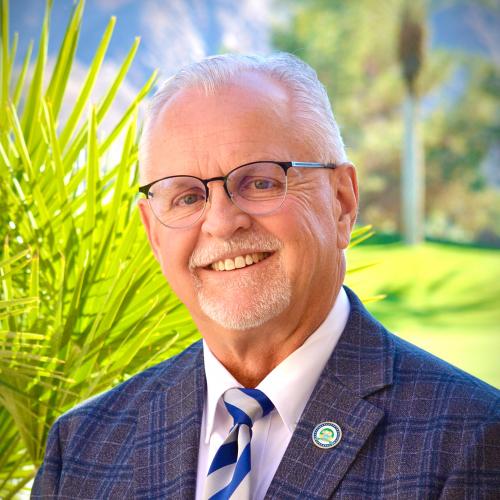
Photo of Tom Lackey
R California Assembly · District 34

Asm. Tom Lackey

Compare
Total votes
27,218
all sessions
Attendance
91%
2,152 missed
Lower than 95% of chamber peers
With party
97%
of cast votes
Near the chamber average
Bipartisan score
1%
crosses aisle rarely
Near the chamber average
Sponsored
2,638
bills & resolutions
Near the chamber average
Committees
11
assignments
2,638 bills and resolutions

Sponsored bills

Total
2,638
Primary
235
Co-sponsor
2,403
This page
2,638
matching current filters
Co-sponsor AB 427
Failed · California Assembly · Co-sponsor
Personal income taxes: exclusion: uniformed services: retirement pay.

The Personal Income Tax Law imposes a tax on individual taxpayers measured by the taxpayer's taxable income for the taxable year, but excludes certain items of income from the computation of tax, including an exclusion for combat-related special compensation. This bill, for taxable years beginning on or after January 1, 2020, and before January 1, 2030, would exclude from gross income specified amounts of retirement pay received by a taxpayer from the federal government for service performed in the uniformed services, as defined, during the taxable year. This bill would take effect immediately as a tax levy.

Failed Feb 3, 2020 1 co-sponsor
Co-sponsor AB 395
Failed · California Assembly · Co-sponsor
Child abuse or neglect: foster children.

Existing law, the Child Abuse and Neglect Reporting Act, establishes procedures for the reporting and investigation of suspected child abuse or neglect. The act requires certain professionals, including specified health practitioners and social workers, known as "mandated reporters," to report known or suspected child abuse or neglect to a local law enforcement agency or a county welfare or probation department, as specified. Existing law states the Legislature's intent that those receiving agencies in each county develop and implement cooperative arrangements in order to coordinate existing duties in connection with the investigation of suspected child abuse or neglect cases, and requires the local law enforcement agency to report investigations of suspected child abuse or neglect to the county welfare or probation department within 36 hours after starting its investigation. Existing law generally provides for the placement of children in foster care, and provides for the licensure and regulation by the State Department of Social Services of certain community care facilities that provide care for foster children, including short-term residential therapeutic programs and transitional housing placement providers. Existing law requires the agencies receiving mandated reports, within 24 hours of receiving a report of abuse alleged to have occurred in facilities licensed to care for children by the department, to notify the licensing office with jurisdiction over that facility. Existing law makes reports of child abuse or neglect confidential and limits the disclosure of the reports to certain individuals or entities. This bill would require certain agencies to develop and implement protocols for coordinating investigations of alleged child abuse and neglect involving children under the jurisdiction of the juvenile court. The bill would require, when an agency receives a report that contains a report of abuse or neglect alleged to have occurred in a resource family home, foster family home, certified foster home, the home of an approved relative or nonrelative extended family member, or a facility licensed to care for children by the department, to notify the licensing office or agency with oversight responsibility over the home or facility within the 24-hour period described above. This bill would require, whenever the department or another agency with oversight responsibility over a home or facility becomes aware of an allegation of abuse or neglect to cooperate with other agencies to coordinate existing duties in connection with the investigation and to complete the investigation no later than 45 days after receiving notice of the allegation. The bill would establish standards and protocols for the conduct of the investigation, including, among other things, requiring a face-to-face interview in private with the victim of child abuse or neglect separate and apart from the suspected offender. The bill would require, upon completion of the investigation, the approving agency or the licensing agency to send a copy of its investigation report to the Office of the State Foster Care Ombudsperson. The bill would require that office to review a representative sample of the investigations annually and include determinations of the extent to which the investigations complied with the investigation protocols. The bill would authorize that office to make recommendations for the improvement of those protocols based on the determinations. The bill would require the department to, at a minimum, annually report to the Legislature and post on its internet website, a statewide summary of these investigations, as specified. The bill would also add the Office of the State Foster Care Ombudsperson, as specified, to the list of individuals and entities to which reports may be disclosed, and would delete obsolete provisions. By imposing new duties on local officials, the bill would impose a state-mandated local program. The California Constitution requires the state to reimburse local agencies and school districts for certain costs mandated by the state. Statutory provisions establish procedures for making that reimbursement. This bill would provide that with regard to certain mandates no reimbursement is required by this act for a specified reason. With regard to any other mandates, this bill would provide that, if the Commission on State Mandates determines that the bill contains costs so mandated by the state, reimbursement for those costs shall be made pursuant to the statutory provisions noted above.


Failed Feb 3, 2020 1 co-sponsor
Primary AB 400
Failed · California Assembly · Lead sponsor
State mandates.

The California Constitution requires the state to provide a subvention of funds to reimburse local government for the costs of a new program or a higher level of service, with specified exceptions, when the Legislature or a state agency mandates a new program or higher level of service on any local government, including school districts. Existing law authorizes a local agency or school district, by February 15, to file an annual reimbursement claim detailing these state-mandated costs, as specified. This bill would extend that date to March 1.

Failed Feb 3, 2020 0 co-sponsors
Primary AB 461
Failed · California Assembly · Lead sponsor
Vehicles: renewal of registration.

Existing law authorizes the Department of Motor Vehicles to renew the registration of a vehicle upon the application of the owner and the payment of applicable fees. Existing law imposes penalties for a late registration renewal application and the late payment of registration fees. This bill would require the department to provide an indigent person, as defined, with a payment plan option that allows the person to apply for renewal of registration any time after enrolling in the payment plan and pay any outstanding fees in monthly installments. For persons enrolled in a payment plan, the bill would waive specified late penalties and suspend wage garnishments, bank levies, or offsets for the collection of delinquent registration fees and would allow a person who becomes delinquent on a payment plan one 45-day extension to resume payments. The bill would require the department to develop options for submitting an application for the payment plan, including online or by mail. Existing law requires an owner who does not wish to renew the registration of a vehicle to certify that the vehicle will not be operated, moved, or left standing upon a highway unless the owner first applies for registration of the vehicle and pays the applicable fees, except as provided, and imposes penalties for the late filing of this certification. This bill would require the department to allow an indigent person, whether or not enrolled in the payment plan described above, to file this certification regardless of any fees or late penalties owed for the vehicle. Existing law authorizes peace officers or specified public employees engaged in directing traffic or enforcing parking laws to remove a vehicle in various circumstances, including if the vehicle is found or operated upon a highway, public land, or an offstreet parking facility with a registration expiration date in excess of 6 months before the date it is found or operated, and to impound the vehicle until the owner or person in control of the vehicle provides proof of current registration and other specified information. This bill would prohibit a parked vehicle from being removed due to an expired registration, as described above, unless a notice containing specified information is affixed to the vehicle at least 7 days before the vehicle is removed. By requiring local authorities to provide notice before removing a vehicle due to an expired registration, the bill would impose a state-mandated local program. The California Constitution requires the state to reimburse local agencies and school districts for certain costs mandated by the state. Statutory provisions establish procedures for making that reimbursement. This bill would provide that, if the Commission on State Mandates determines that the bill contains costs mandated by the state, reimbursement for those costs shall be made pursuant to the statutory provisions noted above.
Failed Feb 3, 2020 0 co-sponsors
Co-sponsor AB 288
Failed · California Assembly · Co-sponsor
Consumer privacy: social media companies.

The California Constitution provides for a right of privacy. Existing law prescribes a variety of consumer privacy protections, including those arising from particular business transactions. The California Consumer Privacy Act of 2018, operative January 1, 2020, grants consumers various rights with regard to personal information collected by a business, as defined, including the right to know what is collected and the right to have that information deleted. This bill would require a social networking service, as defined, to provide users that close their accounts the option to have the user's personally identifiable information permanently removed from the company's database and records and to prohibit the service from selling that information to, or exchanging that information with, a third party in the future, subject to specified exceptions. The bill would require a social media company to honor such a request within a commercially reasonable time. The bill would authorize specified relief for a consumer for a violation of these provisions.

Failed Feb 3, 2020 1 co-sponsor
Co-sponsor AB 444
Failed · California Assembly · Co-sponsor
Sex offenders: registration: solicitation of a minor.

Existing law provides that an individual who solicits, or who agrees to engage in, or who engages in, any act of prostitution with another person who is a minor in exchange for the individual providing compensation, money, or anything of value to the minor is guilty of disorderly conduct, a misdemeanor. Existing law requires persons convicted of specified sex offenses and certain acts of human trafficking for purposes of committing various sex offenses or extortion, or attempts to commit those offenses, to register with local law enforcement agencies while residing in the state or while attending school or working in the state. Willful failure to register, as required, is a misdemeanor, or a felony, depending on the underlying offense. This bill would require a person convicted of disorderly conduct, as described above, to register as a sex offender. By expanding the scope of an existing crime, this bill would impose a state-mandated local program. The California Constitution requires the state to reimburse local agencies and school districts for certain costs mandated by the state. Statutory provisions establish procedures for making that reimbursement. This bill would provide that no reimbursement is required by this act for a specified reason.

Failed Feb 3, 2020 1 co-sponsor
Primary AB 696
Failed · California Assembly · Lead sponsor
County juvenile facilities: pepper spray.

Existing law requires the Board of State and Community Corrections to adopt minimum standards for the operation and maintenance of juvenile halls for the confinement of minors. Existing law requires the judge of the juvenile court of the county to annually inspect any jail or juvenile hall that was used for the confinement of any minor and to notify the operator of the jail or juvenile hall of any observed noncompliance with the minimum standards of the juvenile facility adopted by the board. This bill would require the board to contract with a research entity to conduct a study on the efficacy and impacts of the use of pepper spray in juvenile halls and juvenile ranches, camps, and forestry camps. The bill would require the research entity to satisfy specified requirements, including that it has not previously taken a policy position on, or made recommendations regarding, the use of pepper spray in juvenile facilities, and require the study to examine, at a minimum, specified topics, including the impacts of pepper spray on youth in county juvenile facilities. The bill would require the research entity to submit the study to the board, the Assembly Public Safety Committee, and the Senate Public Safety Committee by January 1, 2022.

Failed Feb 3, 2020 0 co-sponsors
Co-sponsor AB 200
Failed · California Assembly · Co-sponsor
State veterans cemeteries: Hmong veterans.

Existing law authorizes the Department of Veterans Affairs to design, develop, and construct state-owned and state-operated veterans cemeteries, as specified, in northern, southern, and central California. Existing law makes honorably discharged veterans, their spouses, and dependent children eligible for internment in those cemeteries, as specified. This bill would additionally authorize the remains of a person to be buried in those cemeteries if the person was naturalized pursuant to the federal Hmong Veterans' Naturalization Act of 2000, as specified, and resided in the State of California at the time of the person's death.

Failed Feb 3, 2020 1 co-sponsor
Co-sponsor AB 154
Failed · California Assembly · Co-sponsor
Public postsecondary education: income share agreement: pilot program.

The Donahoe Higher Education Act provides for a public postsecondary education system in this state. This system consists of the University of California, the California State University, and the California Community Colleges. The act applies to the University of California only to the extent that the Regents of the University of California act by resolution to make it applicable. This bill would require the California State University and, as a condition of receipt of funds appropriated for purposes of the bill's provisions, the University of California to each select a campus of their respective system to establish, commencing with the 2021–22 academic year, a pilot program for participating students to enter into an income share agreement with the campus. These agreements would specify that moneys for the pilot program would be provided to students for costs of attendance, with students agreeing to pay a portion of their future incomes in exchange. The bill would provide that the period of repayment shall not exceed 10 years, unless extended by up to 60 months under specified circumstances, and shall commence 6 months after the student is no longer enrolled full-time in an accredited college program. The bill would require the income share agreement to be subject to specified requirements, including, among others, that the agreement provide for monthly payments to be based on a specified percentage of the student's annual income. The bill would require the pilot program to be open to students in their sophomore, junior, or senior year, and would authorize the campus to impose other eligibility requirements and cap the number of participants based on the amount of moneys appropriated for the pilot program. The bill would require that implementation of the pilot program be contingent upon the appropriation of funds for this purpose in the annual Budget Act or another statute. The bill would require each participating campus to submit a report no later than November 1, 2023, and a 2nd report no later than November 1, 2026, to the appropriate policy and fiscal committees of the Legislature containing specified information about the pilot program.

Failed Feb 3, 2020 1 co-sponsor
Co-sponsor SB 374
In committee · California Senate · Co-sponsor
CalWORKs: postsecondary education.

Existing law establishes the California Work Opportunity and Responsibility to Kids (CalWORKs) program, under which each county provides cash assistance and other benefits to qualified low-income families using federal, state, and county funds. Existing law requires a recipient of CalWORKs to participate in welfare-to-work activities as a condition of eligibility. Existing law authorizes a student who, at the time they are required to participate in the program, is enrolled in any undergraduate degree or certificate program that leads to employment to continue in that program if they are making satisfactory progress in that program, the county determines that continuing in the program is likely to lead to self-supporting employment for that recipient, and the welfare-to-work plan reflects that determination. A person may meet their welfare-to-work requirements by taking part in a self-initiated education or training program; however, if a recipient does not complete a specified number of hours of classroom, laboratory, or internship activities, the county human services agency is required to have the recipient participate in concurrent work activities, as specified. Existing law limits the time period in which a participant may engage in certain educational activities, in satisfaction of welfare-to-work requirements, to 24 cumulative months during a participant's lifetime. Existing law provides for an extension of that 24-month period under certain circumstances. Existing law requires that necessary supportive services, including child care and transportation costs, be available to every welfare-to-work participant in order to participate in the program activity to which they are assigned. This bill would require that a CalWORKs eligible individual participating in an educational activity full time and making satisfactory progress, as specified, receive a standard allowance of $500, which may be provided, in whole or in part, in the form of a book voucher. The bill would authorize a participant to opt out of the standard allowance at any time, to make a reimbursement claim for the actual costs of books and supplies, and to submit this claim to the county. The bill would require that an applicant or recipient who is enrolled in a specified educational plan or program and making satisfactory progress be deemed to be meeting all welfare-to-work requirements, including the hourly participation requirements, and be entitled to the allowance or reimbursement and other necessary supportive services. The bill would provide that a recipient who is enrolled in a publicly funded postsecondary educational institution and making satisfactory progress that would meaningfully increase the likelihood of their employment is entitled to an extension of the 24-month cumulative participation period, as specified. The bill would define "full time" and "making satisfactory progress" for purposes of these provisions and would require that these allowances be adjusted annually for inflation. By imposing a higher level of service of county employees, the bill would impose a state-mandated local program. The California Constitution requires the state to reimburse local agencies and school districts for certain costs mandated by the state. Statutory provisions establish procedures for making that reimbursement. This bill would provide that, if the Commission on State Mandates determines that the bill contains costs mandated by the state, reimbursement for those costs shall be made pursuant to the statutory provisions noted above. Existing law continuously appropriates moneys from the General Fund to defray a portion of county costs under the CalWORKs program. This bill would instead provide that the continuous appropriation would not be made for purposes of implementing the bill.

In committee Feb 3, 2020 1 co-sponsor
Showing 1,501 to 1,510 of 2,638 bills