

Passed Feb 3, 2022
1 co-sponsor
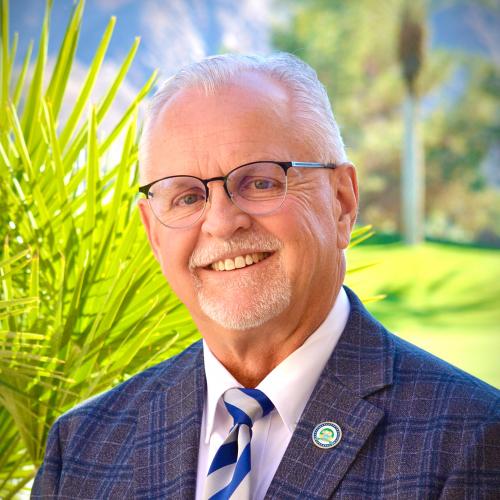
Total votes
27,218
all sessions
Attendance
91%
2,152 missed
Lower than 95% of chamber peers
With party
97%
of cast votes
Near the chamber average
Bipartisan score
1%
crosses aisle rarely
Near the chamber average
Sponsored
2,638
bills & resolutions
Near the chamber average
Committees
11
assignments
2,638 bills and resolutions
Sponsored bills
Total
2,638
Primary
235
Co-sponsor
2,403
Matching
2,638
matching current filters
Passed Feb 3, 2022
1 co-sponsor
Earned Income Tax Credit: 2021 credit calculation.
The Personal Income Tax Law, beginning on or after January 1, 2015, in modified conformity with federal income tax laws, allows an earned income tax credit against personal income tax, and a payment from the Tax Relief and Refund Account for an allowable credit in excess of tax liability, to an eligible individual that is equal to that portion of the earned income tax credit allowed by federal law as determined by the earned income tax credit adjustment factor, as specified. The law provides that the amount of the credit is calculated as a percentage of the eligible individual's earned income and is phased out above a specified amount as income increases. This bill, for each taxable year beginning on or after January 1, 2021, and before January 1, 2022, would authorize a taxpayer to elect to have the amount of the credit calculated based on the taxpayer's earned income for the taxable year beginning on or after January 1, 2019, and before January 1, 2020, the taxpayer's earned income for the taxable year beginning on or after January 1, 2020, and before January 1, 2021, or the taxpayer's earned income for the next taxable year beginning on or after January 1, 2021, and before January 1, 2022. Existing law establishes the continuously appropriated Tax Relief and Refund Account and provides that payments required to be made to taxpayers or other persons from the Personal Income Tax Fund are to be paid from that account, including any amount to be paid as an earned income tax credit in excess of any tax liabilities. By increasing the amount of the California Earned Income Tax Credit to be paid with funds from the Tax Relief and Refund Account, and thus, authorizing new payments from that account for additional amounts in excess of personal income tax liabilities, this bill would make an appropriation.
In committee Feb 1, 2022
1 co-sponsor
Controlled substances.
Existing law makes it a crime to possess for sale or purchase for purpose of sale, transport, sell, furnish, administer, give away, manufacture, compound, convert, produce, derive, process, or prepare various controlled substances, including, among others, fentanyl, peyote, and various other opiates and narcotics. This bill would require a person who is convicted of, or who pleads guilty or no contest to, the above crimes to receive a written advisory of the danger of manufacturing or distribution of controlled substances and that, if a person dies as a result of that action, the manufacturer or distributor can be charged with voluntary manslaughter or murder. The bill would require that the fact the advisory was given be on the record and recorded on the abstract of conviction.
died Feb 1, 2022
1 co-sponsor
Pupil health: mental health services: grants.
Existing law requires the governing board of any school district to give diligent care to the health and physical development of pupils and authorizes the governing board of a school district to employ properly certified persons for the work, including school psychologists and counselors. This bill would require the State Department of Education, upon appropriation by the Legislature, to provide up to $500,000,000 in grants each year for the purpose of providing mental health services for all pupils, including those affected by school closures and distance learning requirements resulting from the COVID-19 pandemic. The bill would require the department to allocate those grants to local educational agencies, as specified. The bill would be implemented only to the extent that funds for its purposes are appropriated by the Legislature in the annual Budget Act, and would authorize that appropriation to come from any available state and federal funds.
In committee Feb 1, 2022
1 co-sponsor
Income tax: credits: food banks.
The Personal Income Tax Law and the Corporation Tax Law allow various credits against the taxes imposed by those laws, including, for taxable years beginning on or after January 1, 2017, and before January 1, 2022, a credit for qualified taxpayers in an amount equal to 15% of the qualified value of fresh fruits or vegetables and specified raw agricultural products or processed foods donated to a food bank. In accordance with specified requirements imposed on bills containing new tax expenditures, existing law requires the Franchise Tax Board to report to the Legislature on or before December 1, 2019, and each December 1 thereafter until January 1, 2021, regarding the utilization of those tax credits and requires specified data to be included in the report. This bill would extend the authorization for those tax credits to a taxable year beginning before January 1, 2027. The bill would extend the requirement of the reports until January 1, 2026. This bill would take effect immediately as a tax levy.
died Feb 1, 2022
1 co-sponsor
California Environmental Quality Act: emergency definition.
The California Environmental Quality Act (CEQA) requires a lead agency, as defined, to prepare, or cause to be prepared, and certify the completion of an environmental impact report on a project that it proposes to carry out or approve that may have a significant effect on the environment, or to adopt a negative declaration if it finds that the project will not have that effect. Existing law provides an exemption to the requirements of CEQA for emergency repairs to public service facilities, projects related to a declared state of emergency, as provided, and specific actions necessary to prevent or mitigate an emergency, and defines "emergency" for this purpose. This bill would expand the definition of "emergency" provided in CEQA to include a project jointly identified by a state or local agency and the Department of Forestry and Fire Protection or the State Board of Forestry and Fire Protection, with notice to the Department of Fish and Wildlife, as mitigating a high threat to life and safety by preventing, minimizing, or mitigating damage to life, health, property, natural resources, or essential public services, resulting from a catastrophic fire in areas of the state that a lead agency determines, based on substantial evidence, are at a heightened risk of the occurrence of that event. The bill would also specify that "emergency" includes, but is not limited to, man-made or natural occurrences, as specified, and would make other nonsubstantive changes. Because the bill would expand the definition of "emergency" in certain CEQA exemptions, thereby increasing duties on a lead agency to determine whether a project qualifies for those exemptions, the bill would impose a state-mandated local program. The California Constitution requires the state to reimburse local agencies and school districts for certain costs mandated by the state. Statutory provisions establish procedures for making that reimbursement. This bill would provide that no reimbursement is required by this act for a specified reason.
In committee Feb 1, 2022
1 co-sponsor
Unemployment insurance: benefit determination deadlines.
Existing law authorizes the Employment Development Department (department) to administer the federal-state unemployment insurance program and provides for the payment of unemployment compensation benefits to eligible individuals who are unemployed through no fault of their own. Existing law establishes procedures for the filing, determination, and payment of benefit claims, and those benefits are payable from the Unemployment Fund. Existing law requires the department to promptly pay benefits if it finds the claimant is eligible and to promptly deny benefits if it finds the claimant is ineligible for benefits. Existing law requires the department to consider facts submitted by an employer in making this determination and also provides for the department to audit claims, as specified. Existing law provides a procedure for a claimant or a base employer to challenge a determination of the computation or recomputation of the benefits. This bill would require the department to provide a claimant with a notification of the computation used to determine their benefits within 30 days of the receipt of the claim and to respond to a challenge by the claimant or the base employer based on the computation or recomputation of benefits within 15 days of the receipt of the protest, except as specified. This bill would also make technical changes to these provisions. This bill would declare that it is to take effect immediately as an urgency statute.
Failed Feb 1, 2022
1 co-sponsor
Income taxes: credits: low-income housing.
The Personal Income Tax Law and the Corporation Tax Law allow various credits against the taxes imposed by those laws. This bill, for taxable years beginning on or after January 1, 2022, and before January 1, 2027, would allow a credit against those taxes to a taxpayer that is transferred, and allocated, credits pursuant to the sale of a multifamily rental housing development or mobilehome park to a qualified developer, as defined, that has received a credit reservation from the California Tax Credit Allocation Committee, in specified amounts. The bill would require the credits to be reserved on a first-come-first-served basis. The bill would limit the aggregate amount of credit that may be allocated by the committee, as provided. The bill would also provide that the credit amount shall be $0 for each taxable year beginning on or after January 1, 2022, and before January 1, 2027, unless otherwise specified in a bill providing for appropriations related to the Budget Act. Existing law requires that any bill introduced on or after January 1, 2020, that would authorize certain tax expenditures, as defined, or tax exemptions contain, among other things, specific goals, purposes, and objectives that the tax expenditure or exemption will achieve, detailed performance indicators, and data collection requirements. This bill would include additional information required for any bill authorizing a new tax expenditure. This bill would take effect immediately as a tax levy.
Failed Feb 1, 2022
1 co-sponsor
Unemployment insurance: Unemployment Insurance Oversight Advisory Board.
Existing law authorizes the Employment Development Department to administer the state unemployment and disability compensation programs. Existing law requires the department, among other duties, to make unemployment and disability compensation payments, as prescribed. This bill would establish the Unemployment Insurance Oversight Advisory Board (board) in the Labor and Workforce Development Agency as an advisory body to review the operations of the Employment Development Department (department) under the state unemployment and disability compensation programs and make recommendations to the department, the Governor, and the Legislature to, among other things, enhance the efficiency of those operations and ensure equitable access to benefits administered by the department. The bill would require the board to consist of 7 members, as specified, who serve without compensation, but would require members to be reimbursed for their necessary and reasonable expenses incurred in performing their duties and responsibilities, upon appropriation by the Legislature. The bill would require, beginning on and after January 1, 2022, the board to hold at least 2 public meetings a year, during which the board members would be required to accept public comment. The bill would also require, beginning on and after July 1, 2022, the board to issue biannual public reports with its recommendations. The bill would require the department to submit a yearly report to the Assembly Committee on Budget and the Senate Committee on Budget and Fiscal Review regarding the recommendations of the board for state disability insurance and paid family leave benefits, as provided.
Failed Feb 1, 2022
1 co-sponsor
Ask Maddy
·
AI policy assistant
Ask Maddy about Tom Lackey
Scope: CA
Hi! I can help you understand Tom Lackey's legislative record. What would you like to know?
Try one of these
i
Maddy answers using official bill text and legislative records. Always verify before sharing.
Sources cited inline