

Passed May 3, 2022
1 co-sponsor
Total votes
27,218
all sessions
Attendance
91%
2,152 missed
Lower than 95% of chamber peers
With party
97%
of cast votes
Near the chamber average
Bipartisan score
1%
crosses aisle rarely
Near the chamber average
Sponsored
2,638
bills & resolutions
Near the chamber average
Committees
11
assignments
2,638 bills and resolutions
Sponsored bills
Total
2,638
Primary
235
Co-sponsor
2,403
This page
2,638
matching current filters
Passed May 2, 2022
1 co-sponsor
Cannabis: excise tax: cultivation tax.
The Control, Regulate and Tax Adult Use of Marijuana Act (AUMA) , an initiative measure approved as Proposition 64 at the November 8, 2016, statewide general election, authorizes a person who obtains a state license under AUMA to engage in commercial adult-use cannabis activity pursuant to that license and applicable local ordinances. AUMA imposes an excise tax on upon purchasers of cannabis or cannabis products sold in this state at the rate of 15% of the average market price of any retail sale by a cannabis retailer, and a separate cultivation tax on harvested cannabis that enters the commercial market, as specified. Existing law, beginning January 1, 2020, requires the California Department of Tax and Fee Administration to adjust the cultivation tax rate for inflation each calendar year, except for the 2021 calendar year, in which existing law prohibited the department from adjusting for inflation unless the adjustment was for an inflation rate less than zero. Existing law requires revenues from the excise and cultivation taxes to be deposited into the California Cannabis Tax Fund, which is continuously appropriated for specified purposes. This bill would suspend the imposition of the cultivation tax from July 1, 2023, to July 1, 2028, and would discontinue the requirement that the department adjust the cultivation tax rate for inflation for the 2023 calendar year and during the suspension. The bill would increase, from July 1, 2023, until July 1, 2028, the excise tax by an additional percentage that the Department of Finance estimates will generate the amount of revenue that would have been collected pursuant to the cultivation tax. AUMA authorizes legislative amendment of its provisions with a 23 vote of both houses, without submission to the voters, to further its purposes and intent. This bill would declare that its provisions further the purposes and intent of AUMA. This bill would take effect immediately as a tax levy.
In committee Apr 26, 2022
1 co-sponsor
Controlled substances: homicide resulting from the illegal furnishing of a controlled substance.
Existing law prohibits the possession, transportation, importation, sale, manufacturing, furnishing, administering, or giving away of specified controlled substances including, without limitation, cocaine, heroin, and fentanyl. Existing law defines voluntary manslaughter as the unlawful killing of a human being without malice upon a sudden quarrel or heat of passion. Existing law defines murder as the unlawful killing of a human being, or a fetus, with malice aforethought. Existing law holds a person, who is not the actual killer, criminally liable for murder in the first degree if that person is a major participant in the underlying felony and acts with reckless indifference to human life. Under existing law both manslaughter and murder are punishable as felonies. This bill would require a court to advise a person convicted of specified crimes, including, among others, selling, furnishing, transporting, or manufacturing certain controlled substances, that such conduct inflicts a grave health risk to those who ingest or are exposed to those substances, that it is extremely dangerous to human life to manufacture or distribute real or counterfeit controlled substances, and that if someone dies as a result, the defendant can be charged with voluntary manslaughter or murder. The bill would require the advisement to be provided in writing and the fact that the advisement was given to be recorded on the record and recorded in the abstract of judgment.
died Apr 26, 2022
1 co-sponsor
Theft and burglary.
(1) The existing Safe Neighborhoods and Schools Act, enacted as an initiative statute by Proposition 47, as approved by the electors at the November 4, 2014, statewide general election, makes the theft of property that does not exceed $950 in value petty theft, and makes that crime punishable as a misdemeanor, with certain exceptions. The initiative statute defines shoplifting as entering a commercial establishment with the intent to commit larceny while that establishment is open during regular hours, where the value of the property that is taken or intended to be taken does not exceed $950. The initiative statute requires that shoplifting be punished as a misdemeanor. Proposition 47 authorizes amendment of its provisions by a 23 vote of the Members of each house of the Legislature so long as the amendments are consistent with and further the intent of the act. This bill would amend Proposition 47 by authorizing acts of shoplifting that occur on 2 or more separate occasions within a 12-month period, and the aggregated value of the merchandise taken exceeds $950, to be punished either by imprisonment in a county jail for not more than one year or by 16 months or 2 or 3 years in a county jail. By increasing the penalty for a crime, this bill would impose a state-mandated local program. (2) Existing law defines the crime of burglary to include entering a railroad car or cargo container with the intent to commit grand larceny or petit larceny or any felony within. Exiting law divides burglary into first and 2nd degrees, with first degree burglary defined as burglary of an inhabited dwelling house, a vessel that is inhabited and designed for habitation, a floating home, a trailer coach, or the inhabited portion or any other building. Existing law defines 2nd degree burglary as all other types of burglary. First degree burglary is punishable by imprisonment in the state prison for 2, 4, or 6 years and 2nd degree burglary being punishable in a county jail for not more than one year or by 16 months or 2 or 3 years in a county jail. This bill would make burglary with regard to a railroad car or a cargo container punishable by imprisonment in a county jail for 2, 4, or 6 years. By increasing the penalty for a crime, this bill would impose a state-mandated local program. (3) The California Constitution requires the state to reimburse local agencies and school districts for certain costs mandated by the state. Statutory provisions establish procedures for making that reimbursement. This bill would provide that no reimbursement is required by this act for a specified reason.
In committee Apr 26, 2022
1 co-sponsor
Passed Apr 25, 2022
1 co-sponsor
Relative to the Girl Scouts of the USA.
This measure would resolve that the Legislature declares March 12, 2022, as National Girl Scout Day.
Signed into law Apr 22, 2022
1 co-sponsor
Federal funding: promoting homeownership.
Under existing law governing the Community Development Block Grant Program, the Department of Housing and Community Development is required to distribute federal funds in the form of grants to eligible cities and counties to provide housing and economic development, principally for persons and families of low or moderate income. Existing law requires all funds made available under the program to be utilized to provide decent housing, a suitable living environment, and expanding economic opportunities, consistent with federal requirements. This bill would authorize the Department of Housing and Community Development to prioritize 10% of program funds for down payment assistance. The bill would provide that these requirements be implemented only to the extent that they are consistent with federal requirements. Existing federal law establishes the HOME Investment Partnership Act, which allocates funds to states and local governments to, among other things, expand the supply of affordable housing. Existing law designates the Department of Housing and Community Development as the state agency responsible for the administration of the state's allocation of HOME Investment Partnership Act funds, the provision of technical assistance, and coordination of HOME Investment Partnership Act activities. This bill would authorize the Department of Housing and Community Development to prioritize 30% of the federal funding provided under the HOME Investment Partnership Act for purposes of promoting homeownership. The bill would provide that this requirement be implemented only to the extent that it is consistent with federal requirements.
In committee Apr 21, 2022
1 co-sponsor
Passed Apr 21, 2022
1 co-sponsor
Passed Apr 21, 2022
1 co-sponsor
Ask Maddy
·
AI policy assistant
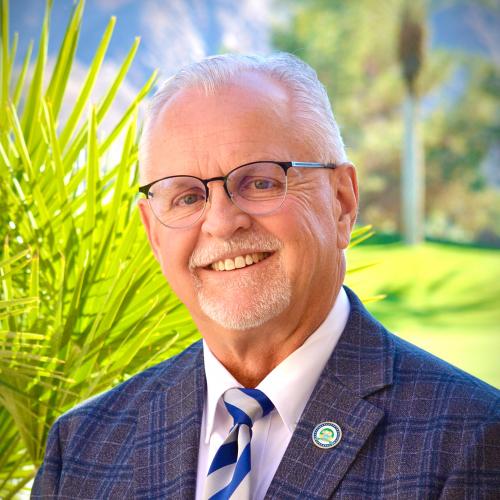
Ask Maddy about Tom Lackey
Scope: CA
Hi! I can help you understand Tom Lackey's legislative record. What would you like to know?
Try one of these
i
Maddy answers using official bill text and legislative records. Always verify before sharing.
Sources cited inline