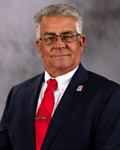
Photo of Thurston "Smitty" Smith
R California Assembly · District 33

Asm. Thurston "Smitty" Smith

Compare
Total votes
4,221
all sessions
Attendance
89%
433 missed
Lower than 76% of chamber peers
With party
98%
of cast votes
Lower than 77% of chamber peers
Bipartisan score
1%
crosses aisle rarely
Higher than 79% of chamber peers
Sponsored
421
bills & resolutions
Near the chamber average
Committees
0
assignments
421 bills and resolutions

Sponsored bills

Total
421
Primary
28
Co-sponsor
393
This page
421
matching current filters
Co-sponsor SCR 99
Signed into law · California Senate · Co-sponsor
Relative to Take Our Daughters And Sons To Work Day.

This measure would declare April 28, 2022, as Take Our Daughters and Sons to Work Day, and would recognize the goals of introducing our daughters and sons to the workplace and commend all participants of Take Our Daughters And Sons To Work Day.

Signed into law May 27, 2022 1 co-sponsor
Co-sponsor SCR 88
Signed into law · California Senate · Co-sponsor
Relative to California Wines: Down to Earth Month.

This measure would proclaim, in perpetuity, the month of April as California Wines: Down to Earth Month, to celebrate the sustainable leadership of California wineries and winegrape growers throughout the month of April.

Signed into law May 24, 2022 1 co-sponsor
Co-sponsor AB 2041
In committee · California Assembly · Co-sponsor
California Safe Drinking Water Act: primary drinking water standards: compliance.

Existing law, the California Safe Drinking Water Act, requires the State Water Resources Control Board to adopt primary drinking water standards for contaminants in drinking water. Existing law requires the state board to consider specified criteria when it adopts a primary drinking water standard, including the technological and economic feasibility of compliance. This bill would require the state board to take specified actions if the state board adopts a primary drinking water standard with a compliance period for which public water systems are given a designated period of time to comply with the primary drinking water standard without being held in violation of the primary drinking water standard. Specifically, the bill would require the state board to determine which public water system may not be able to comply with the primary drinking water standard without receiving financial assistance and develop a compliance plan, including a financial plan to assist that public water system in complying with the primary drinking water standard. The bill would also require the state board, if a public water system is in violation of the primary drinking water standard after the compliance period, to take into consideration whether or not the public water system implemented the compliance plan.

In committee May 19, 2022 1 co-sponsor
Co-sponsor SB 1353
In committee · California Senate · Co-sponsor
Homeless population census information: collection and reporting.

(1) Existing law creates the California Interagency Council on Homelessness (council) and requires departments administering state programs created on or after July 1, 2017, to collaborate with the council for the purpose of adopting guidelines and regulations to incorporate core components of Housing First. Existing law defines "Housing First" as an evidence-based model that uses housing as a tool, rather than a reward, for recovery and that centers on providing or connecting homeless people to permanent housing as quickly as possible. Under existing law, Housing First providers offer services as needed and requested on a voluntary basis and do not make housing contingent on participation in services. This bill would require a local government entity to provide specified homelessness information for its jurisdiction to the council by January 1, 2025, including expenditures on homelessness programs and efforts provided to homeless persons within its jurisdiction, as well as related information regarding the funding of these services. The bill would specify how a local government would meet this requirement. This bill would require the council to develop and maintain a publicly available internet website homelessness dashboard for prescribed purposes. The bill would require the council to report to the Legislature, and post to its homelessness dashboard, information related to programs that the state has undertaken to reduce homelessness in California, including federal funding for state and local programs by January 1, 2026. The bill would require a state agency or office responsible for these programs to report data related to the programs, in a form prescribed by the council, to the council no later than January 1, 2025. The bill would require the council to perform a specified assessment of the success or failure of funded and implemented programs addressing homelessness. This bill would express that it is the intent of the Legislature that continuums of care collaborate with local government entities, state agencies, and the council to help collect the required information. The bill would repeal these provisions as of January 1, 2027. By increasing the duties of local government entities, this bill would impose a state-mandated local program. (2) The California Constitution requires the state to reimburse local agencies and school districts for certain costs mandated by the state. Statutory provisions establish procedures for making that reimbursement. This bill would provide that, if the Commission on State Mandates determines that the bill contains costs mandated by the state, reimbursement for those costs shall be made pursuant to the statutory provisions noted above.

In committee May 19, 2022 1 co-sponsor
Co-sponsor AB 1665
Failed · California Assembly · Co-sponsor
Trafficking a minor: plea bargains.

Existing law defines the crime of human trafficking and imposes a penalty of at least 5, 8, or 12 years in state prison and a fine of not more than $500,000. This bill would prohibit plea bargaining in a case in which the indictment or information charges the crime of human trafficking and it is alleged that the victim is a minor, unless there is insufficient evidence to prove the people's case, or testimony of a material witness cannot be obtained, or a reduction or dismissal would not result in a substantial change in sentence. By increasing the penalty for a crime, this bill would impose a state-mandated local program. The California Constitution requires the state to reimburse local agencies and school districts for certain costs mandated by the state. Statutory provisions establish procedures for making that reimbursement. This bill would provide that no reimbursement is required by this act for a specified reason.

Failed May 19, 2022 1 co-sponsor
Co-sponsor SB 1395
In committee · California Senate · Co-sponsor
California Defense Community Infrastructure Program.

Existing law establishes within state government the Office of Planning and Research as the comprehensive state planning agency for long-range planning and research. Existing law, until January 1, 2026, establishes within state government a Governor's Military Council that serves under the direction of the Military Department to advise the Governor on efforts to retain military installations and operations within this state that are necessary for the defense of the nation, and to coordinate and focus those efforts. This bill would establish the California Defense Community Infrastructure Program, which would require the Office of Planning and Research, with input and assistance from the Governor's Military Council, to grant funds to local agencies to assist with matching fund requirements in applications for funds from the federal Defense Community Infrastructure Program. This bill would require the office to use specified project criteria, define an eligible project, and require the Military Council to rank the projects, as specified, and forward their recommendations to the office to award the grants, or, if the Military Council is abolished, would require the office to rank the projects based on the available criteria and funds. This bill would appropriate $50,000,000 for the purposes of the program. The bill would authorize the office to award these grants without regard to fiscal year and would require funds unencumbered after 3 years to revert to the General Fund.

In committee May 19, 2022 1 co-sponsor
Co-sponsor SB 1073
In committee · California Senate · Co-sponsor
Property tax: exemptions: disabled veterans.

Existing property tax law, pursuant to the authorization of the California Constitution, provides a disabled veteran's property tax exemption for the principal place of residence of a veteran, the veteran's spouse, or the veteran and veteran's spouse jointly, and the unmarried surviving spouse of a veteran, as provided, if the veteran is blind in both eyes, has lost the use of 2 or more limbs, or is totally disabled as a result of injury or disease incurred in military service, or if the veteran has, as a result of a service-connected injury or disease, died while on active duty in military service. Existing law exempts that part of the full value of the residence that does not exceed $100,000, or $150,000 if the household income of the claimant does not exceed $40,000, as adjusted for inflation, as specified. This bill, for property tax lien dates occurring on or after January 1, 2023, would additionally provide a partial exemption for property owned by, and that constitutes the principal place of residence of, a veteran who is partially disabled, as defined, or the veteran's spouse or the veteran and the veteran's spouse jointly, under these provisions. The bill would require that the amount of partial exemption provided be the percentage of the full amount of exemption, as described above, equivalent to the partially disabled veteran's disability rating percentage by the United States Department of Veterans Affairs or the military service from which the veteran was discharged, as applicable. By adding to the duties of local tax officials in administering the disabled veterans' property tax exemption, this bill would impose a state-mandated local program. The California Constitution requires the state to reimburse local agencies and school districts for certain costs mandated by the state. Statutory provisions establish procedures for making that reimbursement. This bill would provide that, if the Commission on State Mandates determines that the bill contains costs mandated by the state, reimbursement for those costs shall be made pursuant to the statutory provisions noted above. Existing law requires the state to reimburse local agencies annually for certain property tax revenues lost as a result of any exemption or classification of property for purposes of ad valorem property taxation. This bill would provide that, notwithstanding those provisions, no appropriation is made and the state shall not reimburse local agencies for property tax revenues lost by them pursuant to the bill. This bill would take effect immediately as a tax levy.


In committee May 19, 2022 1 co-sponsor
Co-sponsor AB 1889
In committee · California Assembly · Co-sponsor
Personal income tax: deductions: adjusted gross income: teachers' expenses.

The Personal Income Tax Law, in modified conformity with federal income tax laws, allows various deductions from gross income in computing adjusted gross income under that law, but does not conform with the federal deduction in computing adjusted gross income allowed for certain expenses of elementary and secondary school teachers. This bill, for each taxable year beginning on or after January 1, 2022, and before January 1, 2027, would, in modified conformity with federal personal income tax laws, allow a deduction in computing adjusted gross income for certain expenses of public elementary and secondary school teachers. Existing law requires any bill authorizing a new tax expenditure to contain, among other things, specific goals, purposes, and objectives that the tax expenditure will achieve, detailed performance indicators, and data collection requirements. This bill would include additional information required for any bill authorizing a new tax expenditure. This bill would take effect immediately as a tax levy.
In committee May 19, 2022 1 co-sponsor
Co-sponsor AB 1773
In committee · California Assembly · Co-sponsor
Williamson Act: subvention payments: appropriation.

The Williamson Act, also known as the California Land Conservation Act of 1965, authorizes a city or county to enter into contracts with owners of land devoted to agricultural use, whereby the owners agree to continue using the property for that purpose, and the city or county agrees to value the land accordingly for purposes of property taxation. Existing law sets forth procedures for reimbursing cities and counties for property tax revenues not received as a result of these contracts and continuously appropriates General Fund moneys for that purpose. This bill, for the 2022–23 fiscal year, would appropriate an additional $40,000,000 from the General Fund to the Controller to make subvention payments to counties, as provided, in proportion to the losses incurred by those counties by reason of the reduction of assessed property taxes. The bill would make various findings in this regard.

In committee May 19, 2022 1 co-sponsor
Showing 151 to 160 of 421 bills
Previous 1 … 15 16 17 … 43 Next