

Relative to Valley Fever Awareness Month.
This measure would declare August 2022 as Valley Fever Awareness Month.
Passed Aug 15, 2022
1 co-sponsor
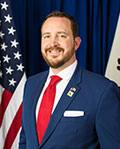
This measure would declare August 2022 as Valley Fever Awareness Month.
This measure would declare the month of September 2022 as California Emergency Preparedness Month.
(1) Existing law establishes in the Natural Resources Agency the Department of Forestry and Fire Protection (CalFire) , and requires CalFire to be responsible for, among other things, fire protection and prevention, as provided. Existing law establishes the State Board of Forestry and Fire Protection in CalFire to represent the state's interest in the acquisition and management of state forests and requires the board to maintain an adequate forest policy. The former Governor, Edmund G. Brown Jr., issued Executive Order No. B-52-18 that, among other things, established a Forest Management Task Force, now known as the Wildfire and Forest Resilience Task Force, involving specified state agencies to create the action plan for wildfire and forest resilience. The executive order also established a Joint Institute for Wood Products Innovation, to be located within the state board. This bill would establish the Forest Waste Biomass Utilization Program to be administered by the state board's Joint Institute for Wood Products Innovation to develop an implementation plan to meet the goals and recommendations of, and the comprehensive framework to align with the state's wood utilization policies and priorities and focused market strategy of, specified statewide forest management plans and to develop a workforce training program to complement workforce needs associated with the implementation plan. The bill would require the state board, in coordination with the Wildfire and Forest Resilience Task Force, to submit an annual report to the Legislature, beginning January 1, 2024, on the progress made on implementing the implementation plan. This bill would require the Natural Resources Agency, in furtherance of the program, to facilitate the integration of recommendations for forest biomass waste utilization in relevant, state climate adaptation plans. (2) The Warren-Alquist State Energy Resources Conservation and Development Act establishes the State Energy Resources Conservation and Development Commission (Energy Commission) and requires the Energy Commission to undertake various actions in furtherance of meeting the state's clean energy and pollution reduction objectives. Existing law requires the Energy Commission, in consultation with specified state and federal agencies and at least every 2 years, to conduct assessments and forecasts of all aspects of energy industry supply, production, transportation, delivery and distribution, demand, and prices. Existing law requires the Energy Commission, in consultation with specified entities, to adopt a biennial integrated energy policy report containing certain information. This bill would require the Energy Commission, in furtherance of the Forest Waste Biomass Utilization Program, to prepare and submit a report to the Legislature, on or before December 31, 2023, that evaluates innovative bioenergy technologies that utilize forest biomass waste, as specified. The bill would also require the Energy Commission to include, as part of the 2023 edition of the integrated policy report, and each report adopted biennially thereafter, an assessment of the potential for forest biomass waste energy to provide firm renewable power. (3) The California Global Warming Solutions Act of 2006 designates the State Air Resources Board (state air board) as the state agency charged with monitoring and regulating sources of emissions of greenhouse gases. The act requires the state air board to adopt a statewide greenhouse gas emissions limit, as specified, and to adopt rules and regulations in an open public process to achieve the maximum technologically feasible and cost-effective greenhouse gas emission reductions. The act requires the state air board to develop, on or before December 31, 2020, and every 5 years thereafter, a report that assesses greenhouse gas emission associated with wildfire and forest management activities. The act requires the state air board to prepare, approve, and update at least once every 5 years, beginning on January 1, 2009, a scoping plan for achieving the maximum technologically feasible and cost-effective reductions in greenhouse gas emissions from sources or categories of sources of greenhouse gases under the act. This bill would require the state air board, in the report developed on or before December 31, 2025, and every 5 years thereafter, to include, among other things, a methodology to quantify the greenhouse gas and short-lived climate pollutant emissions from wildfire, pile burning, and forest management activities, as specified. The bill would also require the state air board to consider the results of that report, as applicable, in the next update of the scoping plan.
Existing federal law, the Indian Child Welfare Act of 1978 (ICWA) , governs the proceedings for determining the placement of an Indian child when that child is removed from the custody of the child's parent or guardian. Existing law specifies that the state is committed to protecting the essential tribal relations and best interest of an Indian child by promoting practices in accordance with ICWA. Existing law authorizes a federally recognized tribe to approve a home for the purpose of foster or adoptive placement of an Indian child pursuant to ICWA and authorizes a tribe to designate a tribal organization to do the same. This bill would establish the Tribally Approved Homes Compensation Program to provide funding to eligible tribes and tribal organizations in California to assist in funding the costs associated with recruiting and approving homes for the purpose of foster or adoptive placement of an Indian child pursuant to ICWA, as described above. The bill would, subject to an appropriation for this purpose in the annual Budget Act, require the State Department of Social Services to provide annual allocations of $75,000 to eligible tribes and tribal organizations in each fiscal year and would require a tribe or tribal organization to submit to the department a letter of intent for funding, as specified, in order to be eligible for the funding allocation. The bill would require a tribe or tribal organization that receives funding pursuant to the program to submit a progress report to the department following the close of the fiscal year in which an allocation was received that includes details about how many homes were approved, recruitment efforts, and challenges experienced during the fiscal year that was funded and would require the department to annually compile those progress reports and submit a report to the Legislature, as specified.
Under existing law, a state agency is authorized to apply to the Department of Motor Vehicles (DMV) to sponsor a specialized license plate program, and the DMV is required to issue those license plates if the agency meets certain requirements. Existing law also requires the DMV to charge specified fees for certain services related to the issuance of those plates. This bill would require the State Department of Education to apply to the DMV to sponsor a mental health awareness license plate program, and would require the DMV to issue the license plates if the State Department of Education meets certain requirements. The bill would also establish the Mental Health Awareness Fund in the State Treasury and would require the revenue generated from the license plates to be deposited in the fund for use, upon appropriation by the Legislature to the State Department of Education, for mental health services in public schools.
The California Global Warming Solutions Act of 2006 designates the State Air Resources Board as the state agency charged with monitoring and regulating sources of emissions of greenhouse gases. The act requires the state board to prepare and approve a scoping plan for achieving the maximum technologically feasible and cost-effective reductions in greenhouse gas emissions and to update the scoping plan at least once every 5 years. This bill would require the state board, upon a specified appropriation and before December 31, 2024, to complete an assessment of renewable hydrogen production, distribution, transmission, and application within the state, as specified. The bill would authorize the state board to contract with an educational institution or related organization to conduct the assessment. The bill would also require the state board, on or before December 31, 2024, to post the assessment on its internet website.
Under existing law, the State Department of Health Care Services is responsible for the administration and oversight of various health care programs, including those related to cancer screening and research. This bill, the California Childhood Cancer Research Fund Act, would request the Regents of the University of California to establish and administer the Childhood Cancer Research Grant Program to provide funding to various entities to support research and treatment for children impacted by cancer and the long-term effects of cancer treatment. The bill would create the Childhood Cancer Research Council composed of 7 members, including specialists in pediatric oncology, appointed by the Governor, Senate Committee on Rules, or Speaker of the Assembly, and would require the council to develop the strategic objectives and priorities of the program and make grant recommendations to the University of California in accordance with the program's goals. The bill would require the council to submit an annual report to the Legislature describing the grants made, grants in progress, program accomplishments, and future program directions. The bill would create the Andrew Hirschman Childhood Cancer Research Fund for the implementation and administration of the grant program, upon appropriation by the Legislature. The bill would make these provisions operative until January 1, 2028.
Existing law, the Medi-Cal Act, provides for the Medi-Cal program, which is administered by the State Department of Health Care Services, under which qualified low-income individuals receive health care services. The Medi-Cal program is, in part, governed and funded by federal Medicaid program provisions. Existing law requires Medi-Cal benefits to be provided to individuals eligible for services pursuant to prescribed standards, including a modified adjusted gross income (MAGI) eligibility standard. Existing law prohibits the use of an asset or resources test for individuals whose financial eligibility for Medi-Cal is determined based on the application of MAGI. Existing federal law authorizes a state to establish a non-MAGI standard for determining the eligibility of specified individuals, and existing law imposes the use of a resources test for establishing Medi-Cal eligibility for prescribed populations. This bill would prohibit the use of resources, including property or other assets, to determine eligibility under the Medi-Cal program to the extent permitted by federal law, and would require the department to seek federal authority to disregard all resources as authorized by the flexibilities provided pursuant to federal law. The bill would authorize the department to implement this prohibition by various means, including provider bulletins, without taking regulatory authority. By January 1, 2023, the bill would require the department to adopt, amend, or repeal regulations on the prohibition, and to update its notices and forms to delete any reference to limitations on resources or assets. Because counties are required to make Medi-Cal eligibility determinations, and this bill would expand Medi-Cal eligibility, the bill would impose a state-mandated local program. With respect to the prohibition on resources, the bill would make various conforming and technical changes to the Medi-Cal Act. The California Constitution requires the state to reimburse local agencies and school districts for certain costs mandated by the state. Statutory provisions establish procedures for making that reimbursement. This bill would provide that, if the Commission on State Mandates determines that the bill contains costs mandated by the state, reimbursement for those costs shall be made pursuant to the statutory provisions noted above.