

Existing law establishes the Department of Housing and Community Development in the Business, Consumer Services, and Housing Agency. Existing law requires the department to administer various grants, including the California Emergency Solutions Grants Program. This bill would require the department to issue and complete, for any grant program administered by the department, all necessary contracts and standard agreements, if applicable, between the department and the grant recipient within 90 days of issuing a grant award letter to the grant recipient. The bill would require the department to issue and complete these contracts and agreements by March 31, 2022, for a grant award letter issued to a grant recipient prior to January 1, 2022. The bill would provide that the department shall use moneys appropriated to it in the annual Budget Act or another statute for purposes of the bill's provisions or for the general administration of the department.
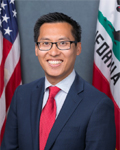
Sponsored bills
Existing law, the California Emergency Services Act (CESA) , authorizes the Governor to proclaim a state of emergency when specified conditions of disaster or extreme peril to the safety of persons and property exist, and authorizes the Governor to exercise certain powers in response to that emergency, including, but not limited to, suspending specified statutes, ordinances, orders, regulations, or rules. Existing law requires orders and regulations, or amendments or rescissions thereof, issued during a state of war emergency or state of emergency to be in writing and to take effect immediately upon their issuance. Existing law requires all of the powers granted to the Governor by the CESA with respect to a state of emergency or a state of war emergency to terminate when the state of emergency or state of war emergency has been terminated by proclamation of the Governor or by concurrent resolution of the Legislature declaring it at an end. Existing law also requires all of the powers granted to the Governor by the CESA with respect to a state of war emergency to terminate when the Governor has not within 30 days after the beginning of the state of war emergency issued a call for a special session of the Legislature, as specified. Existing law requires the orders and regulations to be of no further force or effect upon termination of the state of war emergency or state of emergency. This bill would permit an order or regulation, or an amendment or rescission thereof, issued pursuant to specified CESA provisions 60 or more days after the proclamation, to take effect only if approved by a concurrent resolution of the Legislature.
Existing law generally provides that everyone is responsible, not only for the result of their willful acts, but also for an injury occasioned to another by that person's want of ordinary care or skill in the management of their property or person, except as specified. This bill would exempt a business, as defined, from liability for an injury or illness to a person due to coronavirus (COVID-19) based on a claim that the person contracted COVID-19 while at that business, or due to the actions of that business, if the business has substantially complied with all applicable state and local health laws, regulations, and protocols. The bill would define a business to include a sole proprietorship, partnership, corporation, association, or other group, including a nonprofit organization, as specified. The bill would not permit this exception to apply if the injury or illness resulted from a grossly negligent act or omission, willful or wanton misconduct, or unlawful discrimination by the business or an employee of the business. The bill would include related legislative findings. This bill would declare that it is to take effect immediately as an urgency statute.
Existing law establishes the Office of Small Business Advocate within the Governor's Office of Business and Economic Development for the purpose of advocating for the causes of small business and to provide small businesses with the information they need to survive in the marketplace. This bill, the Keep California Working Act, would establish the Keep California Working Grant Program. The act would require the Small Business Advocate to administer the program and award grants, as specified, to small businesses and nonprofit entities that meet specified criteria, including that the entity has experienced economic hardship resulting from the COVID-19 pandemic. The act would specify that grant money awarded pursuant to the program may be used only for specified purposes, including payroll costs, health care benefits, paid sick, medical, or family leave, and insurance premiums. The act would appropriate $2.6 billion dollars to the Office of Small Business Advocate for those purposes. The Personal Income Tax Law and the Corporation Tax Law, in conformity with federal income tax law, generally define "gross income" as income from whatever source derived, except as specifically excluded, and provide various exclusions from gross income. This bill would exclude from gross income, for state income tax purposes, the amount of a grant awarded pursuant to the Keep California Working Grant Program. Existing law requires a bill authorizing a new tax expenditure to contain, among other things, specific goals, purposes, and objectives that the tax expenditure will achieve, detailed performance indicators, and data collection requirements. The bill also would include additional information required for a bill authorizing a new tax expenditure. This bill would declare that it is to take effect immediately as an urgency statute.
Existing law establishes the California Health and Human Services Agency, which includes the State Department of Public Health, among other state departments charged with the administration of health, social, and other human services. Under existing law, the State Department of Public Health has authority over various programs promoting public health, including genetic disease testing and newborn screenings. This bill would establish the Rare Disease Advisory Council within the California Health and Human Services Agency. This bill would specify the purposes of the Rare Disease Advisory Council, including, among others, coordinating statewide efforts for the study of the incidence of rare diseases within the state, and acting as the advisory body on rare diseases to the Legislature and state and private agencies that provide services to persons with rare diseases. Under the bill, the duties of the advisory council would include, among others, adopting implementing regulations, researching and determining the most appropriate method to collect data on rare diseases, and identifying best practices for rare disease care. The bill would specify the composition of the advisory council, including members appointed by the Secretary of California Health and Human Services and the State Public Health Officer. Before any appointments are made, the bill would require the agency to research and report to the Legislature on existing sources of funding that may be used to finance the formation and operation of the advisory council. The bill would require the advisory council to apply for, and accept, any grant of funds from the federal government, private foundations, or other sources. The bill would prohibit the advisory council from accepting funds from the employer of any sitting council member. The bill would require the advisory council to meet at least 3 times annually and to report to the agency and the Legislature every 2 years on its activities, findings, and recommendations.
Existing law provides for the licensure and regulation of health care service plans by the Department of Managed Health Care and makes the willful violation of its provisions a crime. Existing law also provides for the regulation of health insurers by the Department of Insurance. Existing law requires a health care service plan contract or health insurance policy that provides coverage for outpatient prescription drugs to cover medically necessary prescription drugs. This bill would prohibit a health care service plan, a health insurer, or the agent thereof from engaging in patient steering, as specified. The bill would define "patient steering" to mean communicating to an enrollee or insured that they are required to have a prescription dispensed at, or pharmacy services provided by, a particular pharmacy, as specified, or offering group health care coverage contracts or policies that include provisions that limit access to only pharmacy providers that are owned or operated by the health care service plan, health insurer, or agent thereof. The bill would provide that these provisions do not apply to certain entities, including an entity that is part of a "fully integrated delivery system," as specified. The bill would also make related findings and declarations. Because a willful violation of these provisions by a health care service plan would be a crime, the bill would impose a state-mandated local program. The California Constitution requires the state to reimburse local agencies and school districts for certain costs mandated by the state. Statutory provisions establish procedures for making that reimbursement. This bill would provide that no reimbursement is required by this act for a specified reason.
Existing law, the Pharmacy Law, establishes the California State Board of Pharmacy within the Department of Consumer Affairs and sets forth its powers and duties relating to the licensing and regulation of pharmacists. A violation of the Pharmacy Law is a crime. Existing law authorizes a pharmacist to administer immunizations pursuant to a protocol with the prescriber. Existing law provides additional authority for the pharmacist to independently initiate and administer any COVID-19 vaccines approved or authorized by the federal Food and Drug Administration (FDA) , or vaccines listed on the routine immunization schedules recommended by the federal Advisory Committee on Immunization Practices (ACIP) , in compliance with individual ACIP vaccine recommendations, and published by the federal Centers for Disease Control and Prevention (CDC) for persons 3 years of age and older. This bill would recast this provision to instead authorize a pharmacist to independently initiate and administer any vaccine that has been approved or authorized by the FDA and received an ACIP individual vaccine recommendation published by the CDC for persons 3 years of age and older.
Existing law prohibits a person from engaging in a motor vehicle exhibition of speed on a highway or aiding or abetting in a motor vehicle exhibition of speed on any highway. Upon conviction, existing law punishes a person by imprisonment in a county jail for not more than 90 days, by a fine of not more than $500, or by both that fine and imprisonment. This bill would, commencing July 1, 2025, additionally authorize the court to order the privilege to operate a motor vehicle suspended for 90 days to 6 months and restrict the person's operation of a motor vehicle for the purposes of their employment, as specified. The bill would require the court to consider a person's hardships, as specified, when deciding to either suspend or restrict a driver's license. The bill would require the Department of Motor Vehicles to suspend or restrict a driver's license as ordered by the court.
Existing law makes a person who negligently, or in violation of the law, sets a fire, allows a fire to be set, or allows a fire kindled or attended by the person to escape onto any public or private property liable for the fire suppression costs incurred in fighting the fire, the cost of providing rescue or emergency medical services, the cost of investigating and making any reports with respect to the fire, and the costs relating to accounting for the fire and the collection of specified funds. Existing law authorizes the Director of Forestry and Fire Protection to enter into an agreement, including a grant agreement, for prescribed burning or other hazardous fuel reduction efforts with any person for specified purposes. Existing law requires the agreement to designate an officer of the Department of Forestry and Fire Protection or a certified burn boss as the burn boss with final authority regarding the prescribed burning operation and to specify the duties of, and the precautions taken by, the person contracting with the department and any personnel furnished by that person. Existing law prohibits a person from knowingly setting or permitting agricultural burning unless that person has a valid permit, as specified. Existing law prohibits, among other things, a person from setting fire or causing fire to be set to any forest, brush, or other flammable material that is on any land that is not the person's own, or under the person's legal control, without the permission of the owner, lessee, or agent of the owner or lessee of the land. This bill would provide that no person shall be liable for any fire suppression or other costs otherwise recoverable for a prescribed burn if specified conditions are met, including, among others, that the burn be for the purpose of wildland fire hazard reduction, ecological maintenance and restoration, cultural burning, silviculture, or agriculture, and that, when required, a certified burn boss review and approve a written prescription for the burn. The bill would provide that any person whose conduct constitutes gross negligence shall not be entitled to immunity from fire suppression or other costs otherwise recoverable, as specified. The bill would define terms for its purposes.
(1) Existing law establishes the Multifamily Housing Program administered by the Department of Housing and Community Development. Existing law requires assistance for projects under the program to be provided in the form of deferred payment loans to pay for eligible costs of the development, as provided. Existing law also requires that funds appropriated in the 2020 Budget Act or an act related to the 2020 Budget Act, including moneys received from the Coronavirus Relief Fund established by the federal Coronavirus Aid, Relief, and Economic Security (CARES) Act, to provide housing for individuals and families who are experiencing homelessness or who are at risk of homelessness and who are impacted by the COVID-19 pandemic, be disbursed in accordance with the Multifamily Housing Program for specified uses, and provides that the above-described deferred payment loan requirement under the program does not apply to assistance provided pursuant to these provisions, as specified. Existing law, the Veterans Housing and Homeless Prevention Act of 2014, requires the California Housing Finance Agency, the Department of Housing and Community Development, and the Department of Veterans Affairs to establish and implement programs that focus on veterans at risk for homelessness or experiencing temporary or chronic homelessness, as specified. In this regard, existing law requires those departments to establish and implement programs that, among other things, prioritize projects that combine housing and supportive services. Existing law, the No Place Like Home Program, as ratified and amended by Proposition 2, which was approved by the voters at the November 6, 2018, statewide general election, provides funding to provide permanent supportive housing for the target population, which is defined to include individuals who have a serious mental disorder and who are homeless, chronically homeless, or at risk of chronic homelessness. Existing law authorizes the Legislature to amend Proposition 2 by a 23 vote, so long as the amendment is consistent with and furthers the intent of that measure. This bill would require, beginning January 1, 2023, that a grantee or entity operating specified state homelessness programs, including the No Place Like Home Program, as a condition of receiving state funds, to enter Universal Data Elements and Common Data Elements, as defined by the United States Department of Housing and Urban Development Homeless Management Information System Data Standards, on the individuals and families it serves into its local Homeless Management Information System, unless otherwise exempted by state or federal law. The bill would require the Homeless Coordinating and Financing Council to specify the format and disclosure frequency of the required data elements. The bill would apply the data entry requirements to all new state homelessness programs that commence on or after July 1, 2021. The bill would require the Homeless Coordinating and Financing Council to provide technical assistance and guidance to any grantee or entity that operates a program subject to the bill, if the grantee or entity does not already collect and enter into the local Homeless Management Information System the data elements required. The bill would require the Homeless Coordinating and Financing Council to provide the aggregate data summaries collected under these provisions to specified state agencies or departments within 45 days of receipt, as specified. Existing law creates the Homeless Coordinating and Financing Council and requires it, among other things, to create a statewide data system or warehouse that collects local data through Homeless Management Information Systems, with the ultimate goal of matching data on homelessness to programs impacting homeless recipients of state programs. This bill would specify that the statewide data storage system described above be known as the Homeless Data Integration System and would grant staff of the Homeless Coordinating and Financing Council specified powers in regard to its operation. The bill would require that a continuum of care, as defined in federal law, provide collected data elements, including health information, as specified, to the Homeless Data Integration System, and would except health information and personal identifying information from disclosure to the public. By imposing new duties on local entities to provide information to the state, this bill would create a state-mandated local program. (2) Existing law authorizes the Legislature to amend Proposition 2 by a 23 vote, so long as the amendment is consistent with and furthers the intent of that measure. The bill would state the findings of the Legislature that these provisions are consistent with, and further the intent of, the No Place Like Home Act. (3) Existing constitutional provisions require that a statute that limits the right of access to the meetings of public bodies or the writings of public officials and agencies be adopted with findings demonstrating the interest protected by the limitation and the need for protecting that interest. This bill would make legislative findings to that effect. The California Constitution requires the state to reimburse local agencies and school districts for certain costs mandated by the state. Statutory provisions establish procedures for making that reimbursement. This bill would provide that, if the Commission on State Mandates determines that the bill contains costs mandated by the state, reimbursement for those costs shall be made pursuant to the statutory provisions noted above. (4) This bill would incorporate additional changes to Sections 8256 and 8257 of the Welfare and Institutions Code proposed by AB 1220 to be operative only if this bill and AB 1220 are enacted and this bill is enacted last.