

Passed Feb 6, 2023
1 co-sponsor
Total votes
20,475
all sessions
Attendance
88%
1,681 missed
Lower than 90% of chamber peers
With party
99%
of cast votes
Lower than 82% of chamber peers
Bipartisan score
1%
crosses aisle rarely
Higher than 82% of chamber peers
Sponsored
767
bills & resolutions
Among the lowest in the chamber
Committees
0
assignments
767 bills and resolutions
Sponsored bills
Total
767
Primary
83
Co-sponsor
684
This page
767
matching current filters
Passed Feb 2, 2023
1 co-sponsor
Passed Feb 2, 2023
1 co-sponsor
Passed Jan 30, 2023
1 co-sponsor
Unemployment: federal unemployment account: advances repayment.
Existing law authorizes the Director of Employment Development to apply for an advance to the Unemployment Fund and accept the responsibility for the repayment of the advance in accordance with the conditions specified in Title XII of the Social Security Act, as amended, to secure the advantages available under the provisions of that title. Existing law authorizes the federal government to make advances to the states from the federal unemployment account in the federal Unemployment Trust Fund and requires repayment of those advances, with interest, as specified. Existing law authorizes the governor of any state to request that funds be transferred from a state account to the federal unemployment account in repayment of part or all of the balance of advances, as specified. This bill would appropriate $19,300,000,000 from the General Fund to the Employment Development Department for the purpose of repaying all advances from the federal unemployment account, as specified.
Failed Oct 24, 2022
1 co-sponsor
Criminal sentencing: dismissal of enhancements.
Existing law prescribes certain criminal sentencing enhancements that increase the term of imprisonment for specified criminal offenses committed under circumstances including those committed using a firearm, those committed for the benefit of a criminal street gang, those committed by a repeat offender, and those determined to be hate crimes. Existing law requires a sentencing court to dismiss an enhancement if, after considering specified mitigating circumstances, the court determines that it is in the furtherance of justice to do so. This bill would exempt from this requirement an enhancement imposed for an offense determined to be a hate crime.
Failed Oct 24, 2022
1 co-sponsor
Proposition 47: repeal.
The Safe Neighborhoods and Schools Act, enacted as an initiative statute by Proposition 47, as approved by the electors at the November 4, 2014, statewide general election, made various changes relating to theft and the possession of controlled substances, including by, among other things, generally reducing the penalty for those crimes, including reducing the penalty for possession of concentrated cannabis, establishing a procedure by which individuals convicted of those crimes prior to the passage of the act may petition for resentencing under the act, and creating the crime of shoplifting. The act also requires the Director of Finance to calculate the savings accruing to the state as a result of the implementation of the act and requires the Controller to transfer that sum from the General Fund to the Safe Neighborhoods and Schools Fund, which was created by the act. The act specifies the manner of distribution of those funds and the purposes for which they may be used. This bill would repeal the changes and additions made by Proposition 47, except those related to reducing the penalty for possession of concentrated cannabis. Existing law makes it a crime for a caretaker of an elder or a dependent adult, or a person who is not a caretaker and who knows or reasonably should know that the victim is an elder or a dependent adult, to violate specified laws proscribing theft, embezzlement, forgery, fraud, or identity theft with respect to the property or personal identifying information of that elder or dependent adult. Existing law makes a violation of those provisions punishable as a misdemeanor or a felony when the moneys, labor, goods, services, or real or personal property taken or obtained is of a value exceeding $950. This bill would reduce the value threshold for a violation of those provisions to be punishable as a felony from $950 to $400. Existing law defines grand theft as the wrongful taking of money, labor, or property of a value exceeding $950, except as specified. Existing law also makes it grand theft where the money, labor, or real or personal property is taken by a servant, agent, or employee from their principal or employer and aggregates $950 or more in any consecutive 12-month period. This bill would reduce the value threshold for committing grand theft under those provisions from $950 to $400. This bill would provide that it would become effective only upon approval of the voters, and would provide for the submission of this measure to the voters for approval at the next statewide general election.
Failed Oct 24, 2022
1 co-sponsor
Intermodal marine terminals.
Existing law prohibits an intermodal marine equipment provider or intermodal marine terminal operator, as defined, from imposing per diem, detention, or demurrage charges on an intermodal motor carrier relative to transactions involving cargo shipped by intermodal transport under certain circumstances, including when an intermodal marine terminal decides to divert equipment without 48 hours' notice. This bill would also prohibit an intermodal marine container provider from imposing those charges, extended dwell charges, or commencing or continuing free time, as defined, on a motor carrier, as defined, beneficial cargo owner, or other intermediary relative to transactions involving cargo shipped by intermodal transport under certain circumstances. The bill would instead specify that those circumstances include when the intermodal marine container provider decides to divert equipment from the original interchange location without notice, as described above, and also include when the motor carrier documents an unsuccessful attempt to make an appointment for either a loaded or empty container transaction, as specified. The bill would also specify that those circumstances include when a return or delivery of an intermodal container is delayed because a booked vessel's receiving date changes, and when the obstacle to the cargo retrieval or return of equipment are within the scope of responsibility of the carrier or their agent and beyond the control of the invoices or contracting party. Existing law also prohibits an intermodal marine equipment provider from terminating, suspending, or restricting equipment interchange rights of a motor carrier for specified reasons and from charging back, deducting, or offsetting per diem charges or certain other charges from the motor carrier's freight bill. This bill would also prohibit an intermodal marine container provider from commencing or continuing free time if cargo is unavailable for retrieval and timely notice of cargo availability has not been provided. Existing law defines "intermodal marine terminal" to mean a marine terminal location or facility that engages in discharging or receiving equipment owned, operated, or controlled by an equipment provider. This bill would define "intermodal marine container provider" to mean the entity authorizing delivery or receipt of physical possession of the container with a motor carrier, beneficial cargo owner, or other intermediary. The bill would also define "satellite facility" to mean an intermodal yard, that is not a marine terminal, within the same local commercial territory that supports operations of an intermodal marine container provider or intermodal marine terminal, and would require any provisions related to acts at intermodal marine terminals to also be applied to acts at satellite facilities. This bill would specify that where these provisions are addressed by future federal law or regulation, and the federal law or regulation permits states to exceed the requirements set forth in the federal law or regulation, the more stringent provision shall govern.
Signed into law Sep 30, 2022
1 co-sponsor
Telecommunications: universal service programs.
Existing law authorizes the Public Utilities Commission to supervise and regulate every public utility in the state, including telephone corporations, and to fix just and reasonable rates and charges for public utilities. Existing law establishes the state's 6 universal service funds in the State Treasury, including the California High-Cost Fund-A Administrative Committee Fund and the California High-Cost Fund-B Administrative Committee Fund, and provides that moneys in each of the state's universal service funds are the proceeds of rates and are held in trust for the benefit of ratepayers and to compensate telephone corporations for their costs of providing universal service. Moneys in the funds may only be expended to accomplish specified telecommunications universal service programs, upon appropriation in the annual Budget Act or upon supplemental appropriation. Existing law, until January 1, 2023, requires the commission to maintain the California High-Cost Fund-A Administrative Committee Fund (the CHCF-A program) to provide universal service rate support to small independent telephone corporations, as defined, in certain amounts in furtherance of the state's universal service commitment to the continued affordability and widespread availability of safe, reliable, high-quality communications services in rural areas of the state. Existing law, until January 1, 2023, requires the commission to develop, implement, and maintain a suitable, competitively neutral, and broad-based program to establish a fair and equitable local rate support structure aided by universal service rate support to telephone corporations serving areas where the cost of providing services exceeds rates charged by providers, as determined by the commission (the CHCF-B program) . This bill would extend the CHCF-A program and CHCF-B program requirements to January 1, 2028. Under existing law, a violation of the Public Utilities Act or an order or direction of the commission is a crime. Because the CHCF-A program and CHCF-B program, that are extended under the provisions of this bill, are within the act and a decision or order of the commission implements the programs' requirements, the bill would impose a state-mandated local program by expanding the definition of a crime. The California Constitution requires the state to reimburse local agencies and school districts for certain costs mandated by the state. Statutory provisions establish procedures for making that reimbursement. This bill would provide that no reimbursement is required by this act for a specified reason. This bill would declare that it is to take effect immediately as an urgency statute.
Signed into law Sep 28, 2022
1 co-sponsor
Blood banks: collection.
Existing law requires a blood bank to be licensed by the State Department of Health Care Services. Existing law authorizes specified individuals to collect human blood at a blood bank that meets specified requirements if the collection is under the direct and responsible supervision of a licensed physician or surgeon. Existing regulations authorize blood collection when a physician is not present on the blood bank premises when specified requirements are met, including that a qualified physician or emergency medical facility is no more than 15 minutes away. Existing law requires a health care provider to obtain verbal or written consent from a patient before the use of telehealth to deliver health care services. An existing executive order has suspended that requirement during the COVID-19 pandemic. This bill would authorize blood collection at a blood bank when a physician or surgeon is not physically present if the medical director and their medical advisory committee approve and if the employee placed in charge is a registered nurse. The bill would authorize the registered nurse placed in charge to be physically present or available via telehealth, so long as the method of telehealth used is synchronous. The bill would require a blood bank, under these circumstances, to report annually to the department on any adverse donor events requiring emergency medical intervention, including whether a registered nurse was physically present on the premises, and to provide, at the request of the department, written procedures for managing adverse donor reactions. The bill would make these provisions inoperative on January 1, 2028.
Signed into law Sep 28, 2022
1 co-sponsor
Ask Maddy
·
AI policy assistant
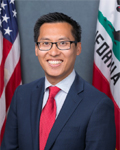
Ask Maddy about Vince Fong
Scope: california
Hi! I can help you understand Vince Fong's legislative record. What would you like to know?
Try one of these
i
Maddy answers using official bill text and legislative records. Always verify before sharing.
Sources cited inline