

Existing law, the Knox-Keene Health Care Service Plan Act of 1975 (Knox-Keene) , provides for the licensure and regulation of health care service plans by the Department of Managed Health Care and makes a willful violation of the act a crime. Existing law provides for the regulation of health insurers by the Department of Insurance. Existing law authorizes a health care service plan or health insurer to require step therapy if there is more than one drug that is appropriate for the treatment of a medical condition, as specified. Existing law requires a health care service plan or health insurer to expeditiously grant a step therapy exception request if the health care provider submits justification and supporting clinical documentation, as specified. Under existing law, if a health care service plan or other related entity fails to notify a prescribing provider of its coverage determination within a prescribed time period after receiving a prior authorization or step therapy exception request the prior authorization or step therapy exception request is deemed approved for the duration of the prescription. Existing law excepts contracts entered into under specified medical assistance programs from these time limit requirements. Existing law permits a health care provider or prescribing provider to appeal a denial of a step therapy exception request for coverage of a nonformulary drug, a prior authorization request, or a step therapy exception request, consistent with the current utilization management processes of the health care service plan or health insurer. Existing law also permits an enrollee or insured, or the enrollee's or insured's designee or guardian, to appeal a denial of a step therapy exception request for coverage of a nonformulary drug, prior authorization request, or step therapy exception request by filing a grievance under a specified provision. This bill would require health care service plan's or health insurer's utilization management process to ensure that an appeal of a denial of an exception request is reviewed by a clinical peer of the health care provider or prescribing provider, as specified. The bill would define the term "clinical peer" for these purposes. The bill would require health care service plans and health insurers that require step therapy or prior authorization to maintain specified information for at least 10 years, including, but not limited to, the number of exception requests for coverage of a nonformulary drug, step therapy exception requests, and prior authorization requests received by the plan or insurer and, upon request, to provide the information in a deidentified format to the Department of Managed Health Care or the Insurance Commissioner, as appropriate. Because a violation of certain of the bill's requirements by a health care service plan would be a crime, the bill would impose a state-mandated local program. The California Constitution requires the state to reimburse local agencies and school districts for certain costs mandated by the state. Statutory provisions establish procedures for making that reimbursement. This bill would provide that no reimbursement is required by this act for a specified reason.
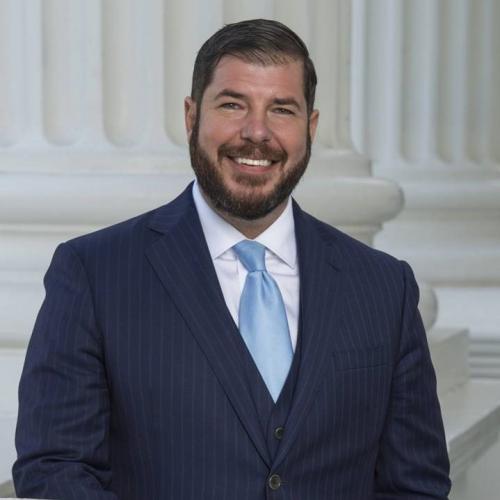
Asm. Joaquin Arambula
Sponsored bills
Existing law provides for the Medi-Cal program, which is administered by the State Department of Health Care Services, under which qualified low-income individuals receive health care services. The Medi-Cal program is, in part, governed and funded by federal Medicaid program provisions. Under existing law, Medi-Cal services may be provided pursuant to contracts with various types of managed care health plans, including through a county organized health system. Under existing law, in-person contact between a health care provider and a patient is not required under the Medi-Cal program for services appropriately provided through telehealth. Existing law provides that neither face-to-face contact nor a patient's physical presence on the premises of an enrolled community clinic is required for services provided by the clinic to a Medi-Cal beneficiary during or immediately following a proclamation declaring a state of emergency. Existing law defines "immediately following" for this purpose to mean up to 90 days following the termination of the proclaimed state of emergency, unless there are extraordinary circumstances. Under existing law, federally qualified health center (FQHC) services and rural health clinic (RHC) services are covered benefits under the Medi-Cal program, to be reimbursed, to the extent that federal financial participation is available, to providers on a per-visit basis. "Visit" is defined as a face-to-face encounter between an FQHC or RHC patient and any of specified health care professionals. Under existing law, "visit" also includes an encounter between an FQHC or RHC patient and specified medical professionals when services delivered through that interaction meet the applicable standard of care. Existing law prohibits an FQHC or RHC from establishing a new patient relationship using an audio-only synchronous interaction and authorizes the department to provide specific exceptions to that prohibition, developed in consultation with affected stakeholders and published in departmental guidance. This bill would authorize the department to authorize an FQHC or RHC to establish a new patient relationship using an audio-only synchronous interaction when the visit is related to sensitive services, as defined, and authorize an FQHC or RHC to establish a new patient relationship using an audio-only synchronous interaction when the patient requests an audio-only modality or attests they do not have access to video. Existing law provides that face-to-face contact is not required when covered health care services are provided by video synchronous interaction, audio-only synchronous interaction, remote patient monitoring, or other permissible virtual communication modalities when those services and settings meet certain criteria. Existing law, effective as specified, requires a provider furnishing services via audio-only synchronous interaction to also offer those same health care services via video synchronous interaction to preserve beneficiary choice. Existing law authorizes the department to provide specific exceptions to that requirement based on a Medi-Cal provider's access to requisite technologies, as specified. Existing law also prohibits a health care provider from establishing a new patient relationship with a Medi-Cal beneficiary via, among other interactions, telephonic (audio-only) synchronous interaction. Existing law authorizes the department to provide specific exceptions to that prohibition, as specified. This bill would authorize the department to take into consideration the availability of broadband access when providing those specific exceptions. The bill would authorize the department to authorize a health care provider to establish a new patient relationship using an audio-only synchronous interaction when the visit is related to sensitive services, as defined, and authorize a health care provider to establish a new patient relationship using an audio-only synchronous interaction when the patient requests an audio-only modality or attests they do not have access to video. This bill would incorporate additional changes to Section 14132.100 of the Welfare and Institutions Code proposed by SB 966 to be operative only if this bill and SB 966 are enacted and this bill is enacted last.
Existing law provides for various services for individuals who are blind, including authorization for the Department of Rehabilitation to appoint counselor-teachers to provide individual guidance and training that will enable adult individuals who are blind adjust to daily living in the home and the community. Existing law requires a counselor-teacher to teach an adult individual who is blind reading and writing of braille, typing, travel techniques, and household arts and crafts in accordance with the needs of the blind person. This bill would eliminate the requirement for a counselor-teacher to teach typing and household arts and crafts, and instead would require the counselor-teacher to teach independent living skills and to provide assistive technology training to an adult individual who is blind. Existing federal law establishes the Independent Living Services for Older Individuals Who Are Blind program, under which funds are awarded to states to provide independent living services to individuals who are 55 years of age or older and whose severe visual impairment makes competitive employment difficult to obtain, but for whom independent living goals are feasible. Pursuant to this federal program, the state Department of Rehabilitation administers the Older Individuals Who Are Blind program, which provides grants to specified organizations across the state to provide services to visually impaired individuals who are 55 years of age and older, to assist them to live independently. Other federal law, the Rehabilitation Act of 1973, among other things, awards grants to states for vocational rehabilitation services for individuals with disabilities. This bill would require the department to establish a grant program to provide services to promote independent living to adults who are blind or have low vision, and who are not eligible to receive vocational rehabilitation services pursuant to the federal Rehabilitation Act of 1973. The bill would require the department to award grants to private organizations with demonstrated expertise in serving adults who are blind or have low vision. The bill would authorize the department to select private organizations awarded grants under the most recent solicitation of grantees under the state's Older Individuals who are Blind program without using a competitive awards process. The bill would require the department to implement the program subject to an appropriation of funds in the annual Budget Act or through the use of any other funds already made available for the purposes described by the bill. The bill would eliminate an obsolete funding requirement in a related provision.
Existing law, the California Emergency Services Act, authorizes use of the Emergency Alert System to inform the public of local, state, and national emergencies. Existing law requires a law enforcement agency to activate the Emergency Alert System within the appropriate area if that agency determines that a child 17 years of age or younger, or an individual with a proven mental or physical disability, has been abducted and is in imminent danger of serious bodily injury or death, and there is information available that, if disseminated to the general public, could assist in the safe recovery of that person. Existing law also authorizes the issuance and coordination of a Blue Alert following an attack upon a law enforcement officer or a Silver Alert relating to a person who is 65 years of age or older who is reported missing. This bill would authorize a law enforcement agency to request the Department of the California Highway Patrol to activate a "Feather Alert," as defined, if specified criteria are satisfied with respect to an endangered indigenous person who has been reported missing under unexplained or suspicious circumstances. The bill would require the department, if it concurs that specified requirements are met, to activate a Feather Alert within the appropriate geographical area requested by the investigating law enforcement agency and to assist the agency by disseminating specified alert messages and signs. The bill would require the department to create and submit a report to the Governor's Office and the Legislature that includes an evaluation of the notification system established pursuant to these provisions no later than January 1, 2027. The bill would also make related legislative findings and declarations.
Existing law establishes the Natural Resources Agency, which consists of various departments and commissions, including the Department of Conservation, Department of Parks and Recreation, and State Lands Commission. Existing law vests in the agency various powers, including those related to conservation of lands. Pursuant to the agency's general authority, the agency established the California Advisory Committee on Geographic Names to be a liaison to the United States Board on Geographic Names. The duties, powers, and responsibilities of the committee are established by its internal charter. Commencing on January 1, 2025, this bill would require the term "squaw" to be removed from all geographic features and place names in the state. The bill would require the Natural Resources Agency to direct the committee to revise its existing charter to perform specified responsibilities, including notifying public agencies, as defined, of each geographic feature and place name that includes the term "squaw." The bill would require the committee to choose a replacement name, under its discretion, and in consultation with advisory bodies, if the local governing body fails to recommend a replacement name within the allotted 180 days. The bill would require the committee to work in formal consultation with California Native American tribes on the list maintained by the Native American Heritage Commission to establish a procedure for receiving name recommendations. This bill would require public agencies to no longer replace signs, interpretive markers, or any other marker or printed material with the discontinued name containing the word "squaw." The bill would require each agency or local governing body to ensure that map updates and sign replacements use the new name. Commencing January 1, 2025, the bill would require the committee to annually report to the Legislature regarding the implementation of these provisions, and would require that report to include specified information, including each geographic feature and place name that uses the term "squaw" in that public agency's jurisdiction and the proposed replacement name. By imposing requirements on local governments to remove the term "squaw" from geographic features and place names and to report specified information to the committee, this bill would impose a state-mandated local program. The California Constitution requires the state to reimburse local agencies and school districts for certain costs mandated by the state. Statutory provisions establish procedures for making that reimbursement. This bill would provide that, if the Commission on State Mandates determines that the bill contains costs mandated by the state, reimbursement for those costs shall be made pursuant to the statutory provisions noted above.
Existing law establishes the Medi-Cal program, which is administered by the State Department of Health Care Services and under which qualified low-income individuals receive health care services through various delivery systems, including fee-for-service and managed care. The Medi-Cal program is, in part, governed and funded by federal Medicaid program provisions. Under federal law, covered services include "preventive services," which are defined as, services recommended by a physician or other licensed practitioner of the healing arts acting within the scope of authorized practice under state law to prevent disease, disability, and other health conditions or their progression, prolong life, and promote physical and mental health and efficiency. On July 26, 2022, the federal Centers for Medicare and Medicaid Services approved the department's Medicaid State Plan Amendment to add community health workers as a preventive service. This bill would codify the requirement that community health worker services be a covered Medi-Cal benefit. The bill would require a Medi-Cal managed care plan to engage in outreach and education efforts to enrollees, as determined by the department, but that would include, at a minimum, specified information to enrollees, including, among other things, a description of the community health worker services benefit and a list of providers that are authorized to refer an enrollee to community health worker services. The bill would require the department, through existing and regular stakeholder processes, to inform stakeholders about, and accept input from stakeholders on, implementation of the community health worker services benefit. The bill would be implemented only to the extent that federal financial participation is available and not otherwise jeopardized. The bill would authorize the department to implement, interpret, or make specific this bill by means of policy letters, provider bulletins, or other similar instructions, without taking any further regulatory action.
Existing law authorizes the Department of Motor Vehicles to issue and renew driver's licenses, as specified. Existing law also authorizes the department to issue identification cards. Existing law requires the department to issue a restricted driver's license to an eligible applicant who is unable to submit satisfactory proof that their presence in the United States is authorized under federal law if they meet all other qualifications for licensure and provide satisfactory proof of identity and California residency. Existing law also authorizes the department to issue an identification card to a person documented under the federal Deferred Action for Childhood Arrivals program. This bill would, among other things, require the department to, by no later than July 1, 2027, issue a restricted identification card to an eligible applicant who is unable to submit satisfactory proof that their presence in the United States is authorized under federal law if they provide satisfactory proof of identity and California residency, as specified. Existing law requires the restricted licenses and identification cards to include a recognizable feature on the front of the cards, such as the letters "DP" instead of "DL" and "IC" instead of "ID." This bill would delete the provision requiring a recognizable feature on the cards. Existing law prohibits California law enforcement agencies from cooperating, as specified, with federal immigration authorities. Existing law prohibits the disclosure of certain documents provided by an applicant to the department, except in response to a subpoena for individual records in a criminal proceeding or a court order, or in response to a law enforcement request to address an urgent health or safety need, as specified. This bill would specify that immigration enforcement, as defined, does not constitute an urgent health and safety need for those purposes, and would prohibit a government agency or department, law enforcement agency, commercial entity, or other person from obtaining, accessing, using, or otherwise disclosing, noncriminal history information maintained by the department, for the purpose of immigration enforcement. The bill would make other conforming changes. This bill would incorporate additional changes to Section 12926 of the Government Code proposed by SB 523 to be operative only if this bill and SB 523 are enacted and this bill is enacted last.
Existing law generally designates local air districts with primary responsibility for the control of air pollution from all sources other than vehicular sources. Existing law requires the State Air Resources Board to coordinate air pollution control activities throughout the state and to ensure that the entire state is, or will be, in compliance with state standards, to review a district's attainment plan, and any revised plan, to determine whether the plan will achieve and maintain the state's ambient air quality standards by the earliest practicable date, to review the rules, regulations, and programs submitted by an air district to determine whether they are sufficiently effective to achieve and maintain the state ambient air quality standards, and to review the enforcement practices of a district to determine whether reasonable action is being taken to enforce the district's programs, rules, and regulations. Existing law authorizes the state board, if, after a public hearing, it finds that a program or the rules and regulations of an air district will not likely achieve and maintain the state's ambient air quality standards, to establish a program, or portion thereof, or rules and regulations it deems necessary to enable the air district to achieve and maintain ambient air quality standards. This bill would require the state board, if the San Joaquin Valley Air Pollution Control District does not receive a determination of attainment from the United States Environmental Protection Agency for a national ambient air quality standard established by the agency pursuant to the federal Clean Air Act by the applicable attainment date for that standard, to undertake certain activities, including coordinating with the district and community-based organizations in the district and conducting outreach to under-resourced communities in the district to identify gaps in the state implementation plan and the district's attainment plan, rules, regulations, programs, and enforcement practices that impact the district's ability to attain and maintain that ambient air quality standard. This bill would require the state board to conduct at least one public hearing in the district regarding the district's attainment plan, and would require the state board to solicit public comment on specified topics, including the state board's review of the district's attainment plan, rules, regulations, programs, and enforcement practices, data regarding stationary sources in the district, including monitoring and enforcement of those sources, and the state board's plan to coordinate with the district to provide additional monitoring and enforcement capacity for stationary sources in the district. The bill would require the state board, after the final public hearing, to draft, and post on its internet website, a report that includes an outline of the program, or portion thereof, or rules or regulations that the state board deems necessary for the district to attain and maintain that national ambient air quality standard and a summary of, and response to, all public comments received by the state board. The bill would require the state board, after finalizing the report and based on the findings in the report, to develop the program, or portion thereof, or rules or regulations that the state board deems necessary for the district to attain and maintain that national ambient air quality standard. This bill would make legislative findings and declarations as to the necessity of a special statute for the San Joaquin Valley Air Pollution Control District.
Existing law requires the board of supervisors, following a county's decision to elect its board using district-based elections or following each decennial federal census for a county whose board is already elected using district-based elections, by ordinance or resolution, to adjust the boundaries of all of the supervisorial districts of the county so that the districts are as nearly equal in population as possible and comply with applicable federal law, and specifies the procedures the board of supervisors must follow in adjusting those boundaries. Existing law establishes the Independent Redistricting Commission in the County of San Diego and the Citizens Redistricting Commission in the County of Los Angeles, which are charged with adjusting the supervisorial district boundaries for their respective counties. This bill would establish the Citizens Redistricting Commission in the County of Fresno, which would be charged with adjusting the boundary lines of the districts of the Board of Supervisors of the County of Fresno in accordance with specified criteria. The commission would consist of 14 members who meet specified qualifications. By increasing the duties on local officials, the bill would impose a state-mandated local program. This bill would make legislative findings and declarations as to the necessity of a special statute for the unique circumstances facing the County of Fresno. The California Constitution requires the state to reimburse local agencies and school districts for certain costs mandated by the state. Statutory provisions establish procedures for making that reimbursement. This bill would provide that, if the Commission on State Mandates determines that the bill contains costs mandated by the state, reimbursement for those costs shall be made pursuant to the statutory provisions noted above.
Existing law establishes the Medi-Cal program, which is administered by the State Department of Health Care Services and under which qualified low-income individuals receive health care services, including certain behavioral health services. The Medi-Cal program is, in part, governed and funded by federal Medicaid program provisions. This bill would require the department to establish a pilot project to provide funding for targeted outreach by participating counties to Medi-Cal beneficiaries who are blind or have low vision, regarding behavioral health services that are covered by the Medi-Cal program. The bill would require that the pilot project be implemented in at least 6 counties that have agreed to participate, with at least one of those counties being in northern California, one in central California, and one in southern California, as specified. The bill would require the participating counties to conduct outreach, as specified, and report certain information to the department and the Legislature no later than December 31, 2025. The bill would make related legislative findings. The bill would condition implementation of the pilot project on an appropriation by the Legislature, receipt of any necessary federal approvals, and the availability of federal financial participation.