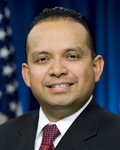
Signed into law
·
California Senate
·
Co-sponsor
Child custody: immigration.
(1) Under existing law, a child who is removed from the physical custody of his or her parent or parents in dissolution, dependency, or probate guardianship proceedings may be placed with a parent, relative, legal guardian, or other specified persons or in specified placement homes or facilities. When a child is placed with his or her relative during dependency proceedings and the relative is not a licensed or certified foster parent, existing law requires a county social worker to visit the relative's home, prior to placing the child in that home, to ascertain the appropriateness of the placement. Existing law also requires the court or county social worker to initiate a state and federal criminal records check of the relative through the California Law Enforcement Telecommunications System as part of the assessment. This bill would permit a court to place a child in any of those proceedings with a parent, legal guardian, or relative regardless of the immigration status of the parent, legal guardian, or relative. This bill would also permit a relative's foreign consulate identification card or foreign passport to be used for initiating the criminal records and fingerprint clearance checks. To the extent this bill would impose additional duties on county welfare departments, this bill would create a state-mandated local program. (2) Existing law sets forth the procedure for terminating the parental rights of a dependent child, including regular review hearings before a court may order a hearing to terminate parental rights. Under existing law, a court may continue these review hearings if it finds that there is a substantial probability that the child will be returned to the physical custody of his or her parent or legal guardian and safely maintained in the home within the extended period of time or that reasonable services have not been provided to the parent or legal guardian. This bill would authorize a court to extend the review hearing periods following consideration of the parent's circumstances if a parent has been arrested and issued an immigration hold, detained by the United States Department of Homeland Security, or deported to his or her country of origin, and, under these circumstances would authorize a court to continue the case only if the court finds that there is a substantial probability, as defined, that the child will be returned to the physical custody of his or her parent and safely maintained in the home within the extended time period or that reasonable services have not been provided to the parent or guardian. (3) Existing law establishes the State Department of Social Services, which oversees the administration of county public social services, including child welfare services. This bill would require the State Department of Social Services to provide guidance on best practices and to facilitate an exchange of information and best practices among counties on an annual basis, beginning no later than January 1, 2014, on establishing memoranda of understanding with foreign consulates in juvenile court cases, including procedures for contacting a consulate, accessing a child's documentation, locating a detained parent, assisting in family reunification after a parent has been deported, aiding the safe transfer of a child to the parent's country of origin, and communicating with relevant departments and services in a parent's country of origin, and procedures to assist children in juvenile court cases who are eligible for special immigrant juvenile status and other specified visas. (4) The bill would change references in the above-described provisions from the United States Immigration and Customs Enforcement to the United States Department of Homeland Security, and would make other technical, nonsubstantive changes. (5) This bill would incorporate additional changes in Section 3040 of the Family Code proposed by SB 1476 that would become operative only if SB 1476 and this bill are both chaptered and become effective on or before January 1, 2013, and this bill is chaptered last. (6) This bill would incorporate additional changes in Section 361 of the Welfare and Institutions Code proposed by AB 1712 and AB 2060 that would become operative only if either or both of those bills are chaptered and become effective on or before January 1, 2013, and this bill is chaptered last. (7) This bill would incorporate additional changes in Section 361.2 of the Welfare and Institutions Code proposed by AB 2209 that would become operative only if AB 2209 and this bill are both chaptered and become effective on or before January 1, 2013, and this bill is chaptered last. (8) This bill would incorporate additional changes in Sections 361.5 and 16501.1 of the Welfare and Institutions Code proposed by AB 1712 and SB 1521 that would become operative only if either or both of these bills are chaptered and become effective on or before January 1, 2013, and this bill is chaptered last. (9) This bill would incorporate additional changes in Sections 366.21, 366.22, and 366.25 of the Welfare and Institutions Code proposed by AB 1712 and AB 2292 that would become operative only if either or both of these bills are chaptered and become effective on or before January 1, 2013, and this bill is chaptered last. (10) This bill would incorporate additional changes in Section 388 of the Welfare and Institutions Code proposed by AB 1712 that would become operative only if AB 1712 and this bill are both chaptered and become effective on or before January 1, 2013, and this bill is chaptered last. (11) The California Constitution requires the state to reimburse local agencies and school districts for certain costs mandated by the state. Statutory provisions establish procedures for making that reimbursement. This bill would provide that, if the Commission on State Mandates determines that the bill contains costs mandated by the state, reimbursement for those costs shall be made pursuant to these statutory provisions.