

Relative to Valley Fever Awareness Month.
This measure would declare August 2023 as Valley Fever Awareness Month.
Signed into law Sep 8, 2023
1 co-sponsor
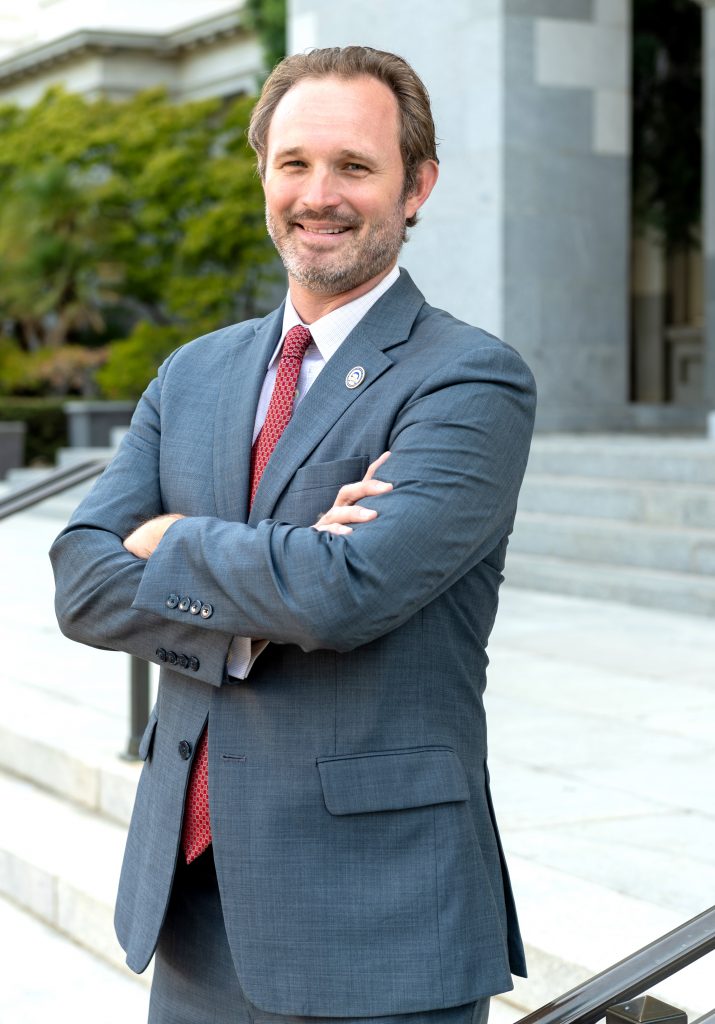
This measure would declare August 2023 as Valley Fever Awareness Month.
This measure would designate the month of June 2023 as Healthy Homes Awareness Month.
This measure would recognize July 28 as World Hepatitis Day and would urge all California institutions, nonprofit organizations, health care organizations, businesses, community leaders, and residents to ensure screenings for hepatitis B and C, vaccinations for hepatitis B, and treatment become the standard of care.
This measure would designate October 23, 2023, as Aromatic L-Amino Acid Decarboxylase (AADC) Deficiency Awareness Day in the state.
This measure would recognize August 15, 2023, as India's Independence Day and urge all Californians to join in celebrating India's independence.
This measure would proclaim August 2023 as Breastfeeding Awareness Month of 2023 in California. The measure would recognize the unique benefits that breastfeeding provides, as specified, and would affirm that Californians should work to ensure that barriers to initiation and continuation of breastfeeding are removed. The measure would encourage Californians to work together to explore ways to, among other things, improve women's access to breastfeeding support services in medical, social, and employment settings.
Existing law generally requires the State Department of Public Health to license, inspect, and regulate health facilities, defined to include, among other types of health facilities, an acute psychiatric hospital. Existing law generally requires the State Department of Social Services to license, inspect, and regulate various types of care facilities, including, among others, a community crisis home. Existing law requires the State Department of Health Care Services to license and regulate facilities that provide residential nonmedical services to adults who are recovering from problems related to alcohol, drug, or alcohol and drug misuse or abuse, and who need alcohol, drug, or alcohol and drug recovery treatment or detoxification services. This bill would require, by January 1, 2026, the State Department of Health Care Services, in consultation with the State Department of Public Health and the State Department of Social Services, and by conferring with specified stakeholders, to develop a real-time, internet-based database to collect, aggregate, and display information about beds in specified types of facilities, such as chemical dependency recovery hospitals, acute psychiatric hospitals, and mental health rehabilitation centers, among others, to identify the availability of inpatient and residential mental health or substance use disorder treatment. The bill would require the database to include a minimum of specific information, including the contact information for a facility's designated employee, the types of diagnoses or treatments for which the bed is appropriate, and the target populations served at the facility, and have the capacity to, among other things, enable searches to identify beds that are appropriate for individuals in need of inpatient or residential mental health or substance use disorder treatment. This bill would authorize the department to impose a plan of correction or assess penalties against a facility that fails to submit data accurately, timely, or as otherwise required and would establish a process for facilities to appeal these penalties. The bill would create the Available Care for Inpatient and Residential Mental Health or Substance Use Disorder Treatment Database Maintenance and Oversight Fund for the receipt of any penalties. Because the bill would continuously appropriate moneys in the fund for administrative costs of implementing the database, it would create an appropriation.
(1) Existing law prohibits each school district offering instruction in any of grades 9 to 12, inclusive, that provides on-campus access to employers, from prohibiting access to the military services. Existing law defines "military services" for these purposes to include the United States Army, the United States Navy, the United States Air Force, the United States Marine Corps, the United States Coast Guard, or any reserve component of those federal forces, the National Guard, the State Guard, and the active militia. This bill would additionally prohibit each county office of education and charter school offering instruction in any of grades 9 to 12, inclusive, that provides on-campus access to employers, from prohibiting access to the military services. The bill would expressly include the United States Space Force in that definition. (2) Existing law ratifies the Interstate Compact on Educational Opportunity for Military Children to, among other things, facilitate the enrollment, placement, advancement, and transfer of the academic records of the children of military families for the purpose of removing barriers to their educational success due to the frequent moves and deployment of their parents. The compact defines "Uniformed Services" to mean the United States Army, Navy, Air Force, Marine Corps, or Coast Guard, as well as the Commissioned Corps of the National Oceanic and Atmospheric Administration and the United States Public Health Services. This bill would include the United States Space Force in the definition of Uniformed Services for purposes of the compact. To the extent the change to the definition imposes additional duties on local educational agencies, the bill would impose a state-mandated local program. (3) The California Constitution requires the state to reimburse local agencies and school districts for certain costs mandated by the state. Statutory provisions establish procedures for making that reimbursement. This bill would provide that, if the Commission on State Mandates determines that the bill contains costs mandated by the state, reimbursement for those costs shall be made pursuant to the statutory provisions noted above.