

Passed Feb 8, 2024
1 co-sponsor
Total votes
27,305
all sessions
Attendance
89%
2,334 missed
Lower than 85% of chamber peers
With party
97%
of cast votes
Near the chamber average
Bipartisan score
2%
crosses aisle rarely
Near the chamber average
Sponsored
2,099
bills & resolutions
Higher than 91% of chamber peers
Committees
5
assignments
2,099 bills and resolutions
Sponsored bills
Total
2,099
Primary
217
Co-sponsor
1,882
This page
2,099
matching current filters
Sexual assault forensic evidence: testing.
Existing law requires law enforcement agencies to either submit sexual assault forensic evidence received on or after January 1, 2016, to a crime lab within 20 days after it is booked into evidence or to ensure that a rapid turnaround deoxyribonucleic acid (DNA) program is in place, as specified. Existing law also requires a crime lab that receives sexual assault forensic evidence on or after January 1, 2016, to either process the evidence, create DNA profiles when able, and upload qualifying DNA profiles into the Combined DNA Index System, as specified, or transmit the sexual assault forensic evidence to another crime lab as soon as practically possible, but no later than 30 days after receiving the evidence, for processing of the evidence for the presence of DNA. This bill would require a law enforcement agency, for any sexual assault forensic evidence connected to a reported crime received by the law enforcement agency prior to January 1, 2016, to submit that evidence to the crime lab on or before January 31, 2025. The bill would additionally require a crime lab, for any sexual assault evidence kit received by a law enforcement agency prior to January 1, 2016, and submitted to the crime lab on or after January 1, 2024, to process that evidence kit no later than January 31, 2026. Because the bill would impose a higher level of service on local law enforcement agencies in processing that evidence, it would impose a state-mandated local program. The California Constitution requires the state to reimburse local agencies and school districts for certain costs mandated by the state. Statutory provisions establish procedures for making that reimbursement. This bill would provide that, if the Commission on State Mandates determines that the bill contains costs mandated by the state, reimbursement for those costs shall be made pursuant to the statutory provisions noted above.
Failed Feb 1, 2024
1 co-sponsor
Lifetime hunting and sport fishing licenses: Gold Star Family members.
Existing law requires the Department of Fish and Wildlife to issue lifetime hunting licenses and lifetime sport fishing licenses, and grants certain lifetime privileges to holders of those licenses, upon the one-time payment of specified fees. This bill would require, upon application to the department, lifetime hunting licenses and lifetime sport fishing licenses to be issued at no cost to Gold Star Family members who meet certain eligibility requirements.
Failed Feb 1, 2024
1 co-sponsor
Gender identity: parental notification.
Existing law provides that parents and guardians of children enrolled in public schools have the right, and should have the opportunity, as mutually supportive and respectful partners in the education of their children within the public schools, to be informed by the school, and to participate in the education of their children, as specified to include, among other things, having access to the school records of their child. Existing law authorizes a minor who is 12 years of age or older to consent to mental health treatment or counseling services, notwithstanding any provision of law to the contrary, if, in the opinion of the attending professional person, the minor is mature enough to participate intelligently in those services, or to outpatient mental health treatment or counseling services if the foregoing is true and the minor would present a danger of serious physical or mental harm to self or to others without the mental health treatment or counseling or residential shelter services, or is the alleged victim of incest or child abuse. Existing law requires the mental health treatment or counseling of a minor authorized by these provisions to include involvement of the minor's parent or guardian unless, in the opinion of the professional person who is treating or counseling the minor, the involvement would be inappropriate. This bill would, notwithstanding the consent provisions described above, provide that a parent or guardian has the right to be notified in writing within 3 days from the date any teacher, counselor, or employee of the school becomes aware that a pupil is identifying at school as a gender that does not align with the child's sex on their birth certificate, other official records, or sex assigned at birth, using sex-segregated school programs and activities, including athletic teams and competitions, or using facilities that do not align with the child's sex on their birth certificate, other official records, or sex assigned at birth. The bill would state legislative intent related to these provisions. By imposing additional duties on public school officials, the bill would impose a state-mandated local program. The California Constitution requires the state to reimburse local agencies and school districts for certain costs mandated by the state. Statutory provisions establish procedures for making that reimbursement. This bill would provide that, if the Commission on State Mandates determines that the bill contains costs mandated by the state, reimbursement for those costs shall be made pursuant to the statutory provisions noted above.
Failed Feb 1, 2024
1 co-sponsor
Intradistrict and interdistrict transfers: low-performing pupils.
Existing law authorizes the governing boards of 2 or more school districts to enter into an agreement, for a term not to exceed 5 school years, for the interdistrict attendance of pupils who are residents of the school districts. Existing law requires a school district of residence to approve an intradistrict transfer request for a victim of an act of bullying, as provided. If there is no available school for an intradistrict transfer, existing law authorizes a victim of an act of bullying to apply for an interdistrict transfer and prohibits a school district of residence from prohibiting that transfer if the school district of proposed enrollment approves the application for transfer. This bill would require a school district of residence to also approve an intradistrict transfer request for a low-performing pupil, as defined, of that school district if the school of attendance has been identified for comprehensive support and improvement or identified as low performing pursuant to specified federal laws, as provided. If there is no available school for an intradistrict transfer, the bill would authorize a low-performing pupil of a school district, if the school of attendance has been identified for comprehensive support and improvement or identified as low performing pursuant to specified federal laws, to apply for an interdistrict transfer and would prohibit the school district of residence from prohibiting that transfer if the school district of proposed enrollment approves the application for transfer. The bill would prohibit a school district of proposed enrollment from approving those transfer requests if the requested school has been identified for comprehensive support and improvement or identified as low performing pursuant to specified federal laws. By requiring school districts to approve intradistrict transfers for certain pupils, the bill would impose a state-mandated local program. The California Constitution requires the state to reimburse local agencies and school districts for certain costs mandated by the state. Statutory provisions establish procedures for making that reimbursement. This bill would provide that, if the Commission on State Mandates determines that the bill contains costs mandated by the state, reimbursement for those costs shall be made pursuant to the statutory provisions noted above.
Failed Feb 1, 2024
1 co-sponsor
Goat herders: labor protections.
Existing law establishes specified labor protections for goat herders, as defined, relating to wages, meal and rest periods, lodging, and other conditions of employment. Existing law imposes civil penalties, as prescribed, for violations of these provisions. Existing law requires the Labor Commissioner, on or before January 1, 2024, to issue a report to the Legislature on wage violations, including minimum wage and overtime, affecting sheepherders and goat herders. These goat herder provisions are repealed on January 1, 2024. This bill would delete the repeal language, thereby making the provisions operative indefinitely.
Failed Feb 1, 2024
1 co-sponsor
Encampments: penalties.
Under existing law, a person who lodges in a public or private place without permission is guilty of disorderly conduct, a misdemeanor. Existing law also provides that a person who willfully and maliciously obstructs the free movement of any person on any street, sidewalk, or other public place is guilty of a misdemeanor. This bill would prohibit a person from camping, as defined, in a street, sidewalk, or other public property within 500 feet of a school. The bill would authorize a city attorney, county counsel, or district attorney to bring an action for a violation of this prohibition. The bill would make a person who violates this prohibition liable for a civil fine of not more than $10 in an action brought by the city attorney of the city or the county counsel or the district attorney of the county where the violation occurred.
Failed Feb 1, 2024
1 co-sponsor
Taxation: renter's credit.
The Personal Income Tax Law authorizes various credits against the taxes imposed by that law, including a credit for qualified renters in the amount of $120 for spouses filing joint returns, heads of household, and surviving spouses if adjusted gross income is $50,000, as adjusted, or less, and in the amount of $60 for other individuals if adjusted gross income is $25,000, as adjusted, or less. Existing law requires the Franchise Tax Board to annually adjust for inflation these adjusted gross income amounts. For 2021, the adjusted gross income limit is $87,066 and $43,533, respectively. Existing law establishes the continuously appropriated Tax Relief and Refund Account in the General Fund and provides that payments required to be made to taxpayers or other persons from the Personal Income Tax Fund are to be paid from that account. This bill, for taxable years beginning on or after January 1 of the taxable year that includes the date on which funding is first authorized for purposes of this bill and for the succeeding 4 taxable years, and only when specified in a bill relating to the Budget Act, would increase the credit amount to $2,000 for spouses filing joint returns, heads of households, and surviving spouses and $1,000 for other individuals. In the event the increased credit amount is not specified in a bill relating to the Budget Act, the existing credit amounts, as described above, would be the credit amounts for that taxable year. The bill would require the Franchise Tax Board to annually recompute the credit amounts for inflation for taxable years following the first year in which the increased credit is operative, except as provided. The bill, for credits allowable for taxable years in which the above-described increased credit is operative, would provide that the credit amount in excess of the qualified renter's liability would be refundable and paid from the Tax Relief and Refund Account to the qualified renter upon appropriation by the Legislature. Existing law requires any bill authorizing a new tax credit to contain, among other things, specific goals, purposes, and objectives that the tax credit will achieve, detailed performance indicators, and data collection requirements. The bill would provide findings and declarations relating to the goals, purposes, and objectives of this credit. This bill would take effect immediately as a tax levy.
Failed Feb 1, 2024
0 co-sponsors
Housing development: Camp Fire Housing Assistance Act of 2019.
Existing law, the Camp Fire Housing Assistance Act of 2019, authorizes a development proponent to submit an application for a residential development, or mixed-use development that includes residential units with a specified percentage of space designated for residential use, within the territorial boundaries or a specialized residential planning area identified in the general plan of, and adjacent to existing urban development within, specified cities that is subject to a streamlined, ministerial approval process and not subject to a conditional use permit if the development satisfies specified objective planning standards. Existing law requires a local government to notify the development proponent in writing if the local government determines that the development conflicts with any of those objective standards by a specified time; otherwise, the development is deemed to comply with those standards. Existing law repeals these provisions as of January 1, 2026. This bill would include the City of Chico within the list of specified cities. The bill would also extend the act until January 1, 2029. By imposing new duties on the City of Chico and by extending the duties of specified local agencies with respect to the streamlined, ministerial approval process described above, the bill would impose a state-mandated local program. This bill would include findings that changes proposed by this bill address a matter of statewide concern rather than a municipal affair and, therefore, apply to the City of Chico and the City of Oroville. The California Environmental Quality Act (CEQA) requires a lead agency, as defined, to prepare, or cause to be prepared, and certify the completion of, an environmental impact report on a project that it proposes to carry out or approve that may have a significant effect on the environment or to adopt a negative declaration if it finds that the project will not have that effect. CEQA also requires a lead agency to prepare a mitigated negative declaration for a project that may have a significant effect on the environment if revisions in the project would avoid or mitigate that effect and there is no substantial evidence that the project, as revised, would have a significant effect on the environment. CEQA does not apply to the approval of ministerial projects. By expanding the streamlined, ministerial approval process for certain housing developments to the City of Chico and by extending the streamlined, ministerial approval process for certain housing developments until January 1, 2029, this bill would expand the exemption for the ministerial approval of projects under CEQA. This bill would make legislative findings and declarations as to the necessity of a special statute for cities specified in the bill. The California Constitution requires the state to reimburse local agencies and school districts for certain costs mandated by the state. Statutory provisions establish procedures for making that reimbursement. This bill would provide that no reimbursement is required by this act for a specified reason.
Failed Feb 1, 2024
0 co-sponsors
Postsecondary education: safety: credible threats.
Existing law requires the governing board of each community college district, the Trustees of the California State University, the Board of Directors of the College of the Law, San Francisco, the Regents of the University of California, and the governing boards of postsecondary educational institutions receiving public funds for student financial assistance to require the appropriate officials at each campus to compile records of specified crimes and noncriminal acts reported to campus police, campus security personnel, campus safety authorities, or designated campus authorities. This bill would require each campus of the California Community Colleges and the California State University, and request each campus of the University of California, to take action after receiving a credible threat to student, faculty, or staff safety. The bill would require each campus after receiving a threat to student, faculty or staff safety to determine, through a third-party risk assessment, whether the threat is credible, as specified. The bill would require the campus, if the campus determines the threat is credible, to determine whether the individual poses an immediate threat to the physical health or safety of any student, or other individual on campus, which justifies their removal from campus. The bill would authorize a campus to impose interim measures to ensure school and student safety, as specified. By imposing new duties on community college districts the bill would create a state-mandated local program. The California Constitution requires the state to reimburse local agencies and school districts for certain costs mandated by the state. Statutory provisions establish procedures for making that reimbursement. This bill would provide that, if the Commission on State Mandates determines that the bill contains costs mandated by the state, reimbursement for those costs shall be made pursuant to the statutory provisions noted above.
Failed Feb 1, 2024
0 co-sponsors
Ask Maddy
·
AI policy assistant
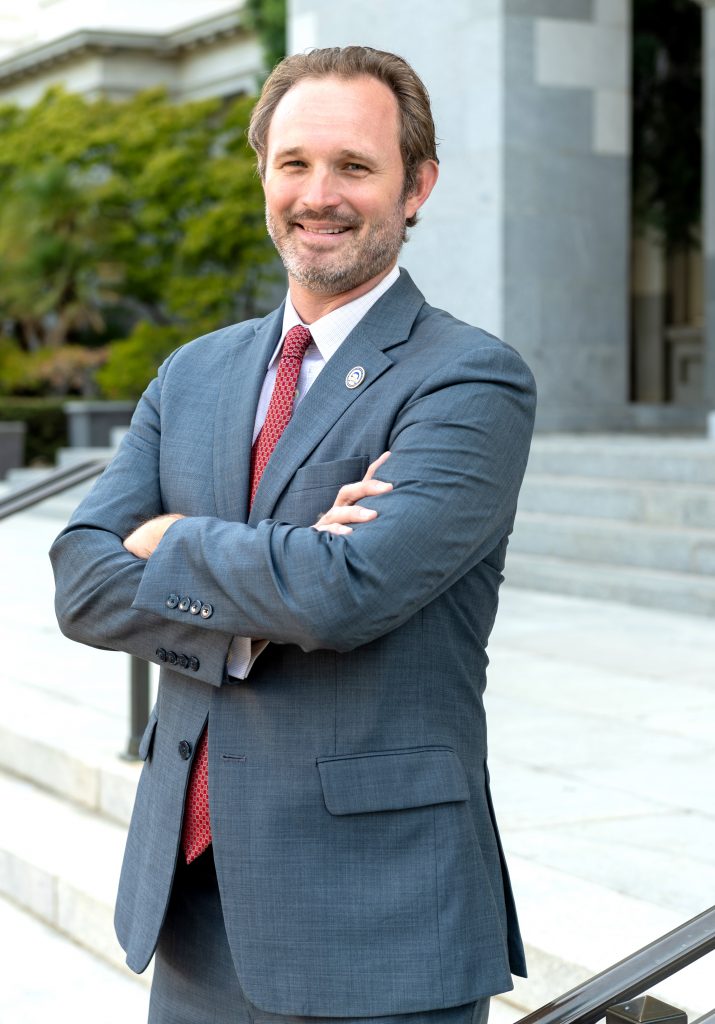
Ask Maddy about James Gallagher
Scope: california
Hi! I can help you understand James Gallagher's legislative record. What would you like to know?
Try one of these
i
Maddy answers using official bill text and legislative records. Always verify before sharing.
Sources cited inline