

Passed Apr 14, 2016
1 co-sponsor
Total votes
27,305
all sessions
Attendance
89%
2,334 missed
Lower than 85% of chamber peers
With party
97%
of cast votes
Near the chamber average
Bipartisan score
2%
crosses aisle rarely
Near the chamber average
Sponsored
2,099
bills & resolutions
Higher than 91% of chamber peers
Committees
5
assignments
2,099 bills and resolutions
Sponsored bills
Total
2,099
Primary
217
Co-sponsor
1,882
This page
2,099
matching current filters
Smartphones.
Existing law requires that a smartphone that is manufactured on or after July 1, 2015, and sold in California after that date, include a technological solution at the time of sale, which may consist of software, hardware, or both software and hardware, that, once initiated and successfully communicated to the smartphone, can render inoperable the essential features, as defined, of the smartphone to an unauthorized user when the smartphone is not in the possession of an authorized user. This bill would require a manufacturer or operating system provider of a smartphone sold or leased in California on or after January 1, 2017, that is unable to decrypted the smartphone pursuant to a state court order to be subject to a civil penalty of $2,500 for each instance in which the smartphone is unable to be decrypted. The bill would prohibit a manufacturer or operating system provider who has paid this civil penalty from passing any portion of the penalty on to purchasers of smartphones. The bill would authorize only the Attorney General or a district attorney to bring a civil suit to enforce these provisions. This bill would make findings and declarations related to smartphones and criminal activity.
In committee Apr 13, 2016
1 co-sponsor
Political Reform Act of 1974: Conflict of Interest Codes: public postsecondary educational institutions.
The Political Reform Act of 1974 requires every state and local government agency to adopt and promulgate a Conflict of Interest Code and requires each Conflict of Interest Code to include, among other things, a requirement that each designated employee file statements, as specified, disclosing reportable investments, business positions, interests in real property and income. Existing law prohibits a faculty member or academic department or other adopting entity at an institution of higher education from demanding or receiving anything of value, as specified, for adopting specific course materials required for coursework or instruction, except as specified, including royalties or other compensation from sales of course materials that include the instructor's writing or other work. This bill would require that the Conflict of Interest Code of each public postsecondary educational institution require an employee of that institution to disclose any item of value, any royalties, or any other compensation the employee receives as a result of making or influencing a decision to adopt specific course materials required for coursework or instruction. By requiring the revision of Conflict of Interest Codes for community colleges, the bill would impose a state-mandated local program. The California Constitution requires the state to reimburse local agencies and school districts for certain costs mandated by the state. Statutory provisions establish procedures for making that reimbursement. This bill would provide that, if the Commission on State Mandates determines that the bill contains costs mandated by the state, reimbursement for those costs shall be made pursuant to these statutory provisions. The Political Reform Act of 1974, an initiative measure, provides that the Legislature may amend the act to further the act's purposes upon a 23 vote of each house and compliance with specified procedural requirements. This bill would declare that it furthers the purposes of the act.
In committee Apr 13, 2016
1 co-sponsor
Court facilities: County of Colusa.
Existing law establishes the State Court Facilities Construction Fund for the planning, design, construction, rehabilitation, renovation, replacement, leasing, or acquisition of court facilities. Existing law levies a state court construction penalty on every criminal offense, as specified, to be deposited into the fund. Existing law requires, with specified exceptions, that 25% of moneys collected from a county for the fund be designated for implementation of trial court projects in that county. Existing law authorizes the board of supervisors to establish in the county treasury a Courthouse Construction Fund into which shall be deposited the amounts specified in the resolutions adopted by the board of supervisors, for the purpose of rehabilitating existing courtrooms, an existing courtroom building or buildings, or court facilities, for other uses if a new courtroom, a courtroom building or buildings, or court facilities are acquired, constructed, or financed. Existing law requires that any amount in a county's courthouse construction fund be transferred to the State Court Facilities Construction Fund at the later of specified dates. This bill would transfer $844,000 of the amount that was held in the Courthouse Construction Fund for the County of Colusa on December 31, 2009, to the State Court Facilities Construction Fund, and would appropriate that amount to the Judicial Council for the purpose of constructing or renovating facilities, as specified, located within the courthouse building in the County of Colusa that was transferred to state responsibility on March 24, 2009. This bill would make legislative findings and declarations as to the necessity of a special statute for the County of Colusa.
In committee Apr 12, 2016
0 co-sponsors
Bonds: transportation.
Existing law, the Safe, Reliable High-Speed Passenger Train Bond Act for the 21st Century, approved by the voters as Proposition 1A at the November 4, 2008, statewide general election, provides for the issuance of $9 billion in general obligation bonds for high-speed rail purposes and $950,000,000 for other related rail purposes. Article XVI of the California Constitution requires measures authorizing general obligation bonds to specify the single object or work to be funded by the bonds and further requires a bond act to be approved by a 23 vote of each house of the Legislature and a majority of the voters. This bill would provide that no further bonds shall be sold for high-speed rail purposes pursuant to the Safe, Reliable High-Speed Passenger Train Bond Act for the 21st Century, except as specifically provided with respect to an existing appropriation for high-speed rail purposes for early improvement projects in the Phase 1 blended system. The bill, subject to the above exception, would require redirection of the unspent proceeds received from outstanding bonds issued and sold for other high-speed rail purposes prior to the effective date of these provisions, upon appropriation, for use in retiring the debt incurred from the issuance and sale of those outstanding bonds. The bill, subject to the above exception, would also require the net proceeds of other bonds subsequently issued and sold under the high-speed rail portion of the bond act to be made available, upon appropriation, to fund projects in the State Highway Operation and Protection Program. The bill would make no changes to the authorization under the bond act for issuance of $950,000,000 for rail purposes other than high-speed rail. These provisions would become effective only upon approval by the voters at the next statewide election. This bill would declare that it is to take effect immediately as an urgency statute.
Failed Apr 12, 2016
0 co-sponsors
High-speed rail bond proceeds: redirection: water projects.
Existing law, the Safe, Reliable High-Speed Passenger Train Bond Act for the 21st Century, approved by the voters as Proposition 1A at the November 4, 2008, general election, provides for the issuance of general obligation bonds in the amount of $9 billion in general obligation bonds for high-speed rail purposes and $950 million for other related rail purposes. Article XVI of the California Constitution requires measures authorizing general obligation bonds to specify the single object or work to be funded by the bonds and further requires a bond act to be approved by a 23 vote of each house of the Legislature and a majority of the voters. This bill would provide that no further bonds shall be sold for high-speed rail purposes pursuant to the Safe, Reliable High-Speed Passenger Train Bond Act for the 21st Century, except as specifically provided with respect to an existing appropriation for high-speed rail purposes for early improvement projects in the Phase 1 blended system. The bill, subject to the above exception, would require redirection of the unspent proceeds received from outstanding bonds issued and sold for other high-speed rail purposes prior to the effective date of these provisions, upon appropriation, for use in retiring the debt incurred from the issuance and sale of those outstanding bonds. The bill, subject to the above exception, would also require the net proceeds of other bonds subsequently issued and sold under the high-speed rail portion of the bond act to be made available, upon appropriation, to fund capital expenditures for water projects, including the construction of desalination facilities, wastewater treatment and recycling facilities, reservoirs, water conveyance infrastructure, and aquifer recharge. The bill would make no changes to the authorization under the bond act for the issuance of $950 million in bonds for rail purposes other than high-speed rail. These provisions would become effective only upon approval by the voters at the next statewide election.
Failed Apr 12, 2016
1 co-sponsor
Bonds: transportation.
Existing law, the California High-Speed Rail Act, creates the High-Speed Rail Authority to develop and implement a high-speed rail system in the state. Existing law, the Safe, Reliable High-Speed Passenger Train Bond Act for the 21st Century, approved by the voters as Proposition 1A at the November 4, 2008, general election, provides for the issuance of $9 billion in general obligation bonds for high-speed rail purposes and $950 million for other related rail purposes. Article XVI of the California Constitution requires measures authorizing general obligation bonds to specify the single object or work to be funded by the bonds and further requires a bond act to be approved by a 23 vote of each house of the Legislature and a majority of the voters. This bill would provide that no further bonds shall be sold for high-speed rail purposes pursuant to the Safe, Reliable High-Speed Passenger Train Bond Act for the 21st Century, expect as specifically provided with respect to an existing appropriation for high-speed rail purposes for early improvement projects in the Phase I blended system. The bill, subject to the above exception, would require redirection of the unspent proceeds received from outstanding bonds issued and sold for other high-speed rail purposes prior to the effective date of these provisions, upon appropriation, for use in retiring the debt incurred from the issuance and sale of those outstanding bonds. The bill, subject to the above exception, would also require the net proceeds of other bonds subsequently issued and sold under the high-speed rail portion of the bond act to be made available, upon appropriation, to fund projects in the State Transportation Improvement Program and the State Highway Operation and Protection Program, and to fund projects eligible for funding from the Trade Corridors Improvement Fund. The bill would make no changes to the authorization under the bond act for issuance of $950 million for rail purposes other than high-speed rail. These provisions would become effective only upon approval by the voters at the next statewide general election. This bill would declare that it is to take effect immediately as an urgency statute.
Failed Apr 12, 2016
1 co-sponsor
Passed Apr 11, 2016
1 co-sponsor
Legal assistants: continuing education.
Existing law defines and regulates the activities of legal document assistants and unlawful detainer assistants, as those terms are defined. Existing law requires a legal document assistant or unlawful detainer assistant to be registered in the county in which his or her principal place of business is located and in which he or she maintains a branch office. Existing law requires that a certificate of registration expire after 2 years, as specified. Existing law requires a registrant, whether a legal document assistant or an unlawful detainer assistant, to complete 15 hours of continuing legal education courses, as specified, as a condition of registration renewal. This bill would delete this continuing legal education requirement for an unlawful detainer assistant.
In committee Apr 6, 2016
0 co-sponsors
Unlawful detainer proceedings.
Under existing law, a dwelling is deemed untenantable, as specified, if it substantially lacks certain affirmative standard characteristics including floors, stairways, and railings maintained in good repair. Existing law authorizes a landlord, after giving a tenant reasonable written notice, to enter a dwelling for certain purposes, including to make necessary or agreed repairs, decorations, alterations, or improvements. This bill would also authorize a landlord to enter a dwelling to comply with the obligation that the dwelling have certain affirmative standard characteristics, as described above, necessary for the dwelling to be deemed tenantable. Existing law provides that a tenant of real property for a term less than life, or the executor of his or her estate, is guilty of unlawful detainer if, among other things, he or she continues in possession, in person or by subtenant, of the property or any part of the property, after the expiration of the term for which it is let to him or her, except as specified. Existing law requires a complaint filed in an unlawful detainer proceeding to include certain information and requires a defendant to answer the complaint, as specified, within 5 days of being served with a summons and the complaint, unless the court orders otherwise for good cause shown. This bill would require a defendant in an unlawful detainer action, if he or she asserts an affirmative defense of breach of the implied warranty of habitability, to indicate on the appropriate Judicial Council answer form if he or she has lodged a complaint or complaints regarding the uninhabitability of the premises before the filing of the action, and would require the defendant to include information about who the complaint or complaints were lodged with. The bill would require the Judicial Council, on or before July 1, 2017, to revise the appropriate answer form to include spaces to input the information, as described above. Existing law provides that the proper location for the trial of an unlawful detainer action is the location of the court in which unlawful detainer actions are tried that is nearest or most accessible to where the real property that is the subject of the action is situated. This bill would prohibit a plaintiff or defendant in an unlawful detainer action from requesting a change in court location if the court location for trial of the action is the nearest to where the real property that is the subject of the action is situated. The bill would provide that this prohibition only applies if that court location has been designated as a proper court location for the trial and allows for a jury trial.
Failed Apr 5, 2016
1 co-sponsor
Ask Maddy
·
AI policy assistant
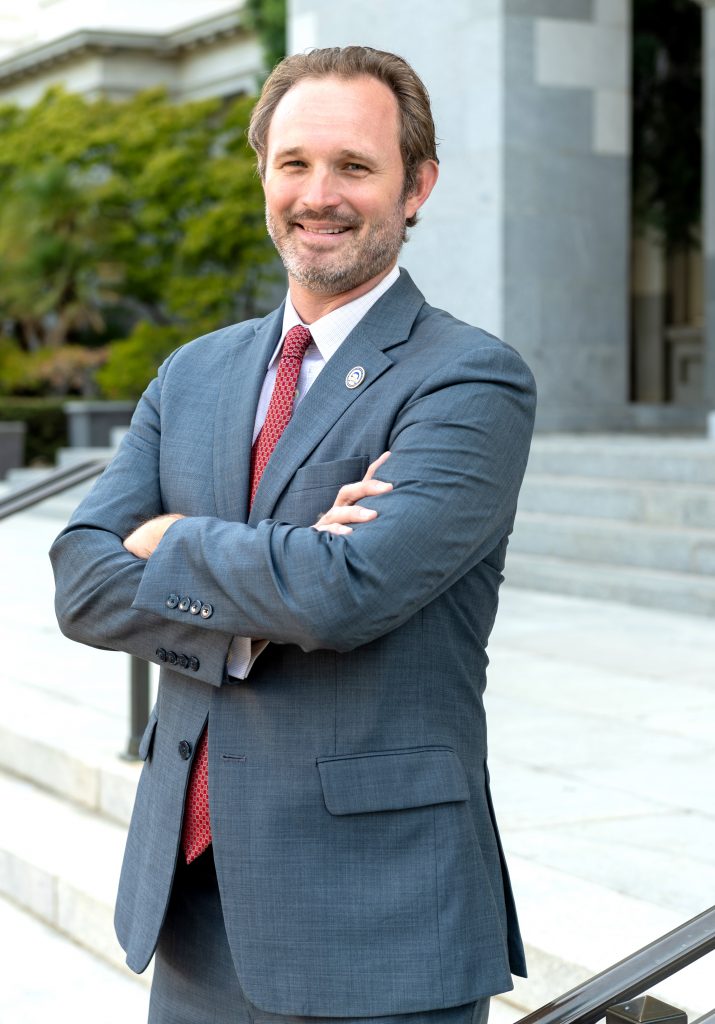
Ask Maddy about James Gallagher
Scope: california
Hi! I can help you understand James Gallagher's legislative record. What would you like to know?
Try one of these
i
Maddy answers using official bill text and legislative records. Always verify before sharing.
Sources cited inline