

Relative to hemophilia.
This measure would recognize April 17, 2016, as World Hemophilia Day.
Signed into law Jun 1, 2016
1 co-sponsor
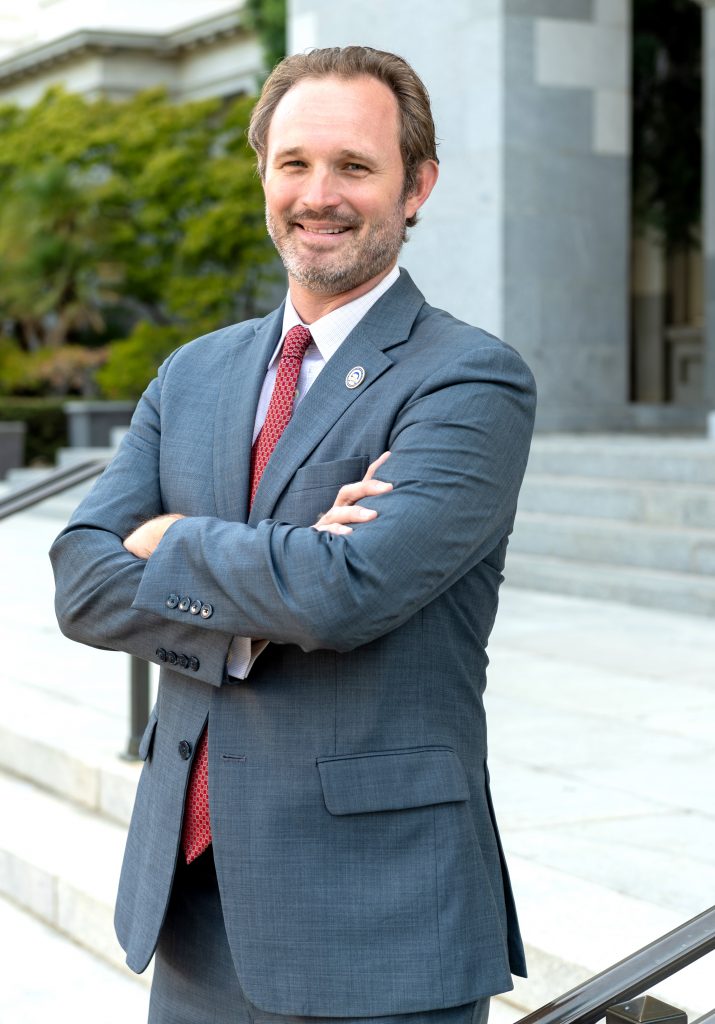
This measure would recognize April 17, 2016, as World Hemophilia Day.
Existing law requires a licensed covered facility, as defined, to disseminate to clients a notice, as specified, stating that California has public programs that provide immediate free or low-cost access to comprehensive family planning services, prenatal care, and abortion for eligible women. Existing law requires an unlicensed covered facility, as defined, to disseminate to clients a notice, as specified, stating that the facility is not licensed as a medical facility by the State of California and has no licensed medical provider. Existing law authorizes the Attorney General, city attorney, or county counsel to bring an action to impose a specified civil penalty against covered facilities that fail to comply with these requirements. This bill would require a facility that offers abortion services to disseminate a notice to clients, as specified, providing the telephone number for a specified organization and stating that pregnancy centers can provide women with services at no cost that include consultation, pregnancy tests, sexually transmitted disease or sexually transmitted infection (STD/STI) testing, ultrasound services, support groups, parenting programs, and material assistance.
Existing law requires the Board of State and Community Corrections to collect and maintain available information and data about state and community correctional policies, practices, capacities, and needs, as specified. Existing law also requires the board, in consultation with the Administrative Office of the Courts, the Chief Probation Officers of California, and the California State Sheriffs' Association, to collect and analyze data regarding local plans implementing the 2011 public safety realignment. This bill would require the board, in consultation with the Administrative Office of the Courts, the California District Attorneys Association, the California State Association of Counties, the California State Sheriffs' Association, and the Chief Probation Officers of California, to collect and analyze data regarding recidivism rates of all persons who receive a felony sentence punishable by imprisonment in county jail or who are placed on postrelease community supervision. The bill would also require the board to make this data available on the board's Internet Web site.
The Personal Income Tax Law authorizes various credits against the taxes imposed by that law, including a credit for qualified renters in the amount of $120 for married couples filing joint returns, heads of household, and surviving spouses if adjusted gross income is $50,000, as adjusted, or less, and in the amount of $60 for other individuals if adjusted gross income is $25,000, as adjusted, or less. This bill would, for taxable years beginning on and after January 1, 2016, and before January 1, 2020, increase this credit for a qualified renter to $140 for married couples filing joint returns, heads of household, and surviving spouses and to an amount equal to $70 for other individuals. This bill would take effect immediately as a tax levy.
Existing law requires the Department of Motor Vehicles (DMV) to charge a registration fee on every vehicle or trailer coach, as specified. Existing law also authorizes the imposition of certain additional fees and surcharges, including, among others, an additional fee, as specified, on all motor vehicles to fund local programs relating to vehicle theft crimes. This bill would require the DMV to clearly identify the registration fee as the base registration fee on any application for renewal of registration, and to aggregate any additional fees or surcharges added to the base registration fee as a separate and distinct line item on those applications. The bill would require the DMV to post on its Internet Web site a clear description of each additional fee or surcharge added to the base registration fee, including the statutory authority for that fee or surcharge. The bill would also require the DMV to provide with each application for renewal of registration the Internet Web site address where this information can be accessed.
Existing law requires the Director of Health Care Services to, among other things, maintain or enter into contracts directly with nonprofit caregiver resource centers (CRCs) to provide direct services to caregivers of cognitively impaired adults, as defined, throughout the state. These services include, but are not limited to, specialized information, family consultation, respite care, short-term counseling, and support groups. This bill would, each fiscal year, commencing with the 2016–17 fiscal year, appropriate $3,300,000 from the General Fund to the State Department of Health Care Services for allocation to CRCs for the purpose of providing those respite care services. The bill would also authorize those services to be provided in-person and, except for respite care services, through the use of remote technologies.
Existing law requires every service station in this state to display at a conspicuous place on, at, or near the dispensing apparatus, or at or near the point of sale, at least one clearly visible sign showing a list of applicable state and federal fuel taxes per gallon of motor vehicle fuel sold from the dispensing apparatus. A violation of this provision is an infraction. Existing law establishes the State Energy Resources Conservation and Development Commission in the Natural Resources Agency, and specifies the powers and duties of the commission with respect to energy resources in the state. Under existing law, various provisions regulate petroleum supply and pricing. The California Global Warming Solutions Act of 2006 designates the State Air Resources Board as the state agency charged with monitoring and regulating sources of emissions of greenhouse gases. The act authorizes the state board to include the use of market-based compliance mechanisms. This bill would require every service station to also display the average per-gallon cost of gasoline and diesel fuel, as annually calculated by the commission in consultation with the Legislative Analyst's Office, across the industry of refiners producing transportation fuels as a result of their compliance with a market-based compliance mechanism. Because a violation of this requirement would be a crime, this bill would impose a state-mandated local program. The California Constitution requires the state to reimburse local agencies and school districts for certain costs mandated by the state. Statutory provisions establish procedures for making that reimbursement. This bill would provide that no reimbursement is required by this act for a specified reason.
Existing law authorizes a state agency to apply to the Department of Motor Vehicles (DMV) to sponsor a specialized license plate program and requires the DMV to issue those license plates if the sponsoring state agency meets certain requirements. Existing law requires the DMV to charge specified fees related to the issuance of those plates and to deposit the fees, less the DMV's costs, in the Specialized License Plate Fund. Existing law requires that moneys in the fund be allocated, upon appropriation by the Legislature, to the sponsoring agency in proportion to the amount that is attributable to the agency's specialized license plate program. Existing law authorizes the sponsoring agency to use these moneys to fund projects and programs that promote the state agency's official policy, mission, or work. This bill would require the Department of Veterans Affairs, in consultation with the State Treasurer, to apply to the DMV to sponsor specified historic state and federal motto license plate programs and would require the DMV to issue those specialized license plates for those programs if the Department of Veterans Affairs satisfies certain requirements. Notwithstanding the above-described provisions regarding fees for specialized license plates, the bill would require the additional fees for the issuance, renewal, or transfer of these specialized license plates to be deposited, after the DMV deducts its administrative costs, in a newly created fund, to be available upon appropriation by the Legislature for the purpose of funding specified veterans programs and services.
Existing law establishes the Division of Labor Standards Enforcement in the Department of Industrial Relations for the enforcement of labor laws, and establishes certain obligations on an employer, including, requiring an employer to post specified wage and hour information in a location where it can be viewed by employees. Under existing law, any person who deprives or violates the personal liberty of another with the intent to obtain forced labor or services is guilty of the crime of human trafficking. This bill would require a private or public employer that provides mass transportation services, as specified, in the state to train its employees, who are likely to interact or come into contact with victims of human trafficking, in recognizing the signs of human trafficking and how to report those signs to the appropriate law enforcement agency. The bill would require the Department of justice to develop guidelines for the training, including, but not limited to, guidance on how to report human trafficking. The bill would require that, by January 1, 2018, the training be incorporated into the initial training process for all new employees and that all existing employees receive the training.
(1) Under existing law, a hunting license grants the privilege to take birds and mammals. Existing law requires the Department of Fish and Wildlife to issue a hunting license for a term of one year, as provided, upon payment of a fee, to eligible residents and nonresidents. Existing law requires the department to issue a reduced fee hunting license for a term of one year, as provided, upon payment of a reduced fee, to a disabled veteran or recovering service member, as specified. Existing law requires these fees to be adjusted annually according to a specified index. Under existing law, the department issues tags, validations, and other entitlements upon payment of specified fees that are required in addition to a valid hunting license to take specified birds and mammals for purposes other than commercial purposes. This bill would instead require the department to issue a free hunting license, upon application to the department, to a disabled veteran or recovering service member and would require the department to issue a reduced fee hunting license, upon application and payment of a fee of $5, to a veteran of the Armed Forces of the United States who was honorably discharged. The bill would prohibit the reduced hunting license fee from being adjusted pursuant to the specified index. The bill would require the department to reduce the fee required for a tag, validation, or other entitlement by 50% for a person who receives a reduced fee hunting license for veterans and would prohibit the department from charging a person who receives a free hunting license for disabled veterans or recovering service members a fee for these entitlements. (2) Existing law requires every person 16 years of age or older who takes any fish, reptile, or amphibian for any purpose other than profit to first obtain a sport fishing license for that purpose and to have that license on his or her person or in his or her immediate possession when engaged in carrying out any activity authorized by the license. Existing law requires the department to issue a sport fishing license for the period of a calendar year, as provided, upon payment of a specified fee, to eligible residents and nonresidents. Existing law requires the department to issue a reduced fee sport fishing license for the period of a calendar year upon payment of a reduced fee to a disabled veteran or recovering service member, as specified. Existing law requires these fees to be adjusted annually according to a specified index. Under existing law, the department issues sport fishing report cards and validations upon payment of specified fees that authorize various activities relating to the taking and possession of amphibians, reptiles, and fish for purposes other than profit. This bill would instead require the department to issue a free sport fishing license, upon application to the department, to a disabled veteran or recovering service member and would require the department to issue a reduced fee sport fishing license, upon application and payment of a fee of $5, to a veteran of the Armed Forces of the United States who was honorably discharged. The bill would prohibit this reduced fishing license fee from being adjusted pursuant to the specified index. The bill would require the department to reduce the fee required to obtain a sport fishing report card, validation, or other entitlement by 50% for a person who receives a reduced fee sport fishing license for veterans and would prohibit the department from charging a person who receives a free sport fishing license for disabled veterans or recovering service members a fee for these entitlements.