

Existing law establishes a variety of health care workforce training programs and health professions education programs within the Department of Health Care Access and Information to, among other things, maximize the delivery of primary care and family physician services to specific areas of California where there is a recognized unmet priority need for those services and ensure an adequate supply of appropriately trained professional and vocational nurses. Existing law establishes the Health Professions Education Fund to support those programs by providing scholarships and loans to students from underrepresented groups who are accepted to or enrolled in schools of medicine, dentistry, nursing, or other health professions. This bill would establish the California Reproductive Health Service Corps within the department for the purposes of recruiting, training, and retaining a diverse workforce of reproductive health care professionals who will be part of reproductive health care teams to work in underserved areas. The bill would require the corps to administer and oversee scholarships and stipends for scholars who are new reproductive health students, and loan repayment for scholars who have acquired debt from attending a reproductive health professional school in the past, in exchange for a 3-year term of obligated service in California at a corps-approved site. The bill would require the corps to prioritize the selection of scholars from historically excluded populations and underserved areas, and would require scholars to agree to complete abortion training as part of their health care education and to provide, or participate on a team that provides, reproductive health services and to commit to working at a corps-approved site in a specified area with a specified population. This bill would require the department to conduct an evaluation 5 years after implementation to assess the impact and effectiveness of the corps, and would require the department to report its findings to the Legislature on or before January 1, 2029.
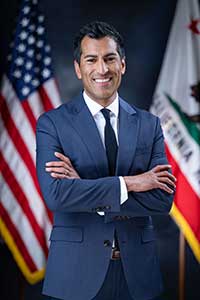
Asm. Robert Rivas
Sponsored bills
Existing law, the Nursing Practice Act, provides for the licensure and regulation of registered nurses, including nurse practitioners and certified nurse-midwives, by the Board of Registered Nursing. Existing law makes a violation of this act a crime. In order to perform an abortion by aspiration techniques under the act, a person with a license or certificate to practice as a nurse practitioner or a certified nurse-midwife is required to complete board-recognized training and adhere to standardized procedures that specify, among other conditions, the extent of supervision by a physician and surgeon with relevant training and expertise. This bill would revise those provisions by requiring, in order to perform abortion by aspiration techniques, a person with a license or certificate to practice as a nurse practitioner practicing pursuant to a standardized procedure, to practice as a certified nurse-midwife, or to practice as a qualified nurse practitioner functioning pursuant to certain advanced practice provisions to achieve clinical competency by successfully completing requisite training, as specified, in performing these procedures, as provided by certain board-approved programs, courses, and trainings. This bill would authorize a nurse practitioner who has completed training required by these provisions and who is functioning pursuant to certain advanced practice provisions to perform an abortion by aspiration techniques without supervision by a physician and surgeon. The bill would require a nurse practitioner to practice abortion by aspiration techniques consistent with applicable standards of care and within the scope of their clinical and professional education and training. By expanding the application of a crime, the bill would impose a state-mandated local program. Existing law provides that it is unprofessional conduct for a nurse practitioner or certified nurse-midwife to perform an abortion by aspiration techniques without prior completion of training and validation of clinical competency. This bill would instead make a violation of the above-described provisions by a nurse practitioner or certified midwife unprofessional conduct. This bill would also prohibit certain persons authorized to perform abortion by aspiration techniques from being punished, held liable for damages in a civil action, or denied any right or privilege for any action relating to the evaluation of clinical competency of a nurse practitioner or certified nurse-midwife, as specified. The California Constitution requires the state to reimburse local agencies and school districts for certain costs mandated by the state. Statutory provisions establish procedures for making that reimbursement. This bill would provide that no reimbursement is required by this act for a specified reason.
Existing law authorizes junk dealers and recyclers, as defined, to sell and purchase junk, which includes secondhand and used furniture, pallets, or other personal property, as specified. Existing law prohibits junk dealers and recyclers from purchasing or receiving bulk merchandise pallets marked with an indicia of ownership from anyone except the indicated owner, unless specified information is provided to the junk dealer or recycler, and requires the junk dealer or recycler to maintain a written record of that information. Existing law makes a violation of these recordkeeping requirements a misdemeanor. This bill would revise the above provisions on bulk merchandise pallets to apply only to the purchase of bulk merchandise pallets marked with an indicia of ownership and would delete the provisions on receiving the bulk merchandise pallets, as described above. The bill would provide that those provisions do not prohibit a junk dealer or recycler from acquiring good faith possession of merchandise pallets based on the representations of the seller that the indicated owner cannot be located or has failed to retrieve the merchandise pallets on a timely basis. The bill would require a junk dealer or recycler who acquires good faith possession of merchandise pallets, if the indicated owner can be located, to give notice of good faith possession to the owner of those pallets. If, within 35 calendar days after the junk dealer or recycler notifies the indicated owner of having acquired good faith possession, the indicated owner demands a return of the pallets, the bill would permit a junk dealer or recycler to require payment of reasonable storage fees. The bill would provide that after 35 calendar days from when the junk dealer or recycler provides notice of good faith possession to the indicated owner, the owner is deemed to have relinquished possession of the merchandise pallets, and would permit the junk dealer or recycler to either sell the pallets or charge reasonable storage fees if the indicated owner demands a return and the pallets are still in the possession of the junk dealer or recycler. This bill would require the seller to retain a copy of the notice of good faith possession for at least 2 years, and would require the notice to contain specified information, including the name and contact information of the junk dealer or recycler that acquired good faith possession of the merchandise pallets. The bill would require the notice of good faith possession to be sent by mail or email to the indicated owner at their physical or email address, if known. By expanding the scope of a crime regarding the recordkeeping requirements of junk dealers and recyclers, the bill would impose a state-mandated local program. The California Constitution requires the state to reimburse local agencies and school districts for certain costs mandated by the state. Statutory provisions establish procedures for making that reimbursement. This bill would provide that no reimbursement is required by this act for a specified reason.
Existing law provides for the Medi-Cal program, which is administered by the State Department of Health Care Services, under which qualified low-income individuals receive health care services. The Medi-Cal program is, in part, governed and funded by federal Medicaid program provisions. Under existing law, Medi-Cal services may be provided pursuant to contracts with various types of managed care health plans, including through a county organized health system. Under existing law, in-person contact between a health care provider and a patient is not required under the Medi-Cal program for services appropriately provided through telehealth. Existing law provides that neither face-to-face contact nor a patient's physical presence on the premises of an enrolled community clinic is required for services provided by the clinic to a Medi-Cal beneficiary during or immediately following a proclamation declaring a state of emergency. Existing law defines "immediately following" for this purpose to mean up to 90 days following the termination of the proclaimed state of emergency, unless there are extraordinary circumstances. Under existing law, federally qualified health center (FQHC) services and rural health clinic (RHC) services are covered benefits under the Medi-Cal program, to be reimbursed, to the extent that federal financial participation is available, to providers on a per-visit basis. "Visit" is defined as a face-to-face encounter between an FQHC or RHC patient and any of specified health care professionals. Under existing law, "visit" also includes an encounter between an FQHC or RHC patient and specified medical professionals when services delivered through that interaction meet the applicable standard of care. Existing law prohibits an FQHC or RHC from establishing a new patient relationship using an audio-only synchronous interaction and authorizes the department to provide specific exceptions to that prohibition, developed in consultation with affected stakeholders and published in departmental guidance. This bill would authorize the department to authorize an FQHC or RHC to establish a new patient relationship using an audio-only synchronous interaction when the visit is related to sensitive services, as defined, and authorize an FQHC or RHC to establish a new patient relationship using an audio-only synchronous interaction when the patient requests an audio-only modality or attests they do not have access to video. Existing law provides that face-to-face contact is not required when covered health care services are provided by video synchronous interaction, audio-only synchronous interaction, remote patient monitoring, or other permissible virtual communication modalities when those services and settings meet certain criteria. Existing law, effective as specified, requires a provider furnishing services via audio-only synchronous interaction to also offer those same health care services via video synchronous interaction to preserve beneficiary choice. Existing law authorizes the department to provide specific exceptions to that requirement based on a Medi-Cal provider's access to requisite technologies, as specified. Existing law also prohibits a health care provider from establishing a new patient relationship with a Medi-Cal beneficiary via, among other interactions, telephonic (audio-only) synchronous interaction. Existing law authorizes the department to provide specific exceptions to that prohibition, as specified. This bill would authorize the department to take into consideration the availability of broadband access when providing those specific exceptions. The bill would authorize the department to authorize a health care provider to establish a new patient relationship using an audio-only synchronous interaction when the visit is related to sensitive services, as defined, and authorize a health care provider to establish a new patient relationship using an audio-only synchronous interaction when the patient requests an audio-only modality or attests they do not have access to video. This bill would incorporate additional changes to Section 14132.100 of the Welfare and Institutions Code proposed by SB 966 to be operative only if this bill and SB 966 are enacted and this bill is enacted last.
The California Constitution provides that the University of California constitutes a public trust, and requires the university to be administered by the Regents of the University of California, a corporation in the form of a board, with full powers of organization and government, subject to legislative control only for specified purposes. Existing law establishes the Hastings College of the Law, under the governance of an 11-member Board of Directors of the Hastings College of the Law, within the University of California. Existing law provides that the college shall forever be known and designated as the Hastings College of the Law. Under existing law, six directors constitutes a quorum for the transaction of all business of the college's board of directors. Existing law requires one of the directors to always be an heir or representative of Serranus Clinton (S.C.) Hastings and all other directors to serve 12-year terms. Existing law requires vacancies occurring in the board of directors other than the death or resignation of the heir or representative of S.C. Hastings to be filled by the Governor and approved by the Senate. This bill would instead provide that the college shall be designated as the College of the Law, San Francisco, as provided. The bill would make conforming changes. The bill would specify that a majority of directors constitutes a quorum for the transaction of all of the board of directors' business, and would require all directors to serve 12-year terms, except as provided. The bill would require all vacancies occurring on the board of directors, including a vacancy of the heir or representative of S.C. Hastings, to be filled by the Governor and approved by the Senate. This bill would incorporate additional changes to Section 67385 of the Education Code proposed by AB 1467 to be operative only if this bill and AB 1467 are enacted and this bill is enacted last.
Existing law establishes the Medi-Cal program, which is administered by the State Department of Health Care Services and under which qualified low-income individuals receive health care services through various delivery systems, including fee-for-service and managed care. The Medi-Cal program is, in part, governed and funded by federal Medicaid program provisions. Under federal law, covered services include "preventive services," which are defined as, services recommended by a physician or other licensed practitioner of the healing arts acting within the scope of authorized practice under state law to prevent disease, disability, and other health conditions or their progression, prolong life, and promote physical and mental health and efficiency. On July 26, 2022, the federal Centers for Medicare and Medicaid Services approved the department's Medicaid State Plan Amendment to add community health workers as a preventive service. This bill would codify the requirement that community health worker services be a covered Medi-Cal benefit. The bill would require a Medi-Cal managed care plan to engage in outreach and education efforts to enrollees, as determined by the department, but that would include, at a minimum, specified information to enrollees, including, among other things, a description of the community health worker services benefit and a list of providers that are authorized to refer an enrollee to community health worker services. The bill would require the department, through existing and regular stakeholder processes, to inform stakeholders about, and accept input from stakeholders on, implementation of the community health worker services benefit. The bill would be implemented only to the extent that federal financial participation is available and not otherwise jeopardized. The bill would authorize the department to implement, interpret, or make specific this bill by means of policy letters, provider bulletins, or other similar instructions, without taking any further regulatory action.
Existing law establishes the California DREAM Loan Program, which authorizes a student attending a participating campus of the University of California or California State University to receive a loan, referred to as a DREAM loan, if the student satisfies certain requirements. Existing law prohibits a student from borrowing more than $20,000 in the aggregate under the program from any one participating institution. Existing law requires each participating institution to provide entrance and exit counseling to borrowers that is generally comparable to that required by federal student loan programs. This bill would prohibit a student from borrowing more than $40,000 in the aggregate under the program. The bill would prohibit a student who is enrolled in an undergraduate program from borrowing, as an undergraduate student, or a student who is enrolled in a graduate program from borrowing, as a graduate student, more than $20,000 in the aggregate under the program. The bill would require a participating institution, on or before January 1, 2024, to establish DREAM loan forgiveness options for borrowers with similar standards as those set forth in the Federal Perkins Loan Program. The bill would require borrowers to qualify for or be granted certain administrative relief, and would require borrowers to qualify for state of emergency administrative forbearance, as specified. The bill would specify that exit counseling provided by a participating institution includes information about DREAM loan repayment, forbearance, deferment, discharge, and forgiveness. The bill would require a participating institution to post information about the DREAM loan on its internet website, as specified.
Existing law authorizes the Department of Motor Vehicles to issue and renew driver's licenses, as specified. Existing law also authorizes the department to issue identification cards. Existing law requires the department to issue a restricted driver's license to an eligible applicant who is unable to submit satisfactory proof that their presence in the United States is authorized under federal law if they meet all other qualifications for licensure and provide satisfactory proof of identity and California residency. Existing law also authorizes the department to issue an identification card to a person documented under the federal Deferred Action for Childhood Arrivals program. This bill would, among other things, require the department to, by no later than July 1, 2027, issue a restricted identification card to an eligible applicant who is unable to submit satisfactory proof that their presence in the United States is authorized under federal law if they provide satisfactory proof of identity and California residency, as specified. Existing law requires the restricted licenses and identification cards to include a recognizable feature on the front of the cards, such as the letters "DP" instead of "DL" and "IC" instead of "ID." This bill would delete the provision requiring a recognizable feature on the cards. Existing law prohibits California law enforcement agencies from cooperating, as specified, with federal immigration authorities. Existing law prohibits the disclosure of certain documents provided by an applicant to the department, except in response to a subpoena for individual records in a criminal proceeding or a court order, or in response to a law enforcement request to address an urgent health or safety need, as specified. This bill would specify that immigration enforcement, as defined, does not constitute an urgent health and safety need for those purposes, and would prohibit a government agency or department, law enforcement agency, commercial entity, or other person from obtaining, accessing, using, or otherwise disclosing, noncriminal history information maintained by the department, for the purpose of immigration enforcement. The bill would make other conforming changes. This bill would incorporate additional changes to Section 12926 of the Government Code proposed by SB 523 to be operative only if this bill and SB 523 are enacted and this bill is enacted last.
Existing law grants the Division of Occupational Safety and Health, which is within the Department of Industrial Relations, jurisdiction over all employment and places of employment, with the power necessary to enforce and administer all occupational health and safety laws and standards. The Occupational Safety and Health Standards Board, an independent entity within the department, has the exclusive authority to adopt occupational safety and health standards within the state. Existing law, the California Occupational Safety and Health Act of 1973, requires employers to comply with certain standards ensuring healthy and safe working conditions, as specified, and charges the division with enforcement of the act. Existing law makes certain violations of the act a crime. Existing law requires citations, orders, and special orders issued by the department, in enforcing occupational safety and health standards, to be prominently posted at or near each place a violation referred to in the citation or order occurred, in accordance with specified timeframes and procedures. Existing law makes certain violations of specified posting or recordkeeping requirements enforceable by a civil penalty. This bill would require an employer to post an employee notification containing specified information when the above-described citations or orders are issued. The bill would require this notification, in addition to English, to be made available in specified languages. The bill would make a violation of these provisions enforceable by a civil penalty, as specified. The bill would also include related legislative findings. By expanding the scope of a crime, the bill would impose a state-mandated local program. The California Constitution requires the state to reimburse local agencies and school districts for certain costs mandated by the state. Statutory provisions establish procedures for making that reimbursement. This bill would provide that no reimbursement is required by this act for a specified reason.
(1) Existing law, the California Cigarette Fire Safety and Firefighter Protection Act, administered by the State Fire Marshal, prohibits a person from selling, offering, or possessing for sale in this state cigarettes not in compliance with certain requirements, including the requirement that the cigarettes are tested by the manufacturer in accordance with prescribed testing methods. In certain circumstances, the act provides an exception from the above for distributors, wholesalers, or retailers to sell their cigarette inventory that existed on January 1, 2007. This bill would delete the authorization to sell that cigarette inventory that existed on January 1, 2007. The bill would generally delete the State Fire Marshal's authority to administer the act and instead require the Attorney General to administer the act, as provided. The act requires each manufacturer to submit a written certification to the State Fire Marshal attesting that each cigarette listed in the certification has been tested as provided. The act requires, before a certified cigarette can be sold in the state, a manufacturer to submit its proposed marking to the State Fire Marshal for approval. Existing law requires proposed markings to be deemed approved if the State Fire Marshal fails to act within 10 business days. This bill would instead require each manufacturer to submit a written certification to the Attorney General in the form, manner, and detail required by the Attorney General. The bill would authorize the Attorney General to publish on its internet website this information. The bill would require the Attorney General to approve a proposed marking upon a certain finding and would deem a proposed marking approved if the Attorney General fails to act within 30 business days. The bill would authorize the Attorney General to adopt rules and regulations to implement these provisions, including initial emergency regulations. The act establishes several civil penalties for violations of the act and requires some of the penalty moneys to be deposited into the Cigarette Fire Safety and Firefighter Protection Fund. Existing uncodified law requires the moneys in the fund, upon appropriation, to be made available to the State Fire Marshal to administer and implement the act. This bill would authorize the moneys in the fund to be appropriated to the Attorney General to administer and implement the act. (2) States' attorneys general and various tobacco product manufacturers settled various lawsuits by entering into a Master Settlement Agreement (MSA) , which imposes financial obligations on participating manufacturers and provides for the allocation of money to the states and certain territories for recovery of those governments' tobacco-related health care costs. Existing law requires that a tobacco product manufacturer selling cigarettes to consumers in California either become a participating manufacturer in the MSA or, as a nonparticipating manufacturer, place funds into a qualified escrow fund, as specified. The Cigarette and Tobacco Products Tax Law requires every tobacco product manufacturer whose cigarettes are sold in this state to make an annual certification to the Attorney General that the manufacturer is a participating manufacturer that has made all payments due under the MSA or has placed funds into the qualified escrow fund. That law also requires the certification to include specified information, including a complete list of all of the manufacturer's brand families and, in the case where the nonparticipating manufacturer is not the fabricator or maker of the cigarettes, that the escrow agreement or other forms are signed by the company that fabricates or makes the cigarettes. That law makes a false certification a misdemeanor. That law requires the Attorney General to post on its internet website a directory (Directory) of tobacco product manufacturers that have submitted compliant certifications, as specified, and requires the Directory to include the brand families listed in those certifications, except as provided. This bill would require the certification to also include a complete list of the tobacco product manufacturer's brand styles, as defined, and would make conforming changes. The bill would specify that listings on the Directory expire on April 29 each year. This bill would require, beginning with the 2023 calendar year, a tobacco product manufacturer to renew its listing on the Directory by providing the annual certification and remitting an annual fee of $1,000 payable to the office of the Attorney General. This bill would require any fees received to be deposited into the California Tobacco Directory Fund, which the bill would create in the State Treasury. This bill would continuously appropriate amounts deposited in the California Tobacco Directory Fund to the office of the Attorney General for the purpose of administering the Directory. The bill would allow the Attorney General to retain a listing for a tobacco product manufacturer on the Directory while the renewal for the certification is pending, provided that if the Attorney General decides not to retain a listing of any manufacturer or brand family while the renewal of the certification is pending, the bill would require the Attorney General to comply with specified delisting provisions. This bill would eliminate the requirement, in the case where the nonparticipating manufacturer is not the fabricator or maker of the cigarettes, that the escrow agreement or other forms are signed by the company that fabricates or makes the cigarettes. This bill would require a nonparticipating manufacturer to certify that it fabricates all of the brand families of the cigarettes that it seeks to certify. This bill would require the Attorney General to list the brand styles of cigarettes that are compliant with the annual certification and the qualified escrow requirements. This bill would also prohibit the Attorney General from including or retaining in the Directory any brand style that has not met specified requirements, including if the brand style has not been tested and marked in compliance with the California Cigarette Fire Safety and Firefighter Protection Act. Existing law provides that newly qualified and elevated-risk nonparticipating manufacturers are required to file a surety bond with the Attorney General, as specified. Existing law also prohibits inclusion in the Directory of specified nonparticipating manufacturers and their brand families until a surety bond is filed, as specified. This bill would expand the criteria for when a nonparticipating manufacturer may be deemed to pose an elevated risk, including when, as of January 1, 2023, a nonparticipating manufacturer's cigarettes are sold in or into California by distributors that have not reported their last 12 months of California sales electronically, as prescribed. By expanding the scope of information required to be on the certification and expanding the scope of the surety bond requirement, the false certification of which is a crime, this bill imposes a state-mandated local program. The California Constitution requires the state to reimburse local agencies and school districts for certain costs mandated by the state. Statutory provisions establish procedures for making that reimbursement. This bill would provide that no reimbursement is required by this act for a specified reason. The Cigarette and Tobacco Products Tax Law requires that the tax on the distribution of cigarettes imposed by that law be paid through the use of stamps or meter impressions, and requires that these stamps or meter impressions be affixed to each package of cigarettes distributed. That law prohibits (1) any tax stamp or meter impression to be affixed to a package of cigarettes unless the tobacco product manufacturer and brand family are included on the Directory, (2) the sale, offer, or possession for sale in this state, shipment or distribution into or within this state, or importation for personal consumption in this state, of cigarettes of a tobacco product manufacturer or brand family not included in the Directory, and (3) the possession, transportation, and other specified activities of the cigarettes that the person knows or should have known are intended to be distributed in violation of the other 2 prohibitions. That law requires distributors to submit to the California Department of Tax and Fee Administration or the Attorney General specified information to facilitate compliance with that prohibition and the certification requirements. That law imposes civil penalties for violations of that prohibition and information reporting requirements. This bill would require the department to disclose to the Attorney General any information it receives under the Cigarette and Tobacco Products Tax Law for specified purposes and would authorize the department and the Attorney General to share information provided by distributors with specified entities for specified purposes. This bill would additionally authorize the Attorney General to bring a civil action for civil penalties and injunctive relief against specified persons for specific violations of those prohibitions or information reporting requirements and against any nonparticipating manufacturer that does not submit a timely, complete, and accurate certification as required by the Cigarette and Tobacco Products Tax Law regarding its sales of cigarettes in this state, as provided. This bill would require any civil penalties imposed to be deposited into the General Fund. Existing law requires each tobacco product manufacturer that elects to place funds into a qualified escrow to annually certify to the Attorney General that it is in compliance with specified requirements. Existing law authorizes the Attorney General to bring a civil action against any tobacco product manufacturer that fails to place into escrow the funds required and authorizes the imposition of civil penalties paid to the General Fund. This bill would additionally authorize the Attorney General to bring a civil action for civil penalties and injunctive relief against any nonparticipating manufacturer that does not submit a timely, complete, and accurate certification related to those qualified escrow funds regarding its sales of cigarettes in this state, as provided. This bill would require any civil penalties imposed to be deposited into the General Fund.