

Existing law establishes the Medi-Cal program, which is administered by the State Department of Health Care Services and under which qualified low-income individuals receive health care services, including federally qualified health center (FQHC) services and rural health clinic (RHC) services. The Medi-Cal program is, in part, governed and funded by federal Medicaid program provisions. Under existing law, to the extent that federal financial participation is available, FQHC and RHC services are reimbursed on a per-visit basis, as specified. "Visit" is defined as a face-to-face encounter between a patient of an FQHC or RHC and a physician or other specified health care professionals. Under existing law, "visit" also includes an encounter using video or audio-only synchronous interaction or an asynchronous store and forward modality, as specified. This bill would authorize reimbursement for a maximum of 2 visits that take place on the same day at a single site, whether through a face-to-face or telehealth-based encounter, if after the first visit the patient suffers illness or injury that requires additional diagnosis or treatment, or if the patient has a medical visit and either a mental health visit or a dental visit, as defined. The bill would require the department, by July 1, 2024, to submit a state plan amendment to the federal Centers for Medicare and Medicaid Services reflecting those provisions. The bill would include a licensed acupuncturist within those health care professionals covered under the definition of a "visit." The bill would also make a change to the provision relating to physicians and would make other technical changes.
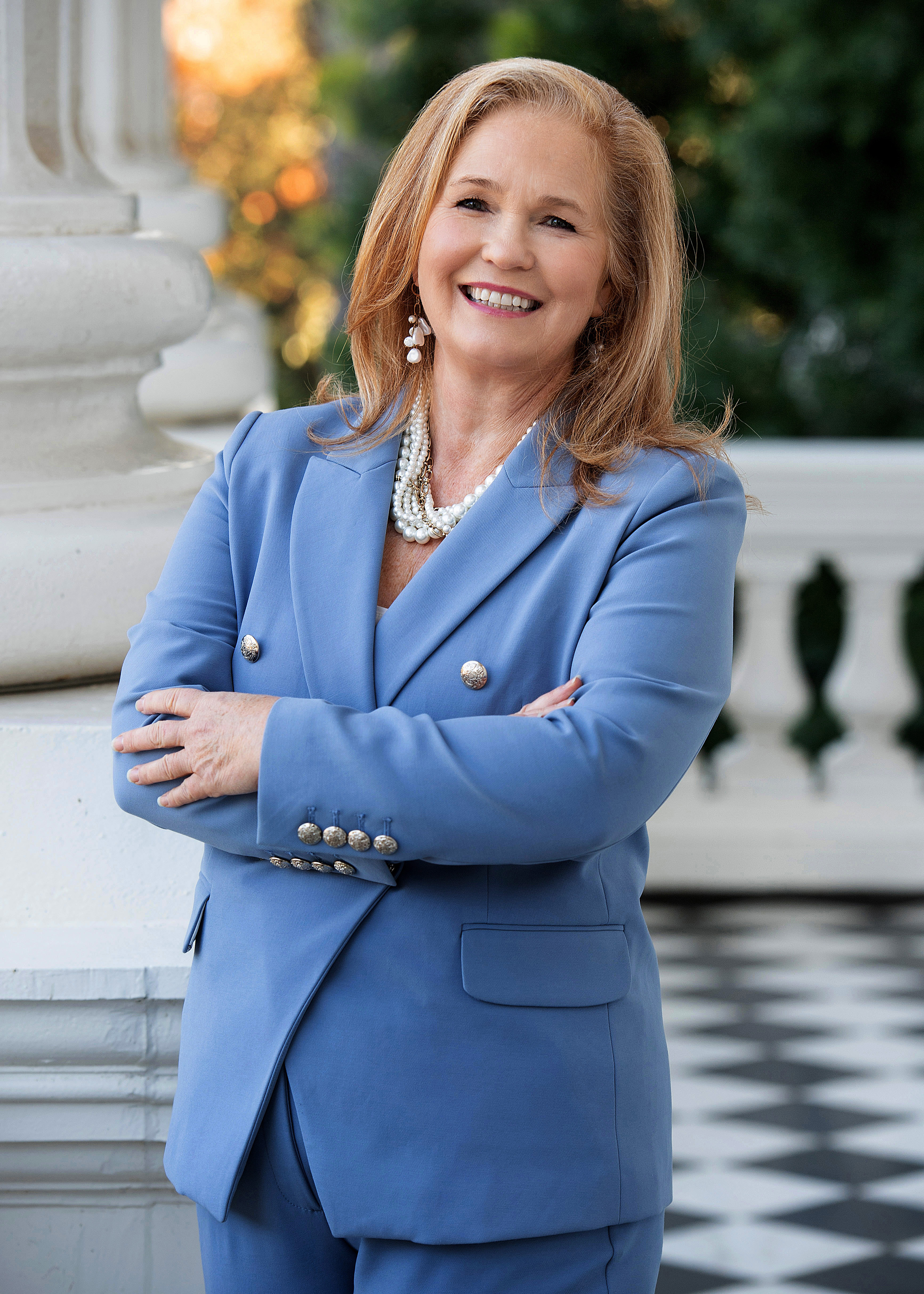
Asm. Gail Pellerin
Sponsored bills
Existing law, the Mobilehome Parks Act, generally regulates various classifications of mobilehome and related vehicle parks, and imposes enforcement duties on the Department of Housing and Community Development and local enforcement agencies. The act authorizes any person to file an application with the governing body of a city or county for a conditional use permit for a mobilehome park. The act requires a person, before operating a mobilehome park, and each year thereafter, to obtain a valid permit from the enforcement agency in order to operate the park. The act also requires the owner of a mobilehome park to obtain a permit to create, move, shift, or alter park lot lines. This bill would authorize an owner of an existing mobilehome park that is subject to, or intends to qualify for, a valid permit to operate the park, to apply to the enforcement agency to add additional specified spaces to the mobilehome park not to exceed 10% of the previously approved number of spaces in the mobilehome park, if the owner has not been served with a notice of violation that constitutes an imminent threat to health and safety. The bill would exempt the additional spaces from any business tax, local registration fee, use permit fee, or other fee, except those fees that apply to the existing spaces in the park. Existing law, the California Environmental Quality Act (CEQA) , requires a lead agency, as defined, to prepare, or cause to be prepared, and certify the completion of, an environmental impact report on a project that it proposes to carry out or approve that may have a significant effect on the environment or to adopt a negative declaration if it finds that the project will not have that effect. CEQA also requires a lead agency to prepare a mitigated negative declaration for a project that may have a significant effect on the environment if revisions in the project would avoid or mitigate that effect and there is no substantial evidence that the project, as revised, would have a significant effect on the environment. CEQA does not apply to the approval of ministerial projects. This bill would prohibit the enforcement agency, city, or county from requiring a conditional use permit, zoning variance, or other zoning approval in order to add the spaces. By requiring a city or county to ministerially approve a project to add the mobilehome park spaces described above, this bill would exempt those projects from CEQA.
Existing law establishes the Ocean Protection Council in state government to, among other things, establish policies to coordinate the collection, evaluation, and sharing of scientific data related to coastal and ocean resources among agencies. Existing law requires the council to develop and implement a voluntary sustainable seafood promotion program for the state, to consist of specified components, including a competitive grant and loan program for eligible entities, including, but not limited to, fishery groups and associations, for the purpose of assisting California fisheries in qualifying for certification to internationally accepted standards for sustainable seafood. This bill would require the council, on or before January 1, 2026, in coordination and in consultation with various entities, including the State Air Resources Board, to implement a statewide voluntary vessel speed reduction and sustainable shipping program for the California coast in order to reduce air pollution, the risk of fatal vessel strikes on whales, and harmful underwater acoustic impacts. The bill would require the program to expand a certain existing program and would authorize the program to include specified components, including incentives to program participants based on a percentage of distance traveled by a participating vessel at a reduced speed, as provided. The bill would limit application of the program to vessels that are 300 gross tons or greater. The bill would require the council, on or before December 31, 2026, to submit a report to the Legislature regarding the implementation of the program.
Existing law establishes the Atmospheric Rivers: Research, Mitigation, and Climate Forecasting Program in the Department of Water Resources. Existing law requires the department, upon an appropriation for purposes of the program, to research climate forecasting and the causes and impacts that climate change has on atmospheric rivers, to operate reservoirs in a manner that improves flood protection, and to reoperate flood control and water storage facilities to capture water generated by atmospheric rivers. This bill would rename that program the Atmospheric Rivers Research and Forecast Improvement Program: Enabling Climate Adaptation Through Forecast-Informed Reservoir Operations and Hazard Resiliency (AR/FIRO) Program. The bill would require the department to research, develop, and implement new observations, prediction models, novel forecasting methods, and tailored decision support systems to improve predictions of atmospheric rivers and their impacts on water supply, flooding, post-wildfire debris flows, and environmental conditions. The bill would also require the department to utilize relevant information to operate reservoirs in a manner that improves flood protection in the state and to reoperate flood control and water storage facilities to capture water generated by atmospheric rivers and other storms.
Existing law establishes the Ocean Protection Council in state government to, among other things, establish policies to coordinate the collection, evaluation, and sharing of scientific data related to coastal and ocean resources among agencies. This bill would require the council, upon an appropriation by the Legislature, to oversee the establishment of, in coordination with other unspecified state and federal agencies, a nonprofit West Coast Offshore Wind Science Entity for the purpose of directing comprehensive baseline and ongoing monitoring of the California current ocean ecosystem as well as targeted research, and oversee that the research is available and used to inform state and federal decisions, as provided. The bill would require the entity to perform specified functions, including reviewing and incorporating existing research, monitoring, data standardization methods, and data portals. The bill would require, by no later than July 1, 2024, the council to form a steering committee to provide governance and oversight on the processes and procedures of the entity, as specified.
The California Urban Forestry Act of 1978 has a purpose of, among other things, promoting the use of urban forest resources for purposes of increasing integrated projects with multiple benefits in urban communities. The act requires the Department of Forestry and Fire Protection to implement a program in urban forestry to encourage better tree management and planting in urban areas to increase integrated, multiple-benefit projects by assisting urban areas with innovative solutions to problems, as provided. The act authorizes the Director of Forestry and Fire Protection to make grants to provide assistance of 25% to 90% of costs for projects, as provided. This bill would require funds appropriated or allocated to the department for the bill's purposes to be administered to support school greening, as defined, by providing grants to eligible local educational agencies, as defined, nonprofit organizations, cities, counties, and districts, including special districts, through a competitive grant process that the bill would require the department to develop, including guidelines and selection criteria, as specified, on or before July 1, 2024. The bill would require the department, before developing the grant process, to hold at least 2 public hearings to gather public input on the grant process development. The bill would, upon appropriation in the annual Budget Act, require funding for these purposes to be transferred to the School Greening and Resiliency Fund, which the bill would establish in the State Treasury.
Existing law requires the Department of Food and Agriculture to promote and protect the agricultural industry of the state. Existing law under Article XVI of the California Constitution requires measures authorizing general obligation bonds to specify the single object or work to be funded by the bonds and further requires a bond act to be approved by a 23 vote of each house of the Legislature and a majority of the voters. This bill would enact the Climate-resilient Farms, Sustainable Healthy Food Access, and Farmworker Protection Bond Act of 2024, which, if approved by the voters, would authorize the issuance of bonds in the amount of $3,650,000,000 pursuant to the State General Obligation Bond Law, to finance programs related to, among other things, agricultural lands, food and fiber infrastructure, climate resilience, agricultural professionals, including farmers, ranchers, and farmworkers, workforce development and training, air quality, tribes, disadvantaged communities, nutrition, food aid, meat processing facilities, and fishing facilities. The bill would make its provisions severable. The bill would provide for the submission of the bond act to the voters at the November 5, 2024, statewide general election. This bill would declare that it is to take effect immediately as an urgency statute.
Existing law, the California Disaster Assistance Act, requires the Director of Emergency Services to provide financial assistance to local agencies for their personnel costs, equipment costs, and the cost of supplies and materials used during disaster response activities, incurred as a result of a state of emergency proclaimed by the Governor, subject to specified criteria. The act continuously appropriates moneys in the Disaster Assistance Fund and its subsidiary account, the Earthquake Emergency Investigations Account, without regard to fiscal year, for purposes of the act. This bill would enact the California Individual Assistance Act to establish a grant program to provide financial assistance to local agencies, community-based organizations, and individuals for specified costs related to a disaster, as prescribed. The bill would require the director to allocate from the fund, subject to specified conditions, funds to meet the cost of expenses for those purposes. By authorizing increased expenditure of moneys from a continuously appropriated fund for a new purpose, the bill would make an appropriation. This bill would authorize the director to adopt regulations, as determined to be necessary, to govern the administration of the program. The bill would require the director to enter into agreements with local agencies or community-based organizations to retroactively provide individual and family grants for specific disaster events. This bill would declare that it is to take effect immediately as an urgency statute.
This measure would declare that the Legislature should pass laws that halt the importation of cobalt or any product using cobalt mined in Africa using child slave labor and encourage the production of cobalt and other critical minerals ethically sourced from within the United States.