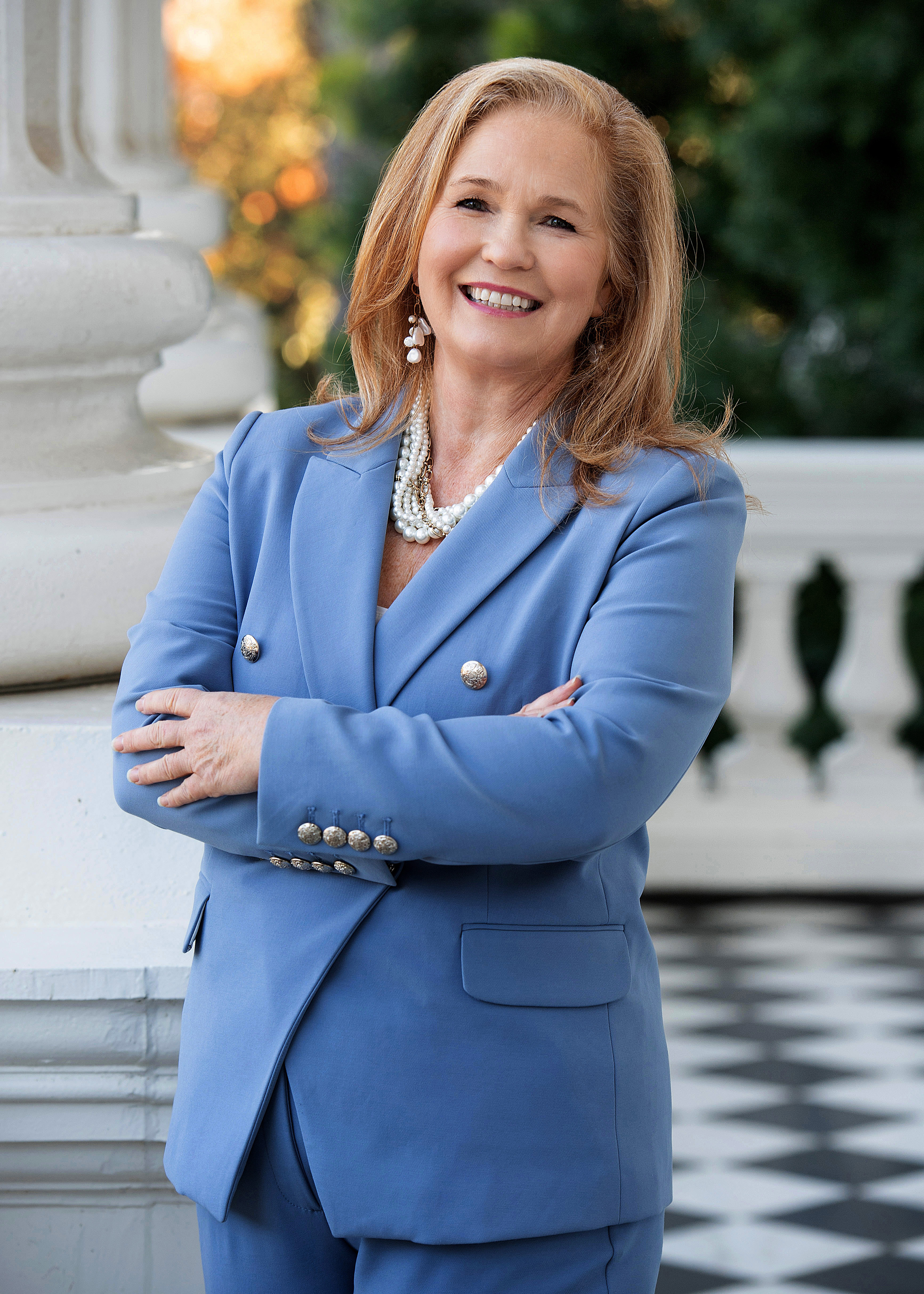
Photo of Gail Pellerin
D California Assembly · District 28 On the 2026 ballot

Asm. Gail Pellerin

Compare
Total votes
14,015
all sessions
Attendance
97%
208 missed
Lower than 99% of chamber peers
With party
99%
of cast votes
Near the chamber average
Bipartisan score
0%
crosses aisle rarely
Near the chamber average
Sponsored
924
bills & resolutions
Near the chamber average
Committees
11
assignments
924 bills and resolutions

Sponsored bills

Total
924
Primary
86
Co-sponsor
838
This page
924
matching current filters
Co-sponsor HR 102
Passed · California Assembly · Co-sponsor
Relative to Memorial Day.

Maddy summaryThis bill is a House Resolution that formally recognizes May 27, 2024, as Memorial Day in California. It serves as a commemorative measure to honor the men and women who have died while serving in the U.S. Armed Forces. The resolution does not alter laws or create new programs but instead expresses the state's gratitude for the sacrifices made by military personnel.

Passed May 23, 2024 1 co-sponsor
Co-sponsor SB 233
Signed into law · California Senate · Co-sponsor
Practice of medicine: Arizona physicians: abortions and abortion-related care for Arizona patients.

Existing law, the Medical Practice Act, establishes the Medical Board of California and the Osteopathic Medical Board of California to license and regulate the practice of medicine, and establishes examination, training, and other requirements for licensure as a physician and surgeon. A violation of the act is a misdemeanor. This bill, through November 30, 2024, would authorize a physician licensed to practice medicine in Arizona who meets certain requirements to practice medicine in California for the purpose of providing abortions and abortion-related care to patients who are Arizona residents traveling from Arizona, upon application for registration with the Medical Board of California or the Osteopathic Medical Board of California, as applicable. The bill would prohibit the physician from providing care or consultation for other purposes or to other patients, except under specified circumstances. The bill would require an Arizona physician, before practicing in California, to submit specified information to the Medical Board of California or the Osteopathic Medical Board of California, as applicable, including, among other information, written verification from the Arizona Medical Board or the Arizona Board of Osteopathic Examiners in Medicine and Surgery, or documentation printed from an online licensing system, that the physician's Arizona license to practice medicine is in good standing and confers on the physician the authority to practice abortions and abortion-related care. The bill would require the applicant to provide an affidavit attesting that, among other things, the applicant meets all of the requirements for registration, as specified, and would make it a misdemeanor for a person to provide false information. The bill would limit the information the California boards are required to disclose about a registrant. The bill would deem a physician registered pursuant to the bill's provisions a licensee of the applicable board, would authorize the applicable board to take enforcement against a person registered pursuant to the bill's provisions, and would prohibit the applicable boards from collecting any fees for registration. By creating a new crime, the bill would impose a state-mandated local program. The bill would repeal the bill's provisions on January 1, 2025. The California Constitution requires the state to reimburse local agencies and school districts for certain costs mandated by the state. Statutory provisions establish procedures for making that reimbursement. This bill would provide that no reimbursement is required by this act for a specified reason. This bill would declare that it is to take effect immediately as an urgency statute. Existing constitutional provisions require that a statute that limits the right of access to the meetings of public bodies or the writings of public officials and agencies be adopted with findings demonstrating the interest protected by the limitation and the need for protecting that interest. This bill would make legislative findings to that effect.

Signed into law May 23, 2024 1 co-sponsor
Co-sponsor AB 305
Passed · California Assembly · Co-sponsor
California Flood Protection Bond Act of 2024.

The California Drought, Water, Parks, Climate, Coastal Protection, and Outdoor Access For All Act of 2018, approved by the voters as Proposition 68 at the June 5, 2018, statewide primary election, authorizes the issuance of bonds in the amount of $4,000,000,000 pursuant to the State General Obligation Bond Law to finance a drought, water, parks, climate, coastal protection, and outdoor access for all program. The California Constitution requires a measure authorizing general obligation bonds to specify the single object or work to be funded by the bonds and further requires the measure to be approved by a 23 vote of each house of the Legislature and a majority of the voters. This bill would enact the California Flood Protection Bond Act of 2024 which, if approved by the voters, would authorize the issuance of bonds in the amount of $4,500,000,000 pursuant to the State General Obligation Bond Law for flood protection projects, as specified. The bill would provide for the submission of these provisions to the voters at the November 5, 2024, statewide general election.

Passed May 22, 2024 1 co-sponsor
Co-sponsor HR 100
Passed · California Assembly · Co-sponsor
Relative to Bike to School Day.

Maddy summaryThis bill designates May 17, 2024, as Bike to School Day in California to encourage students to ride bicycles or electric bikes to their schools. The resolution highlights the environmental, health, and recreational benefits of cycling while acknowledging the state's existing bike-friendly infrastructure and recent cycling events. It serves as a commemorative measure rather than a law that changes regulations or funding, and it directs the Assembly's Chief Clerk to distribute copies of the text for public awareness.

Passed May 20, 2024 1 co-sponsor
Co-sponsor HR 97
Passed · California Assembly · Co-sponsor
Relative to Harvey Milk Day.

Maddy summaryThis bill establishes April 27 as Harvey Milk Day to honor the first openly gay man elected to public office in a major U.S. city. The resolution recognizes Milk's legacy as a civil rights leader who fought against discrimination and advocated for LGBTQ+ visibility and unity among minority communities. It recounts key events in his life, including his assassination in 1978 and the subsequent legal proceedings against his killer. The measure serves as a commemorative acknowledgment of Milk's impact on California and national history rather than creating new laws or policies.

Passed May 20, 2024 1 co-sponsor
Co-sponsor AB 1999
In committee · California Assembly · Co-sponsor
Electricity: fixed charges.

Existing law vests the Public Utilities Commission with regulatory authority over public utilities, including electrical corporations. Existing law authorizes the commission to adopt new, or expand existing, fixed charges, as defined, for the purpose of collecting a reasonable portion of the fixed costs of providing electrical service to residential customers. Under existing law, the commission may authorize fixed charges for any rate schedule applicable to a residential customer account. Existing law requires the commission, no later than July 1, 2024, to authorize a fixed charge for default residential rates. Existing law requires these fixed charges to be established on an income-graduated basis, with no fewer than 3 income thresholds, so that low-income ratepayers in each baseline territory would realize a lower average monthly bill without making any changes in usage. This bill would prohibit modifications to the amount of the income-graduated fixed charge from exceeding changes in inflation, as provided. The bill would make the provisions authorizing the income-graduated fixed charge inoperative on July 1, 2028. The bill, commencing July 1, 2028, would instead permit the commission to authorize fixed charges that, as of January 1, 2015, do not exceed $5 per residential customer account per month for low-income customers enrolled in the California Alternate Rates for Energy (CARE) program and that do not exceed $10 per residential customer account per month for customers not enrolled in the CARE program. The bill would authorize these maximum allowable fixed charges to be adjusted by no more than the annual percentage increase in the Consumer Price Index for the prior calendar year, beginning January 1, 2016. The bill would require the commission to adopt any modification to an existing fixed charge for the collection of a reasonable portion of the fixed costs of providing electrical service to residential customers in a stand-alone proceeding. The bill would prohibit a fixed charge from resulting in an increase to an electrical corporation's revenue requirement. The bill would require the commission, on or before July 1, 2027, but no sooner than 2 years after the adoption of the income-graduated fixed charge, to submit a public report to the relevant policy committees of both houses of the Legislature on the electrical corporations' implementation of the income-graduated fixed charge and other cost-saving options, as specified. Under existing law, a violation of the Public Utilities Act or any order, decision, rule, direction, demand, or requirement of the commission is a crime. Because the provisions of this bill would be a part of the act and therefore a violation of the bill's requirements or of a commission action implementing its requirements would be a crime, the bill would impose a state-mandated local program. The California Constitution requires the state to reimburse local agencies and school districts for certain costs mandated by the state. Statutory provisions establish procedures for making that reimbursement. This bill would provide that no reimbursement is required by this act for a specified reason.

In committee May 16, 2024 1 co-sponsor
Co-sponsor SB 953
In committee · California Senate · Co-sponsor
Medi-Cal: menstrual products.

Existing law establishes the Medi-Cal program, which is administered by the State Department of Health Care Services and under which qualified low-income individuals receive health care services. The Medi-Cal program is, in part, governed and funded by federal Medicaid program provisions. Existing law establishes a schedule of covered benefits under the Medi-Cal program. This bill would add menstrual products, as defined, to that schedule of covered benefits. The bill would require the department to seek any necessary federal approvals to implement this coverage. The bill would require the department to seek, and would authorize the department to use, any and all available federal funding, as specified, to implement this coverage.

In committee May 16, 2024 1 co-sponsor
Co-sponsor HR 83
Passed · California Assembly · Co-sponsor
Relative to Menopause Awareness Month.

Maddy summaryThis bill designates October 2024 as Menopause Awareness Month in California to highlight the health and societal impacts of menopause on women. It acknowledges that millions of women face symptoms that can affect their daily lives and work, noting that women of color are at higher risk for complications like premature menopause and heart disease. The resolution encourages the state to provide better health information and services to support women's well-being before, during, and after this transition. While the text outlines these goals, the bill itself is a formal recognition rather than a law that creates new funding or mandates specific programs.

Passed May 16, 2024 1 co-sponsor
Co-sponsor AB 1786
In committee · California Assembly · Co-sponsor
California Individual Assistance Act: California Local Assistance Act.

Existing law, the California Emergency Services Act, empowers the Governor to proclaim a state of emergency under certain circumstances. Existing law defines a state of emergency to mean the duly proclaimed existence of conditions of disaster or of extreme peril to the safety of persons and property within the state caused by conditions such as, among others, air pollution, fire, flood, and storm. Existing law defines a local emergency to mean the duly proclaimed existence of conditions of disaster or of extreme peril to the safety of persons and property within the territorial limits of a county, city and county, or city, caused by conditions such as, among others, air pollution, fire, flood, and storm. This bill would add climate change and climate change exacerbated conditions to the list of conditions for which a state of emergency or local emergency may be proclaimed. Existing law, the California Disaster Assistance Act, requires the Director of Emergency Services to provide financial assistance to local agencies for their personnel costs, equipment costs, and the cost of supplies and materials used during disaster response activities, incurred as a result of a state of emergency proclaimed by the Governor, subject to specified criteria. The act continuously appropriates moneys in the Disaster Assistance Fund and its subsidiary account, the Earthquake Emergency Investigations Account, without regard to fiscal year, for purposes of the act. Existing law, the California Global Warming Solutions Act of 2006, establishes the State Air Resources Board as the state agency responsible for monitoring and regulating sources emitting greenhouse gases. The act authorizes the state board to include the use of market-based compliance mechanisms. Existing law requires all moneys, except for fines and penalties, collected by the state board from the auction or sale of allowances as part of a market-based compliance mechanism to be deposited in the Greenhouse Gas Reduction Fund and to be available upon appropriation by the Legislature. This bill would enact the California Individual Assistance Act to establish a grant program to provide funds to community-based organizations for specified costs related to a disaster, as prescribed. The bill would require the Director of Social Services to allocate moneys from the California Individual Assistance Act Account, which the bill would establish as a special account within the Disaster Assistance Fund, for purposes of the program. The bill would authorize the Director of Social Services to adopt regulations, as determined to be necessary, to govern the administration of the program. The bill would require the Controller to transfer $100,000,000 of the moneys in the Greenhouse Gas Reduction Fund to the California Individual Assistance Act Account for purposes of the act. By transferring moneys into a continuously appropriated fund, and by authorizing increased expenditure of moneys from a continuously appropriated fund for a new purpose, the bill would make an appropriation. This bill would additionally enact the California Local Assistance Act to establish a grant program to provide funds to local and tribal governments, transportation systems, and communities for specified costs related to a disaster, as prescribed. The bill would require the Strategic Growth Council to allocate moneys from the California Local Assistance Act Account, which the bill would establish as a special account within the Disaster Assistance Fund, for purposes of the program. The bill would authorize the Strategic Growth Council to adopt regulations, as determined to be necessary, to govern the administration of the program. The bill would require the Controller to transfer $400,000,000 of the moneys in the Greenhouse Gas Reduction Fund to the California Local Assistance Act Account for purposes of the act. By transferring moneys into a continuously appropriated fund, and by authorizing increased expenditure of moneys from a continuously appropriated fund for a new purpose, the bill would make an appropriation.


In committee May 16, 2024 1 co-sponsor
Primary AB 2627
In committee · California Assembly · Lead sponsor
Voter registration and outreach programs.

Existing law requires the Secretary of State to adopt regulations requiring each county to design and implement programs intended to identify qualified electors who are not registered to vote and to register those persons to vote. This bill would require the Secretary of State to award grants from the Civic Learning, Outreach, and Engagement Fund to local elections officials for programs that integrate voter registration and preregistration with civic education and engagement, and to coordinate with school districts, county offices of education, or charter schools to implement these programs. The bill would require a local elections official applying for a grant to submit to the Secretary of State a plan for administration of the civic education and engagement program, as specified. The bill would require a local elections official receiving a grant to evaluate the program each year and report the results to the Secretary of State, as specified. The bill would require initial grants be awarded for a minimum of three years and would require the Secretary of State, when awarding grants, to prioritize counties with lower voter registration and participation rates. The bill would establish the Civic Learning, Outreach, and Engagement Fund in the General Fund and would make the moneys in the fund available, upon appropriation by the Legislature, for the grants and contracts provided for in the bill.

In committee May 16, 2024 0 co-sponsors
Showing 581 to 590 of 924 bills
Previous 1 … 58 59 60 … 93 Next