

Passed Jul 6, 2023
1 co-sponsor
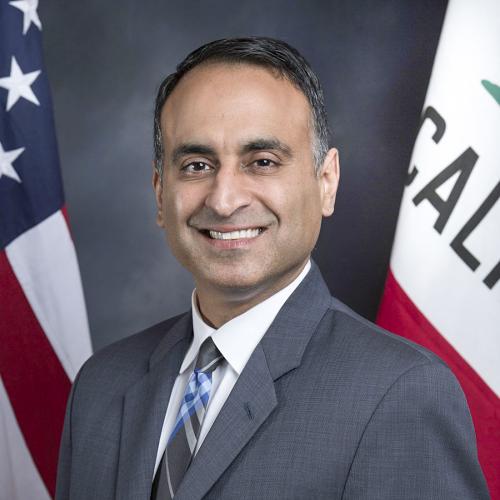
Asm. Ash Kalra
Total votes
23,729
all sessions
Attendance
97%
547 missed
Higher than 75% of chamber peers
With party
99%
of cast votes
Near the chamber average
Bipartisan score
0%
crosses aisle rarely
Near the chamber average
Sponsored
2,377
bills & resolutions
Higher than 97% of chamber peers
Committees
12
assignments
2,377 bills and resolutions
Sponsored bills
Total
2,377
Primary
290
Co-sponsor
2,087
This page
2,377
matching current filters
Passed Jul 6, 2023
0 co-sponsors
Passed Jul 3, 2023
1 co-sponsor
Privacy: reverse demands.
The United States Constitution generally requires a state to give full faith and credit to the public acts, records, and judicial proceedings of every other state. Existing law sets forth procedures by which a person may enforce a judgment for the payment of money issued by the court of a state other than California. Existing law, the Electronic Communications Privacy Act, determines how governmental entities may access information on electronic devices and from electronic communication service providers, as defined. Existing law requires a California corporation that provides electronic communication services or remote computing services to the general public to comply with a warrant issued by another state to produce records that would reveal the identity of the customers using those services, data stored by, or on behalf of, the customer, the customer's usage of those services, the recipient or destination of communications sent to or from those customers, or the content of those communications as if that warrant had been issued by a California court, except as specified. This bill would prohibit any government entity from seeking, or any court from enforcing, assisting, or supporting, a reverse-keyword or reverse-location demand, as defined, issued by a government entity or court in this state or any other state. The bill would prohibit a person or California entity from complying with a reverse-keyword or reverse-location demand. The bill would require a court to suppress any information obtained or retained in violation of these provisions, the United States Constitution, or California Constitution. The bill would authorize the Attorney General to commence a civil action for compliance with these provisions. The bill would require a government entity to immediately notify any person whose information was obtained in violation of these provisions of the violation and of the legal recourse available, as specified. The bill would authorize an individual whose information was obtained, or a service provider or other recipient of the reverse-keyword or reverse-location demand to file a petition to void or modify the demand or order the destruction of information obtained in violation of these provisions. The bill would authorize an individual whose information was obtained by a government entity in violation of these provisions to bring a civil suit against the government entity for damages, injunctive or declaratory relief, or other relief that the court deems proper. The California Constitution provides for the Right to Truth-in-Evidence, which requires a 23 vote of the Legislature to exclude any relevant evidence from any criminal proceeding, as specified. Because the bill would require any information obtained or retained in violation of the bill's provisions to be suppressed in a trial, hearing, or other proceeding, it would require a 23 vote. The bill would make these provisions severable.
Passed Jun 30, 2023
1 co-sponsor
Relative to the 2023 International Day of Yoga.
This measure would recognize June 21, 2023, as the 2023 International Day of Yoga in California.
Signed into law Jun 29, 2023
0 co-sponsors
Relative to Osteoporosis Awareness and Prevention Month.
This measure would designate the month of May 2023 as Osteoporosis Awareness and Prevention Month.
Signed into law Jun 29, 2023
1 co-sponsor
Relative to California Nonprofits Day.
This measure would declare June 7, 2023, as California Nonprofits Day in recognition of the importance of nonprofit organizations to the economy and well-being of this state.
Signed into law Jun 29, 2023
1 co-sponsor
California Court Interpreter Workforce Pilot Program.
Existing law generally requires a person who interprets in a court proceeding to be a certified court interpreter, except as specified. Existing law requires the Judicial Council to designate languages requiring certification programs and requires the Judicial Council to adopt and publish guidelines, standards, and procedures to determine which certification entities will be approved to test and certify interpreters. This bill would create, until January 1, 2030, the California Court Interpreter Workforce Pilot Program to be administered by the Judicial Council to develop training and increase the number of eligible applicants for employment as court interpreters. The bill would require the Judicial Council, on or before September 1, 2024, to select a minimum of 4 counties, including the County of Los Angeles, to participate in the pilot program, and would require the Judicial Council to select up to 10 applicants per superior court in the program. The bill would require the Judicial Council, on or before July 1, 2025, to establish an application form and procedure for participation in the pilot program and would require the Judicial Council to begin accepting applications to the program beginning December 1, 2025. The bill would require the Judicial Council, on or before July 1, 2025, in collaboration with participating courts and designated labor organizations representing court interpreters in a county, to develop a court interpreter training program. The bill would require the training program to include, among other things, options for appropriate training to prepare for the applicable interpreter exam authorized by the Judicial Council. The bill would require participants to agree to work for the courts for at least 3 years after successfully passing all required examinations and enrollment with the Judicial Council as a court interpreter. The bill would authorize courts to require participants to pay back the costs of training, coursework, and exam fees on a prorated basis based on the length of employment if under 3 years, except as specified. The bill would also create the California Interpreter Workforce Development Plan fund to, upon appropriation, be used by the Judicial Council for the purpose of the pilot program, including paying for the costs of training, coursework, and up to 3 interpreter exam fees for applicants.
Passed Jun 26, 2023
1 co-sponsor
A resolution to propose to the people of the State of California an amendment to the Constitution of the State, by adding Section 1.5 to Article XIV thereof, relating to employment.
Existing state law forbids a public employer from deterring or discouraging public employees from becoming or remaining members of an employee organization. Existing federal law forbids employers from interfering with, restraining, or coercing employees in the exercise of rights relating to organizing, forming, joining, or assisting a labor organization for collective bargaining purposes, or from working together to improve terms and conditions of employment, or refraining from any such activity. This measure, the Right to Organize and Negotiate Act, would ensure that all Californians have the right to join a union and to negotiate with their employers, through their legally chosen representative, to protect their economic well-being and safety at work. This measure would require the Legislature to provide for the enforcement of these rights. This measure would also prohibit, after January 1, 2023, the passing of any statute or ordinance that interferes with, negates, or diminishes the right of employees to organize and bargain collectively over their wages, hours, and other terms and conditions of employment and workplace safety.
In committee Jun 26, 2023
1 co-sponsor
School curriculum: Asian American history and contributions.
This measure would urge all schools to ensure that Asian American history and contributions are included in their curriculum, alongside those of other communities of color.
Signed into law Jun 23, 2023
1 co-sponsor
Ask Maddy
·
AI policy assistant
Ask Maddy about Ash Kalra
Scope: CA
Hi! I can help you understand Ash Kalra's legislative record. What would you like to know?
Try one of these
i
Maddy answers using official bill text and legislative records. Always verify before sharing.
Sources cited inline