

(1) Existing law establishes the Pure Pet Food Act of 1969, which is administered by the State Department of Public Health. Under the act, every person who manufactures a processed pet food, as defined, in California is required to first obtain a license from, and every person who manufactures a processed pet food for import into California from another state is required to first obtain a registration certificate from, the State Department of Public Health. Existing law excludes from the definition of "processed pet food" fresh or frozen pet foods subject to the control of the Department of Food and Agriculture. Under existing law, an annual license or registration certificate shall only be issued when certain conditions are met, including, among others, when the applicant submits to the State Department of Public Health the label that would be attached to the container of each type of processed pet food. Existing law also provides that, unless a different penalty is expressly provided, a violation of any provision of the Food and Agricultural Code is a misdemeanor. This bill would require the Department of Food and Agriculture to collect, on an annual basis, a charge of $200 from a manufacturer of dog and cat food, as defined, for each label submitted by the manufacturer to the State Department of Public Health for dog and cat food, as provided. The bill would require the State Department of Public Health to, at the request of the Department of Food and Agriculture, provide the Department of Food and Agriculture with the information necessary to administer the above-mentioned provision. The bill would require a manufacturer of dog and cat food that has less than $75,000 in verifiable gross annual sales to instead only pay a single annual charge of $200 to the Department of Food and Agriculture. The bill would establish the California Spay-Neuter Fund in the State Treasury and would require these moneys to be transferred into the fund. The bill would continuously appropriate all moneys in the fund to the Department of Food and Agriculture without regard to fiscal years, as provided, thereby making an appropriation. (2) Existing law prohibits a public animal control agency or shelter, society for the prevention of cruelty to animals shelter, humane society shelter, or rescue group from selling or giving away any cat or dog that has not been spayed or neutered, except as provided. Existing law also requires the owner of a nonspayed or unneutered cat or dog that is impounded by a city or county animal control agency or shelter, society for the prevention of cruelty to animals, or humane society to receive a specified fine. This bill would require the Department of Food and Agriculture to undertake certain actions in administering and overseeing the California Spay-Neuter Fund, including, among others, offering competitive grants or set allocations, or both, to public animal shelters, private animal shelters with public contracts, or nonprofits for whom spay-neuter is a primary activity and requiring these competitive grants and set allocations to primarily be used to fund spay-neuter services. The bill would prohibit the department's expenses in administering the fund from exceeding 5% of the moneys deposited into the fund in any fiscal year. The bill would also require the department to promulgate certain rules, including, among others, by establishing administrative, recordkeeping, and reporting requirements related to the receipt of fund moneys, as specified. The bill would also make related findings and declarations. (3) This bill would include a change in state statute that would result in a taxpayer paying a higher tax within the meaning of Section 3 of Article XIIIA of the California Constitution, and thus would require for passage the approval of 23 of the membership of each house of the Legislature. (4) Because the provisions of this bill would be located in the Food and Agricultural Code and the violation of these provisions would be a crime, the bill would impose a state-mandated local program. The California Constitution requires the state to reimburse local agencies and school districts for certain costs mandated by the state. Statutory provisions establish procedures for making that reimbursement. This bill would provide that no reimbursement is required by this act for a specified reason.
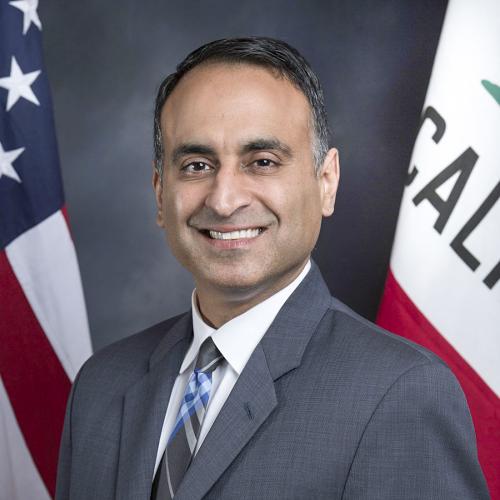
Asm. Ash Kalra
Sponsored bills
The Political Reform Act of 1974 prohibits a foreign government or foreign principal from making any contribution, expenditure, or independent expenditure in connection with the qualification or support of, or opposition to, a state or local ballot measure or an election for a state or local office. The act prohibits a person or committee from soliciting or accepting a contribution from a foreign government or foreign principal for the same purposes. The act makes a violation of these prohibitions a misdemeanor. This bill would expand these prohibitions to include contributions, expenditures, or independent expenditures made by a foreign-influenced business entity, as defined, in connection with an election or ballot measure. The bill would require a business entity that makes a contribution, expenditure, or independent expenditure to file with the filing officer and the applicable candidate or committee a statement of certification, signed by the entity's chief executive officer under penalty of perjury, avowing that the entity was not a foreign-influenced business entity on the date the contribution, expenditure, or independent expenditure was made. The bill would prohibit a person who receives funds from a business entity from using those funds for purposes of a contribution, expenditure, or independent expenditure in connection with a ballot measure or election unless the person receives a copy of the statement of certification from the business entity. By creating a new crime and expanding the scope of an existing crime, the bill would impose a state-mandated local program. The California Constitution requires the state to reimburse local agencies and school districts for certain costs mandated by the state. Statutory provisions establish procedures for making that reimbursement. This bill would provide that no reimbursement is required by this act for a specified reason. The Political Reform Act of 1974, an initiative measure, provides that the Legislature may amend the act to further the act's purposes upon a 23 vote of each house of the Legislature and compliance with specified procedural requirements. This bill would declare that it furthers the purposes of the act.
Existing law, the Uniform Anatomical Gift Act, authorizes the creation of a not-for-profit entity to be designated as the California Organ and Tissue Donor Registrar and requires that entity to establish and maintain the Donate Life California Organ and Tissue Donor Registry for persons who have identified themselves as organ and tissue donors upon their death. Existing law provides for the Medi-Cal program, administered by the State Department of Health Care Services and under which qualified low-income individuals receive health care services. The Medi-Cal program is, in part, governed and funded by federal Medicaid program provisions. Existing law requires the department, in consultation with the board governing the California Health Benefit Exchange, to develop a single paper, electronic, and telephone application for insurance affordability programs, including Medi-Cal. This bill would require the department to modify the electronic application for insurance affordability programs to add an option for individuals to enroll in the Donate Life California Organ and Tissue Donor Registry. The bill would require the option to include specified check boxes for an applicant to indicate whether to add the applicant's name to the registry. The bill would require the option to be voluntary to complete and to not be a required part of the application. The bill would also require a specified disclosure related to organ and tissue donations to be included with the check boxes described above. The bill would require the department to electronically transmit specified information related to enrollment in the registry on a weekly basis to the Donate Life California nonprofit organization.
Existing law requires the Department of Motor Vehicles to establish the California Legacy License Plate Program, and to create and issue a series of specialized license plates, consisting of one or more of 3 specified designs that replicate license plates from the state's past. Existing law requires the department to collect and hold paid applications for the plates, as specified, and prohibits the department from issuing a specialized license plate until it has received not less than 7,500 paid applications for any one of the particular plates on or before January 1, 2015. This bill would extend the deadline for receipt of the required number of paid applications to January 1, 2025, for plate designs that did not receive the required number of applications by January 1, 2015.
(1) Existing law prohibits a person subject to a protective order, as defined, from owning, possessing, purchasing, or receiving a firearm or ammunition while that protective order is in effect. Existing law makes a violation of that prohibition with regard to purchasing or receiving a firearm or ammunition punishable by imprisonment in the county jail for up to one year, by imprisonment in the state prison for 16 months or 2 or 3 years, or by a fine not exceeding $1,000, or by both that imprisonment and fine. Existing law makes a violation of that prohibition with regard to owning or possessing a firearm or ammunition punishable by imprisonment in the county jail for up to one year, or by a fine not exceeding $1,000, or by both that imprisonment and fine. After notice and hearing, this bill would, for protective orders, as specified, issued on or after July 1, 2024, prohibit a person subject to the protective order from owning, possessing, purchasing, or receiving a firearm or ammunition within 3 years after the expiration of the order and make a violation of these provision a crime. The bill would require a court, if they find that the person willfully violated that prohibition within 3 years after the expiration of the order, to impose the maximum fine allowed under existing law. (2) Existing law allows a search warrant to be issued upon various grounds, including when the property or things to be seized include a firearm, if the prohibited firearm is possessed, owned, in the custody of, or controlled by a person against whom a specified protective order has been issued, and the person is served with the order and fails to relinquish the firearm as required by law. This bill would expand the grounds for the search warrant to include a person who is subject to any civil or criminal protective order that includes a prohibition on owning, possessing, or having custody or control of a firearm. (3) Existing law requires the Judicial Council to provide notice on all protective orders issued within the state and requires a restraining order requiring a person to relinquish a firearm or ammunition to state on its face that the respondent is prohibited from owning, possessing, purchasing, or receiving a firearm or ammunition while the protective order is in effect. This bill would require the Judicial Council to also include a statement in the notice that the firearm and ammunition prohibition extends for 3 years after the expiration of the protective order that is issued on or after July 1, 2024. The bill would require a restraining order to include a similar statement. By creating new crimes, this bill would create a state-mandated local program. The California Constitution requires the state to reimburse local agencies and school districts for certain costs mandated by the state. Statutory provisions establish procedures for making that reimbursement. This bill would provide that no reimbursement is required by this act for a specified reason.
Existing law, the Control, Regulate and Tax Adult Use of Marijuana Act (AUMA) , an initiative measure approved as Proposition 64 at the November 8, 2016, statewide general election, authorizes a person who obtains a state license under AUMA to engage in commercial adult-use cannabis activity pursuant to that license and applicable local ordinances. Existing law, the Medicinal and Adult-Use Cannabis Regulation and Safety Act (MAUCRSA) , among other things, consolidates the licensure and regulation of commercial medicinal and adult-use cannabis activities. Under MAUCRSA, the Department of Cannabis Control has sole authority to license and regulate commercial cannabis activity, which MAUCRSA defines to include, among other activities, the delivery and sale of cannabis and cannabis products as provided for therein, and acting as a cannabis event organizer for temporary cannabis events. This bill would add acting as a cannabis caterer for a private event to the definition of commercial cannabis activity. MAUCRSA does not supersede or limit the authority of a local jurisdiction to adopt and enforce local ordinances to regulate commercial cannabis businesses within that local jurisdiction. MAUCRSA authorizes the department to issue a state temporary event license to a licensee authorizing onsite cannabis sales and consumption at a county fair event, district agricultural association event, or at another venue expressly approved by a local jurisdiction if, among other requirements, (1) access to the area where cannabis consumption is allowed is restricted to persons 21 years of age or older; (2) cannabis consumption is not visible from any public place or nonage-restricted area; and (3) sale or consumption of alcohol or tobacco is not allowed on the premises. This bill would authorize the department to issue a state caterer license authorizing the licensee to serve cannabis or cannabis products at a private event approved by a local jurisdiction for the purpose of allowing event attendees 21 years of age or older to consume the cannabis or cannabis products that is not hosted, sponsored, or advertised by the caterer. In determining whether to issue a state caterer license, the bill would require the department to consider the proximity of the private event to a youth recreation center, school, or location where persons under 21 years of age congregate. Under the bill, consumption of alcohol or tobacco would be authorized on the premises of that event, as specified. The bill would prohibit a caterer licensee from serving cannabis or cannabis products at any one premises for more than 36 events in one calendar year, except as specified, and would authorize a caterer licensee to reuse cannabis at a subsequent event, as provided. MAUCRSA requires a cannabis license applicant to provide certain information relating to the proposed premises where the license privileges would be exercised. This bill would exempt a caterer license application from those requirements, except that the bill would require an applicant for a cannabis caterer license to provide proof that the owner of the property on which the private event will be held acknowledges the use of the property for the private event. AUMA authorizes the Legislature to amend its provisions with a 23 vote of both houses to further its purposes and intent. This bill would state that the bill furthers the purposes and intent of AUMA.
The State Contract Act governs the bidding and award of public works contracts by specific state departments and requires an awarding department, before entering into any contract for a project, to prepare full, complete, and accurate plans and specifications and estimates of cost. The Buy Clean California Act, requires, among other things, the Department of General Services, in consultation with the State Air Resources Board, to establish a maximum acceptable global warming potential for each category of eligible materials, as specified. That law requires an awarding authority, as defined, to require a successful bidder to submit a current Environmental Product Declaration developed in accordance with specified standards, for that type of product. This bill would provide that it is the intent of the Legislature to enact subsequent legislation that provides that the policy of the state is to ensure that companies that contract with the state are not contributing to tropical deforestation, either directly or through their supply chains.
(1) Existing law provides that every contract that restrains anyone from engaging in a lawful profession, trade, or business of any kind is, to that extent, void, except as provided. Existing law authorizes any person who sells the goodwill of a business, any owner of a business entity selling or otherwise disposing of all of their ownership interest in the business entity, or any owner of a business entity that sells specified assets or ownership interests to agree with the buyer to refrain from carrying on a similar business within a specified geographic area in which the business so sold, or that of the business entity, division, or subsidiary has been carried on, if the buyer, or any person deriving title to the goodwill or ownership interest from the buyer, carries on a like business therein. Existing law defines "ownership interest" as a partnership interest, membership interest, or a capital stockholder, as described. This bill would modify the definition of "ownership interest" to require the partnership interest, membership interest, or capital stock to be more than a 10% interest of the total partnership interest, more than a 10% interest of the total membership interest, or more than 10% of the total shares of ownership of the entity, respectively. This bill would prohibit an employer, as defined, from entering into, presenting an employee, as defined, or prospective employee as a term of employment, or attempting to enforce any contract in restraint of trade, as defined, that is void, as described. The bill would provide that an employer, as defined, that violates that provision is liable for actual damages and an additional penalty of up to $5,000 per employee, as defined, or prospective employee. The bill would authorize an employee or prospective employee to bring an action for injunctive relief and for the recovery of actual damages and penalties and would provide that a prevailing employee or prospective employee is entitled to recover reasonable costs and attorney's fees. The bill would require the Attorney General to receive and investigate allegations of a violation of this provision and would authorize the Attorney General to bring an action enforcing this provision. Existing law provides for a system of labor standards enforcement administered by the Labor Commissioner. This bill would require the Labor Commissioner to, in coordination with the Attorney General, receive and investigate complaints related to the above-described provisions of this bill. (2) Existing law, the State Bar Act, provides for the licensure and regulation of attorneys by the State Bar of California, a public corporation. Existing law provides that it is cause for suspension, disbarment, or other discipline for any licensee, whether acting on their own behalf or on behalf of someone else, whether or not in the context of litigation, to solicit, agree, or seek agreement that, among other things, misconduct or the terms of a settlement of a claim for misconduct shall not be reported to the State Bar. This bill would provide that it is cause for suspension, disbarment, or other discipline for any licensee to enter into with an employee, prospective employee, or former employee, present an employee, prospective employee, or former employee as a term of employment, or attempt to enforce any employee contract or other agreement in restraint of trade, as provided. (3) Existing law prohibits an employer from requiring an employee who primarily resides and works in the state to agree, as a condition of employment, to a provision that would require the employee to adjudicate outside of the state a claim arising in the state or would deprive the employee of the substantive protection of state law with respect to a controversy arising in the state. Existing law provides that this prohibition does not apply to a contract with an employee who is in fact individually represented by legal counsel in negotiating the terms of an agreement to designate either the venue or forum in which a controversy arising from the employment contract may be adjudicated or the choice of law to be applied. This bill would provide that, for a contract entered into, modified, or extended on or after January 1, 2025, the above-described prohibition does not apply to a contract with an employee who is individually represented by legal counsel, excluding when the counsel is paid for by, or was selected based upon the suggestion of, the employee's employer, in negotiating the terms of an agreement and, at the option of the employee, designates either the venue or forum in which a controversy arising from the employment contract may be adjudicated or the choice of law to be applied.
Existing law, the California Worker Adjustment and Retraining Act, governs relocations, terminations, and mass layoffs. Existing law prohibits an employer from ordering a mass layoff, relocation, or termination at a covered establishment unless, 60 days before the order takes effect, the employer gives prescribed written notice of the order to specified entities, including the local workforce investment board and the chief elected official of each city and county government within which the termination, relocation, or mass layoff occurs. Existing law exempts certain types of employment from the act, including seasonal employment where the employees were hired with the understanding that their employment was seasonal and temporary (seasonal employment exemption) . Existing law makes an employer who fails to give notice as required liable to each employee entitled to notice who lost their employment for prescribed compensation, calculated for the period of the employer's violation, up to a maximum of 60 days, or 12 the number of days that the employee was employed by the employer, whichever period is smaller. Existing law authorizes the Labor Commissioner to enforce specified provisions of existing law, as prescribed. Existing law defines terms for its purposes, including definitions for the terms "employer" and "employee." Existing law defines "mass layoff" for purposes of the act to mean a layoff during any 30-day period of 50 or more employees at a covered establishment, and defines "covered establishment" as an industrial or commercial facility that employs, or has employed within the preceding 12 months, 75 or more persons. This bill would require the prescribed notice 75 days before the order takes effect, and would make a conforming change to the calculation of employer liability. The bill would modify the requirement for notice to the local workforce investment board and the chief elected official of each city and county government within which the termination, relocation, or mass layoff occurs to apply only to a termination, relocation, or mass layoff that impacts 50 or more employees at a single location. The bill would require a labor contractor to remit to the employee the payment provided to the client employer in the full amount calculated, as specified, for a violation of the notice requirement, and would define a "labor contractor" for purposes of the act. This bill would additionally require for the application of the seasonal employment exemption that the season be complete. The bill would also exempt from the act employees who are employed by a labor contractor to fulfill the needs of a temporary project with a defined end date and are laid off because of the completion of the temporary employment contract, as specified. This bill would include within the term "employer" a client employer of a labor contractor. The bill would include within the term "employee" a person employed by a labor contractor and performing labor with the client employer for at least 6 months of the 12 months and for at least 60 hours preceding the date on which notice is required. The bill would revise the definition of "covered establishment" to instead mean a place of employment that employs, or has employed within the preceding 12 months, 75 or more persons, and would specify that a "covered establishment" may be a single location or a group of locations, as specified. The bill would revise the definition of "mass layoff" to also include employees reporting to a covered establishment. This bill would prohibit an employer from utilizing compliance with the act in connection with a severance agreement and waiver of an employee's right to claims. The bill would provide that any general release, waiver of claims, or nondisparagement or nondisclosure agreement that is made a condition of the payment of amounts for which the employer is liable is void as a matter of law and against public policy. The bill would prohibit an employer who is required to give notice from offering an employee a separate agreement that includes a general release, waiver of claims, or nondisparagement or nondisclosure agreement, unless the agreement is offered in exchange for reasonable consideration that is in addition to anything of value to which the individual already is entitled and includes a statement to this effect, as specified. The bill would provide that any agreement in violation of this prohibition is void as a matter of law and against public policy, and would make an employer who violates this provision subject to a civil penalty of up to $500 for each violation.
Existing law, until January 1, 2024, increases the smog abatement fee on certain vehicles by a specified amount and requires the revenues generated by the increase to be deposited in the Air Quality Improvement Fund and the Alternative and Renewable Fuel and Vehicle Technology Fund. Existing law, until January 1, 2024, increases vehicle registration fees and certain service fees for identification plates by specified amounts. Existing law requires the revenue generated by the increase in those fees to be deposited in the Alternative and Renewable Fuel and Vehicle Technology Fund and either the Air Quality Improvement Fund or the Enhanced Fleet Modernization Subaccount, as provided. This bill would extend the increases in those charges to July 1, 2035. Existing law, until January 1, 2024, prohibits the State Air Resources Board from enforcing any element of its clean fuels outlet regulations or other regulation that requires or has the effect of requiring suppliers, as defined, to construct, operate, or provide funding for the construction or operation of publicly available hydrogen-fueling stations. Existing law, until January 1, 2024, requires the state board to aggregate and make available certain information regarding projected leases and sales of, and the registration of, hydrogen-fueled vehicles, to evaluate, based on that information, the need for additional publicly available hydrogen-fueling stations for the actual and projected number of hydrogen-fueled vehicles, the geographic areas where fuel will be needed, and station coverage, and to report the finding of the evaluation to the State Energy Resources Conservation and Development Commission. Existing law, until January 1, 2024, requires the commission to annually allocate $20,000,000 to fund the number of publicly available hydrogen-fueling stations identified by the state board, not to exceed 20% of the moneys appropriated by the Legislature from the Alternative and Renewable Fuel and Vehicle Technology Fund, until at least 100 publicly available hydrogen-fueling stations are operating in the state. This bill would extend the above-described provisions to July 1, 2035, and would repeal them as of January 1, 2036. The bill would lower the annual allocation described above to $10,000,000, require the commission to make that allocation only until July 1, 2030, and impose other specified requirements. The bill would also delete the requirements that the hydrogen-fueling stations be publicly available and that there be at least 100 hydrogen-fueling stations operating in the state. Existing law creates the Enhanced Fleet Modernization Program to provide compensation for the retirement and replacement of passenger vehicles and light-duty and medium-duty trucks that are high polluters. Existing law requires the Bureau of Automotive Repair to administer the program and the state board to adopt the guidelines for the program. Existing law requires the guidelines to ensure vehicle replacement or a mobility option be an option for all motor vehicle owners and may be in addition to compensation for vehicles retired. Existing law creates the Enhanced Fleet Modernization Subaccount in the High Polluter Repair or Removal Account and makes available, upon appropriation, all moneys in the account to establish, implement, and administer the program. This bill would require the guidelines to ensure each replacement vehicle in the program be either a plug-in hybrid or zero-emission vehicle unless the state board makes a specified determination regarding either the availability of vehicles or the availability of charging and refueling capabilities in consultation with the commission, as specified. Existing law establishes the Clean Transportation Program that is administered by the commission to provide financial assistance to develop and deploy innovative technologies that transform California's fuel and vehicle types to help attain the state's climate change policies with an emphasis on the development and deployment of technology and alternative and renewable fuels in the marketplace. Existing law authorizes the commission to make a single source or sole source award for applied research. This bill would revise and recast the Clean Transportation Program to, among other things, change the emphasis of the program to the development and deployment of zero-emission technology and fuels in the marketplace where feasible and near-zero-emission technology and fuels elsewhere. The bill would additionally authorize the commission to make a single source or sole source award to public or nonpublic entities that manage a United States Department of Energy national laboratory. The bill would require the commission, on and after January 1, 2025, to expend at least 50% of the moneys appropriated to the program on programs and projects that directly benefit or serve residents of disadvantaged and low-income communities and low-income Californians. The bill would also require the State Energy Resources Conservation and Development Commission, by January 1, 2028, in consultation with the State Air Resources Board and the Department of Motor Vehicles, to propose to the Legislature alternative funding methodologies or fee structures for funding zero-emission vehicle infrastructure for light-, medium-, and heavy-duty vehicles. The bill would require the proposal to include an assessment of the economic equity of the alternatives. This bill would declare that it is to take effect immediately as an urgency statute.