

Existing law generally requires an online marketplace to require a high-volume third-party seller on the online marketplace to make certain disclosures. Existing law requires an online marketplace to suspend future sales activity of a high-volume third-party seller that is not in compliance with those information sharing requirements, as specified. Existing law imposes certain information retention and security requirements on an online marketplace and prohibits specified uses of that information. Existing law generally defines a "high-volume third-party seller," for purposes of the above-described provisions, as a third-party seller who has entered into a certain number of consumer product sales transactions through an online marketplace for which payment is processed by the online marketplace, as specified. Existing law defines an "online marketplace," for purposes of those provisions, as a consumer-directed, electronically accessed platform that includes features that allow for, facilitate, or enable, and are used by, a third-party seller to engage in the sale, purchase, payment, storage, shipment, or delivery of a consumer product and that has a contractual relationship with consumers governing their use of the platform to purchase consumer products. This bill would revise the types of transactions that qualify a third-party seller as a "high-volume third-party seller," for those purposes. Specifically, the bill would remove the conditions that the transactions be made through an online marketplace and that the online marketplace process the payment and, instead, would add the condition that the transactions were made utilizing an online marketplace. The bill would also revise the definition of "online marketplace" by removing the conditions that the above-described features be used by third-party sellers, and that the platform have the above-described contractual relationship with consumers. Existing law requires a high-volume third-party seller to disclose and certify to the online marketplace certain identification, contact, and payment information of the seller, as specified. This bill would require an online marketplace to establish and maintain a policy prohibiting the sale of stolen goods on the marketplace and to provide a mechanism to notify the marketplace of the sale of stolen goods, as specified. The bill would require an online marketplace to alert local, regional, or state law enforcement agencies in California if it knows or should know that a third-party seller is selling or attempting to sell stolen goods to a California resident, except as specified. Existing law requires a person or entity who violates the above-described provisions to be liable for a civil penalty not to exceed $10,000 for each violation and reasonable attorney's fees and costs and to be subject to preventive relief, as specified. Existing law limits recovery and relief to a civil action brought by the Attorney General, as specified. This bill would expand recovery and relief to a civil action brought by a district attorney in any county, a city attorney in any city or city and county, or a county counsel in any county. The bill would make these changes operative on July 1, 2025.
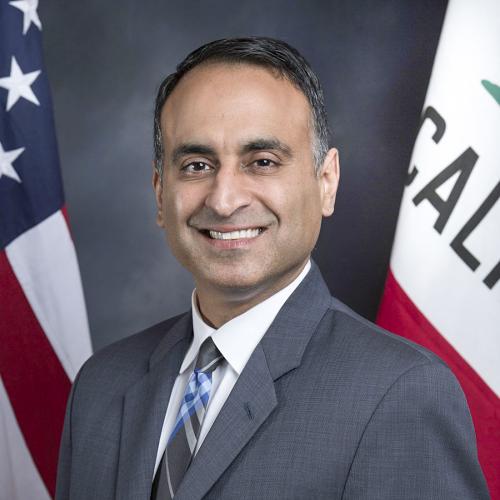
Asm. Ash Kalra
Sponsored bills
Existing law requires the schedule of parking penalties for parking violations and late payment penalties to be established by the governing body of the jurisdiction where the notice of violation is issued, as specified. This bill would specify that, when paid by mail, payment of a parking penalty or late payment penalty is deemed received on the date payment is postmarked. This bill would, notwithstanding any other law, prohibit a late payment penalty for a parking violation from exceeding 30% of the established parking penalty. Existing law establishes a process by which a person who has received a notice of a parking violation or a notice of a delinquent parking violation may contest the notice. Existing law requires the notice of delinquent parking violation to include information that renewal of the vehicle registration is contingent upon the registered owner paying the parking penalty or contesting the citation within 21 calendar days from the date of issuance of the citation or 14 calendar days after the mailing of the notice of delinquent parking violation, or filing a specified affidavit. Existing law prohibits the addition of additional fees, assessments, and charges if the owner complies with the above-described deadlines and requirements. Existing law authorizes a person to request an initial review of the notice by the issuing agency for a period of 21 calendar days from the issuance of the notice of the parking violation or 14 calendar days from the mailing of a notice of delinquent parking notification, exclusive of the days the processing agency receives a specified request and the day the processing agency complies with the request. This bill would extend the time for the registered owner to pay the penalty or contest the citation to 30 calendar days, and extend the time to pay following issuance of the notice of delinquent parking violation to 21 calendar days. The bill would prohibit the imposition of additional fees until after the expiration of 30 days from the date of issuance of the parking violation. The bill would prohibit governing bodies from sending citations to the Department of Motor Vehicles for registration renewal hold until after 30 days from the date of issuance of the parking citation. This bill would extend the time for the person to request an initial review to 30 calendar days from the issuance of the notice of the parking violation or 21 days from the mailing of a notice of delinquent parking notification, exclusive of the days the processing agency receives a specified request and the day the processing agency complies with the request. This bill would require its provisions to be implemented in a local jurisdiction on the first day of the local jurisdiction's first fiscal year following January 1, 2025. By creating new duties for local entities, the bill would impose a state-mandated local program. The California Constitution requires the state to reimburse local agencies and school districts for certain costs mandated by the state. Statutory provisions establish procedures for making that reimbursement. This bill would provide that, if the Commission on State Mandates determines that the bill contains costs mandated by the state, reimbursement for those costs shall be made pursuant to the statutory provisions noted above.
Existing law establishes the Department of Industrial Relations within the Labor and Workforce Development Agency to, among other things, foster, promote, and develop the welfare of the wage earners of California, to improve their working conditions, and to advance their opportunities for profitable employment. Existing law establishes the Division of Labor Standards Enforcement under the direction of the Labor Commissioner within the Department of Industrial Relations, and requires the division to ascertain the wages paid to all employees in this state, to ascertain the hours and conditions of labor and employment in the various occupations, trades, and industries in which employees are employed in this state, and to investigate the health, safety, and welfare of those employees. This bill would require the Labor and Workforce Development Agency to convene a working group to study and evaluate topics related to the minimum wage in California. The bill would require the working group to submit to the Legislature, on or before July 1, 2025, a report that outlines recommendations for raising the minimum wage for all workers in California.
The Unruh Civil Rights Act (Unruh Act) requires persons within the jurisdiction of the state to be free and equal and, regardless of the person's sex, race, color, religion, ancestry, national origin, disability, medical condition, genetic information, marital status, sexual orientation, citizenship, primary language, or immigration status to be entitled to the full and equal accommodations, advantages, facilities, privileges, or services in all business establishments, as prescribed, and makes a violation of the federal Americans with Disabilities Act of 1990 (ADA) a violation of the act. Existing law imposes liability upon a person who denies, aids, or incites a denial of, or makes any discrimination or distinction contrary to, rights afforded by law for actual damages suffered, exemplary damages, a civil penalty, and attorney's fees, as specified, to any person who was denied the specified rights. Existing law also imposes liability upon a person, firm, or corporation that denies or interferes with admittance to, or enjoyment of, public facilities or otherwise interferes with the rights of an individual with a disability, as specified, for damages and attorney's fees to a person who was denied those rights. This bill would provide that statutory damages on the basis of a specific accessibility barrier on an internet website under these provisions shall only be recovered against an entity, as defined, if the internet website is not accessible, as defined. The bill would require, for a plaintiff to be entitled to statutory damages on the basis of a specific accessibility barrier that constitutes a violation of the Unruh Act by violating the ADA, the plaintiff to prove either that the plaintiff personally encountered a specific barrier that caused the plaintiff to experience a difference in the plaintiff's access to, or use of, the internet website as compared to other users because the internet website was not accessible or that the plaintiff was deterred from accessing or using all or part of the internet website or the content of the internet website because the internet website was not accessible. The bill would prohibit, in a civil action seeking statutory damages under the Unruh Act and the other provisions described above therewith on the basis of a specific accessibility barrier, as defined, on an entity's internet website that is a violation of the ADA, the entity from being liable for those damages if the entity establishes, as an affirmative defense to the claim, certain elements, including that the entity identified the specific accessibility barrier in a digital accessibility report posted on the accessibility page, as specified, of its internet website. This bill would make it unlawful for a resource service provider, as defined, in exchange for remuneration, to intentionally, negligently, recklessly, or knowingly construct, license, distribute, or maintain for online use an internet website that is not accessible or any resource or part of an internet website that, when used by the entity in accordance with any instructions provided by the resource provider, causes an entity's internet website to be inaccessible. The bill would also make it unlawful for a resource provider to intentionally, negligently, knowingly, or recklessly make certain false representations, including that the internet website is accessible or conforms to the internet website accessibility standard, as defined. The bill would authorize a civil action by, among others, an individual or entity that pays, compensates, or contracts with a resource service provider to construct, license, distribute, or maintain an internet website that is accessible who is injured as a result of the defendant's violation of the bill and reasonably relied upon the resource provider to ensure that the internet website, or a part of the internet website, is accessible, with remedies as prescribed. The bill would also authorize the Attorney General, the Civil Rights Department, or a district attorney, county counsel, or city attorney to bring an action to obtain injunctive or declaratory relief and attorney's fees and costs. The bill would provide, subject to an exception, that a provision within a contract between an individual or entity and a resource service provider that seeks to waive liability under these provisions, or otherwise shift liability to a person or entity that pays, compensates, or contracts with the resource provider, as provided, is void as a matter of public policy and subject to specified provisions of the Ralph Civil Rights Act of 1976 relating to waiver of rights.
Existing law generally regulates formation and enforcement of contracts, including what constitutes an unlawful contract. Existing law provides that, except as provided, a contract entered into on or after January 1, 2018, to transfer ownership of a dog or cat in which ownership is contingent upon the making of payments over a period of time subsequent to the transfer of possession of the dog or cat is void as against public policy. Existing law provides that a contract entered into on or after January 1, 2018, for the lease of a dog or cat that provides for or offers the option of transferring ownership of the dog or cat at the end of the lease term is void as against public policy. This bill would provide that a contract entered into on or after January 1, 2025, to transfer ownership of a dog or cat that is offered, negotiated, brokered, or otherwise arranged by a broker and where the buyer is located in California is void as against public policy if specified conditions are met, including that the contract requires a nonrefundable deposit. The bill would require a contract entered into on or after January 1, 2025, between a broker and a buyer who is located in California to include specified information, including that the broker is required to disclose the original source of the dog or cat involved in the contract. The bill would authorize any court of competent jurisdiction to enjoin a person who offers a contract that contains a term that violates the above-described provisions. The bill would authorize a buyer harmed by a violation to bring a civil action pursuant to that provision against any person in violation of the above-described provisions, and would entitle a prevailing plaintiff to reasonable attorney's fees and costs. The bill would require, if money has been exchanged pursuant to a contract that is void pursuant to these provisions, the seller to refund the money to the buyer within 30 days of receiving notice that the contract is void. The bill would specify that nothing in its provisions are to be construed to limit a contract for the transfer of ownership of an animal trained as a service animal or police dog, and would define various terms for these purposes.
Existing law requires each state and local agency that employs peace officers to annually report to the Attorney General data on all stops conducted by the agency's peace officers, and requires that data to include specified information, including the time, date, and location of the stop, and the reason given to the person stopped at the time of the stop. Existing law also makes all stop data and reports public records. This bill would revise these provisions to require each state and local agency that employs peace officers to report stop data to the Attorney General, as described above, by March 1, as specified. The bill would require those agencies to report semiannually if reporting issues or unresolved errors are identified in their submissions, as specified. By imposing new duties on local agencies, the bill would impose a state-mandated local program. This bill would specify that any stop data reported by a state or local agency in an open text or narrative field only be made available from the reporting agency and not from the Attorney General. The bill would also require the Attorney General to provide all state and local agency stop data to public or private entities, as specified, for the study of racial and identity profiling by law enforcement. The bill would make related findings and declarations. Existing constitutional provisions require that a statute that limits the right of access to the meetings of public bodies or the writings of public officials and agencies be adopted with findings demonstrating the interest protected by the limitation and the need for protecting that interest. This bill would make legislative findings to that effect. The California Constitution requires the state to reimburse local agencies and school districts for certain costs mandated by the state. Statutory provisions establish procedures for making that reimbursement. This bill would provide that, if the Commission on State Mandates determines that the bill contains costs mandated by the state, reimbursement for those costs shall be made pursuant to the statutory provisions noted above.
Existing law authorizes a pupil with a moral objection to dissecting or otherwise harming or destroying an animal to refrain from participation in an educational project that involves the harmful or destructive use of animals. Existing law authorizes, if the pupil chooses to refrain and a teacher believes that an adequate alternative education project is possible, the teacher to work with the pupil to develop and agree upon an alternative education project in order to obtain the knowledge, information, or experience required by the course of study in question. Existing law requires each teacher teaching a course that utilizes live or dead animals or animal parts to inform the pupils of their rights pursuant to these provisions. Existing law applies these provisions to all levels of instruction in all public schools operating programs in kindergarten and grades 1 to 12, inclusive. Existing law requires the Superintendent of Public Instruction to establish and implement a system of complaint processing, known as the Uniform Complaint Procedures, for specified educational programs. This bill, if a pupil chooses to refrain from participation in an assessment, education project, or test involving the dissection of animals, would require a teacher to provide an alternative assessment, education project, or test. The bill would prohibit a pupil's grades from being impacted as a means of penalizing the pupil for exercising their rights concerning dissection of animals. The bill would require a teacher to provide, at a pupil's request, any sourcing information provided by the vendor or provider of the animals and information about the chemicals used to preserve the animals for dissection to which the pupil may be exposed. The bill would require a teacher, or a public school on behalf of the teacher, to provide written notice of the pupils' rights that includes specified information, including, among other things, the above-described rights and the complaint procedures described below. The bill would require, by November 1, 2025, the State Department of Education to develop a template that a teacher, or a public school on behalf of the teacher, would be authorized to use to provide this written notice and to make the template available on its internet website. The bill would encourage, by July 1, 2028, public schools to explore using effective alternative methods in lieu of utilizing live or dead animals or animal parts for dissection in a course of study, except as provided. The bill would require the Uniform Complaint Procedures to apply to pupils' rights to refrain from participation in an assessment, education project, or test involving the dissection of animals and to choose an alternative assessment, education project, or test. By imposing additional duties on public schools, the bill would impose a state-mandated local program. The California Constitution requires the state to reimburse local agencies and school districts for certain costs mandated by the state. Statutory provisions establish procedures for making that reimbursement. This bill would provide that, if the Commission on State Mandates determines that the bill contains costs mandated by the state, reimbursement for those costs shall be made pursuant to the statutory provisions noted above.
(1) The California Safe Drinking Water Act provides for the operation of public water systems and imposes on the State Water Resources Control Board various responsibilities and duties relating to the regulation of drinking water to protect public health. Existing law establishes the Safe and Affordable Drinking Water Fund in the State Treasury to help water systems provide an adequate and affordable supply of safe drinking water in both the near and long terms. Existing law requires the state board to annually adopt a fund expenditure plan, as provided, and requires expenditures from the fund to be consistent with the fund expenditure plan. Existing law requires the state board to base the fund expenditure plan on data and analysis drawn from a specified drinking water needs assessment. This bill would require the state board to update a needs analysis of the state's public water systems to include an assessment, as specified, of the funds necessary to provide a 20% bill credit for low-income households served by community water systems with fewer than 3,300 service connections and for community water systems with fewer than 3,300 service connections to meet a specified affordability threshold on or before July 1, 2026, and on or before July 1 of every 3 years thereafter. (2) Existing law requires the state board, by January 1, 2018, to develop a plan for the funding and implementation of the Low-Income Water Rate Assistance Program. Existing law requires the plan to include, among other things, a description of the method for collecting moneys to support and implement the program and a description of the method for determining the amount of moneys that may need to be collected from water ratepayers to fund the program. This bill would require qualified systems, defined as any retail water supplier that serves over 3,300 residential connections, to begin providing water rate assistance to eligible ratepayers, defined to mean a low-income residential ratepayer with an annual household income that is no greater than 200% of the federal poverty guideline level, on or before July 1, 2027. The bill would require a qualified system to automatically enroll an eligible ratepayer in the water rate assistance program if available information, which includes, among other things, authorizing a ratepayer to confirm eligibility by self-certification made under penalty of perjury, indicates that they are qualified to receive assistance and provide a water bill credit, as specified. By expanding the crime of perjury, the bill would impose a state-mandated local program. The bill would require a qualified system, on or before September 1, 2026, to provide an opportunity for each ratepayer to provide a voluntary contribution as part of the ratepayer's water bill to provide funding for the qualified system's water rate assistance program. The bill would require a qualified system to recommend a voluntary contribution amount on the bill of each ratepayer, other than an eligible ratepayer, at a level intended to raise sufficient funding to provide a bill credit to eligible ratepayers, pay for the qualified system's administrative costs to implement the program beginning January 1, 2025, and establish a balancing account if the qualified system chooses to do so. The bill would require a qualified system to notify ratepayers of the voluntary contribution on the water bill and provide each ratepayer the option and method of opting out of the voluntary contribution, as specified. The bill would also prohibit a qualified system from sanctioning or holding liable a ratepayer in any manner for not paying the voluntary contribution. The bill would authorize a qualified system to use any state or federal funds that are available to support a ratepayer assistance program by offsetting or supplementing the funds collected from voluntary contributions. The bill would authorize the Attorney General to bring an action in state court to restrain the use of any method, act, or practice in violation of these provisions, except as provided. (3) The California Constitution requires the state to reimburse local agencies and school districts for certain costs mandated by the state. Statutory provisions establish procedures for making that reimbursement. This bill would provide that no reimbursement is required by this act for a specified reason.
The Warren-Alquist State Energy Resources Conservation and Development Act requires the State Energy Resources Conservation and Development Commission to adopt building design and construction standards and energy and water conservation standards for new residential and nonresidential buildings to reduce the wasteful, uneconomic, inefficient, or unnecessary consumption of energy, including energy associated with the use of water. The act requires those standards to be cost effective when taken in their entirety and when amortized over the economic life of the structure compared with historic practice. The California Global Warming Solutions Act of 2006 requires the State Air Resources Board to prepare and approve a scoping plan for achieving the maximum technologically feasible and cost-effective reductions in greenhouse gas emissions and to update the scoping plan at least once every 5 years. This bill would require the commission, on or before July 1, 2026, to evaluate opportunities to increase electrification of industrial heat processes to meet the state's industrial emissions reduction goals, as provided. The bill would, as part of the state board's next update to the scoping plan occurring on or after January 1, 2025, require the state board to assess the potential for the state to reduce the emissions of greenhouse gases from the state's industrial facilities' heat application equipment and processes, as specified. The bill would require the state board to incorporate the commissions' evaluation required by the bill into the assessment and to identify potential emission reductions associated with the recommendations provided in the commission's evaluation.
Existing law establishes the California State University and its various campuses under the administration of the Trustees of the California State University. Existing law requires the trustees to establish an internal audit staff with prescribed duties, including auditing, reviewing, cost and systems analysis, analyzing, and recommending operating procedures for the university. Existing law also requires the university's internal audit staff to perform audits, at least once every 5 years, of the activities of the university, as provided. This bill would require an external financial audit of each campus of the California State University to be conducted by January 1, 2028. The bill would also require all audits of the California State University or any of its campuses, including audits conducted by the university's internal audit staff, to be available to the public.