

(1) Existing law authorizes a peace officer, as defined, or a regularly employed and salaried employee, who is engaged in directing traffic or enforcing parking laws and regulations, of a city, county, or jurisdiction of a state agency in which a vehicle is located, to remove a vehicle located within the territorial limits in which the officer or employee may act, under designated circumstances, including, but not limited to, when a vehicle is found upon a highway or public land or removed pursuant to the Vehicle Code, and has been issued 5 or more notices of parking violations to which the owner or person in control of the vehicle has not responded within a designated time period. Under existing law, a vehicle that has been removed and impounded under those circumstances that is not released may be subject to a lien sale to compensate for the costs of towage and for caring for and keeping safe the vehicle. This bill would delete the authority of a peace officer or public employee, as appropriate, to remove a vehicle under these circumstances. The bill would delete the related authority to conduct a lien sale to cover towing and storage expenses, except as specified. The bill would make various conforming and technical changes. (2) Existing law authorizes a parking citation processing agency, as defined, to collect an unpaid parking penalty by requesting the Department of Motor Vehicles to place a registration hold on the vehicle to which the citations have been issued, or by obtaining a civil judgment against the registered owner of the vehicle, as specified. Existing law requires a processing agency to offer a payment plan for unpaid parking citations to qualified indigent persons, defined as a person whose monthly income is 200 percent or less of the current federal poverty guidelines. This bill would expand the payment plan option to a person whose monthly income is 300 percent or less of the current poverty guidelines. The bill would modify payment plans for low-income persons by removing the deadline to file a request to participate in a payment plan, allowing automatic payments, and reducing the total amount due for penalties so that it can be paid off within 24 months, as specified. The bill would give a low-income person who falls out of compliance with a payment plan at least 4 extensions to resume payments, as specified. The bill would require a processing agency to establish a process to have an unpaid parking penalty waived for a vehicle if the registered owner was in custody in a juvenile facility, county jail, or state prison when the penalty was pending. The bill would require the processing agency to provide a payment plan option for persons who do not qualify as low income. The bill would require the processing agency to mail a courtesy warning notice to the registered vehicle owner that contains information about the payment program, as specified. Existing law authorizes an issuing officer or agency to make a determination, in the interest of justice, to cancel a notice of parking violation within 21 days of the notice being secured to the vehicle. This bill would remove the 21-day time limitation described above. Existing law authorizes penalties for specified parking violations to be paid in installments if the issuing agency determines the violator is unable to pay the entire amount in one payment. This bill would further authorize an issuing agency to reduce or waive the parking penalty if the violator provides evidence satisfactory to the issuing agency of an inability to pay the parking penalty in full. This bill would incorporate additional changes to Section 22651 of the Vehicle Code proposed by AB 1978 to be operative only if this bill and AB 1978 are enacted and this bill is enacted last.
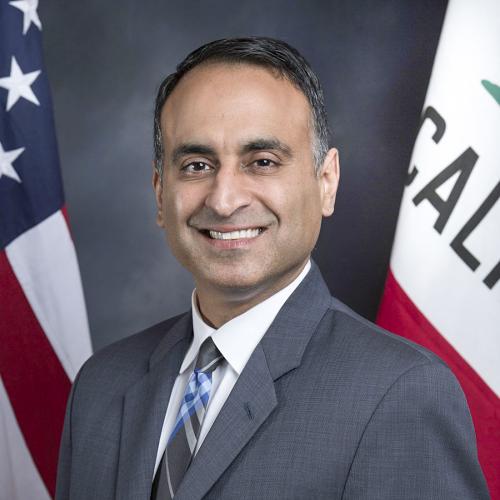
Asm. Ash Kalra
Sponsored bills
Existing law prohibits the prosecuting attorney, attorney for the defendant, or investigator for either the prosecution or the defendant from interviewing, questioning, or speaking to a victim or witness whose name has been disclosed by the defendant pursuant to existing law without first clearly identifying themself and identifying the full name of the agency by whom they are employed, and identifying whether they represent, or have been retained by, the prosecution or the defendant. Under existing law, if an interview takes place in person, the party is also required to show the victim or witness a business card, official badge, or other form of official identification before commencing the interview or questioning. This bill would require a peace officer, as defined, a prosecuting attorney, or an investigator for the prosecution, prior to interviewing an immediate family member of a person who has been killed or seriously injured by a peace officer, to clearly identify themself, if the interview takes place in person, to show identification, and to clearly state specified information, including that the family member has the right to ask about the status of their family member prior to answering questions, has the right to remain silent, and before speaking with the interviewer, can consult with a trusted person and can have that person with them while they speak to the interviewer. By increasing duties on local law enforcement, this bill would impose a state-mandated local program. The California Constitution requires the state to reimburse local agencies and school districts for certain costs mandated by the state. Statutory provisions establish procedures for making that reimbursement. This bill would provide that, if the Commission on State Mandates determines that the bill contains costs mandated by the state, reimbursement for those costs shall be made pursuant to the statutory provisions noted above.
(1) Existing law provides that a person who willfully disturbs a public school or a public school meeting is guilty of a misdemeanor and subject to a fine of not more than $500. This bill would exempt from those misdemeanor and fine provisions a person who, at the time of the disturbance, is a pupil of the school district. (2) Existing state law requires the principal of a school or the principal's designee to notify the appropriate law enforcement authorities of the county or city in which the school is situated of certain acts committed by a pupil that may be unlawful, including, among others, the selling or possession of narcotics or other designated controlled or regulated substances, and acts of assault, as specified. This bill instead would eliminate the requirement that the principal or principal's designee notify the appropriate law enforcement authorities of possession of designated controlled or regulated substances by a pupil. The bill would require that the principal or principal's designee notify the appropriate law enforcement authorities if a pupil's act requires notification pursuant to the federal Gun-Free Schools Act of 1994, which conditions certain federal funding on a criminal or juvenile delinquency referral policy for a student who brings a firearm or weapon to a school.
This measure would urge the Congress of the United States to repeal the state and local tax deduction limitation so that residents of California and married taxpayers are no longer penalized by the federal tax code.
Maddy summaryAssembly Concurrent Resolution 120 designates January 2024 as Positive Parenting Awareness Month in California. This measure does not change laws or allocate funding but instead encourages state agencies, communities, and organizations to focus on the importance of positive parenting strategies. The resolution highlights how supportive family environments can improve children's health and well-being while acknowledging the diverse forms families take in the state. It serves as a formal acknowledgment of existing programs and resources rather than creating new mandates or policies.
This measure would proclaim September 20, 2024, and September 20 of each year thereafter, as California Youth Climate Action Day to honor and support the efforts of young people in their pursuit of environmental sustainability, climate justice, and the preservation of biodiversity.
Maddy summaryThis bill officially designates the week of January 26 through February 2, 2024, as CalEITC Awareness Week to highlight the California Earned Income Tax Credit program. The measure aims to increase public knowledge about this refundable tax credit, which assists low-income working families in meeting basic needs like housing, food, and health care. By drawing attention to the program, the resolution seeks to inform residents that the credit is available to many households, including those led by non-citizens and families with young children. The text includes findings on poverty levels and the economic benefits of the credit but does not change any laws or funding.
This measure would urge the federal government to allow vehicles registered to disabled veterans to utilize high-occupancy vehicle lanes or carpool lanes pursuant to the federal government's Clean Air Act program authority.
Maddy summaryThis bill designates September 2024 as Ovarian Cancer Awareness Month in California. It serves as a symbolic gesture to highlight the importance of early detection and support for those affected by the disease. The resolution does not create new laws or funding but aims to encourage public awareness and education about ovarian cancer risks and symptoms. Copies of the proclamation will be distributed to the bill's author for sharing with the community.
This measure would urge the United States Congress to explore policy options to improve the timeliness of the United States Food and Drug Administration's approval pathways for sunscreen ingredients and filters.