

(1) Existing law authorizes a person who believes he or she has been discharged or otherwise discriminated against in violation of any law under the jurisdiction of the Labor Commissioner to file a complaint with the Division of Labor Standards Enforcement within 6 months after the occurrence of the violation. This bill would extend the period to file a complaint to within 3 years after the occurrence of the violation. (2) Existing law prohibits an employer, as defined, or any person acting on behalf of the employer, as defined, from, among other things, preventing an employee from providing information to, or testifying before, any public body conducting an investigation, hearing, or inquiry, if the employee has reasonable cause to believe that the information discloses a violation of a law, regardless of whether disclosing the information is part of the employee's job duties. This bill would authorize a court to award reasonable attorney's fees to a plaintiff who brings a successful action for a violation of these provisions.
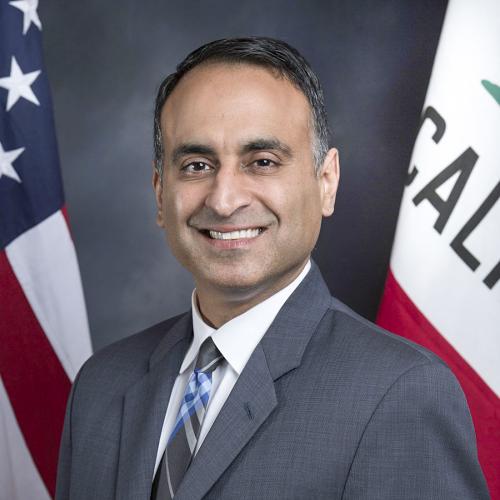
Asm. Ash Kalra
Sponsored bills
Existing law requires the Labor Commissioner to enforce and administer a program to register and supervise foreign labor contractors who perform foreign labor contracting activities to recruit or solicit foreign workers. Existing law defines terms for its purposes, including defining "foreign worker" to mean any person seeking employment who is not a United States citizen or permanent resident but who is authorized by the federal government to work in the United States, including a person who engages in temporary nonagricultural labor pursuant to existing federal law. Existing law requires foreign labor contractors to register under the program, as prescribed, and imposes specific requirements relating to recruitment or solicitation for employment and to work contracts. Existing law authorizes the Labor Commissioner to adopt regulations or policies and procedures to implement these provisions. A violation of these provisions is a crime. Existing law limits the application of these provisions to nonagricultural workers, as defined. Existing law provides that these provisions apply only to nonagricultural workers, as defined, and that they do not apply to a person licensed as a farm labor contractor, as defined, to any person exempt from specified licensing requirements, or to an employer employing agricultural workers, as defined. This bill would delete those limitations. By expanding the application of the foreign labor contractor provisions, this bill would expand an existing crime, thereby imposing a state-mandated local program. The California Constitution requires the state to reimburse local agencies and school districts for certain costs mandated by the state. Statutory provisions establish procedures for making that reimbursement. This bill would provide that no reimbursement is required by this act for a specified reason.
This measure would urge lawmakers in Poland to reverse or revise a recent Polish law on speech related to the Holocaust, would call on Congress to join that effort, and would call for a renewed commitment to Holocaust education in California.
This measure would recognize the month of May 2018 as Foster Care Month as an opportunity to raise awareness about the challenges that children, and particularly lesbian, gay, bisexual, transgender, queer, and questioning (LGBTQ) youth, face in the foster care system, as specified.
This measure would recognize May 2018 as National Mental Health Awareness Month in California to enhance public awareness of mental illness.
Existing federal law, the federal Patient Protection and Affordable Care Act (PPACA) , enacted various health care coverage market reforms that took effect January 1, 2014. PPACA required each state, by January 1, 2014, to establish an American Health Benefit Exchange to facilitate the purchase of qualified health benefit plans by qualified individuals and qualified small employers. PPACA defines a "qualified health plan" as a plan that, among other requirements, provides an essential health benefits package. Existing state law creates the California Health Benefit Exchange, also known as Covered California, to facilitate the purchase of qualified health plans by qualified individuals and qualified small employers. Existing law, the Knox-Keene Health Care Service Plan Act of 1975 (Knox-Keene) , provides for the licensure and regulation of health care service plans by the Department of Managed Health Care. Existing law provides for the regulation of health insurers by the Department of Insurance. Existing law provides for the Medi-Cal program, which is administered by the State Department of Health Care Services, under which qualified low-income individuals receive health care services. The Medi-Cal program is, in part, governed and funded by federal Medicaid program provisions. This bill would create the California Health Care Cost, Quality, and Equity Commission, an independent state agency, to control in-state health care costs and set the amounts accepted as payment by health plans, hospitals, physicians, physician groups, and other health care providers, among other things. The bill would provide that funding for the commission would be provided from the Managed Care Fund and the Insurance Fund, subject to appropriation by the Legislature. The bill would provide that the commission would have 11 paid members, including the Secretary of California Health and Human Services or his or her designee, a CalPERS representative, and 9 members with specified experience appointed to staggered 6-year terms by the Governor, Senate Committee on Rules, and Speaker of the Assembly, as specified. The bill would require the commission to convene an advisory committee to meet at least quarterly with 19 volunteer members, including, but not limited to, a representative of a licensed health facility and a representative of CalPERS. This bill would provide the powers of the commission, including authorization to adopt regulations and employ necessary staff, and would require the commission to meet at least quarterly and prepare a written report annually, as specified. The bill would require the commission, beginning July 1, 2019, to annually determine the base amounts that health care entities, as defined, are required to accept as full payment for health care services, and would specify that the base amount for a health care provider shall be a percentage of Medicare rates not lower than 100% of Medicare rates. The bill would permit a health care service plan or health insurer to negotiate a contracted rate that is not based on Medicare rates. The bill would exempt noncontracting physicians and other noncontracting health professionals, as defined, from the base amounts until health care service plans and health insurers provide information on average contracted amounts to the commission and the commission sets a base amount for noncontracting physicians and other noncontracting health professionals. The bill would require the commission, on or before July 1, 2019, to establish an appeal process to consider adjustments to the base amounts to be paid to health care entities, and would require the commission to consider specified factors during an appeal. The bill would require the commission to adopt regulations to establish the Purchaser Participation Program on or before July 1, 2019, to allow the commission's executive director to award reasonable fees, not to exceed $400,000 annually, to an organization that represents purchasers' or consumers' interests and made a substantial contribution to a regulation, order, or decision, as specified. The bill would require the commission to obtain the information necessary to determine total health care expenditures and to set a global growth cap for total health care expenditures, as specified. This bill would require the commission to estimate the cost savings to the General Fund from lower health care costs paid by public employers because of this bill, and require the Department of Finance to estimate the cost to increase reimbursement rates, as specified, and estimate how much of those costs could be paid using the estimated cost savings to the General Fund. The bill would express the intent of the Legislature to transfer that cost savings, upon appropriation, to programs that recruit and retain health professionals in underserved areas, as specified. This bill would exempt a Medi-Cal managed health care plan or individuals receiving coverage through Medicare or another federal health program from the bill's provisions. The bill would prohibit a health care provider from billing or collecting an amount other than the applicable cost sharing from an individual, and would provide that an individual would not owe a health care provider an amount other than that applicable cost sharing. This bill would require all information to be submitted electronically to the commission to facilitate public disclosure, but would provide that specified information be kept confidential. Existing constitutional provisions require that a statute that limits the right of access to the meetings of public bodies or the writings of public officials and agencies be adopted with findings demonstrating the interest protected by the limitation and the need for protecting that interest. This bill would make legislative findings to that effect.
Existing property tax law, in accordance with the California Constitution, provides for a "welfare exemption" for property used exclusively for religious, hospital, scientific, or charitable purposes and that is owned or operated by certain types of nonprofit entities, if certain qualifying criteria are met. Under existing property tax law, property that meets these requirements that is used exclusively for rental housing and related facilities is entitled to a partial exemption, equal to that percentage of the value of the property that is equal to the percentage that the number of units serving lower income households represents of the total number of residential units, in any year that any of certain criteria apply. This bill, on and after January 1, 2019, would provide a similar exemption for qualified property, as defined, that meets the requirements of the welfare exemption and that is used exclusively for rental housing and related facilities, equal to that percentage of the value of the property that is equal to the percentage that the number of units serving moderate income households, as defined, represents of the total number of residential units. The bill would require the owner of the property to certify specified information under penalty of perjury. By imposing new duties upon local government officials with respect to the exemption provided by this bill, and by expanding the scope of the crime of perjury, the bill would impose a state-mandated local program. The California Constitution requires the state to reimburse local agencies and school districts for certain costs mandated by the state. Statutory provisions establish procedures for making that reimbursement. This bill would provide that with regard to certain mandates no reimbursement is required by this act for a specified reason. With regard to any other mandates, this bill would provide that, if the Commission on State Mandates determines that the bill contains costs so mandated by the state, reimbursement for those costs shall be made pursuant to the statutory provisions noted above. Existing law requires the state to reimburse local agencies annually for certain property tax revenues lost as a result of any exemption or classification of property for purposes of ad valorem property taxation. This bill would provide that, notwithstanding those provisions, no appropriation is made and the state shall not reimburse local agencies for property tax revenues lost by them pursuant to the bill. This bill would take effect immediately as a tax levy.
This measure would declare the support of the Legislature for the expansion of sensory-friendly movie screenings and similar programs for people with autism, and would encourage families to attend a sensory-friendly movie screening during April 2018, which is National Autism Awareness Month.
This measure would, among other things, designate the year 2018 as "State of California Year of Commemoration of the Anniversary of the Armenian Genocide of 1915–1923," would designate April 24, 2018, as "State of California Day of Commemoration of the 103rd Anniversary of the Armenian Genocide of 1915–1923," and would call upon the President of the United States and the United States Congress to formally and consistently reaffirm the historical truth that the atrocities committed against the Armenian people constituted genocide.