

Existing law, the Medical Practice Act, provides for the licensure and regulation of physicians and surgeons by the Medical Board of California. Under the act, a physician and surgeon is required to demonstrate satisfaction of continuing education requirements, including cultural and linguistic competency in the practice of medicine, as specified. This bill, by January 1, 2022, would require all continuing education courses for a physician and surgeon to contain curriculum that includes specified instruction in the understanding of implicit bias in medical treatment. The bill, by January 1, 2022, would require associations that accredit these continuing education courses to develop standards to comply with these provisions. Existing law, the Nursing Practice Act, regulates the practice of nursing by the Board of Registered Nursing. The act requires persons licensed by the board to complete specified courses of instruction, including instruction regarding alcoholism and substance dependency and spousal abuse. This bill would require the Board of Registered Nursing, by January 1, 2022, to adopt regulations requiring all continuing education courses for its licensees to contain curriculum that includes specified instruction in the understanding of implicit bias in treatment. Beginning January 1, 2023, the bill would require continuing education providers to comply with these provisions and would require the board to audit education providers for compliance with these provisions, as specified. Existing law, the Physician Assistant Practice Act, authorizes the Physician Assistant Board to require a licensee to complete not more than 50 hours of continuing education every two years as a condition of license renewal. This bill would require the Physician Assistant Board, by January 1, 2022, to adopt regulations requiring all continuing education courses for its licensees to contain curriculum that includes specified instruction in the understanding of implicit bias in treatment. Beginning January 1, 2023, the bill would require continuing education providers to comply with these provisions and would require the board to audit continuing education providers for compliance with these provisions.
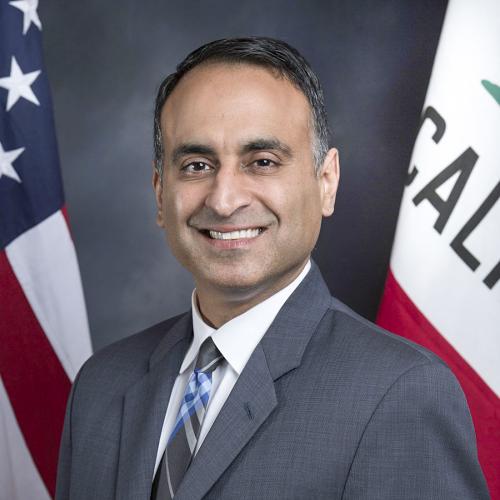
Asm. Ash Kalra
Sponsored bills
Existing law generally designates the State Air Resources Board as the state agency with the primary responsibility for the control of vehicular air pollution and air pollution control and air quality management districts with the primary responsibility for the control of air pollution from all sources other than vehicular sources. This bill would establish until January 1, 2025, the Wildfire Smoke Clean Air Centers for Vulnerable Populations Incentive Pilot Program, to be administered by the state board, to provide funding through a grant program to retrofit ventilation systems to create a network of clean air centers in order to mitigate the adverse public health impacts due to wildfires and other smoke events, as specified. The bill would specify that moneys for the program would be available upon appropriation, and that the implementation of these provisions is contingent upon an appropriation by the Legislature in the annual Budget Act or another statute for this purpose.
Existing law, the Financial Institutions Law, regulates the activities of various financial entities, including commercial banks, industrial banks, trust companies, credit unions, and savings associations. The Banking Law defines and regulates state banks and commits the enforcement of banking laws to the Commissioner of Business Oversight. Existing law prohibits a county from giving or loaning its credit to, or in aid of, any person or corporation. Existing law requires a local agency, as defined, to deposit all money belonging to, or in the custody of, that local agency into specified state or national banks, as defined. Existing law regulates the investment of public funds by local agencies. Existing law, the Nonprofit Corporation Law, regulates the formation and conduct of a nonprofit mutual benefit corporation and a nonprofit public benefit corporation. This bill would define the term "bank" for purposes of the Financial Institutions Law and the Banking Law to include a public bank. The bill would define the term "public bank" to mean a corporation, organized as either a nonprofit mutual benefit corporation or a nonprofit public benefit corporation for the purpose of engaging in the commercial banking business or industrial banking business, that is wholly owned by a local agency, as specified, local agencies, or a joint powers authority. The bill would require a public bank to obtain a certificate of authorization to transact business as a bank from the commissioner and to obtain and maintain insurance, subject to specified requirements. The bill would prohibit the commissioner from issuing more than 2 public bank licenses, as defined, in a calendar year and would prohibit the commissioner from authorizing more than 10 public banks at one time. The bill would require a public bank to include a specified purpose statement in its articles of incorporation and make conforming changes. The bill would require a local agency to conduct and approve, as specified, a study of the viability of a public bank containing specified elements before submitting an application to the commissioner to organize and establish a public bank and would require the local agency to include a copy of that study in the application submitted to the commissioner. The bill would require a local agency that is not a charter city to obtain voter approval of a motion to submit an application to the commissioner, as specified. The bill would authorize a county to lend its available funds to a public bank. The bill also would authorize a local agency to deposit funds in a public bank, and to invest in a public bank, subject to certain requirements. The bill would authorize a public bank to make distributions to its members. The bill would require, as specified, a public bank to conduct retail activities in partnership with local financial institutions and would prohibit a public bank from competing with local financial institutions. The Corporation Tax Law imposes a franchise tax on financial corporations, but provides that the tax is in lieu of all other state and local taxes and licenses, with certain exceptions. That law also exempts specified classes of entities from the franchise and income taxes imposed by that law, including state-chartered credit unions. This bill would additionally exempt from those franchise and income taxes any public bank. This bill would also exempt a public bank from all other state and local taxes and licenses, with certain exceptions. Existing law, the Ralph M. Brown Act, requires that all meetings of the legislative body, as defined, of a local agency be open and public and all persons be permitted to attend unless a closed session is authorized. This bill would authorize the governing board of a public bank or a committee of that governing board to meet in a closed session to consider and take action on matters pertaining to a loan or investment decision, a decision of the internal audit committee, the compliance committee, or the governance committee, and a meeting with a state or federal regulator. The bill would authorize a public bank to make all information received by a shareholder, member, or owner of a public bank confidential, as specified. Existing law, the California Public Records Act, requires that public records, as defined, be available to the public for inspection and made promptly available to any person. This bill would exempt specified information and records of a public bank, and related decisions of the directors, officers, and managers of the public bank, from the disclosure requirements of the act, including, among others, records related to alternative investments of the bank, as specified, meeting materials of any closed session, a record containing information regarding a portfolio position in which the public bank invests, information related to a specific account in the bank, and specified correspondence related to meetings with, or a memorandum or letter received from, state and federal banking regulators. Existing constitutional provisions require that a statute that limits the right of access to the meetings of public bodies or the writings of public officials and agencies be adopted with findings demonstrating the interest protected by the limitation and the need for protecting that interest. This bill would make legislative findings to that effect. The California Constitution requires local agencies, for the purpose of ensuring public access to the meetings of public bodies and the writings of public officials and agencies, to comply with a statutory enactment that amends or enacts laws relating to public records or open meetings and contains findings demonstrating that the enactment furthers the constitutional requirements relating to this purpose. This bill would make legislative findings to that effect.
The California Child Day Care Facilities Act provides for the licensure and regulation of family daycare homes by the State Department of Social Services. The Child Care and Development Services Act, administered by the State Department of Education, requires the Superintendent of Public Instruction to administer childcare and development programs that offer a full range of services for eligible children from infancy to 13 years of age, including, among others, resource and referral programs, alternative payment programs, and family childcare home education networks. The act states the intent of the Legislature to enact future legislation granting family childcare providers, as defined, the right to democratically choose a representative to meet and negotiate in a formal process with the state regarding the applicable scope of bargaining. This bill would authorize family childcare providers to form, join, and participate in the activities of provider organizations, as defined, and to seek the certification of a provider organization to act as the representative for family childcare providers on matters related to childcare subsidy programs pursuant to a petition and election process overseen by the Public Employment Relations Board or a neutral 3rd party designated by the board. The bill would require a provider organization to include in its certification petition proof of a 10-percent showing of interest designating the provider organization to act as the statewide representative for the providers. The bill would require any party contending fraud or coercion in the obtaining of proof of provider support to file under penalty of perjury a declaration supporting the claim. By creating a new crime, the bill would impose a state-mandated local program. The bill would establish the scope of representation of the certified provider organization, and would require the Governor, through the Department of Human Resources or the Governor's designee, to meet and confer in good faith with the certified provider organization on all matters within that scope of representation. The bill would require the parties to jointly prepare a memorandum of understanding if an agreement is reached, which would be binding on all state departments and agencies, and their contractors and subcontractors, and any political subdivision of the state, that are involved in the administration of state-funded early care and education programs. To the extent that this bill would impose a new duty on a city or a county, the bill would impose a state-mandated local program. The bill would authorize the parties, if, after a reasonable period of time they fail to reach agreement, to agree upon the appointment of a mediator and would authorize either party to declare that an impasse has been reached and request the Public Employment Relations Board to appoint a mediator. The bill would require the Department of Human Resources or the Governor's designee, with the assistance of, among others, the State Department of Education and the State Department of Social Services, to ensure that requests by a certified provider organization to deduct specified costs from the subsidy payments of its provider members are honored, as provided. The bill would require, if online or group in-person preservice meetings or orientations are held for family childcare providers by the state or a department, contractor, subcontractor, agency, or political subdivision of the state, that entity to provide a certified provider organization mandatory access to the entirety of the preservice meetings or orientations and the ability to make a presentation about the organization and its activities, its negotiations and memorandum of understanding, and its membership at the preservice meetings or orientations. The bill would prohibit the disclosure of certain information relating to preservice meetings or orientations in specified situations. The bill would require, if the state, department, political subdivision of the state, contractor, or subcontractor of a state-funded early care and education program, as defined, chooses to disseminate certain mass communications, as defined, to family childcare providers or applicants of state childcare subsidy payments, the Department of Human Resources or the Governor's designee to meet and confer with the certified provider organization concerning the content of the communication. The bill would require specified public administrators of state-funded early care and education programs to distribute to family childcare providers the mass communication of a certified provider organization in certain circumstances. Existing law provides that certain public records are not required to be disclosed. This bill would specify that records of state agencies related to activities governed by the above provisions regarding family childcare providers and certified provider organizations are not required to be disclosed. The California Constitution requires the state to reimburse local agencies and school districts for certain costs mandated by the state. Statutory provisions establish procedures for making that reimbursement. This bill would provide that with regard to certain mandates no reimbursement is required by this act for a specified reason. With regard to any other mandates, this bill would provide that, if the Commission on State Mandates determines that the bill contains costs so mandated by the state, reimbursement for those costs shall be made pursuant to the statutory provisions noted above. The bill would include findings that changes proposed by this bill address a matter of statewide concern rather than a municipal affair and, therefore, apply to all cities and counties, including charter cities and counties. Existing constitutional provisions require that a statute that limits the right of access to the meetings of public bodies or the writings of public officials and agencies be adopted with findings demonstrating the interest protected by the limitation and the need for protecting that interest. This bill would make legislative findings to that effect.
Existing federal law, the Migratory Bird Treaty Act, provides for the protection of migratory birds, as specified. The federal act also authorizes states and territories of the United States to make and enforce laws or regulations that give further protection to migratory birds, their nests, and eggs. Existing state law makes unlawful the taking or possession of any migratory nongame bird, or part of any migratory nongame bird, as designated in the federal act, except as provided by rules and regulations adopted by the United States Secretary of the Interior under provisions of the federal act. This bill, the California Migratory Bird Protection Act, would instead, until January 20, 2025, make unlawful the taking or possession of any migratory nongame bird designated in the federal act before January 1, 2017, any additional migratory nongame bird that may be designated in the federal act after that date, or any part of those migratory nongame birds, except as provided by rules and regulations adopted by the United States Secretary of the Interior under the federal act before January 1, 2017, or subsequent rules or regulations adopted pursuant to the federal act, unless those rules or regulations are inconsistent with the Fish and Game Code. The bill would also reenact, operative January 20, 2025, the existing provisions of law regarding the taking or possession of any migratory nongame bird as designated in the federal act, or any part of such migratory nongame bird, except as specified. Under existing law, a violation of the Fish and Game Code is a crime. By narrowing the exception to a crime defined in existing law, the bill would expand the scope of a crime, thus imposing a state-mandated local program. The California Constitution requires the state to reimburse local agencies and school districts for certain costs mandated by the state. Statutory provisions establish procedures for making that reimbursement. This bill would provide that no reimbursement is required by this act for a specified reason.
Existing law creates the Santa Clara Valley Open-Space Authority, and prescribes the jurisdiction and functions and duties of the authority. Existing law authorizes the authority, among other things, to acquire, hold, and dispose of real and personal property, within the authority's jurisdiction, necessary to the full exercise of its powers. This bill would authorize the authority to establish and administer the Coyote Valley Conservation Program to address resource and recreational goals of the Coyote Valley, as defined. The bill would authorize the authority to collaborate with state, regional, and local partners to help achieve specified goals of the program. The bill would authorize the authority to, among other things, acquire and dispose of interests and options in real property. The bill would require a proponent or party to a certain proposed development project within Coyote Valley to provide notice to the authority of the proposed project, and would authorize the authority to provide analysis of the environmental values and potential impacts of the proposed project. The bill would require Coyote Valley to be acknowledged as an area of statewide significance in local planning documents developed or updated on or after January 1, 2020, affecting land use within Coyote Valley. To the extent that this bill would impose new duties on local entities, it would impose a state-mandated local program. The California Constitution requires the state to reimburse local agencies and school districts for certain costs mandated by the state. Statutory provisions establish procedures for making that reimbursement. This bill would provide that, if the Commission on State Mandates determines that the bill contains costs mandated by the state, reimbursement for those costs shall be made pursuant to the statutory provisions noted above.
(1) Existing law establishes the State Coastal Conservancy, and prescribes the membership and functions and duties of the conservancy with regard to the protection, preservation, and enhancement of specified coastal lands in the state. Existing law authorizes the conservancy to address the impacts and potential impacts of climate change on resources within its jurisdiction, and to undertake certain projects within that designated area. Existing law authorizes the conservancy to award grants to public agencies and nonprofit organizations for certain projects that address the effects of climate change, and, to the extent allowed, to prioritize projects that maximize public benefits, including, but not limited to, reducing emissions of greenhouse gases, reducing hazards to harbors and ports, preserving and enhancing coastal wetlands and natural lands, conserving biodiversity, and providing recreational opportunities. The California Drought, Water, Parks, Climate, Coastal Protection, and Outdoor Access For All Act of 2018, approved by the voters at the June 5, 2018, statewide primary direct election as Proposition 68, authorizes the issuance of bonds in the amount of $4,000,000,000 for the purpose of financing a drought, water, parks, climate, coastal protection, and outdoor access for all program. The act authorizes, upon appropriation by the Legislature, $40,000,000 of those bond funds for projects that assist coastal communities, including those reliant on commercial fisheries, with adaption to climate change, including projects that address ocean acidification, sea level rise, or habitat restoration and protection, among other things. Existing law requires the Office of Planning and Research, in coordination with appropriate entities, to establish a clearinghouse for climate adaption information, as provided. This bill would require specified things of the conservancy when it allocates any funding appropriated pursuant to the act, including that it prioritize projects that use natural infrastructure, as defined, in coastal communities to help adapt to climate change. The bill would require the conservancy to provide information to the Office of Planning and Research on any projects funded pursuant to the above provision to be considered for inclusion into the clearinghouse for climate adaption information. The bill would authorize the conservancy to provide technical assistance to coastal communities to better assist them with their projects that use natural infrastructure. (2) Existing law requires the Natural Resources Agency every 3 years to update the state's climate adaptation strategy, known as the plan. As part of the update, existing law requires the agency to coordinate with other state agencies to identify a lead agency or group of agencies to lead adaptation efforts in each sector. Existing law requires state agencies to work to maximize specified objectives, including the objective of promoting the use of the plan to inform planning decisions and ensure that state investments consider climate change impacts, as well as promote the use of natural systems and natural infrastructure, when developing physical infrastructure to address adaptation. Existing law defines natural infrastructure for these purposes. This bill would revise the definition of natural infrastructure. (3) Existing law requires each local planning agency to prepare and the legislative body of each county and city to adopt a comprehensive, long-term general plan for the physical development of the county or city, and of any land outside its boundaries that in the planning agency's judgment bears relation to its planning. Existing law requires the plan to contain specified elements, including a safety element, which existing law requires to be reviewed and updated as necessary to address climate adaption and resiliency strategies, as provided. Existing law requires the review to include specified things, including a set of feasible implementation measures designed to carry out goals, policies, and objectives, as provided, including the identification of natural infrastructure that may be used in adaption projects. Existing law defines natural infrastructure for these purposes. This bill would revise the definition of natural infrastructure. To the extent the bill would impose additional duties on a local planning agency, the bill would create a state-mandated local program. (4) This bill would incorporate additional changes to Section 65302 of the Government Code proposed by SB 99 and SB 182 to be operative only if this bill and SB 99 or SB 182, or both, are enacted and this bill is enacted last. (5) This bill would incorporate additional changes to Section 31113 of the Public Resources Code proposed by SB 576 to be operative only if this bill and SB 576 are enacted and this bill is enacted last. (6) The California Constitution requires the state to reimburse local agencies and school districts for certain costs mandated by the state. Statutory provisions establish procedures for making that reimbursement. This bill would provide that no reimbursement is required by this act for a specified reason.
This measure would condemn regulations recently adopted by the Department of Homeland Security to prescribe how a determination of inadmissibility for a person who is not a citizen or national is made based on the likelihood that the person will become a public charge. This measure would also urge the federal government to repeal the new regulations.
Existing law authorizes the governing body of a political subdivision, as those terms are defined, to declare a shelter crisis if the governing body makes a specified finding. Upon declaration of a shelter crisis, existing law, among other things, suspends certain state and local laws, regulations, and ordinances to the extent that strict compliance would prevent, hinder, or delay the mitigation of the effects of the shelter crisis. Existing law, upon a declaration of a shelter crisis by the City of Berkeley, Emeryville, Los Angeles, Oakland, or San Diego, the County of Santa Clara, or the City and County of San Francisco, specifies additional provisions applicable to a shelter crisis declared by one of those jurisdictions. Among other things, existing law authorizes the city, county, or city and county that declares a shelter crisis pursuant to these provisions, in lieu of compliance with local building approval procedures or state housing, health, habitability, planning and zoning, or safety standards, procedures, and laws, to adopt by ordinance reasonable local standards and procedures for the design, site development, and operation of homeless shelters and the structures and facilities in the homeless shelters, to the extent that it is determined at the time of adoption that strict compliance with state and local standards or laws in existence at the time of that adoption would in any way prevent, hinder, or delay the mitigation of the effects of the shelter crisis. Existing law requires the Department of Housing and Community Development to review and approve the city's, county's, or city and county's draft ordinance to ensure it addresses minimum health and safety standards. Existing law requires the department to provide its findings to the Senate Committee on Housing and the Assembly Committee on Housing and Community Development within 30 calendar days of receiving the draft ordinance. This bill would extend the time within which the department is required to provide its findings to those legislative committees to 90 calendar days of receiving the draft ordinance. Existing law exempts from the California Environmental Quality Act specified actions by a state agency or a city, county, or city and county relating to land owned by a local government to be used for, or to provide financial assistance to, a homeless shelter constructed pursuant to the above-described provisions. Existing law requires a city, county, or city and county that declares a shelter crisis pursuant to these provisions to develop a plan to address the shelter crisis on or before July 1, 2019, and to annually report to specified committees of the Legislature on or before January 1, 2019, and annually thereafter until January 1, 2021. Existing law repeals these additional provisions as of January 1, 2021. This bill would apply the above-described additional provisions to a shelter crisis declared by the County of Alameda, the County of Orange, any city located within the County of Alameda, any city located within the County of Orange, and the City of San Jose, and extend the above-described repeal date to January 1, 2023. By expanding the scope of these provisions to apply within the County of Alameda, the County of Orange, and the City of San Jose, the bill would expand the above-described exemption from the California Environmental Quality Act. The bill, with respect to a shelter crisis declared by the County of Alameda, the County of Orange, a city located within the County of Alameda, a city located within the County of Orange, or the City of San Jose, would require the county or city, as applicable, to develop the above-described shelter plan on or before July 1, 2020, to include in the shelter plan a plan to transition residents from homeless shelters to permanent housing, and to provide the first above-described annual report on or before January 1 of the year following the declaration of a shelter crisis. This bill would make legislative findings and declarations as to the necessity of a special statute for the County of Alameda, the County of Orange, and the City of San Jose. This bill would declare that it is to take effect immediately as an urgency statute.
This measure would designate the month of November 2019 to be California's Sikh American Awareness and Appreciation Month. This measure would recognize and acknowledge the significant contributions made by Californians of Sikh heritage to our state and seeks to afford all Californians the opportunity to better understand, recognize, and appreciate the rich history and shared principles of Sikh Americans. This measure would condemn all hate crimes and bias incidents against Sikh Americans and encourage all Sikhs to practice their faith freely and fearlessly.