

(1) Existing law establishes the State Department of Public Health (department) to implement various programs throughout the state relating to public health, including licensing and regulating health facilities and control of infectious diseases. Existing law requires the department and the Office of Emergency Services, in coordination with other state agencies, to, upon appropriation and as necessary, establish a personal protective equipment (PPE) stockpile. Existing law requires the department to establish guidelines for the procurement, management, and distribution of PPE, taking into account, among other things, the amount of each type of PPE that would be required for all health care workers and essential workers, as defined, in the state during a 90-day pandemic or other health emergency. This bill would specifically include wildfire smoke events among health emergencies for these purposes. The bill would include agricultural workers, as defined, in the definition of essential workers. Existing law also establishes the Personal Protective Equipment Advisory Committee (committee) , consisting of representatives from, among other groups, an association representing skilled nursing facilities, a statewide association representing physicians, 2 representatives of labor organizations that represent health care workers, and 2 representatives of labor organizations that represent essential workers, as defined, to make recommendations to the department for the development of guidelines for the procurement, management, and distribution of PPE, as specified. This bill would require the committee to include a representative of a labor organization representing agricultural workers and a representative of an organization that represents agricultural employers. The bill would also require the department to report to the Legislature regarding the PPE stockpile within 6 months of the effective date of these provisions. (2) Existing law establishes the Division of Occupational Safety and Health and the Occupational Safety and Health Standards Board within the Department of Industrial Relations and sets forth their powers and duties relating to the adoption of health and safety standards for workers. Under existing law, certain violations of a standard, order, or special order pursuant to these provisions are crimes. Existing regulations of the division protect employees exposed to wildfire smoke and include control by respiratory protective equipment among the methods to control harmful exposure. This bill would require the division to review and update the contents of the protection from wildfire smoke training and thereafter post it on its internet website. The bill would require that training provided by the employer is required to be in a language and manner readily understandable by employees, taking into account their ethnic and cultural backgrounds and education levels, including the use of pictograms, as necessary. Because a violation of certain safety and health standards or orders constitutes a crime, this bill would impose a state-mandated local program. The California Constitution requires the state to reimburse local agencies and school districts for certain costs mandated by the state. Statutory provisions establish procedures for making that reimbursement. This bill would provide that no reimbursement is required by this act for a specified reason. This bill would declare that it is to take effect immediately as an urgency statute.
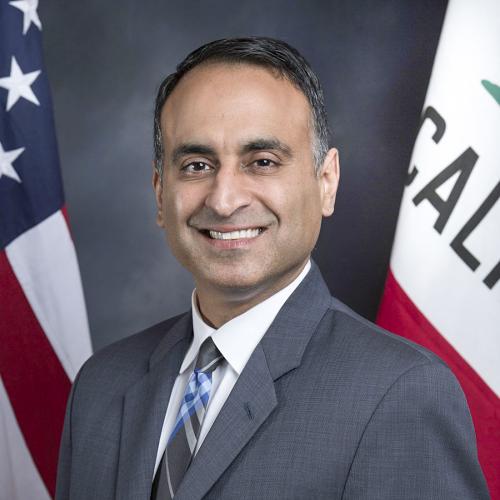
Asm. Ash Kalra
Sponsored bills
Existing law, as established in the case of Dynamex Operations W. v. Superior Court (2018) 4 Cal.5th 903 (Dynamex) , creates a presumption that a worker who performs services for a hirer is an employee for purposes of claims for wages and benefits arising under wage orders issued by the Industrial Welfare Commission. Existing law requires a 3-part test, commonly known as the "ABC" test, to determine if workers are employees or independent contractors for those purposes. Existing law establishes that, for purposes of the Labor Code, the Unemployment Insurance Code, and the wage orders of the Industrial Welfare Commission, a person providing labor or services for remuneration is considered an employee rather than an independent contractor unless the hiring entity demonstrates that the person is free from the control and direction of the hiring entity in connection with the performance of the work, the person performs work that is outside the usual course of the hiring entity's business, and the person is customarily engaged in an independently established trade, occupation, or business. This test is commonly known as the "ABC" test, as described above. Existing law charges the Labor Commissioner with the enforcement of labor laws, including worker classification. Existing law exempts specified occupations and business relationships from the application of Dynamex and the provisions described above. These exemptions include a temporary exemption for newspaper distributors working under contract with a newspaper publisher and newspaper carriers, as those terms are defined, until January 1, 2022. This bill would extend the exemption for newspaper distributors working under contract with a newspaper publisher and newspaper carriers from January 1, 2022, to January 1, 2025. The bill would require every newspaper publisher or distributor that hires or directly contracts with newspaper carriers to submit specified information related to their workforce to the Labor and Workforce Development Agency on or before March 1, 2022, March 1, 2023, and March 1, 2024, as provided. This bill would incorporate additional changes to Section 2783 of the Labor Code proposed by AB 1561 to be operative only if this bill and AB 1561 are enacted and this bill is enacted last.
Existing law designates state holidays, including, among others, the 4th Friday in September, known as "Native American Day," and the 2nd Monday in October, known as "Columbus Day." Existing law adopts those state holidays as judicial holidays, with certain exceptions, including Native American Day. This bill would remove Native American Day from the list of holidays that are excluded from designation as a judicial holiday. The bill would add Columbus Day to the list of excluded judicial holidays.
Existing law, the Alcoholic Beverage Control Act, which is administered by the Department of Alcoholic Beverage Control, regulates the application, issuance, and suspension of alcoholic beverage licenses. Existing law authorizes licensed winegrowers and brandy manufacturers to exercise their license privileges away from their licensed premises at, or from, branch offices or warehouses or United States bonded wine cellars located away from the place of production or manufacture, subject to specified exceptions. One of the exceptions to this authorization is the sale or delivery of wine to consumers in containers supplied, furnished, or sold by the consumer. This bill would delete the exception to the authorization applicable to winemakers, as described above, and would thus allow them to sell and deliver wine to consumers in containers supplied, furnished, or sold by the consumer away from their licensed premises.
(1) Existing law relating to employment regulation and supervision imposes special provisions on certain occupations and industries. Existing law charges the Labor Commissioner and the Division of Labor Standards Enforcement with the enforcement of labor laws. This bill, among other things, would require specified employers to provide to each employee, defined as a nonexempt employee who works at a warehouse distribution center, upon hire, or within 30 days of the effective date of these provisions, with a written description of each quota to which the employee is subject, including the quantified number of tasks to be performed, or materials to be produced or handled, within the defined time period, and any potential adverse employment action that could result from failure to meet the quota. The bill would provide that an employee shall not be required to meet a quota that prevents compliance with meal or rest periods, use of bathroom facilities, or occupational health and safety laws, as specified. The bill would prohibit an employer from taking adverse action against an employee for failure to meet a quota that has not been disclosed or for failure to meet a quota that does not allow a worker to comply with meal or rest periods or occupational health and safety laws. The bill would require that any action taken by an employee to comply with occupational health and safety laws or division standards be considered time on task and productive time for the purposes of any quotas or monitoring system. This bill would provide that if a current or former employee believes that meeting a quota caused a violation of their right to a meal or rest period or required them to violate any occupational health and safety law or standard, they have the right to request, and the employer is required to provide, a written description of each quota to which the employee is subject and a copy of the most recent 90 days of the employee's own personal work speed data. The bill would limit a former employee to one of these requests. The bill would also authorize a current or former employee to bring an action for injunctive relief to obtain compliance with specified requirements, and may, upon prevailing in the action, recover costs and reasonable attorney's fees in that action. This bill would require the Labor Commissioner to enforce these provisions by engaging in coordinated and strategic enforcement efforts with the Department of Industrial Relations, including the Division of Occupational Safety and Health and the Division of Workers' Compensation. The bill would authorize the commissioner to have access to data from the department including employer-reported injury data and enforcement actions in warehouses, the identity of uninsured employers, and employers who are committing workers' compensation fraud, wage theft, or other information relevant to the commissioner's authority, and would make other conforming changes. The bill would require the commissioner to report to the Legislature by January 1, 2023, the number of claims filed with the commissioner, data on warehouse production quotas in warehouses in which annual employee injury rates are above the industry average, and the number of investigations undertaken and enforcement actions initiated, per employer, as specified. This bill would require the Division of Occupational Safety and Health or the Division of Workers' Compensation to notify the commissioner, who is required to determine whether an investigation of violations pursuant to these provisions is appropriate, if a particular worksite or employer is found to have an annual employee injury rate of at least 1.5 times higher than the warehousing industry's average annual injury rate. The bill would authorize the commissioner to adopt regulations relating to the procedures for an employee to make a complaint alleging a violation of this part. (2) The California Constitution requires the state to reimburse local agencies and school districts for certain costs mandated by the state. Statutory provisions establish procedures for making that reimbursement. This bill would provide that no reimbursement is required by this act for a specified reason.
This measure would proclaim November 3, 2021, as One Health Day, to celebrate and bring attention to the need for a One Health approach to address shared health threats at the human-animal-environmental interface.
This measure would designate the month of September 2021 as Leukemia, Lymphoma, and Myeloma Awareness Month and Blood Cancer Awareness Month and the first week of September 2021 as Blood Donation Week.
This measure would declare August 2021 as Valley Fever Awareness Month.
This measure would designate a specified portion of Westside Parkway on State Route 58 in the County of Kern as the Harvey L. Hall Memorial Highway. The measure would request that the Department of Transportation determine the costs of appropriate signs showing this special designation and, upon receiving donations from nonstate sources covering those costs, erect those signs.
This measure would request that the Congress of the United States and the United States Environmental Protection Agency take all measures necessary to prevent further damage to California's citizens, wildlife, and natural resources by the dichloro-diphenyl-trichloroethane waste dumped in the waters near Santa Catalina Island.