

Existing law, the Medical Practice Act, provides for the licensure and regulation of physicians and surgeons by the Medical Board of California. Existing law authorizes the board to take action against all persons guilty of violating the Medical Practice Act. Existing law requires the board to enforce and administer various disciplinary provisions as to physician and surgeon certificate holders. Existing law, the Osteopathic Act, provides for the licensure and regulation of osteopathic physicians and surgeons by the Osteopathic Medical Board of California. Under existing law, the board has disciplinary functions pursuant to the act. Existing law, the Nursing Practice Act, provides for the licensure and regulation of the practice of nursing by the Board of Registered Nursing. Existing law provides for the certification of nurse-midwives by the Board of Registered Nursing. Existing law, the Physician Assistant Practice Act, establishes the Physician Assistant Board for the licensure and regulation of physician assistants. Existing law requires the Board of Registered Nursing and the Physician Assistant Board to enforce and administer various disciplinary provisions as to nurse practitioners, nurse-midwives, and physician assistants. Existing law, the Reproductive Privacy Act, provides that every individual possesses a fundamental right of privacy with respect to their personal reproductive decisions. Under existing law, an abortion is unauthorized if either the person performing the abortion is not an authorized health care provider, as specified, or the fetus is viable. Under existing law, the failure of a physician and surgeon to comply with the Reproductive Privacy Act constitutes unprofessional conduct. This bill would prohibit the Medical Board of California and the Osteopathic Medical Board of California from suspending or revoking the certificate of a physician and surgeon solely for performing an abortion if they performed the abortion in accordance with the provisions of the Medical Practice Act and the Reproductive Privacy Act. The bill would also prohibit those boards from denying an application for licensure as a physician and surgeon, or suspending, revoking, or otherwise imposing discipline upon a physician and surgeon because the person was disciplined in another state in which they are licensed or certified solely for performing an abortion in that state, or the person was convicted in that state for an offense related solely to the performance of an abortion in that state. The bill would additionally prohibit the Board of Registered Nursing and the Physician Assistant Board from suspending or revoking the certification or license of a nurse practitioner, nurse-midwife, or a physician assistant for performing an abortion if they performed the abortion in accordance with the provisions of the Nursing Practice Act or the Physician Assistant Practice Act, as applicable, and the Reproductive Privacy Act. The bill would also prohibit those boards from denying an application for certification or licensure as a nurse practitioner, nurse-midwife, or a physician assistant, or suspending, revoking, or otherwise imposing discipline upon a nurse practitioner, nurse-midwife, or a physician assistant because the person was disciplined in another state in which they are licensed or certified solely for performing an abortion in that state, or the person was convicted in that state for an offense related solely to the performance of an abortion in that state. This bill would declare that it is to take effect immediately as an urgency statute.
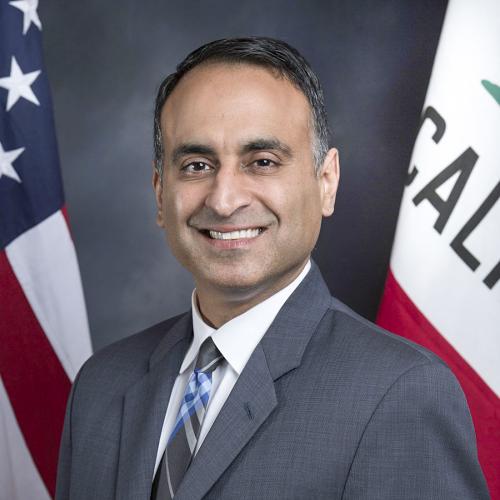
Asm. Ash Kalra
Sponsored bills
Existing law provides for the Medi-Cal program, which is administered by the State Department of Health Care Services, under which qualified low-income individuals receive health care services. The Medi-Cal program is, in part, governed and funded by federal Medicaid program provisions. Under existing law, Medi-Cal services may be provided pursuant to contracts with various types of managed care health plans, including through a county organized health system. Under existing law, in-person contact between a health care provider and a patient is not required under the Medi-Cal program for services appropriately provided through telehealth. Existing law provides that neither face-to-face contact nor a patient's physical presence on the premises of an enrolled community clinic is required for services provided by the clinic to a Medi-Cal beneficiary during or immediately following a proclamation declaring a state of emergency. Existing law defines "immediately following" for this purpose to mean up to 90 days following the termination of the proclaimed state of emergency, unless there are extraordinary circumstances. Under existing law, federally qualified health center (FQHC) services and rural health clinic (RHC) services are covered benefits under the Medi-Cal program, to be reimbursed, to the extent that federal financial participation is available, to providers on a per-visit basis. "Visit" is defined as a face-to-face encounter between an FQHC or RHC patient and any of specified health care professionals. Under existing law, "visit" also includes an encounter between an FQHC or RHC patient and specified medical professionals when services delivered through that interaction meet the applicable standard of care. Existing law prohibits an FQHC or RHC from establishing a new patient relationship using an audio-only synchronous interaction and authorizes the department to provide specific exceptions to that prohibition, developed in consultation with affected stakeholders and published in departmental guidance. This bill would authorize the department to authorize an FQHC or RHC to establish a new patient relationship using an audio-only synchronous interaction when the visit is related to sensitive services, as defined, and authorize an FQHC or RHC to establish a new patient relationship using an audio-only synchronous interaction when the patient requests an audio-only modality or attests they do not have access to video. Existing law provides that face-to-face contact is not required when covered health care services are provided by video synchronous interaction, audio-only synchronous interaction, remote patient monitoring, or other permissible virtual communication modalities when those services and settings meet certain criteria. Existing law, effective as specified, requires a provider furnishing services via audio-only synchronous interaction to also offer those same health care services via video synchronous interaction to preserve beneficiary choice. Existing law authorizes the department to provide specific exceptions to that requirement based on a Medi-Cal provider's access to requisite technologies, as specified. Existing law also prohibits a health care provider from establishing a new patient relationship with a Medi-Cal beneficiary via, among other interactions, telephonic (audio-only) synchronous interaction. Existing law authorizes the department to provide specific exceptions to that prohibition, as specified. This bill would authorize the department to take into consideration the availability of broadband access when providing those specific exceptions. The bill would authorize the department to authorize a health care provider to establish a new patient relationship using an audio-only synchronous interaction when the visit is related to sensitive services, as defined, and authorize a health care provider to establish a new patient relationship using an audio-only synchronous interaction when the patient requests an audio-only modality or attests they do not have access to video. This bill would incorporate additional changes to Section 14132.100 of the Welfare and Institutions Code proposed by SB 966 to be operative only if this bill and SB 966 are enacted and this bill is enacted last.
Existing law authorizes the Department of Motor Vehicles to issue and renew driver's licenses, as specified. Existing law also authorizes the department to issue identification cards. Existing law requires the department to issue a restricted driver's license to an eligible applicant who is unable to submit satisfactory proof that their presence in the United States is authorized under federal law if they meet all other qualifications for licensure and provide satisfactory proof of identity and California residency. Existing law also authorizes the department to issue an identification card to a person documented under the federal Deferred Action for Childhood Arrivals program. This bill would, among other things, require the department to, by no later than July 1, 2027, issue a restricted identification card to an eligible applicant who is unable to submit satisfactory proof that their presence in the United States is authorized under federal law if they provide satisfactory proof of identity and California residency, as specified. Existing law requires the restricted licenses and identification cards to include a recognizable feature on the front of the cards, such as the letters "DP" instead of "DL" and "IC" instead of "ID." This bill would delete the provision requiring a recognizable feature on the cards. Existing law prohibits California law enforcement agencies from cooperating, as specified, with federal immigration authorities. Existing law prohibits the disclosure of certain documents provided by an applicant to the department, except in response to a subpoena for individual records in a criminal proceeding or a court order, or in response to a law enforcement request to address an urgent health or safety need, as specified. This bill would specify that immigration enforcement, as defined, does not constitute an urgent health and safety need for those purposes, and would prohibit a government agency or department, law enforcement agency, commercial entity, or other person from obtaining, accessing, using, or otherwise disclosing, noncriminal history information maintained by the department, for the purpose of immigration enforcement. The bill would make other conforming changes. This bill would incorporate additional changes to Section 12926 of the Government Code proposed by SB 523 to be operative only if this bill and SB 523 are enacted and this bill is enacted last.
Existing law establishes the California Health and Human Services Agency, which includes the State Department of Public Health, among other state departments, and is charged with the administration of health, social, and other human services. This bill, subject to an appropriation by the Legislature in the annual Budget Act or another statute for these purposes and until January 1, 2028, would require the agency, or an entity designated by the agency, to establish and administer a pilot program to direct funds to primary care clinics that provide reproductive health care services in 5 counties. The bill would require a participating primary care clinic to implement at least one of a number of specified activities to improve health care delivery for marginalized patients, and to annually report to the agency over 2 years regarding its efforts and progress with those activities. The bill would require the agency to report to the Legislature on the program on or before June 1, 2026.
Existing law, the Compassionate Use Act of 1996, an initiative measure enacted by Proposition 215 at the November 6, 1996, statewide general election, declares that its purpose is, among other things, to ensure that seriously ill Californians have the right to obtain and use marijuana for medical purposes, as specified, and exempts from state criminal liability certain patients and their primary caregivers who possess or cultivate marijuana for the personal medical purposes of the patient. Existing law, known as the Medical Marijuana Program, establishes a voluntary registration program for qualified medicinal cannabis patients and their primary caregivers through a statewide identification card system maintained by the State Department of Public Health and sets forth guidelines for the possession of medicinal cannabis. The Control, Regulate and Tax Adult-Use of Marijuana Act of 2016 (AUMA) , an initiative measure approved as Proposition 64 at the November 8, 2016, statewide general election, established a comprehensive system to legalize, control, and regulate the cultivation, processing, manufacture, distribution, testing, and sale of nonmedical marijuana. AUMA reserved to a local jurisdiction specified powers regarding commercial adult-use cannabis activity, including adopting and enforcing local ordinances regulating commercial adult-use cannabis activity. Existing law, the Medicinal and Adult-Use Cannabis Regulation and Safety Act (MAUCRSA) , among other things, consolidates the licensure and regulation of commercial medicinal and adult-use cannabis activities, including the retail sale of medicinal cannabis. This bill would enact the Medicinal Cannabis Patients' Right of Access Act, which, on and after January 1, 2024, would prohibit a local jurisdiction from adopting or enforcing any regulation that prohibits the retail sale by delivery within the local jurisdiction of medicinal cannabis to medicinal cannabis patients or their primary caregivers by medicinal cannabis businesses, as defined, or that has the effect of prohibiting the retail sale by delivery within the local jurisdiction of medicinal cannabis to medicinal cannabis patients or their primary caregivers in a timely and readily accessible manner and in types and quantities that are sufficient to meet demand from medicinal cannabis patients within the local jurisdiction, as specified. The bill, on and after January 1, 2024, would provide that the act may be enforced by an action for writ of mandate brought by a medicinal cannabis patient or their primary caregiver, a medicinal cannabis business, the Attorney General, or any other party otherwise authorized by law. This bill would incorporate additional changes to Section 26200 of the Business and Professions Code proposed by AB 2210 to be operative only if this bill and AB 2210 are enacted and this bill is enacted last. To the extent this bill would impose additional duties on local jurisdictions, the bill would impose a state-mandated local program. The California Constitution requires the state to reimburse local agencies and school districts for certain costs mandated by the state. Statutory provisions establish procedures for making that reimbursement. This bill would provide that, if the Commission on State Mandates determines that the bill contains costs mandated by the state, reimbursement for those costs shall be made pursuant to the statutory provisions noted above.
Existing law regulates certain consumer products, including consumer products containing mercury. This bill would prohibit, on and after January 1, 2024, a screw or bayonet base type compact fluorescent lamp, as defined, and, on and after January 1, 2025, a pin-base type compact fluorescent lamp or a linear fluorescent lamp, as defined, from being offered for final sale, sold at final sale, or distributed in this state as a new manufactured product. The bill would exempt various lamps that meet specified criteria from that prohibition, including lamps used for image capture and projection and lamps used for disinfection.
Existing law, the Compassionate Use Act of 1996, an initiative measure, authorizes the use of cannabis for medical purposes and provides certain protections to a physician and surgeon who recommends the use of medical cannabis to a patient. Existing law, the Control, Regulate and Tax Adult Use of Marijuana Act of 2016 (AUMA) , an initiative measure, authorizes a person who obtains a state license under AUMA to engage in commercial adult-use cannabis activity pursuant to that license and applicable local ordinances. Existing law, the Medicinal and Adult-Use Cannabis Regulation and Safety Act (MAUCRSA) , among other things, provides for the licensure and regulation of commercial medicinal and adult-use cannabis activities and states that the purpose and intent of MAUCRSA is to establish a comprehensive system to control and regulate the cultivation, distribution, transport, storage, manufacturing, processing, and sale of both medicinal cannabis and medicinal cannabis products for patients with a valid physician recommendation and adult-use cannabis and adult-use cannabis products for adults 21 years of age and over. MAUCRSA defines various terms for these purposes, including "cannabis," "cannabis products," "cannabis concentrate," and "edible cannabis product." This bill would expand the purpose of the comprehensive system established by MAUCRSA to include the control and regulation of the cultivation, distribution, transport, storage, manufacturing, processing, and sale of cannabis products intended for use on, or consumption by, animals. The bill would make various related revisions to the definitions under MAUCRSA, would exclude livestock and food animals, as specified, from the definition of "animal," for these purposes, and would specify that cannabis concentrate and edible cannabis products are not considered processed pet foods as defined under the Pure Pet Food Act of 1969. Existing law, the Veterinary Medicine Practice Act, establishes the Veterinary Medical Board within the Department of Consumer Affairs and sets forth its powers and duties relating to the practice of veterinary medicine and the licensure and regulation of veterinarians. Existing law authorizes the board to revoke or suspend the license of a person to practice veterinary medicine, or to assess a fine, for specified causes, including discussing medicinal cannabis with a client while the veterinarian is employed by, or has an agreement with, a MAUCRSA licensee and distributing advertising for cannabis in California. Existing law prohibits the board from disciplining a licensed veterinarian solely for discussing the use of cannabis on an animal for medicinal purposes, absent negligence or incompetence. Existing law requires the board to adopt guidelines for veterinarians to follow when discussing cannabis within the veterinarian-client-patient relationship. Existing law prohibits a licensed veterinarian from dispensing or administering cannabis or cannabis products to an animal patient. This bill would additionally prohibit the board from disciplining a veterinarian who recommends the use of cannabis on an animal for potential therapeutic effect or health supplementation purposes, unless the veterinarian is employed by or has an agreement with a cannabis licensee, as specified. The bill would require the board to adopt guidelines, by January 1, 2024, for veterinarians to follow when recommending cannabis within the veterinarian-client-patient relationship, and would require the board to post the guidelines on its internet website. The bill would require that cannabis products intended for animals comply with additional concentration and other standards adopted by regulations of the department. The bill would require the department to promulgate regulations for animal product standards no later than July 1, 2025, and would prohibit the marketing or sale of those products before the regulations take effect. This bill would incorporate additional changes to Section 4883 of the Business and Professions Code proposed by SB 1495 to be operative only if this bill and SB 1495 are enacted and this bill is enacted last. Existing law, AUMA, authorizes legislative amendment of its provisions with a 23 vote of both houses, without submission to the voters, to further its purposes and intent. This bill would declare that its provisions further the purposes and intent of AUMA.
(1) Existing law establishes the Clean Cars 4 All Program, which is administered by the State Air Resources Board, to focus on achieving reductions in the emissions of greenhouse gases, improvements in air quality, and benefits to low-income state residents through the replacement of high-polluter motor vehicles with cleaner and more efficient motor vehicles or a mobility option. Existing law requires the implementing regulations to ensure, among other things, that there is improved coordination, integration, and partnerships with other specified programs that target disadvantaged communities. Existing law creates the enhanced fleet modernization program to provide compensation for the retirement and replacement of passenger vehicles and light-duty and medium-duty trucks that are high polluters. Existing law requires the state board to annually post on its internet website a performance analysis of the replacement and mobility options component of the programs that includes information regarding how incentive levels can be modified to maximize participation and emissions reductions. This bill would require the implementing regulations for the Clean Cars 4 All Program to additionally ensure that the state board coordinates with local air districts and local nonprofit and community organizations, as provided, to identify barriers to accessing the Clean Cars 4 All Program and to develop outreach protocols and metrics to assess the success of outreach across the districts. The bill would additionally require that the performance analysis include an assessment identifying populations that are eligible for, but underserved by the Clean Cars 4 All Program, as provided, and would require the assessment to identify barriers preventing the underserved populations from participating in the program and to propose strategies to overcome those barriers. The bill would require the state board to consider specified metrics in allocating funding to districts participating in the Clean Cars 4 All Program. The bill would authorize up to 10% of the moneys allocated by the state board for the Clean Cars 4 All Program to be used for outreach programs in accordance with specified requirements. (2) Existing state sales and use tax laws impose a tax on retailers measured by the gross receipts from the sale of tangible personal property sold at retail in this state or on the storage, use, or other consumption in this state of tangible personal property purchased from a retailer for storage, use, or other consumption in this state. The Sales and Use Tax Law provides various exemptions from those taxes. This bill, on or after January 1, 2023, and until January 1, 2028, would provide an exemption from those taxes with respect to the sale in this state of, and the storage, use, or other consumption in this state of, a qualified motor vehicle, as defined, sold to a qualified buyer, as defined. The bill would provide that this exemption does not apply to specified state sales and use taxes from which the proceeds are deposited into the Local Revenue Fund, the Local Revenue Fund 2011, or the Local Public Safety Fund. Existing law requires a bill authorizing a new tax expenditure to contain, among other things, specific goals, purposes, and objectives that the tax expenditure will achieve, detailed performance indicators, and data collection requirements. This bill would include additional information required for a bill authorizing a new tax credit. The Bradley-Burns Uniform Local Sales and Use Tax Law authorizes counties and cities to impose local sales and use taxes in conformity with the Sales and Use Tax Law, and existing laws authorize districts, as specified, to impose transactions and use taxes in accordance with the Transactions and Use Tax Law, which generally conforms to the Sales and Use Tax Law. Amendments to the Sales and Use Tax Law are automatically incorporated into the local tax laws. This bill would specify that this exemption does not apply to local sales and use taxes or transactions and use taxes. (3) This bill would incorporate additional changes to Section 44124.5 of the Health and Safety Code proposed by SB 1230 to be operative only if this bill and SB 1230 are enacted and this bill is enacted last.
By Executive Order No. N-82-20, Governor Gavin Newsom directed the Natural Resources Agency to combat the biodiversity and climate crises by, among other things, establishing the California Biodiversity Collaborative and conserving at least 30% of the state's lands and coastal waters by 2030. This bill would require the Natural Resources Agency, in implementing actions to achieve the goal to conserve at least 30% of the state's lands and coastal waters by 2030 established by the executive order, to prioritize specified actions. The bill would require the Secretary of the Natural Resources Agency to prepare and submit, beginning on or before March 31, 2024, an annual report to the Legislature on the progress made during the prior calendar year toward achieving that goal, as provided. The bill would also make related findings and declarations.
The California Constitution prohibits the development, construction, or acquisition of a low-rent housing project, as defined, in any manner by any state public body until a majority of the qualified electors of the city, town, or county in which the development, construction, or acquisition of the low-rent housing project is proposed approve the project by voting in favor at an election, as specified. This measure would repeal these provisions.