

The California Constitution provides that the University of California constitutes a public trust, and requires the university to be administered by the Regents of the University of California, a corporation in the form of a board, with full powers of organization and government, subject to legislative control only for specified purposes. The California Constitution requires the board to consist of 7 ex officio members and 18 appointive members appointed by the Governor and approved by the Senate. The California Constitution authorizes the members of the board to appoint either a member of the faculty at a campus of the university or of another institution of higher education, or a person enrolled as a student at a campus of the university, or both, as members of the board serving for no less than one year with all rights of participation. Beginning on July 1, 2027, this measure would require, instead of authorize, the members of the board to appoint to the board for 2-year terms, 2 undergraduate students and 2 graduate students enrolled at a campus of the university for each regular academic term during their service as members of the board, as provided. The measure would require each student board member to serve as a nonvoting student regent-designate in the first year of their 2-year term, and would authorize a student member who graduates from the university on or after January 1 of the 2nd year of the student member's 2-year term to serve the remainder of their term.
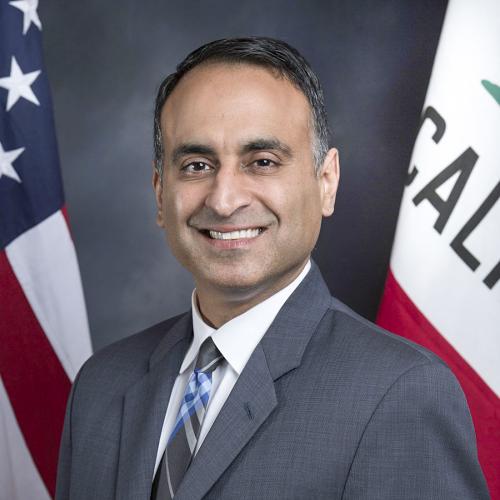
Asm. Ash Kalra
Sponsored bills
Maddy summaryThis House Resolution officially designates September as Black Music Month to honor the significant contributions of Black artists to American culture. The measure recognizes a wide range of musical genres, including jazz, blues, gospel, and hip-hop, by highlighting their historical origins and influential figures. While the text celebrates these artistic achievements, it does not impose any new legal requirements or funding mandates.
(1) Existing law provides for the licensing and regulation of health facilities, including, but not limited to, long-term health care facilities, as defined, by the State Department of Health Care Services. Existing law requires a contract for admission to a long-term care facility to state that a resident shall not be involuntarily transferred within, or discharged from, a long-term health care facility unless the resident is given reasonable notice in writing, and transfer or discharge planning, as specified. Willful or repeated violations of the provisions relating to long-term health care facilities is a misdemeanor. This bill would require long-term health care facilities to provide residents with a notice of a facility-initiated transfer or discharge at least 30 days before a resident is transferred or discharged, unless an exception applies. The bill would require the notice of transfer or discharge to be acknowledged by the signature of the resident or, if applicable, the resident's representative. The bill would make a violation of these provisions a class "B" violation and would make knowingly making a false verification regarding the delivery of a notice of transfer or discharge a willful violation for purposes of the criminal provision described above. The bill would require a notice of discharge or transfer to be provided to a resident and, if applicable, the resident's representative in a translated or accessible format at the same time as the written notice in English if the resident's primary language is not English or if the resident is vision impaired or blind, as specified. The bill would also require the translated or accessible-format notices to be made available to the local long-term care ombudsman upon request. The bill would require the translator to attest, under penalty of perjury, to the accuracy of the translation, thereby expanding the crime of perjury. The bill would require a resident's primary language or sensory impairments to be included in the minimum dataset maintained by the facility. The bill would make a violation of these provisions a class "B" violation. Existing law requires that a copy of the notice of transfer or discharge be sent to the local long-term care ombudsman at the same time notice is provided to the resident or the resident's representative by facsimile machine, email, or first-class mail, as specified. Existing law requires, if a resident is subject to a facility-initiated transfer to a general acute care hospital on an emergency basis, the notice to be provided to the local long-term care ombudsman as soon as practicable. This bill would instead require the notices described above to be sent to the long-term care ombudsman by facsimile, email, or other electronic means. For emergency transfer notices, the bill would require a copy of the notice to be provided to the local long-term care ombudsman as soon as practicable, but in no event later than 24 hours after the transfer. Because a willful or repeated violation of long-term care facilities provisions is a crime and because the crime of perjury is expanded, the bill would impose a state-mandated local program. (2) Existing law requires the State Department of Public Health to establish an inspection and reporting system to ensure that long-term health care facilities are in compliance with state statutes and regulations. Existing law, the Medi-Cal Long-Term Care Reimbursement Act, requires, among other things, that long-term health care facilities timely comply with hearing decisions issued by the department's Office of Administrative Hearings and Appeals for improperly transferring, discharging, or refusing to readmit a resident. Existing law authorizes the department to assess a penalty of $750 for each calendar day a facility fails to comply with the hearing decision and caps aggregate penalties for each individual hearing decision at $75,000. The bill would authorize the State Department of Public Health to prohibit the admission of new residents to a long-term health care facility upon notification that a facility has failed to timely comply with a hearing decision. The bill would require the prohibition to remain in effect until the facility has achieved compliance, the maximum aggregate of penalties have been collected, or the facility has formally sought judicial review of the hearing decision. The bill would increase the daily penalty described above to $1,000 for each calendar day and increase the maximum aggregate penalty amount to $100,000. (3) The California Constitution requires the state to reimburse local agencies and school districts for certain costs mandated by the state. Statutory provisions establish procedures for making that reimbursement. This bill would provide that no reimbursement is required by this act for a specified reason.
Existing law generally regulates various business activities and practices related to consumer rights. Existing law requires law enforcement and state and local governments to interact with and report on federal action against individuals based on their perceived or actual immigration status in various specified manners. This bill would require a large retail store doing business in this state, as defined, to provide the Attorney General with copies of specified documentation related to immigration enforcement activity, as defined, that occurs on the large retail store's premises, including copies of any video footage, upon receipt of an administrative subpoena, as specified. The bill would exempt documentation submitted as described above from the California Public Records Act. The bill would require the large retail store to preserve the documentation described above, as specified. The bill would also require the large home improvement retailer to disclose on the retailer's internet website certain information, including any policies and practices the large home improvement retailer maintains that relate to immigration enforcement activity on its premises, as specified. The bill would also require the large retail store to provide the county in which the immigration enforcement activity occurred with access to the above-described documentation, as specified. In connection with that requirement, the bill would require every county board of supervisors to select that appropriate agency in the county to have the authority to access that documentation. By imposing new duties on counties, the bill would impose a state-mandated local program. The bill would authorize the Attorney General or a county counsel to bring an action for injunctive relief for a violation of the above provisions. The bill would repeal its provisions on January 1, 2030. The bill would make related findings and declarations and would declare the severability of its provisions. The bill would include findings that changes proposed by this bill address a matter of statewide concern rather than a municipal affair and, therefore, apply to all cities, including charter cities. Existing constitutional provisions require that a statute that limits the right of access to the meetings of public bodies or the writings of public officials and agencies be adopted with findings demonstrating the interest protected by the limitation and the need for protecting that interest. This bill would make legislative findings to that effect. The California Constitution requires the state to reimburse local agencies and school districts for certain costs mandated by the state. Statutory provisions establish procedures for making that reimbursement. This bill would provide that, if the Commission on State Mandates determines that the bill contains costs mandated by the state, reimbursement for those costs shall be made pursuant to the statutory provisions noted above.
Existing law requires the operator of a private detention facility, as defined, to comply with, and adhere to, the detention standards of care and confinement agreed upon in the facility's contract for operations, as specified. Existing law requires a private detention facility operator to comply with, and adhere to, all local and state public health orders and occupational safety and health regulations. This bill, the Masuma Khan Justice Act, would authorize the State Department of Public Health to inspect an involuntary residential facility, defined as a facility that houses more than 50 individuals overnight, restricts residents' ability to enter or leave, as specified, and provides specified onsite services, for the limited purpose of ensuring sanitary, hygienic, and safe conditions, using standards and inspection protocols consistent with those applied to licensed residential health facilities. The bill would authorize unnoticed inspections under specified conditions. The bill would require the department, within 30 days of completing an inspection, to submit a report to the Legislature. The bill would require the operator of a facility to provide access to the department for an inspection described above, to maintain all records necessary to demonstrate compliance with the above-described standards, and to correct any violation identified by the department, as specified. The bill would make a violation of the above-described requirements by an operator of a facility, after appropriate notice and an opportunity for a hearing, subject to an administrative penalty, as specified, per violation per day. If an operator fails to correct a violation within the time specified in the citation, the bill would authorize the department to issue a safety warning that identifies the uncorrected condition and requires prompt corrective action by the operator. The bill would authorize the department to refer violations to the Attorney General, and would authorize the Attorney General to bring a civil action for declaratory or injunctive relief. The bill would require the department to adopt rules and regulations to ensure that all involuntary residential facilities comply with measurable standards for sanitary, hygienic, and safe conditions and would require the department to consult with specified organizations in the development of these standards. The bill would require the department to implement the above-described provisions in a manner that avoids unnecessary duplication of existing state or local health and safety oversight, as specified. The bill would declare that its provisions are severable. The bill would make related findings and declarations. The bill would declare that it is to take effect immediately as an urgency statute.
Existing law establishes the California Health and Human Services Agency, headed by the Secretary of California Health and Human Services. Existing law further establishes, within the agency, a number of departments and other entities, including the State Department of Health Care Services. Existing law provides for the Medi-Cal program, which is administered by the State Department of Health Care Services, and under which qualified low-income persons receive health care benefits. This bill would require the State Department of Health Care Services, after obtaining specified information from the Employment Development Department (EDD) , to prepare a report that includes information regarding employers in California that employ 100 or more employees and have any employees who receive benefits from the Medi-Cal program, including, among other things, the estimated total annual cost of Medi-Cal services provided to employees, and the dependents of those employees, of each employer, and submit that report to the Legislature no later than September 1, 2027, and annually thereafter. The bill would provide that individually identifiable information about employees or Medi-Cal enrollees contained in the report is exempt from disclosure under the California Public Records Act, and would authorize the department and EDD to enter into data-sharing agreements, as provided. The bill would also repeal an obsolete reporting requirement. Under existing law, the information obtained in the administration of the Unemployment Insurance Code is for the exclusive use and information of the Director of Employment Development in the discharge of their duties and is not open to the public. However, existing law permits the use of the information for specified purposes, and allows the director to require reimbursement for direct costs incurred. Existing law provides that a person who knowingly accesses, uses, or discloses this confidential information without authorization is guilty of a misdemeanor. The bill would require the Director of Employment Development to permit the use of specified information in their possession by the State Department of Health Care Services to prepare and submit the above-described report. By requiring this information to be provided to the department for these purposes, this bill would expand the crime of unauthorized access, use, or disclosure of this information, and would impose a state-mandated local program. Existing law, subject to certain exceptions, also requires all types of information concerning a person, made or kept by any public officer or agency in connection with the administration of the Medi-Cal program, to be confidential, and makes knowingly releasing or possessing this confidential information punishable as a misdemeanor. The bill would make individually identifiable information about employees or Medi-Cal enrollees contained in the above-described report subject to these confidentiality requirements. By expanding the scope of an existing crime, this bill would impose a state-mandated local program. Existing law establishes within the Department of Industrial Relations the Division of Labor Standards Enforcement, headed by the Labor Commissioner, for the purposes of enforcing labor laws. Existing law prohibits an employer from discharging or in any manner discriminating against an employee for specified actions, including, among other things, taking time off to serve on a jury or because of an employee's status as a victim of crime or abuse, as specified. This bill would additionally prohibit an employer from discharging or in any manner discriminating or retaliating against an employee who applies for, or is enrolled in, the Medi-Cal program. The bill would also prohibit an employer from refusing to hire a person because that person is enrolled in the Medi-Cal program. Existing constitutional provisions require that a statute that limits the right of access to the meetings of public bodies or the writings of public officials and agencies be adopted with findings demonstrating the interest protected by the limitation and the need for protecting that interest. This bill would make legislative findings to that effect. The California Constitution requires the state to reimburse local agencies and school districts for certain costs mandated by the state. Statutory provisions establish procedures for making that reimbursement. This bill would provide that no reimbursement is required by this act for a specified reason.
(1) Under existing law, the State Water Resources Control Board and the 9 California regional water quality control boards regulate water quality and prescribe waste discharge requirements in accordance with the Porter-Cologne Water Quality Control Act (act) and the National Pollutant Discharge Elimination System (NPDES) permit program. Under the act, the State Water Resources Control Board is authorized to adopt water quality control plans for waters for which quality standards are required by the federal Clean Water Act, as specified, and that in the event of a conflict, those plans supersede regional water quality control plans for the same waters. This bill would authorize the state board to adopt water quality control plans for nexus waters, which the bill would define as all waters of the state that are not also navigable, except as specified. The bill would require any water quality standard that was submitted to, and approved by, or is awaiting approval by, the United States Environmental Protection Agency or the state board that applied to nexus waters as of May 24, 2023, to remain in effect, as provided. The bill would require the state board and regional boards to include nexus waters in all federal Clean Water Act processes, including, but not limited to, the California Integrated Report and the establishment of total maximum daily loads, as specified. (2) Existing law requires a regional board, after any necessary hearing, to prescribe requirements as to the nature of any proposed discharge, existing discharge, or material change in an existing discharge, except discharges into a community sewer system, with relation to the conditions existing in the disposal area or receiving waters upon, or into which, the discharge is made or proposed and sets forth what the requirements are to include. This bill would require the above-described discharge requirements to, in the case of discharges from any point source to nexus waters, implement, at a minimum, the requirements of provisions implementing the Federal Water Pollution Control Act and acts amendatory thereof or supplementary thereto. (3) The act authorizes the imposition of civil penalties for violations of certain waste discharge requirements, including violation of a cease and desist order or a cleanup and abatement order, and requires that penalties imposed pursuant to these provisions be deposited into the Waste Discharge Permit Fund, to be expended by the state board, upon appropriation by the Legislature, for specified purposes related to water quality. For violations of certain other waste discharge requirements, the act imposes specified civil penalties, the proceeds of which are deposited into the continuously appropriated State Water Pollution Cleanup and Abatement Account. This bill would require, commencing January 1, 2026, and each calendar year thereafter, the state board's executive director to adjust civil monetary penalties, as specified, including the civil penalties for the above-described provisions. The bill would require moneys collected in accordance with these annual adjustments to be deposited into the Penalty Adjustment Account, that the bill would establish within the Waste Discharge Permit Fund, and upon appropriation by the Legislature, be expended by the state board for purposes of cleaning up and abating the effects of waste on waters of the state. (4) Existing law generally provides for enforcement and implementation of the act. This bill would authorize specified entities, including the Attorney General and the state board, to bring an action to enforce certain provisions related to nexus waters or waste discharge requirements for nexus waters, as provided. (5) The act provides various provisions related to waste discharge to ensure consistency with the requirements for state programs implementing the Federal Water Pollution Control Act and acts amendatory thereof or supplementary thereto. The act defines the terms "navigable waters," "administrator," "pollutants," "biological monitoring," "discharge," and "point sources" as having the same meanings as in the Federal Water Pollution Control Act. This bill would provide that "waste discharge requirements" include waste discharge requirements issued for discharges to nexus waters, and "discharge" includes any addition of a pollutant to a nexus water from any point source. The bill would provide that for purposes of compliance with the Federal Water Pollution Control Act, nexus waters shall be treated as though they are navigable waters and navigable waters of the United States. The bill would require waste discharge requirements adopted or amended for discharges to nexus waters to be adopted pursuant to and in accordance with the requirements of provisions implementing the Federal Water Pollution Control Act and acts amendatory thereof or supplementary thereto, as specified. (6) The act requires a person who discharges pollutants or proposes to discharge pollutants to the navigable waters of the United States within the jurisdiction of this state or a person who discharges dredged or fill material or proposes to discharge dredged or fill material into the navigable waters of the United States within the jurisdiction of this state to file a report of the discharge, except as specified. The act prohibits the discharge of pollutants or dredged or fill material or the operation of a publicly owned treatment works or other treatment works treating domestic sewage by any person, except as authorized by waste discharge requirements or dredged or fill material permits. This bill would require a person to file a report for discharges to nexus waters. The bill would apply the above-described prohibition to nexus waters.
Existing federal law, through copyright, provides authors of original works of authorship, as defined, with certain rights and protections. Existing federal law generally gives the owner of the copyright the right to reproduce the work in copies or phonorecords and the right to distribute copies or phonorecords of the work to the public. Existing federal law provides that sound recordings fixed before February 15, 1972, are not subject to copyright but are subject to similar rights and protections under the Classics Protection and Access Act. Existing law requires, before each time that a generative artificial intelligence system or service, as defined, or a substantial modification to a generative artificial intelligence system or service, released on or after January 1, 2022, is made available to Californians for use, regardless of whether the terms of that use include compensation, a developer of the system or service to post on the developer's internet website documentation, as specified, regarding the data used to train the generative artificial intelligence system or service. This bill would require a developer of a generative artificial intelligence model to make available on its internet website a mechanism allowing a rights owner to request information about the developer's use of the rights owner's covered materials that would allow the rights owner to provide the developer with, among other things, registration, preregistration, or index numbers for one or more covered materials. The bill would require a developer to document and retain any requests received from rights owners for a specified time period. The bill would, subject to specified exceptions, require a developer to, within 30 days of receiving that request from the rights owner, assess whether the developer used the rights owner's covered materials to develop the model and provide the rights owner with a list of covered materials, as specified. The bill would provide that each day following the 30-day period that a developer fails to provide a rights owner with that information constitutes a discrete violation. The bill would authorize a rights owner who complies with specified requirements for submitting a request that is not provided with information according to these provisions to bring, subject to a certain notice and cure opportunity, a civil action against the developer for specified relief. The bill would provide that its requirements do not apply to a model that meets certain criteria, including, among other things, being trained exclusively using data the developer makes publicly available at no cost to users. The bill would provide that it does not impose liability on a telecommunications service, information service, or cable service provider, as specified. The bill would define various terms for these purposes.
Maddy summaryThis bill serves as a commemorative resolution to mark the 50th anniversary of the Surface Mining and Reclamation Act of 1975. It does not create new laws or alter existing regulations but instead formally acknowledges the milestone achievement of the original legislation. The measure is intended to honor the history of mining and land reclamation efforts established by the 1975 act.
This measure would acknowledge and celebrate 50 years of coastal protection and affirm the state's longstanding commitment to protecting its coastal waters, as specified.