

Relative to Ronald Reagan Day.
This measure would declare February 6, 2013, as Ronald Reagan Day.
Signed into law Feb 21, 2013
1 co-sponsor
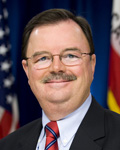
This measure would declare February 6, 2013, as Ronald Reagan Day.
This measure would designate that January 21, 2013, be observed as the official memorial of the late Dr. Martin Luther King, Jr.'s birth and commemorate Martin Luther King, Jr. Day and the work of Dr. Martin Luther King, Jr. and the Civil Rights Movement in changing public policy in California and in the United States of America. This measure would also recognize the anniversaries of the Emancipation Proclamation and the March on Washington in connection with the advancement of civil rights.
This resolution would recognize the month of January 2013, and each following January, as National Slavery and Human Trafficking Prevention Month, and it would recognize February 1, 2013, and each following February 1, as California's Free From Slavery Day.
Existing law, the federal Patient Protection and Affordable Care Act (PPACA) , requires the Secretary of the United States Department of Health and Human Services to establish the Consumer Operated and Oriented Plan program for the purpose of fostering the creation of qualified nonprofit health insurance issuers to offer qualified health plans in the individual and small group markets in the states in which they are licensed to offer those plans and makes start-up and solvency loans available for those purposes, as specified. Existing law, the Knox-Keene Health Care Service Plan Act of 1975, provides for the licensure and regulation of health care service plans by the Department of Managed Health Care and makes a willful violation of that act a crime. Existing law also provides for the regulation of various forms of insurance by the Insurance Commissioner and requires insurers to obtain a certificate of authority from the commissioner in order to be admitted to transact insurance business in the state. This bill would authorize the Director of the Department of Managed Health Care to issue a health care service plan license, and the Insurance Commissioner to issue a certificate of authority, to a consumer operated and oriented plan (CO-OP) established consistent with PPACA, as specified. The bill would specify that a CO-OP issued a license or a certificate of authority is subject to all other provisions of law relating to health care service plans or insurance, respectively, and would further specify that a CO-OP insurer and any solvency loan obtained by the CO-OP pursuant to PPACA are subject to certain requirements imposed on mutual insurers. The bill would authorize the director and the commissioner to request documentation relating to a CO-OP's solvency or start-up loan. The bill would prohibit a CO-OP from converting or selling to a for-profit or nonconsumer-operated entity after receiving a solvency loan, would require a CO-OP to comply with specified governance standards, and would authorize the commissioner to revoke a CO-OP insurer's certificate of authority for violating those prohibitions. The bill would authorize the Department of Insurance to enact regulations implementing these provisions with respect to CO-OP insurers and would enact other related provisions. Because a willful violation of the bill's requirements by a health care service plan would be a crime, the bill would impose a state-mandated local program. The California Constitution requires the state to reimburse local agencies and school districts for certain costs mandated by the state. Statutory provisions establish procedures for making that reimbursement. This bill would provide that no reimbursement is required by this act for a specified reason.
Existing property tax law, in accordance with the California Constitution, provides for a welfare exemption under which property used exclusively for religious, hospital, scientific, or charitable purposes and owned and operated by funds, foundations, or corporations meeting certain statutory requirements is exempt from taxation. Existing law also provides that property used exclusively for the preservation of specified nature resources or open-space lands meeting other specified criteria is deemed to be included within the welfare exemption. This bill would, commencing with the 2013–14 fiscal year, provide that, for the purposes of determining whether the property is used for the actual operation of the exempt activity described above, consideration shall not be given to the use of the property for activities resulting in direct or in-kind revenues, as specified, provided that the activities further the conservation objectives of the property, or for any lease of the property for a purpose that furthers the conservation objectives of the property, as provided. This bill would also make a technical, nonsubstantive change to this provision. By imposing new duties upon local tax officials with respect to the welfare exemption, this bill would impose a state-mandated local program. The California Constitution requires the state to reimburse local agencies and school districts for certain costs mandated by the state. Statutory provisions establish procedures for making that reimbursement. This bill would provide that, if the Commission on State Mandates determines that the bill contains costs mandated by the state, reimbursement for those costs shall be made pursuant to these statutory provisions. Section 2229 of the Revenue and Taxation Code requires the Legislature to reimburse local agencies annually for certain property tax revenues lost as a result of any exemption or classification of property for purposes of ad valorem property taxation. This bill would provide that, notwithstanding Section 2229 of the Revenue and Taxation Code, no appropriation is made and the state shall not reimburse local agencies for property tax revenues lost by them pursuant to the bill. This bill would take effect immediately as a tax levy.
Under the Corporation Tax Law, specific tax-exempt organizations are exempted from the requirement to file annual information returns, including those organizations the gross receipts of which in each taxable year are normally not more than $25,000. This bill would increase the gross receipts threshold for the application of the exemption from the annual filing requirement to $50,000.
The California Global Warming Solutions Act of 2006 designates the State Air Resources Board as the state agency charged with monitoring and regulating sources of emissions of greenhouse gases. The state board is required to adopt a statewide greenhouse gas emissions limit equivalent to the statewide greenhouse gas emissions level in 1990 to be achieved by 2020, and to adopt rules and regulations in an open public process to achieve the maximum, technologically feasible, and cost-effective greenhouse gas emissions reductions. The act authorizes the state board to include use of market-based compliance mechanisms. Existing law imposes limitations on any link, as defined, between the state and another state, province, or country for purposes of a market-based compliance mechanism by, among other things, prohibiting any state agency, including the state board, from taking any action to create such a link unless the state agency notifies the Governor, and the Governor issues specified written findings on the proposed link that consider the advice of the Attorney General. This bill would prohibit the Governor's written findings on the proposed link from being subject to judicial review. Existing law requires all moneys, except for fines and penalties, collected by the state board from the auction or sale of allowances as part of a market-based compliance mechanism to be deposited in the Greenhouse Gas Reduction Fund and to be available upon appropriation by the Legislature. This bill would require the moneys in the Greenhouse Gas Reduction Fund to be used for specified purposes. The bill would require the Department of Finance, in consultation with the state board and any other relevant state entity, to develop, as specified, a 3-year investment plan that includes specified analysis and information and to submit the plan to the Legislature, as specified. The bill would require the Department of Finance to submit a report no later than March 1, 2014, and annually thereafter, to the appropriate committees of the Legislature containing specified information. This bill would make its provisions contingent on the enactment of other legislation, as specified.
Existing law sets forth the requirements for the solicitation and evaluation of bids and the awarding of contracts by state agencies for the erection, construction, alteration, repair, or improvement of any public structure, building, road, or other public improvement. This bill would authorize the Department of Transportation to engage in a Construction Manager/General Contractor project delivery method, as specified, for projects for the construction of a highway, bridge, or tunnel. This bill would require the department to submit a report, as specified, no later than July 1 of each year during which any project using the Construction Manager/General Contractor method is underway and no later than July 1 of the year after any project using the Construction Manager/General Contractor method has been completed. This bill would require the Department of Transportation, on or after January 1, 2013, to use department employees or consultants under contract with the department to perform project design and engineering services, project development services, and construction inspection services, as provided. This bill would require specified information provided to the department to be verified under oath, thus imposing a state-mandated local program by expanding the scope of an existing crime. The California Constitution requires the state to reimburse local agencies and school districts for certain costs mandated by the state. Statutory provisions establish procedures for making that reimbursement. This bill would provide that no reimbursement is required by this act for a specified reason.
Existing law prohibits a person from driving any vehicle or animal, or stopping, parking, or leaving standing any vehicle or animal, whether attended or unattended, upon the driveways, paths, parking facilities, or grounds of specified public entities, except with the permission of, and upon and subject to any condition or regulation that may be imposed by, the governing body of the specified public entity. Existing law also requires that all the provisions of the Vehicle Code relating to traffic upon the highways, except for those conditions imposed or regulations enacted by the governing board, legislative body, or officer applicable to that traffic, are applicable to the traffic upon the driveways, paths, parking facilities, or grounds under the jurisdiction of the specified state or local agency. This bill would authorize a public transportation agency that imposes any condition or regulation upon a person who parks or leaves standing any vehicle, pursuant to these provisions, to enforce that condition or regulation in the same manner generally provided for the enforcement of parking regulations or designate specific employees, for the purpose of removing the vehicle. The bill would also provide that the public transportation agency is considered the issuing agency for this purpose and is authorized to remove any vehicle in the same manner as a city, county, or jurisdiction of a state agency is authorized pursuant to specified provisions of law.