

The Planning and Zoning Law requires each county and city to adopt a comprehensive, long-term general plan for its physical development, and the development of certain lands outside its boundaries, that includes, among other mandatory elements, a land use element and a conservation element. Existing law also permits variances to be granted from the parking requirements of a zoning ordinance for nonresidential development if the variance will be an incentive to the development and the variance will facilitate access to the development by patrons of public transit facilities. This bill would prohibit a public agency in a county with a population of 600,000 or more from imposing a minimum automobile parking requirement, or enforcing a minimum automobile parking requirement, on residential, commercial, or other development if the development is located on a parcel that is within12 mile, as specified, of public transit, as defined. The bill would prohibit a public agency in a city with of 75,000 or more located in a county with a population of less than 600,000 from imposing a minimum automobile parking requirement, or enforcing a minimum automobile parking requirement, on residential, commercial, or other development if the project is located within 14 mile, as specified, of public transit, as defined. The bill would create authorizations in this regard for a city or a county to which these prohibitions do not apply. The bill, when a project provides parking voluntarily, would authorize a public agency to impose specified requirements on the voluntary parking. The bill would prohibit these provisions from reducing, eliminating, or precluding the enforcement of any requirement imposed on a new multifamily or nonresidential development to provide electric vehicle supply equipment installed parking spaces or parking spaces that are accessible to persons with disabilities, as specified. The bill would exempt certain commercial parking requirements from these provisions if the requirements of the bill conflict with an existing contractual agreement of the public agency that was executed before January 1, 2022, as specified. This bill would prohibit a public agency from imposing any new minimum parking requirement on a project to remodel, renovate, or add to a single-family residence, provided that any addition to the single-family residence does not cause the single-family residence to exceed any floor-to-area ratio restriction imposed by the public agency. By changing the duties of local planning officials, this bill would impose a state-mandated local program. The bill would include findings that changes proposed by this bill address a matter of statewide concern rather than a municipal affair and, therefore, apply to all cities, including charter cities. The California Constitution requires the state to reimburse local agencies and school districts for certain costs mandated by the state. Statutory provisions establish procedures for making that reimbursement. This bill would provide that no reimbursement is required by this act for a specified reason.
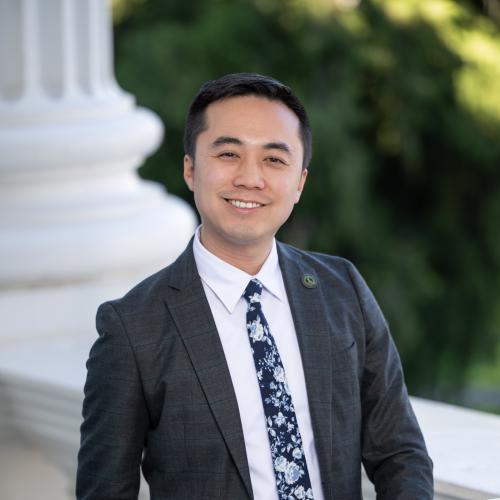
Rep. Alex Lee
Sponsored bills
This measure would commemorate the 50th anniversary of the federal Wild Free-Roaming Horses and Burros Act of 1971. The measure would additionally urge the federal administration to immediately declare a moratorium on all further wild horse and burro roundups, to establish management of these animals informed by independent science and the American public, and to restore a thriving ecological balance to California wild horse and burro areas and territories.
This measure would proclaim June 4, 2021, as National Gun Violence Awareness Day.
Existing law requires the Department of Corrections and Rehabilitation and the Department of Motor Vehicles to ensure that all eligible inmates released from state prison have valid identification cards. Existing law also establishes requirements for the Department of Corrections and Rehabilitation for persons in state prison who are exonerated, including transitional services and financial support, as specified. Existing law establishes an $8 fee for a replacement identification card issued to an eligible inmate upon release from a state or federal correctional facility or a county jail, as specified. This bill would require the Department of Corrections and Rehabilitation to make all reasonable efforts to ensure that all inmates released from state prison are released with a valid California identification card or a duplicate or renewal driver's license, unless an inmate willfully chooses to not obtain a California identification card or driver's license. The bill would require the Department of Corrections and Rehabilitation, where a valid California identification card or driver's license is not obtained before release, to provide the inmate with a photo prison identification card. The bill would require, among other things, that the California Department of Corrections and Rehabilitation obtain Department of Motor Vehicles-approved cameras, determine the documentation inmates require for California identification cards and driver's licenses and provide inmates with the opportunity and means to obtain those documents, provide inmates with the opportunity and means to work with the Department of Motor Vehicles to obtain a California identification card or driver's license, and to make licensing examinations available to inmates. The bill would require the Department of Corrections and Rehabilitation to prepare an annual report for the Legislature regarding this program that includes information about the number of inmates assisted, the number of facilities providing services, and impediments to program implementation. This bill would extend the $8 fee to an original or duplicate identification card as well as to an original, duplicate, or renewal driver's license issued to an inmate upon release, as specified. This bill would make technical, nonsubstantive changes to the law pertaining to exonerated persons.
Existing law, the Mello-Granlund Older Californians Act, establishes the California Department of Aging and sets forth its mission to provide leadership to the area agencies on aging in developing systems of home- and community-based services that maintain individuals in their own homes or least restrictive homelike environments. Existing law requires the department, in allocating specified state and federal funding to area agencies on aging, to ensure that priority consideration is given to criteria that reflect the state's intent to target services to those in greatest economic or social need. Existing law defines "greatest social need" to mean the need caused by noneconomic factors, including physical and mental disabilities, that restrict an individual's ability to perform normal daily tasks or that threaten the individual's capacity to live independently. This bill would revise this definition to include human immunodeficiency virus (HIV) status as a specified noneconomic factor.
This measure would recognize June 19, 2021, as Juneteenth and would urge the people of California to join in celebrating Juneteenth as a day to honor and reflect on the significant role that African Americans have played in the history of the United States and how they have enriched society through their steadfast commitment to promoting unity and equality.