

Under existing law, the Sherman Food, Drug, and Cosmetic Law, the State Department of Public Health generally regulates the packaging, labeling, advertising, and sale of food, drugs, devices, and cosmetics, in accordance with the federal Food, Drug, and Cosmetic Act. A violation of those provisions is a crime. Existing law sets forth various other provisions relating to the furnishing and health care coverage of certain types of contraception. Under existing law, the Unruh Civil Rights Act, all persons, regardless of sex, race, color, religion, ancestry, national origin, disability, medical condition, genetic information, marital status, sexual orientation, citizenship, primary language, or immigration status, are entitled to full and equal accommodations, advantages, facilities, privileges, or services in all business establishments, as specified. This bill would, with certain exceptions, prohibit a retail establishment, as defined, from refusing to furnish nonprescription contraception to a person solely on the basis of age or any of the above-listed characteristics by means of any conduct, including, but not limited to, requiring the customer to present identification for purposes of demonstrating their age or other characteristic. Under the bill, a retail establishment would be subject to a civil penalty in the amount of $25,000 for each violation, and would be exempt from the above-described criminal penalty. The bill would authorize a local health officer, a city attorney, a district attorney, or the Attorney General to cooperate with the State Public Health Officer in the enforcement of these provisions. The bill would authorize the official to seek and recover reasonable costs for services rendered, with certain limitations.
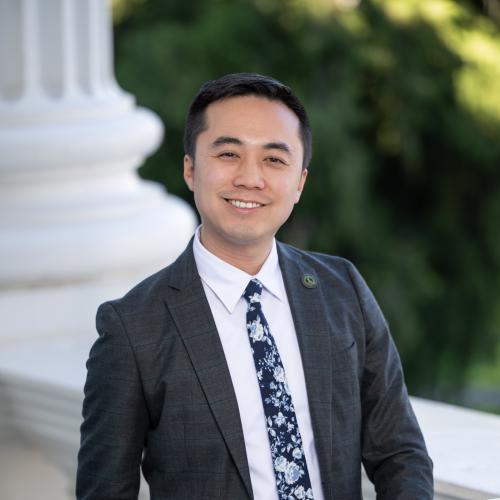
Asm. Alex Lee
Sponsored bills
Existing law establishes the Department of Food and Agriculture, which is under the control of the Secretary of Food and Agriculture. Existing law generally regulates, among other things, beef cattle feedlots, poultry plants, and slaughterhouses, and requires operators of those businesses to be licensed. Under existing law, a violation of certain of those provisions is a crime. This bill would prohibit commercial animal feeding operations, as defined, from commencing or expanding operations, except as specified. The bill would make any person that violates this prohibition civilly liable for a penalty in an amount not to exceed a sum of $10,000 per violation per day, but specify that a violation of this prohibition is not a crime.
This measure would recognize February 2022 as Black History Month, urge all citizens to join in celebrating the accomplishments of African Americans during Black History Month, and encourage the people of California to recognize the many talents of African Americans and the achievements and contributions they make to their communities to create equity and equality for education, economics, and social justice. The measure would also recognize the significance in protecting citizens' right to vote and remedying racial discrimination in voting.
This measure would proclaim February 24, 2022, as Introduce a Girl to Engineering Day.
This resolution would recognize February 4, 2022, as Sri Lankan Independence Day, and urge all Californians to join in celebrating Sri Lanka's independence.
This measure would proclaim the week of March 7, 2022, to March 13, 2022, inclusive, as Women in Construction Week.
Existing sales and use tax laws impose taxes on retailers measured by the gross receipts from the sale of tangible personal property sold at retail in this state, or on the storage, use, or other consumption in this state of tangible personal property purchased from a retailer for storage, use, or other consumption in this state, and provides various exemptions from the taxes imposed by those laws. This bill would exempt from those taxes, until January 1, 2025, the gross receipts from the sale of, and the storage, use, or other consumption of, COVID-19 prevention and response goods, as defined. Existing law requires a bill that would authorize a new tax expenditure under the Sales and Use Tax Law to identify specific goals, purposes, and objectives that the tax expenditure will achieve, and detailed performance indicators and data collection requirements for determining whether the tax expenditure achieves these goals, purposes, and objectives. This bill would make findings specifying the goal, purpose, and objective of the sales and use tax exemption provided by this bill and the performance indicator to be used, and would require, on or before January 1, 2026, the California Department of Tax and Fee Administration to provide a report to the Assembly Revenue and Taxation Committee and the Senate Governance and Finance Committee on the use of the tax exemption. The Bradley-Burns Uniform Local Sales and Use Tax Law authorizes counties and cities to impose local sales and use taxes in conformity with the Sales and Use Tax Law, and existing laws authorize districts, as specified, to impose transactions and use taxes in accordance with the Transactions and Use Tax Law, which generally conforms to the Sales and Use Tax Law. Amendments to the Sales and Use Tax Law are automatically incorporated into the local tax laws. Existing law requires the state to reimburse counties and cities for revenue losses caused by the enactment of sales and use tax exemptions. This bill would provide that, notwithstanding Section 2230 of the Revenue and Taxation Code, no appropriation is made and the state shall not reimburse any local agencies for sales and use tax revenues lost by them pursuant to this bill. This bill would declare that it is to take effect immediately as an urgency statute.