This measure would respectfully memorialize the 117th United States Congress and the President of the United States to enact legislation, S. 3213, known as the IDEA Full Funding Act, which would fully fund the federal Individuals with Disabilities Education Act.
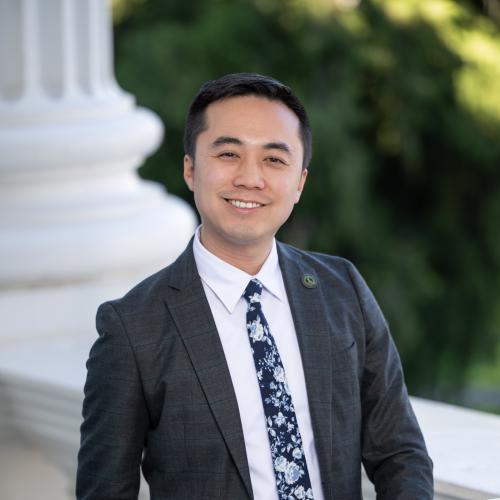
Asm. Alex Lee
Sponsored bills
This measure would proclaim September 25, 2022, as Gold Star Mothers' and Families' Day in California.
This measure would recognize August 15, 2022, as India's Independence Day and urge all Californians to join in celebrating India's independence.
This measure would declare the month of September 2022 as California Emergency Preparedness Month.
Existing law requires the Commission on Teacher Credentialing to establish standards for the issuance and renewal of credentials, certificates, and permits. Under existing law, the commission establishes standards for teacher preparation programs at regionally accredited institutions of higher education, as defined. Existing law authorizes a regionally accredited institution of higher education to offer a 4-year or 5-year integrated program of professional preparation that allows a student to earn a baccalaureate degree and a preliminary multiple or single subject teaching credential, or an education specialist instruction credential authorizing the holder to teach special education, including student teaching requirements, concurrently and within 4 or 5 years of study. Existing law requires an integrated program of professional preparation to provide opportunities for candidates to complete intensive field experiences, including student teaching, in public elementary and secondary schools early in the undergraduate sequence. This bill instead would require an integrated program of professional preparation to provide opportunities for candidates to complete intensive field experiences, including student teaching, in public prekindergarten, kindergarten, or grades 1 to 12, inclusive, programs early in the undergraduate sequence. Existing law requires integrated programs offered by the California State University be designed to concurrently lead to a preliminary multiple subject or single subject teaching credential, or an education specialist instruction credential authorizing the holder to teach special education, and a baccalaureate degree. This bill would additionally authorize the California State University to meet the above-described requirement if the integrated program is designed to concurrently lead to an early childhood education specialist credential and a baccalaureate degree. Existing law, contingent upon appropriation of funds in the annual Budget Act or another statute, requires the commission to develop and implement a program to award grants of up to $250,000 each to regionally accredited institutions of higher education for the development of transition plans to guide the creation of 4-year integrated programs of professional preparation, as provided. This bill would revise and recast that program to instead require the commission to award planning grants of up to $250,000 each to regionally accredited institutions of higher education to develop plans for the creation of integrated programs of professional preparation that lead to more credentialed teachers in identified shortage fields, as provided. The bill would require the commission to award implementation or expansion grants of up to $500,000 each for regionally accredited institutions of higher education to develop new, or expand existing, programs of professional preparation, including programs related to the early childhood education specialist credential, or to establish a new partnership with a California community college, as provided. The bill would require the commission to give preference to proposals that commit to delivering a ratified articulation agreement for teacher preparation coursework between one or more California community colleges and one or more 4-year institutions, as provided. The bill would require a regionally accredited institution of higher education to provide program and outcome data for at least 5 years after receiving the implementation or expansion grant. The bill would require the commission to ensure that applicants for planning grants and implementation or expansion grants provide assurances related to supporting teacher preparation programs, as provided. The bill would authorize applicants that previously received planning grants, or implementation or expansion grants, to apply for new grants, contingent on sharing information on the previous grants and proposing expanded or new programs, as provided. The bill would make these grant programs contingent upon appropriation of funds in the annual Budget Act or another statute.
Existing law requires the State Department of Public Health, subject to an appropriation in the Budget Act of 2016, to award funding to local health departments, local government agencies, or on a competitive basis to other organizations, as specified, to support or establish programs that provide naloxone to first responders and to at-risk opioid users through programs that serve at-risk drug users. This bill would require the Department of Health Care Services to, upon appropriation by the Legislature and until January 1, 2027, establish a pilot program to provide grants to the Counties of San Bernardino, Riverside, and Orange, for public awareness campaigns to spread awareness of existing programs by the department to distribute opioid antagonists approved by the United States Food and Drug Administration. The bill would require counties participating in the program to perform targeted public awareness campaigns, and would require the pilot program to collect specified information and send yearly reports to the Legislature, as specified.
(1) The California Environmental Quality Act (CEQA) requires a lead agency, as defined, to prepare, or cause to be prepared, and certify the completion of an environmental impact report on a project that it proposes to carry out or approve that may have a significant effect on the environment, or to adopt a negative declaration if it finds that the project will not have that effect. CEQA prohibits an environmental impact report or negative declaration from being approved for any project involving the purchase of a schoolsite or the construction of a new elementary or secondary school by a school district unless certain conditions are met relating to, among other things, hazardous emissions or substances safety considerations, as provided. Existing law requires the governing board of a school district, as a condition of receiving state funding under the Leroy F. Greene School Facilities Act of 1998, to conduct a Phase I environmental assessment of a proposed schoolsite before acquiring the site, as provided. Existing law requires the State Department of Education, upon the request of the governing board of a school district, to advise the governing board on the acquisition of new schoolsites, as specified. Existing law requires the governing board of a school district, before acquiring title to property for a new schoolsite or for an addition to a present schoolsite, to give notice in writing of the proposed acquisition to the planning commission. Existing law requires the planning commission to investigate the proposed site and submit a written report to the governing board of the school district, as provided. Existing law prohibits the governing board from acquiring title to the property until the report of the planning commission has been received. This bill would impose those prohibitions, and related requirements, on the governing body of a charter school and the governing body of a private school, and would make the provisions relating to school districts also applicable to charter schools and private schools, as provided. The bill would apply the Phase I environmental assessment requirements to charter schools and private schools, without conditioning the requirements on the receipt of state funds. By imposing new requirements on school districts, charter schools, lead agencies, cities, and counties, the bill would impose a state-mandated local program. (2) The California Constitution requires the state to reimburse local agencies and school districts for certain costs mandated by the state. Statutory provisions establish procedures for making that reimbursement. This bill would provide that with regard to certain mandates no reimbursement is required by this act for a specified reason. With regard to any other mandates, this bill would provide that, if the Commission on State Mandates determines that the bill contains costs so mandated by the state, reimbursement for those costs shall be made pursuant to the statutory provisions noted above.

Existing law creates the Metropolitan Transportation Commission, as a local area planning agency and not as a part of the executive branch of the state government, to provide comprehensive regional transportation planning for the region comprised of the City and County of San Francisco and the Counties of Alameda, Contra Costa, Marin, Napa, San Mateo, Santa Clara, Solano, and Sonoma. This bill would require the commission to develop and adopt a Connected Network Plan, develop a comprehensive, standardized regional transit mapping and wayfinding system, develop an implementation and maintenance strategy and funding plan, and establish open data standards, as specified. The bill would require the region's transit agencies, as defined, to comply with those established regional transit mapping and wayfinding system, implementation and maintenance strategy and funding plan, and open data standards, as provided. This bill would require the transit agencies in the region to establish a regional transit coordinating council and would require the council to, among other things, develop and adopt an integrated transit fare structure. The bill would require the council to submit the integrated transit fare structure to the commission for approval and, after approval, would require each transit agency in the region to present the structure to its board for consideration. Under existing law, moneys in the Public Transportation Account are continuously appropriated to the Controller for allocation to transportation planning agencies, county transportation commissions, and the San Diego Metropolitan Transit Development Board for purposes of the State Transit Assistance Program. Existing law requires the Controller to allocate those moneys to those entities based on population and qualifying revenue, as specified. This bill would require the Metropolitan Transportation Commission to notify a transit agency if the commission determines that the transit agency is out of compliance with the integrated transit fare structure, regional transit mapping and wayfinding system, implementation and maintenance strategy and funding plan, or open data standards described above, and would require the commission to indicate what steps are needed to comply. If a transit agency does not comply with the compliance parameters set by the commission or if the commission rejects the transit agency's request for additional funding or for an exemption, the bill would make that transit agency ineligible to receive a portion of those moneys in an amount to be determined by the commission. The bill would require a transit agency to regain access to any withheld funds upon demonstration of compliance. To the extent that this bill would mandate that a transit agency establish a new program or provide a higher level of service as part of an existing program, and by imposing additional duties on the Metropolitan Transportation Commission, the bill would impose a state-mandated local program. The California Constitution requires the state to reimburse local agencies and school districts for certain costs mandated by the state. Statutory provisions establish procedures for making that reimbursement. This bill would provide that, if the Commission on State Mandates determines that the bill contains costs mandated by the state, reimbursement for those costs shall be made pursuant to the statutory provisions noted above.