

Passed Feb 2, 2023
1 co-sponsor
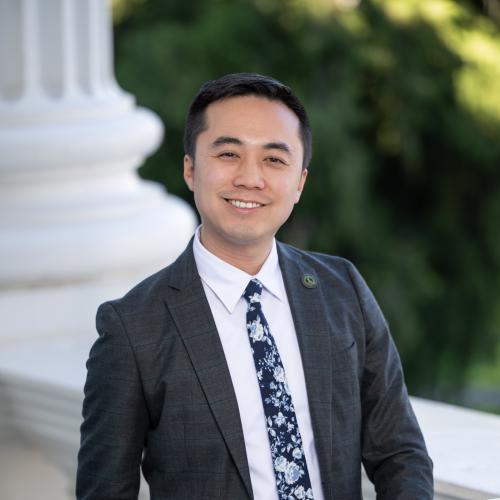
Asm. Alex Lee
Total votes
14,493
all sessions
Attendance
94%
702 missed
Near the chamber average
With party
99%
of cast votes
Near the chamber average
Bipartisan score
0%
crosses aisle rarely
Near the chamber average
Sponsored
1,076
bills & resolutions
Near the chamber average
Committees
12
assignments
1,076 bills and resolutions
Sponsored bills
Total
1,076
Primary
123
Co-sponsor
953
This page
1,076
matching current filters
Passed Jan 30, 2023
1 co-sponsor
Passed Jan 23, 2023
1 co-sponsor
Nonattainment basins: employee parking: parking cash-out program.
Existing law requires, in any air basin designated as nonattainment for certain air quality standards, an employer, defined as an employer of 50 persons or more that provides a parking subsidy to employees, to also offer a parking cash-out program. Existing law defines "parking cash-out program" as an employer-funded program under which an employer offers to provide a cash allowance to an employee equivalent to the parking subsidy that the employer would otherwise pay to provide the employee with a parking space. Existing law defines a "parking subsidy" as the difference between the out-of-pocket amount paid by an employer on a regular basis in order to secure the availability of an employee parking space not owned by the employer and the price, if any, charged to an employee for use of that space. This bill would revise the definitions of "employer," "parking cash-out program," and "parking subsidy." The bill would require an employer to maintain a record of communication with each employee who receives a parking subsidy that those employees have been informed of their right to receive the cash equivalent of the parking subsidy. The bill would also impose specified duties upon the State Air Resources Board.
Signed into law Sep 30, 2022
0 co-sponsors
Surplus medication collection and distribution.
Existing law authorizes a county to establish a repository and distribution program for the donation of surplus medication and redistribution to persons in need of financial assistance to ensure access to necessary pharmaceutical therapies. This bill would, until January 1, 2030, authorize a regional pilot program in the Counties of Santa Clara and San Mateo and the City and County of San Francisco for the purpose of implementing and maintaining a repository and distribution program, as specified. The bill would require participating pharmacies in the regional pilot program to be owned or operated by one of the 3 counties and not on probation with the California State Board of Pharmacy. The bill would exempt the regional pilot program from a specified provision that generally applies to donation of surplus medication redistribution programs. Specifically for the regional pilot program, this bill would authorize donated medication to be transferred more than once, but only within a county, and would allow donated medication from multiple facilities to be commingled by the participating entity. The bill would require participants to maintain a system of recording and logging donated medication to allow the tracking, as specified, and to disclose to the Board of Pharmacy any medication errors, as defined, within 30 days of discovery of the error by the participating entity. This bill would, on January 1, 2028, require the Board of Pharmacy to submit to the Legislature an evaluation of the regional pilot program and the pilot program participants' compliance to program requirements. Existing law defines a donor organization to refer to specified health and care facilities that may donate centrally stored, unused medications. This bill would expand the list of entities that may act as a donor organization to include a facility licensed by the State Department of Social Services, the State Department of Public Health, the State Department of Health Care Services, the Department of Corrections and Rehabilitation, Division of Juvenile Justice, and other specified licensed facilities. Existing law authorizes a pharmacy, licensed in California and not on probation with the California State Board of Pharmacy, whose primary or sole type of pharmacy practice type is limited to a skilled nursing facility, home health care, board and care, or mail order, to donate unused, unexpired medication, as specified. This bill would authorize any pharmacy, licensed in California and not on probation with the California State Board of Pharmacy, to donate unused, unexpired medication, as specified. This bill would exempt specified persons and entities, including a prescription drug manufacturer, a participating entity, and a pharmacist or physician, from criminal or civil liability for an injury caused when any entity or person donates, accepts, or dispenses prescription drugs in compliance with specified provisions. The bill would also include a surplus medication collection and distribution intermediary in this exemption, as specified. This bill would make legislative findings and declarations as to the necessity of a special statute for these 3 counties.
Signed into law Sep 30, 2022
1 co-sponsor
Disability access: certified access specialist program: funding.
(1) The federal Americans with Disabilities Act of 1990 and the California Building Standards Code require that specified buildings, structures, and facilities be accessible to, and usable by, persons with disabilities. Existing law establishes a Disability Access and Education Revolving Fund, a continuously appropriated fund, within the Division of the State Architect for purposes of increasing disability access and compliance with construction-related accessibility requirements and developing educational resources for businesses to facilitate compliance with federal and state disability laws, as specified. Existing law requires the State Architect to establish and publicize a program for voluntary certification by the state of any person who meets specified criteria as a certified access specialist (CASp) , as provided. Existing law, on and after January 1, 2018, and until December 31, 2023, inclusive, requires any applicant for an original or renewal of a local business license or equivalent instrument or permit to pay an additional fee of $4 for that license, instrument, or permit, or in any city, county, or city and county that does not issue a business license or an equivalent instrument or permit, existing law requires an applicant for a building permit to pay an additional fee of $4, to be collected by the city, county, or city and county that issued the license, instrument, or permit for specified purposes related to disability access, including the CASp program. Commencing January 1, 2024, that fee is reduced to $1. Existing law requires a portion of those fees to be deposited in the Disability Access and Education Revolving Fund. This bill would repeal the provision reducing the fee to $1 commencing January 1, 2024, thereby extending the operation of this fee at the amount of $4 indefinitely. By expanding the increased fee deposited into the Disability Access and Education Revolving Fund, this bill would make an appropriation. (2) Existing law requires that the city, county, or city and county retain a specified percentage of the fees collected under the above-described provision, to fund administrative costs and the remainder to be deposited in a special fund, established by the city, county, or city and county to be known as the "CASp Certification and Training Fund," and used for increased CASp training and certification within that local jurisdiction. On and after January 1, 2018, and until December 31, 2023, the specified percentage to be retained is 90%. Commencing January 1, 2024, the percentage is reduced to 70%. Existing law requires that the remaining percentage of the fees be transmitted on a quarterly basis to the Division of the State Architect for deposit in the Disability Access and Education Revolving Fund. This bill would repeal the provision reducing the percentage to be retained, thereby allocating 90% of the fees to be retained by the city, county, or city and county indefinitely. The bill would expand the purpose for which the moneys in the special fund may be used to include providing financial assistance to small business owners for accessibility-related inspection, renovation, and construction and would rename the fund to be known as the "Accessibility Compliance Fund." (3) Existing law requires a city, county, or city and county to submit a report to the Division of the State Architect on the total fees collected in the prior calendar year and distribution of the proceeds, as specified. This bill would require a city, county, or city and county to include additional information in that report regarding financial assistance provided to small businesses for construction of physical accessibility improvements. By imposing an additional requirement on a local government, this bill would impose a state-mandated local program. The California Constitution requires the state to reimburse local agencies and school districts for certain costs mandated by the state. Statutory provisions establish procedures for making that reimbursement. This bill would provide that no reimbursement is required by this act for a specified reason.
Signed into law Sep 30, 2022
0 co-sponsors
Pharmacists and pharmacy technicians: continuing education: cultural competency.
The Pharmacy Law establishes the California State Board of Pharmacy in the Department of Consumer Affairs for the licensing and regulation of pharmacists, pharmacy technicians, and pharmacies. That law prohibits the board from renewing a pharmacist license after the first renewal unless the applicant submits proof satisfactory to the board that the applicant has successfully completed 30 hours of approved courses of continuing pharmacy education. This bill would require that those 30 hours of approved courses of continuing pharmacy education include at least one hour of participation in a cultural competency course, as defined. The bill would also prohibit the board from renewing a pharmacy technician license unless the applicant submits proof satisfactory to the board that the applicant has successfully completed at least one hour of participation in a cultural competency course during the two years preceding the application for renewal. The bill would make the bill's provisions operative on January 1, 2024.
Signed into law Sep 30, 2022
1 co-sponsor
Death certificates: content.
Existing law specifies the content of a certificate of death, including the full name of the father, birthplace of the father, the full maiden name of the mother, and birthplace of the mother. This bill would, instead, require the certificate of death to include the current first and middle names, birth last names, and the birthplaces of the parents, without reference to the parents' gendered relationship to the decedent. The bill would require the State Registrar to electronically capture information on the parents' relationship to the decedent and any additional last names used by the parents, which would not be transcribed onto the actual hard copy of the death certificate. The bill would require the State Registrar to implement the changes made by the bill no later than July 1, 2024.
Signed into law Sep 30, 2022
1 co-sponsor
Vehicles: toll exemptions.
Under existing law, a person who enters a vehicular crossing becomes liable for any tolls imposed. Existing law prescribes the means by which a toll may be collected or paid, including by the use of an electronic transponder or by means of capturing a license plate number and billing the registered owner. Existing law prohibits a person from evading, or attempting to evade, the payment of tolls on any vehicular crossing or toll highway. A violation of this prohibition is subject to civil penalties, but it is not a crime. This bill would exempt a vehicle that is registered to a veteran, displaying a specialized veteran license plate, as specified, and registered to a transponder or other electronic toll payment device from payment of a toll or related fines on a toll road, toll bridge, toll highway, vehicular crossing, or any other toll facility, except a high-occupancy toll lane. The bill would also make conforming changes. Because this bill would create a new duty by requiring locally owned and operated toll facilities to recognize and exempt eligible vehicles, this bill would impose a state-mandated local program. The California Constitution requires the state to reimburse local agencies and school districts for certain costs mandated by the state. Statutory provisions establish procedures for making that reimbursement. This bill would provide that, if the Commission on State Mandates determines that the bill contains costs mandated by the state, reimbursement for those costs shall be made pursuant to the statutory provisions noted above.
Signed into law Sep 30, 2022
0 co-sponsors
Transgender, Gender Nonconforming, and Intersex Fund.
Existing law establishes the Transgender Wellness and Equity Fund, under the administration of the State Department of Public Health's Office of Health Equity, for the purposes of funding grants to create programs, or funding existing programs, focused on coordinating trans-inclusive health care for individuals who identify as transgender, gender nonconforming, or intersex (TGI) . Existing law makes the grants available to TGI-serving organizations, defined as an organization with a mission statement that centers around serving transgender, gender nonconforming, and intersex people, and where at least 65% of the clients of the organization are TGI. This bill would rename the fund as the Transgender, Gender Nonconforming, and Intersex Wellness and Equity Fund and define the terms transgender, gender nonconforming, and intersex. The bill would add to the definition of a TGI-serving organization a nonprofit that serves as the fiscal agent or sponsor for an above-described organization and would require a nonprofit serving in that capacity to pass all funding to the above-described organization, but would authorize a reasonable or industry standard fee for administrative costs.
Signed into law Sep 30, 2022
1 co-sponsor
Ask Maddy
·
AI policy assistant
Ask Maddy about Alex Lee
Scope: california
Hi! I can help you understand Alex Lee's legislative record. What would you like to know?
Try one of these
i
Maddy answers using official bill text and legislative records. Always verify before sharing.
Sources cited inline