

The California Constitution provides that the University of California constitutes a public trust, and requires the university to be administered by the Regents of the University of California, a corporation in the form of a board, with full powers of organization and government, subject to legislative control only for specified purposes. The California Constitution requires the board to consist of 7 ex officio members and 18 appointive members appointed by the Governor and approved by the Senate. The California Constitution authorizes the members of the board to appoint either a member of the faculty at a campus of the university or of another institution of higher education, or a person enrolled as a student at a campus of the university, or both, as members of the board serving for no less than one year with all rights of participation. Beginning on July 1, 2027, this measure would require, instead of authorize, the members of the board to appoint to the board for 2-year terms, 2 undergraduate students and 2 graduate students enrolled at a campus of the university for each regular academic term during their service as members of the board, as provided. The measure would require each student board member to serve as a nonvoting student regent-designate in the first year of their 2-year term, and would authorize a student member who graduates from the university on or after January 1 of the 2nd year of the student member's 2-year term to serve the remainder of their term.
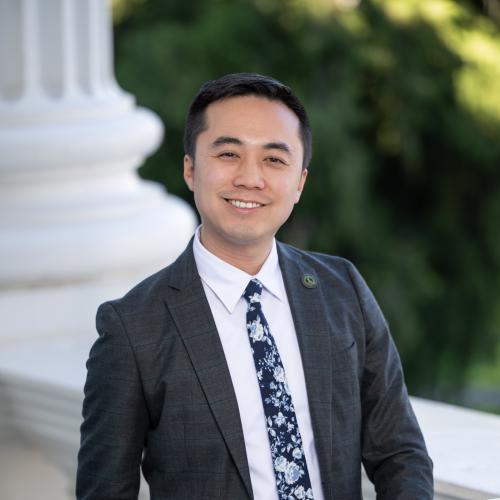
Rep. Alex Lee
Sponsored bills
Maddy summaryThis House Resolution officially designates September as Black Music Month to honor the significant contributions of Black artists to American culture. The measure recognizes a wide range of musical genres, including jazz, blues, gospel, and hip-hop, by highlighting their historical origins and influential figures. While the text celebrates these artistic achievements, it does not impose any new legal requirements or funding mandates.
The Planning and Zoning Law requires the legislative body of a city or county to adopt a comprehensive, long-term general plan that includes various elements, including, among others, a land use, circulation, housing, safety, and environmental justice element. Existing law requires a city or county to update its general plan elements subject to certain criteria and timelines. This bill would require a city, county, or city and county, no later than January 1, 2033, to prepare and adopt a childcare plan or integrate a childcare plan into the next adoption of the city, county, or city and county's general plan to address the childcare needs of the jurisdiction, as specified. The bill would include findings that changes proposed by this bill address a matter of statewide concern rather than a municipal affair and, therefore, apply to all cities, including charter cities. The California Constitution requires the state to reimburse local agencies and school districts for certain costs mandated by the state. Statutory provisions establish procedures for making that reimbursement. This bill would provide that no reimbursement is required by this act for a specified reason.
Existing federal law establishes the Supplemental Nutrition Assistance Program (SNAP) , known in California as CalFresh, under which supplemental nutrition assistance benefits allocated to the state by the federal government are distributed to eligible individuals by each county. Existing federal law limits a participant who is an able-bodied adult without dependents (ABAWD) to 3 months of CalFresh benefits in a 3-year period unless that participant has met work participation requirements or is otherwise exempt. Existing federal law authorizes a waiver of that time limit upon the request of a state if it is determined that the area in which the individuals reside has an unemployment rate of over 10% or does not have a sufficient number of jobs to provide employment for the individuals. Existing state law requires the State Department of Social Services, to the extent permitted by federal law, to annually seek a federal waiver of the time limit. Existing federal law also authorizes a state to provide, in each fiscal year, an exemption from the 3-month time limit for covered individuals, to the extent that the average monthly number of exemptions in effect during a fiscal year does not exceed 8% of the number of covered individuals in the state. Existing law requires the department to also establish the California Food Assistance Program (CFAP) to provide nutrition benefits to households that are ineligible for CalFresh benefits solely due to their immigration status, as specified. Existing law requires CFAP benefits to be equivalent to SNAP benefits. Under existing law, operative on the date the department notifies the Legislature that the Statewide Automated Welfare System can perform the necessary automation for this purpose, an individual 55 years of age or older is eligible for CFAP benefits, subject to an appropriation. Existing law requires these provisions only be implemented during any period that specified federal benefits are provided. This bill, the California Antihunger Response and Employment Training Act of 2026, would expand CFAP eligibility to include individuals ineligible for CalFresh benefits due to the federal time limits placed on ABAWDs regardless of if they are a citizen or noncitizen and individuals ineligible solely due to their humanitarian immigration status. The bill would also repeal the provisions requiring certain federal benefits be provided in order for CFAP to be implemented. The bill would make related findings and declarations. To the extent the bill would expand eligibility for county-administered benefits through expansion of the CFAP program, the bill would impose a state-mandated local program. The California Constitution requires the state to reimburse local agencies and school districts for certain costs mandated by the state. Statutory provisions establish procedures for making that reimbursement. This bill would provide that, if the Commission on State Mandates determines that the bill contains costs mandated by the state, reimbursement for those costs shall be made pursuant to the statutory provisions noted above.
Existing law requires the operator of a private detention facility, as defined, to comply with, and adhere to, the detention standards of care and confinement agreed upon in the facility's contract for operations, as specified. Existing law requires a private detention facility operator to comply with, and adhere to, all local and state public health orders and occupational safety and health regulations. This bill, the Masuma Khan Justice Act, would authorize the State Department of Public Health to inspect an involuntary residential facility, defined as a facility that houses more than 50 individuals overnight, restricts residents' ability to enter or leave, as specified, and provides specified onsite services, for the limited purpose of ensuring sanitary, hygienic, and safe conditions, using standards and inspection protocols consistent with those applied to licensed residential health facilities. The bill would authorize unnoticed inspections under specified conditions. The bill would require the department, within 30 days of completing an inspection, to submit a report to the Legislature. The bill would require the operator of a facility to provide access to the department for an inspection described above, to maintain all records necessary to demonstrate compliance with the above-described standards, and to correct any violation identified by the department, as specified. The bill would make a violation of the above-described requirements by an operator of a facility, after appropriate notice and an opportunity for a hearing, subject to an administrative penalty, as specified, per violation per day. If an operator fails to correct a violation within the time specified in the citation, the bill would authorize the department to issue a safety warning that identifies the uncorrected condition and requires prompt corrective action by the operator. The bill would authorize the department to refer violations to the Attorney General, and would authorize the Attorney General to bring a civil action for declaratory or injunctive relief. The bill would require the department to adopt rules and regulations to ensure that all involuntary residential facilities comply with measurable standards for sanitary, hygienic, and safe conditions and would require the department to consult with specified organizations in the development of these standards. The bill would require the department to implement the above-described provisions in a manner that avoids unnecessary duplication of existing state or local health and safety oversight, as specified. The bill would declare that its provisions are severable. The bill would make related findings and declarations. The bill would declare that it is to take effect immediately as an urgency statute.
Existing law establishes the California Health and Human Services Agency, headed by the Secretary of California Health and Human Services. Existing law further establishes, within the agency, a number of departments and other entities, including the State Department of Health Care Services. Existing law provides for the Medi-Cal program, which is administered by the State Department of Health Care Services, and under which qualified low-income persons receive health care benefits. This bill would require the State Department of Health Care Services, after obtaining specified information from the Employment Development Department (EDD) , to prepare a report that includes information regarding employers in California that employ 100 or more employees and have any employees who receive benefits from the Medi-Cal program, including, among other things, the estimated total annual cost of Medi-Cal services provided to employees, and the dependents of those employees, of each employer, and submit that report to the Legislature no later than September 1, 2027, and annually thereafter. The bill would provide that individually identifiable information about employees or Medi-Cal enrollees contained in the report is exempt from disclosure under the California Public Records Act, and would authorize the department and EDD to enter into data-sharing agreements, as provided. The bill would also repeal an obsolete reporting requirement. Under existing law, the information obtained in the administration of the Unemployment Insurance Code is for the exclusive use and information of the Director of Employment Development in the discharge of their duties and is not open to the public. However, existing law permits the use of the information for specified purposes, and allows the director to require reimbursement for direct costs incurred. Existing law provides that a person who knowingly accesses, uses, or discloses this confidential information without authorization is guilty of a misdemeanor. The bill would require the Director of Employment Development to permit the use of specified information in their possession by the State Department of Health Care Services to prepare and submit the above-described report. By requiring this information to be provided to the department for these purposes, this bill would expand the crime of unauthorized access, use, or disclosure of this information, and would impose a state-mandated local program. Existing law, subject to certain exceptions, also requires all types of information concerning a person, made or kept by any public officer or agency in connection with the administration of the Medi-Cal program, to be confidential, and makes knowingly releasing or possessing this confidential information punishable as a misdemeanor. The bill would make individually identifiable information about employees or Medi-Cal enrollees contained in the above-described report subject to these confidentiality requirements. By expanding the scope of an existing crime, this bill would impose a state-mandated local program. Existing law establishes within the Department of Industrial Relations the Division of Labor Standards Enforcement, headed by the Labor Commissioner, for the purposes of enforcing labor laws. Existing law prohibits an employer from discharging or in any manner discriminating against an employee for specified actions, including, among other things, taking time off to serve on a jury or because of an employee's status as a victim of crime or abuse, as specified. This bill would additionally prohibit an employer from discharging or in any manner discriminating or retaliating against an employee who applies for, or is enrolled in, the Medi-Cal program. The bill would also prohibit an employer from refusing to hire a person because that person is enrolled in the Medi-Cal program. Existing constitutional provisions require that a statute that limits the right of access to the meetings of public bodies or the writings of public officials and agencies be adopted with findings demonstrating the interest protected by the limitation and the need for protecting that interest. This bill would make legislative findings to that effect. The California Constitution requires the state to reimburse local agencies and school districts for certain costs mandated by the state. Statutory provisions establish procedures for making that reimbursement. This bill would provide that no reimbursement is required by this act for a specified reason.
The Trial Court Interpreter Employment and Labor Relations Act (the act) establishes procedures governing the employment and compensation of certified and registered trial court interpreters and court interpreters pro tempore employed by the courts to perform spoken language interpretation. Under existing law, these provisions do not apply to sign language interpreters. This bill would make the provisions of the act applicable to sign language interpreters. The bill would specify that spoken language includes American Sign Language for purposes of these provisions.
Existing federal law, the Indian Child Welfare Act of 1978 (ICWA) , governs the proceedings for determining the placement of an Indian child when that child is removed from the custody of the child's parent or guardian. Existing law specifies that the state is committed to protecting the essential tribal relations and best interest of an Indian child by promoting practices in accordance with ICWA. Existing law also provides for the state and an Indian tribe to enter into an agreement regarding the care and custody of Indian children and jurisdiction over Indian child custody proceedings. Existing law establishes, in order to provide additional funds to eligible Indian tribes that have entered into an agreement with the state pursuant to those provisions, the Tribally Approved Homes Compensation Program to provide funds to recruit and approve homes for the purpose of foster or adoptive placement of an Indian child and the Tribal Dependency Representation Program to provide funds to pay for legal counsel to represent the Indian tribe in a California Indian child custody proceeding. This bill would establish the Tribal Foster Care Prevention Program to provide funding to assist any federally recognized Indian tribe located in California, or with lands that extend into California, in funding the costs associated with services aimed at preserving families and preventing the entry of children into foster care. The bill would require an Indian tribe that seeks funding for this purpose to submit an annual letter of interest to the department. The bill would require the department, subject to an appropriation in the annual Budget Act for this purpose, to provide each Indian tribe that enters into a specified agreement and submits a letter of interest an annual allocation. The bill would require an Indian tribe that receives funds to submit a progress report regarding the number of Indian children and their families served to the department on or before September 30 following the close of the fiscal year in which funding was received. This bill would authorize the department to issue written guidance to implement, interpret, or make specific these provisions without taking any regulatory action.
Existing law, the Dymally-Alatorre Bilingual Services Act, requires every state agency directly involved in the furnishing of information or the rendering of services to the public where contact is made with a substantial number of non-English-speaking people to employ a sufficient number of qualified bilingual persons in public contact positions to ensure provision of information and services to the public in the language of the non-English-speaking person, except as specified. The act requires every state agency that serves a substantial number of non-English-speaking people and provides materials in English explaining services to also provide the same type of materials in any non-English language spoken by a substantial number of the public served by the agency, as specified. The act also requires a state agency to distribute certain written materials in the appropriate non-English language or provide other specified translation assistance at its statewide and local offices and facilities if the state agency finds, among other things, that the statewide or local office or facility serves a substantial number of non-English-speaking persons. The act defines "substantial number of non-English-speaking people" to mean members of a group who either do not speak English or who are unable to effectively communicate in English because it is not their native language and who comprise 5% or more of the people served by the state agency, as specified. This bill would revise the definition of "substantial number of non-English-speaking people" to include the higher of either the people served by or eligible to be served by the state agency and would make related conforming changes to the act. The act requires each state agency to conduct a language survey of each of its statewide and local offices every 2 years to determine and provide, among other things, the number and percentage of non-English-speaking people served by each statewide and local office, broken down by native language. The act requires each state agency to develop and update an implementation plan that provides a detailed description of how the agency plans to address any deficiencies in meeting the requirements of the act, as specified. The act authorizes a state agency to rely upon data gathered from its most recent language survey in developing its implementation plan. This bill would revise and recast the above-described language survey requirements to instead require each state agency to conduct an assessment and survey of the language needs of non-English-speaking and limited-English-speaking people, as specified. The bill would require a state agency to utilize specified information in conducting the assessment and survey and in developing and updating the above-described implementation plan, including, among other things, the most recent census data from the United States Census Bureau. The bill would authorize a state agency to rely on its most recent survey and assessment in developing its implementation plan. The act requires each state agency to report to the Department of Human Resources the language survey results, its implementation plan, and any additional information requested by the department, as specified. The act requires the department to review the results of the surveys and implementation plans, compile that data, and provide a report to the Legislature every 2 years that identifies significant problems or deficiencies and propose solutions where warranted. This bill would include each state agency's most recent language assessment in the materials required to be reported to and reviewed by the department and would require the department's report to the Legislature to include each state agency's language assessment, survey results, and implementation plan. This bill would also require the California Health and Human Services Agency to designate a Language Access Director to ensure individuals with limited English proficiency and individuals who are deaf or hard of hearing have meaningful access to government programs and services. This bill would require the Language Access Director to, among other things, lead the implementation, monitoring, and periodic updating of every Language Access Plan within the agency and coordinate with language access coordinators throughout the agency to implement each Language Access Plan. The bill would require the Language Access Director, commencing no later than January 1, 2027, to engage communities with limited English proficiency and deaf and hard of hearing communities to assist in expanding access to the programs and services provided by the California Health and Human Services Agency and the various departments and offices within the agency. This bill would require the Language Access Director to develop a Language Access Plan Guidance Document to support its various departments and offices in the development of their Language Access Plans. The bill would require each department and office within the agency to develop a Language Access Plan, as specified. The bill would require the California Health and Human Services Agency to allocate, from a specified appropriation, sufficient funds to implement and carry out the provisions relating to the Language Access Director and Language Access Plans.
This measure would declare the month of June 2026 as Alzheimer's Disease and Brain Awareness Month, and would urge all Californians to commemorate the month of June 2026 as Alzheimer's Disease and Brain Awareness Month.