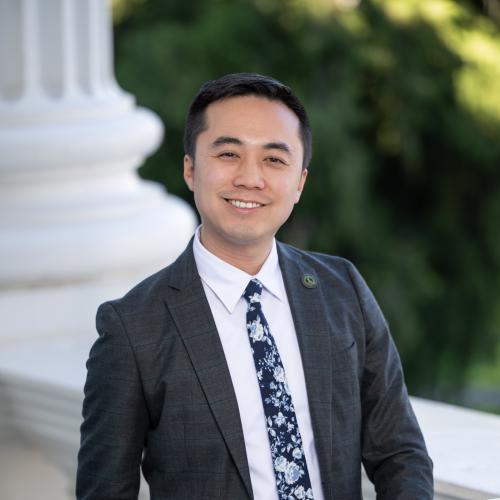
Photo of Alex Lee
D California Assembly · District 24 On the 2026 ballot

Asm. Alex Lee

Compare
Total votes
14,493
all sessions
Attendance
94%
702 missed
Near the chamber average
With party
99%
of cast votes
Near the chamber average
Bipartisan score
0%
crosses aisle rarely
Near the chamber average
Sponsored
1,076
bills & resolutions
Near the chamber average
Committees
12
assignments
1,076 bills and resolutions

Sponsored bills

Total
1,076
Primary
123
Co-sponsor
953
This page
1,076
matching current filters
Co-sponsor ACR 129
Signed into law · California Assembly · Co-sponsor
Relative to Necrotizing Fasciitis Awareness Month.

Maddy summaryThis legislative resolution officially designates the month of May as Necrotizing Fasciitis Awareness Month in California. The measure aims to increase public understanding of the condition, often known as flesh-eating bacteria, which is a rare but serious infection of the tissue under the skin. By recognizing this month, the state intends to encourage awareness and education about the disease's symptoms and causes without changing any laws or funding.

Signed into law May 30, 2024 1 co-sponsor
Co-sponsor ACA 14
Passed · California Assembly · Co-sponsor
A resolution to propose to the people of the State of California an amendment to the Constitution of the State, by adding subdivision (h) to Section 9 of Article IX thereof, relating to the University of California.

The California Constitution provides that the University of California constitutes a public trust, and requires the university to be administered by the Regents of the University of California, a corporation in the form of a board, with full powers of organization and government, subject to legislative control only for specified purposes. These provisions grant the regents all the powers necessary or convenient for the effective administration of its trust. This measure would require employees of the Regents of the University of California to have the right to, and be covered by, certain basic state labor standards, as provided. The measure would require individuals who perform certain work for the regents to have the right to the payment of a prevailing wage. The measure would authorize the Legislature to enact laws that further these rights, establish, define, or specify the basic state labor standards applicable to the regents, or establish other health, safety, and labor protections for individuals performing work for the regents.

Passed May 24, 2024 1 co-sponsor
Co-sponsor HR 102
Passed · California Assembly · Co-sponsor
Relative to Memorial Day.

Maddy summaryThis bill is a House Resolution that formally recognizes May 27, 2024, as Memorial Day in California. It serves as a commemorative measure to honor the men and women who have died while serving in the U.S. Armed Forces. The resolution does not alter laws or create new programs but instead expresses the state's gratitude for the sacrifices made by military personnel.

Passed May 23, 2024 1 co-sponsor
Co-sponsor AB 1567
Passed · California Assembly · Co-sponsor
Safe Drinking Water, Wildfire Prevention, Drought Preparation, Flood Protection, Extreme Heat Mitigation, Clean Energy, and Workforce Development Bond Act of 2024.

The California Drought, Water, Parks, Climate, Coastal Protection, and Outdoor Access For All Act of 2018, approved by the voters as Proposition 68 at the June 5, 2018, statewide primary election, authorizes the issuance of bonds in the amount of $4,100,000,000 pursuant to the State General Obligation Bond Law to finance a drought, water, parks, climate, coastal protection, and outdoor access for all program. Article XVI of the California Constitution requires measures authorizing general obligation bonds to specify the single object or work to be funded by the bonds and further requires a bond act to be approved by a 23 vote of each house of the Legislature and a majority of the voters. This bill would enact the Safe Drinking Water, Wildfire Prevention, Drought Preparation, Flood Protection, Extreme Heat Mitigation, Clean Energy, and Workforce Development Bond Act of 2024, which, if approved by the voters, would authorize the issuance of bonds in the amount of $15,995,000,000 pursuant to the State General Obligation Bond Law to finance projects for safe drinking water, wildfire prevention, drought preparation, flood protection, extreme heat mitigation, clean energy, and workforce development programs. This bill would provide for the submission of these provisions to the voters at the March 5, 2024, statewide primary election.

Passed May 22, 2024 1 co-sponsor
Co-sponsor HR 100
Passed · California Assembly · Co-sponsor
Relative to Bike to School Day.

Maddy summaryThis bill designates May 17, 2024, as Bike to School Day in California to encourage students to ride bicycles or electric bikes to their schools. The resolution highlights the environmental, health, and recreational benefits of cycling while acknowledging the state's existing bike-friendly infrastructure and recent cycling events. It serves as a commemorative measure rather than a law that changes regulations or funding, and it directs the Assembly's Chief Clerk to distribute copies of the text for public awareness.

Passed May 20, 2024 1 co-sponsor
Co-sponsor HR 97
Passed · California Assembly · Co-sponsor
Relative to Harvey Milk Day.

Maddy summaryThis bill establishes April 27 as Harvey Milk Day to honor the first openly gay man elected to public office in a major U.S. city. The resolution recognizes Milk's legacy as a civil rights leader who fought against discrimination and advocated for LGBTQ+ visibility and unity among minority communities. It recounts key events in his life, including his assassination in 1978 and the subsequent legal proceedings against his killer. The measure serves as a commemorative acknowledgment of Milk's impact on California and national history rather than creating new laws or policies.

Passed May 20, 2024 1 co-sponsor
Co-sponsor SB 1012
In committee · California Senate · Co-sponsor
The Regulated Psychedelic Facilitators Act and the Regulated Psychedelic-Assisted Therapy Act.

(1) Existing law provides for the regulation of various professions and vocations by boards established under the jurisdiction of the Department of Consumer Affairs in the Business, Consumer Services, and Housing Agency. Existing law, the California Uniform Controlled Substances Act, classifies controlled substances into 5 schedules, and places the greatest restrictions and penalties on the use of those substances placed in Schedule I. Existing law classifies dimethyltryptamine, mescaline, 3,4-methylenedioxymethamphetamine (MDMA) , ibogaine, psilocybin, and psilocyn as Schedule I substances, and prohibits various actions related to those substances, including their sale, possession, transportation, manufacture, or cultivation. (2) This bill would enact the Regulated Psychedelic Facilitators Act, which would establish the Board of Regulated Psychedelic Facilitators in the Department of Consumer Affairs to license and regulate psychedelic facilitators, as defined. The bill would require the board to be appointed, as specified, by April 1, 2025. The bill would require the board to establish educational, training, and other qualifications and requirements for obtaining a license as a regulated psychedelic facilitator and would establish conditions of licensure. The bill would require the board to establish fees for the reasonable regulatory costs to the board to administer the act. The bill would require the board to begin accepting license applications by April 1, 2026. The bill would make a license subject to renewal every 2 years. The bill would create the Regulated Psychedelic Facilitators Fund in the State Treasury, would require all funds received pursuant to the act to be credited to the fund, and would make moneys in the fund available to the board for the act's purposes upon appropriation by the Legislature. The bill would require the board, consistent with recommendations made by the Regulated Psychedelic Substances Advisory Committee, which would be created by the bill, to adopt regulations, on or before January 1, 2026, governing the safe provision of regulated psychedelic facilitation, including regulations governing the scope of practice for regulated psychedelic facilitators and recordkeeping requirements, provided the recordkeeping does not result in the disclosure of personally identifiable information of participants. The bill would require the board to determine which schools and programs meet the requirements of the act and to adopt regulations governing the requirements and process for approving schools and programs related to the provision of psychedelic facilitation training. The bill would authorize the board to charge a reasonable fee for the inspection or approval of schools or programs. The bill would make a violation of the act a misdemeanor and subject a licenseholder's license to suspension or revocation. The bill would make a violation of specified acts subject to discipline or denial of a license by the board in accordance with specified procedures. By creating a new crime, the bill would impose a state-mandated local program. The bill would make specified practices unfair business practices, including a person without a license holding themselves out as a regulated psychedelic facilitator. The bill would authorize a local government to reasonably regulate the time, place, and manner of regulated psychedelic facilitation within its boundaries. (3) This bill would enact the Regulated Psychedelic-Assisted Therapy Act to establish a comprehensive system to control and regulate the production, distribution, transportation, storage, processing, manufacturing, testing, quality control, and sale of regulated psychedelic substances for use in conjunction with psychedelic facilitation, as defined, the provision of psychedelic facilitation, the approval of locations where regulated psychedelic facilitation may take place, and the collection and publication of data on the implementation and outcomes of the act. The bill would define "regulated psychedelic substances" to include dimethyltryptamine; mescaline; 3,4-methylenedioxymethamphetamine (MDMA) ; psilocybin; psilocyn; and spores or mycelium capable of producing mushrooms that contain psilocybin or psilocyn. The bill would establish the Division of Regulated Psychedelic-Assisted Therapy, to be under the supervision and control of a director appointed by the Governor, in the Business, Consumer Services, and Housing Agency to administer and enforce the act. The bill would require the division to take specified actions to carry out its duties under the act, including conducting investigations and employing peace officers. The bill would grant to specified personnel the authority of peace officers while engaged in investigating the laws administered by the division or commencing criminal prosecution arising from investigations, as specified. The bill would require the division, no later than April 1, 2025, to convene a Regulated Psychedelic Substances Expert Oversight Committee, to be appointed by the Governor, to advise the division and the Board of Regulated Psychedelic Facilitators on the development of standards and regulations that include best practices and guidelines that protect public health and safety. The bill would require the oversight committee, commencing on January 1, 2026, to publish an annual public report that includes, among other things, the oversight committee's recommendations to the division and the board and whether those recommendations were implemented. The bill would require the division to adopt regulations, consistent with the recommendations of the oversight committee, for the administration and enforcement of laws regulating regulated psychedelic substances and services, including regulations that establish categories of licensure and registration. The bill would require the division, no later than April 1, 2026, to begin to accept and process applications for licensure. The bill would authorize the division to collect fees in connection with activities it regulates. The bill would create the Regulated Psychedelic-Assisted Therapy Fund within the State Treasury, and would allocate the funds, upon appropriation by the Legislature, to the division for the purposes of implementing, administering, and enforcing the act. The bill would also create the Psychedelic Substances Public Education and Harm Reduction Fund, to be available to the Office of Community Partnerships and Strategic Communications, upon appropriation by the Legislature, to award grants for public education and harm reduction relating to psychedelic substances. The bill would authorize the division to accept moneys from private sources to supplement state funds, which may be appropriated by the Legislature to the fund. The bill would make a violation of the act a misdemeanor. By creating a new crime, the bill would impose a state-mandated local program. The bill would require the division to work with state and local enforcement agencies to implement, administer, and enforce the division's rules and regulations. (4) Existing law provides that a physician and surgeon, psychotherapist, or alcohol and drug abuse counselor who engages in specified sexual conduct with a patient or client or certain former patients or clients is guilty of sexual exploitation and prescribes specified criminal penalties for acts of sexual exploitation. This bill would make those provisions applicable to registered psychedelic facilitators. By expanding the scope of a crime, the bill would impose a state-mandated local program. (5) This bill would declare that it is the public policy of the people of the State of California that contracts related to the operation of licenses under the Regulated Psychedelic Facilitators Act and the Regulated Psychedelic-Assisted Therapy Act shall be enforceable. (6) This bill would make conforming changes to the California Uniform Controlled Substances Act. (7) This bill would state that its provisions are severable. (8) This bill would include findings that changes proposed by this bill address a matter of statewide concern rather than a municipal affair and, therefore, apply to all cities, including charter cities. (9) Existing constitutional provisions require that a statute that limits the right of access to the meetings of public bodies or the writings of public officials and agencies be adopted with findings demonstrating the interest protected by the limitation and the need for protecting that interest. This bill would make legislative findings to that effect. (10) The California Constitution requires the state to reimburse local agencies and school districts for certain costs mandated by the state. Statutory provisions establish procedures for making that reimbursement. This bill would provide that no reimbursement is required by this act for a specified reason.


In committee May 16, 2024 1 co-sponsor
Primary AB 2665
In committee · California Assembly · Lead sponsor
Housing finance: Mixed Income Revolving Loan Program.

Existing law establishes the California Housing Finance Agency within the Department of Housing and Community Development, and authorizes the agency to, among other things, make loans to finance affordable housing, including residential structures, housing developments, multifamily rental housing, special needs housing, and other forms of housing, as specified. This bill would establish, upon appropriation by the Legislature, the Mixed Income Revolving Loan Program within the agency to provide zero-interest construction loans to qualifying residential, infill housing developers for purposes of constructing deed-restricted affordable housing. The bill would require the agency to administer the program pursuant to specified requirements, including that any loans provided under the program be for the development of multifamily housing projects where a portion of the housing units in the project are set aside to ensure affordability, as specified. The bill would require the agency to be the administrator of the program and to promulgate rules and regulations deemed necessary for the administration and implementation of its provisions.

In committee May 16, 2024 0 co-sponsors
Primary AB 2444
In committee · California Assembly · Lead sponsor
Barbering and cosmetology: licensees: manicurists.

Existing law, the Barbering and Cosmetology Act, provides for the licensure and regulation of barbers and cosmetologists by the State Board of Barbering and Cosmetology in the Department of Consumer Affairs. Existing law requires the board to establish a Health and Safety Advisory Committee to provide the board with advice and recommendations on health and safety issues before the board that impact licensees, including how to ensure licensees are aware of basic labor laws and how to ensure licensees have awareness about physical and sexual abuse their clients may be experiencing. Existing law defines "basic labor laws" for this purpose, and the definition includes the wage and hour rights of an hourly employee. This bill would add to the definition of "basic labor laws" the right to sick pay. Existing law, relating to licenses for activities licensed under existing law, establishes requirements for application for licensure or renewal of licensure, including informational materials on basic labor law being included with the application or renewal form. This bill would require that the informational materials on basic labor law be provided in the application and renewal forms themselves instead of alongside them, and would require the informational materials to include information relating to specified law. Existing law, relating to licenses for establishments where activities licensed under existing law are practiced, establishes requirements for application for licensure or license renewal for any person, firm, or corporation desiring to operate an establishment, including informational materials on basic labor law being included with the application or renewal form. This bill would require that the informational materials on basic labor law be provided in the application and renewal forms themselves instead of alongside them, and would require the informational materials to include information relating to specified law. Existing law requires the board to develop or adopt a health and safety course to be taught in schools approved by the board on, among other topics, basic labor laws. This bill would require the Department of Industrial Relations, to develop and, by July 1, 2025, disseminate, a notification to all board-licensed establishments and licensed manicurists that includes specified statements to inform those licensees of a change in the law relating to the employment classification of manicurists and of the legal consequences of employment classification as an employee or misclassification of a worker. This bill would also require the board, in consultation with the Department of Industrial Relations and community-based organizations, to develop a language-appropriate and culturally-appropriate posts on basic labor laws, as prescribed, on the board's internet website or other accessible platform.

In committee May 16, 2024 0 co-sponsors
Showing 421 to 430 of 1,076 bills
Previous 1 … 42 43 44 … 108 Next