

Maddy summaryThis California Assembly resolution encourages the U.S. Congress to pass legislation creating a National Infrastructure Bank to fund critical repairs and upgrades for roads, bridges, dams, and other public works. The bill cites reports from the American Society of Civil Engineers highlighting billions of dollars in investment gaps and poor conditions affecting California's transportation and water systems. It advocates for a financing model that uses existing federal debt rather than new taxes, aiming to stimulate the economy, create jobs, and prioritize projects in disadvantaged communities. The resolution formally requests that federal leaders adopt this approach to address the state's urgent infrastructure needs.
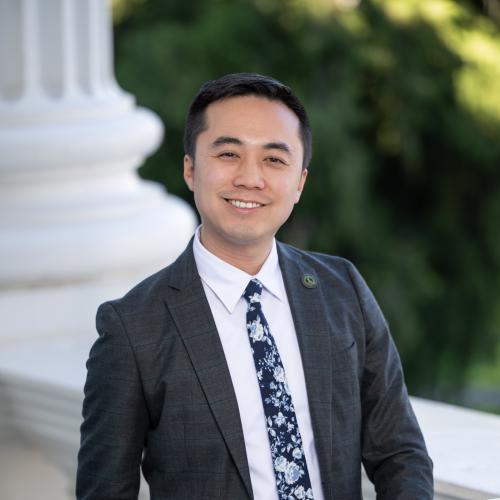
Asm. Alex Lee
Sponsored bills
This measure would recognize the importance of California Native American Day, celebrated this year on September 27, 2024, and the annual California Indian Cultural Awareness Conference, to the enhancement of awareness of California Indian culture.
Maddy summaryThis bill establishes Filipino American History Month to recognize the long-standing contributions of Filipinos to California and the United States. It directly affects state officials and the public by designating a specific month for commemoration and education. The resolution highlights historical milestones, including early Spanish-era interactions, the development of Filipino communities in cities like Stockton and San Francisco, and the significant roles Filipinos played in agriculture, shipbuilding, and military service during World War II. By formally acknowledging these events, the bill aims to promote awareness of Filipino American heritage within the state.
Maddy summaryThis bill designates November 22, 2024, as Kimchee Day in California to honor the traditional Korean dish and its cultural significance. It acknowledges the long history of kimchee, the contributions of Korean Americans, and the dish's recognized health benefits and growing popularity in the United States. The resolution directs the Assembly's Chief Clerk to send copies of the document to the author for distribution.
Maddy summaryThis bill establishes Transgender History Month in California to recognize the state's significant contributions to transgender history and activism. The resolution highlights key historical figures and events, such as early Indigenous gender variance, the Cooper Do-nuts and Compton's Cafeteria riots, and the founding of major support organizations. By formally acknowledging these milestones, the measure aims to educate the public about the long-standing presence and struggles of transgender people in California.
Maddy summaryThis bill is a House Resolution that formally recognizes Diwali as a significant cultural and religious holiday for Indian Americans and South Asian Americans in California. It acknowledges the festival's importance to Hindus, Sikhs, Buddhists, and Jains by highlighting its historical roots and the specific meanings it holds for each group. The resolution expresses the Assembly's respect for these communities and encourages Californians to participate in the celebration of lights on November 1, 2024. As a commemorative measure, the bill does not alter laws or funding but serves to officially honor the occasion within the state legislature.
Maddy summaryThis resolution officially designates Wednesday, June 12, 2024, as Loving Day in the state of California. It commemorates the 1967 U.S. Supreme Court ruling that legalized interracial marriage nationwide and honors the legacy of Mildred and Richard Loving. The measure serves as a symbolic observance to celebrate multicultural communities and the historical significance of the court decision.
Maddy summaryThis legislative resolution commemorates the 100th anniversary of the federal Indian Citizenship Act of 1924, which granted U.S. citizenship to Native Americans born within the country's borders. The measure specifically highlights the historical significance of the 1924 Piper v. Big Pine School District case, where a California court ruled in favor of a Paiute student's right to attend public school based on her new citizenship status. By formally recognizing this centennial, the bill honors the progress made in Native American education and integration while acknowledging the state's ongoing efforts toward truth and healing.
This measure would proclaim the Legislature's support for California State Parks Week, observed the days of June 12, 2024, to June 16, 2024, inclusive, and provide that the Legislature encourages all Californians and visitors to the state to cherish, protect, enjoy, and find inspiration in the diverse holdings within the state park system.
The Federal Highway Administration publishes the national Manual on Uniform Traffic Control Devices, which is incorporated by reference into federal law, to set the national standard for all traffic control devices installed on any street, highway, or bicycle trail open to public travel. Federal law authorizes the California Manual on Uniform Traffic Control Devices as a supplement to the federal manual, and requires it to be in substantial conformance with the federal manual. Existing law requires the Department of Transportation to place and maintain, or cause to be placed and maintained, directional signs on freeways indicating the location of the freeway off ramp which may be used to reach a public or private postsecondary education institution having an enrollment of either 1,000 or more full-time students or the equivalent in part-time students, at the request of the institution. Existing law establishes the California School for the Deaf, Northern California, and the California School for the Deaf, Southern California, known collectively as the California School for the Deaf, and the California School for the Blind, as the state special schools, under the administration of the State Department of Education. This bill would require the Department of Transportation, in the next revision of the California Manual on Uniform Traffic Control Devices, to allow supplemental destination signs for a state special school that is located within 5 miles of the highway, regardless of whether the state special school is located in a major metropolitan area, urbanized area, or rural area.