

The Bergeson-Peace Infrastructure and Economic Development Bank Act creates within the Governor's Office of Business and Economic Development the Infrastructure and Economic Development Bank and requires it to administer the act, which, among other things, provides for the financing of certain economic development projects. This bill, the State Bank Act, would create in state government the State Bank Commission and provide for its membership, as prescribed. This bill would require, on or before June 1, 2028, the commission to develop a state bank plan that addresses various items with respect to creating a state bank, including a state guarantee of public deposits, including those held by public banks. The bill would require, on or before January 1, 2028, the commission to hold at least 2 public hearings to solicit input on the state bank plan from members of the public and, by July 1, 2028, vote whether to adopt the state bank plan. The bill would require, if the commission adopts by a majority vote the state bank plan, the commission to publish the state bank plan and the fact of its adoption on its internet website.
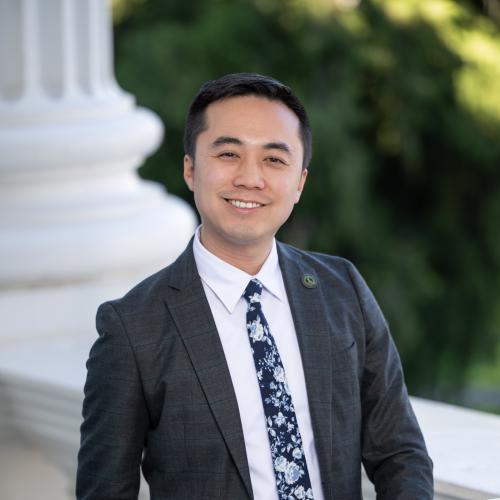
Rep. Alex Lee
Sponsored bills
Existing law establishes the Division of Labor Standards Enforcement within the Department of Industrial Relations. Existing law authorizes the division, which is headed by the Labor Commissioner, to enforce the Labor Code and all labor laws of the state, the enforcement of which is not specifically vested in any other officer, board, or commission. This bill would prohibit an employer from using a worker's personal information, as defined, to train an artificial intelligence system to replicate, automate, or replace a worker's job, and would prohibit an employer from selling, disclosing, or otherwise providing access to a worker's personal information to a third party for the purpose of training an artificial intelligence system to replicate, automate, or replace a worker's job. The bill would prohibit a vendor providing services to an employer under a contract from providing access to the personal information of an employer's worker to a third party or using the personal information of an employer's worker to train artificial intelligence, as specified. The bill would require a contract between an employer and vendor to include a requirement that the vendor implement and maintain reasonable security procedures to protect the worker's personal information from, among other things, unauthorized or illegal access. The bill would define terms for these provisions, including "employer" and "personal information." The bill would require the Labor Commissioner and authorize a public prosecutor to enforce these provisions. The bill would authorize a worker, or their exclusive representative, who suffered a violation of these provisions to bring a civil action for damages, injunctive relief, punitive damages, and attorney's fees and costs. The bill would establish a statutory penalty for a violation of these provisions of up to $500 for each violation. The bill would include findings that changes proposed by this bill address a matter of statewide concern rather than a municipal affair and, therefore, apply to all cities, including charter cities.
Existing law establishes the Department of Housing and Community Development (department) and, pursuant to the Governor's Reorganization Plan No. 1 of 2025, which became effective on July 5, 2025, transfers the department to the California Housing and Homelessness Agency, effective July 1, 2026, for purposes of carrying out state housing policies and programs. Existing law, commonly referred to as the Surplus Land Act, prescribes requirements for the disposal of surplus land by a local agency, as defined, and requires, except as provided, a local agency disposing of surplus land to comply with certain notice requirements before disposing of the land or participating in negotiations to dispose of the land with a prospective transferee. As part of these procedures, existing law requires that the local agency send a notice of availability to housing sponsors, as defined, that have notified the department of their interest in surplus land, as specified. This bill would require the department to establish a dedicated social housing coordinator to lead social housing strategy and implementation. In leading social housing strategy and implementation, the bill would require the dedicated social housing coordinator to, among other things, inventory and prioritize surplus public land suitable for social housing development. The bill would define "social housing development" as housing developed pursuant to the bill's provisions that is owned by a public entity, provides housing affordable to a mix of household income levels, and preserves long-term affordability. The bill would require the dedicated social housing coordinator to compile findings for social housing strategy and implementation, as specified, and post the findings on the department's internet website. The bill would require the department, by January 1, 2028, to submit a report to the Legislature with actionable recommendations based on the social housing strategy and implementation program findings, as described above.
The Personal Income Tax Law allows various credits against the taxes imposed by that law, including a young child tax credit to a qualified taxpayer in a specified amount multiplied by the earned income tax credit adjustment factor, as provided. That law also allows a payment from the continuously appropriated Tax Relief and Refund Account for an amount in excess of tax liability. Existing law defines "qualified taxpayer" for this purpose to include an eligible individual, as defined, who has a qualifying child, defined to be a child younger than 6 years of age as of the last day of the taxable year, and who meets other specified criteria. This bill, for taxable years beginning on or after January 1, 2026, and before January 1, 2038, would instead define a "qualifying child" to mean a child younger than the age limit from the prior taxable year plus one year, as described. The bill, for taxable years beginning on or after January 1, 2038, would define "qualifying child" as being a child younger than 18 years of age, as described. By increasing the payments from the Tax Relief and Refund Account, a continuously appropriated fund, the bill would make an appropriation. Existing law requires any bill authorizing a new tax expenditure to contain, among other things, specific goals that the tax expenditure will achieve, detailed performance indicators, and data collection requirements. This bill would include additional information required for any bill authorizing a new tax expenditure.
Existing law, the Transparency in Frontier Artificial Intelligence Act, among other things related to ensuring the safety of certain artificial intelligence models, requires a large frontier developer to write, implement, and clearly and conspicuously publish on its internet website a frontier AI framework that applies to the large frontier developer's frontier models and describes how the large frontier developer approaches, among other things, incorporating national standards, international standards, and industry-consensus best practices into its frontier AI framework. Existing law requires the Department of Technology to make recommendations about whether and how to update certain definitions for the purposes of the act, including the definition of "frontier model" so that it applies to foundation models at the frontier of artificial intelligence development. Existing law requires a contract entered into by any state agency for the procurement or laundering of apparel, garments, or corresponding accessories, or the procurement of equipment, materials, or supplies, other than procurement related to a public works contract, to require that a contractor certify that nothing furnished to the state pursuant to the contract has been laundered or produced by certain types of labor, including sweatshop labor and forced labor, as defined. Existing law requires the Department of Industrial Relations to establish a contractor responsibility program, including a Sweatfree Code of Conduct, to be signed by all bidders on state contracts and subcontracts, as provided. This bill would require the Department of Industrial Relations, in consultation with the Department of Technology, to convene a Foundation Model Labor and Procurement Working Group consisting of 9 members, as provided, to, among other things, assess labor practices underlying the development of modern foundation models and associated artificial intelligence systems and develop recommendations regarding whether and how the state should incorporate labor standards into procurement decisions for foundation models and associated artificial intelligence systems. The bill would require the working group to compile their findings and recommendations into a report and submit that report to the Legislature on or before December 31, 2027.
Existing law makes it a misdemeanor to, by force or threat of force, willfully injure, intimidate, interfere with, oppress, or threaten another person in the free exercise or enjoyment of a right or privilege secured by the Constitution or laws of this state or by the Constitution or laws of the United States, in whole or in part, because of one or more of specified actual or perceived characteristics of the victim, including disability, gender, religion, race, or sexual orientation. This bill would make it a crime for an elected or appointed official, under color of authority, to retaliate or exert political retribution, as defined, against a person for exercising a constitutionally protected right. The bill would make a violation of this crime punishable by forfeiture of office. The bill would specify that these provisions do not apply to the hiring or personnel decisions of elected or appointed officials that are relative to an employee or prospective employee of that elected or appointed official. By creating a new crime, the bill would impose a state-mandated local program. The California Constitution requires the state to reimburse local agencies and school districts for certain costs mandated by the state. Statutory provisions establish procedures for making that reimbursement. This bill would provide that no reimbursement is required by this act for a specified reason.
Maddy summaryThis bill designates April 2026 as Second Chance Month in California to raise awareness about opportunities for individuals reentering society after incarceration. The measure is a ceremonial proclamation that does not alter laws, allocate funding, or change government operations. Its primary purpose is to encourage public recognition of the challenges faced by formerly incarcerated people and to highlight available support resources during that specific month.
This measure would proclaim the week of April 20, 2026, to April 24, 2026, inclusive, as California Home Visiting Week, and would encourage all Californians to recognize and celebrate the contributions of home visiting programs and professionals and the families they serve.
Maddy summaryThis bill designates the week of April 19 to April 25, 2026, as Mosquito Awareness Week. The measure is a commemorative resolution that officially recognizes this specific time period to highlight mosquito-related issues. It does not create new laws, impose regulations, or allocate funding, but rather serves to raise public awareness through official designation.
Maddy summaryThis bill designates the week of April 12 to April 18, 2026, as California Public Safety Telecommunicators Week to honor the work of emergency call operators. The measure does not change laws or allocate funding; it simply establishes an official state observance. By creating this designated week, the legislation aims to bring public attention to the role of telecommunicators without altering their duties or compensation.