

The Corporation Tax Law, in modified conformity with federal law, provides an exemption from the taxes imposed by those laws for specified organizations. Existing law provides that tax-exempt status, under certain circumstances, may be suspended or revoked. Existing federal law defines various crimes against the established republican form of government, including treason, insurrection, and seditious conspiracy, as provided. This bill would authorize the Attorney General to make a finding that a tax-exempt organization has actively engaged in, or incited the active engagement in, acts or conspiracies defined as criminal under specified federal law, and likely to produce imminent violation of that federal law. The bill would require the Attorney General to notify the Franchise Tax Board of such a finding, and would state the existing authority of the Franchise Tax Board to revoke the tax-exempt status of the organization found to be in violation.
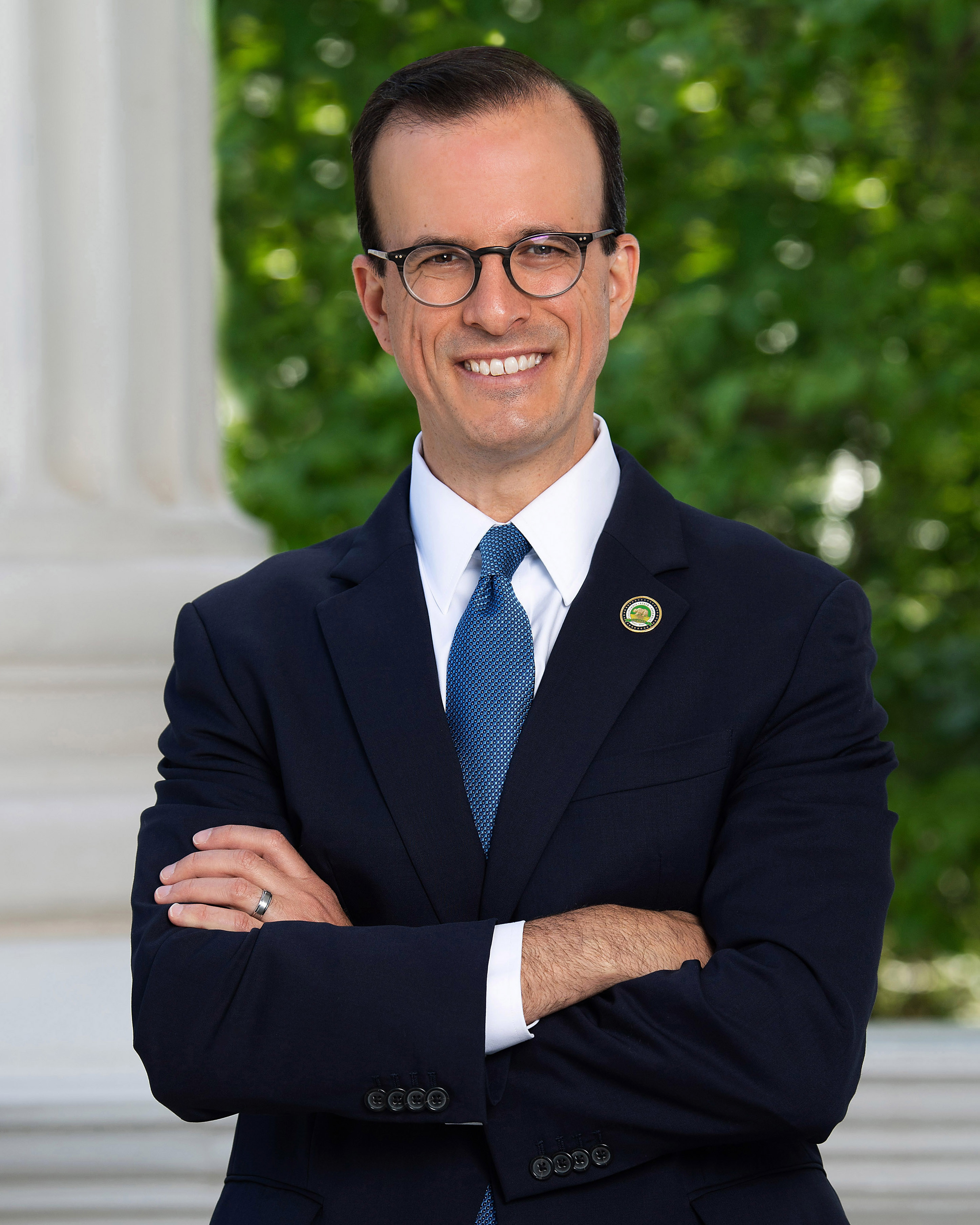
Asm. Marc Berman
Sponsored bills
Existing law establishes the California Health and Human Services Agency, which includes the State Department of Public Health, among other state departments, and is charged with the administration of health, social, and other human services. This bill, subject to an appropriation by the Legislature in the annual Budget Act or another statute for these purposes and until January 1, 2028, would require the agency, or an entity designated by the agency, to establish and administer a pilot program to direct funds to primary care clinics that provide reproductive health care services in 5 counties. The bill would require a participating primary care clinic to implement at least one of a number of specified activities to improve health care delivery for marginalized patients, and to annually report to the agency over 2 years regarding its efforts and progress with those activities. The bill would require the agency to report to the Legislature on the program on or before June 1, 2026.
Existing law establishes the Department of General Services (DGS) in the Government Operations Agency for purposes of, among other things, planning, acquiring, constructing, and maintaining state buildings and property. Under existing law, by executive order, the DGS was required to, among other things, create a digitized inventory of all excess state land, create screening tools for prioritizing affordable housing development on excess state land, and issue requests for proposals for and select affordable housing developments on excess state land, as described. Specifically, Executive Order No. N-06-19 (E.O. N-06-19) required the DGS to create a digitized inventory of excess state land no later than April 30, 2019, and required the DGS, the Department of Housing and Community Development (HCD) , and the California Housing Finance Agency to collaborate to develop 2 new screening tools for prioritizing affordable housing development on excess state land no later than March 29, 2019. This bill would require the DGS to develop, in consultation with the HCD, no later than September 1, 2023, a set of criteria to consistently evaluate state-owned parcels for suitability as affordable housing sites. The bill would also require, on or before July 1, 2024, and every 4 years thereafter, the DGS to, among other things, conduct a review of all state-owned property and identify state-owned parcels that are potentially viable for affordable housing based on those criteria. The bill would require the DGS to update the digitized inventory created pursuant to E.O. N-06-19 of all excess state land, as defined, suitable for affordable housing identified by its review. The bill would require the DGS and the HCD to evaluate and update the 2 screening tools created pursuant to E.O. N-06-19. This bill would require the DGS, in consultation with the HCD, to pursue the development of affordable housing on excess state properties.The bill would require all state agencies to respond to requests for information from the DGS, as described, and to consider exchanging excess state land with local governments for other parcels for purposes of affordable housing development and preservation. The bill would also require all state agencies to use all existing legal and financial authority to expedite and prioritize developments accepted pursuant to the request for proposal process described in the bill, as specified. The bill would require the DGS to report to the Legislature on or before January 1, 2024, and annually thereafter, on the status of the excess state properties identified, as specified.
Existing law, the Nursing Practice Act, establishes the Board of Registered Nurses within the Department of Consumer Affairs, until January 1, 2023, for the licensure and regulation of the practice of nursing, and makes a violation of the act a crime. Existing law grants the power to remove, for cause, a member of any board within the department to the appointing authority that appointed that member. Existing law also grants the Governor the power to remove any member of the board from office for cause, as specified. This bill would extend the provisions establishing the board and the power of the board to January 1, 2027. The bill would authorize each appointing power, rather than only the Governor, to remove members of the board for cause, as specified. The bill would also make other nonsubstantive changes. Existing federal law, the Clinical Laboratory Improvement Amendments of 1988 (CLIA) , requires all United States facilities or sites that test human specimens for health assessment or to diagnose, prevent, or treat disease, to abide by specific standards. Existing law authorizes various licensed medical professionals, as specified, to perform provider-performed microscopy, as described, under CLIA, to dispense, furnish, prescribe, and order contraceptives, drugs, and devices, as appropriate, to their patients, and to apply topical medications, as specified. The bill would extend these authorizations to nurse practitioners, as specified. Existing law authorizes the board, with the permission of the Director of Consumer Affairs, to form advisory committees that advise the board on the implementation of the Nursing Practice Act. The Administrative Procedure Act generally governs the procedure for the adoption, amendment, or repeal of regulations by state agencies and for the review of those regulatory actions by the Office of Administrative Law. This bill would create within the board a Nursing Education and Workforce Advisory Committee, which the bill would require to solicit input from approved nursing programs and members of the nursing and health care profession to study and recommend nursing education standards, simulated clinical experiences, and solutions to workforce issues to the board. The bill would require the committee be comprised of representatives from various sectors of the nursing profession. The bill would limit the terms of these appointments as specified. The bill would authorize the committee to establish subcommittees as specified. The bill would authorize the board to implement, interpret, or make specific the provisions governing the committee in a charter, which would be exempt from the requirements of the Administrative Procedure Act. Existing law specifies that an approved school of nursing, or an approved nursing program, is one that has been approved by the board, gives the course of instruction approved by the board, covering not less than 2 academic years, is affiliated or conducted in connection with one or more hospitals, and is an institution of higher education, as specified. Existing law imposes specified duties on the board related to the approval and regulation of schools of nursing and nursing programs, including a requirement that the board prepare and maintain a list of approved schools of nursing in this state whose graduates are eligible to apply for a license to practice nursing. This bill would provide that the board's executive officer is required to develop a uniform method for evaluating requests and granting approvals pursuant to the above-described provisions, as specified, and would require the executive officer to post the uniform method and any revisions on the board's website. The bill would prohibit an institution of higher education or a private postsecondary school of nursing subject to the above-described provisions from paying any clinical agency or facility for clinical experience placements for students enrolled in a nursing program offered by that school of nursing, as specified. By adding a prohibition to the Nursing Practice Act, the violation of which is a crime, this bill would impose a state-mandated local program. This bill would additionally require an approved school of nursing or nursing program to meet a minimum of 500 direct patient care clinical hours, as specified. The bill would authorize an approved school of nursing or nursing program to cover fewer than 2 academic years if approved to providing a course of instruction that prepares a licensed vocational nurse, as specified. This bill would, for approved schools of nursing actively accredited, as specified, require the board to accept continuing approval decisions from the accreditor, approve substantive change requests if approved by the accreditor, and consider limited factors when considering a request to increase enrollment, among other things. The bill would prohibit the board from requiring a fee for substantive changes approved under those provisions. Existing law, until the end of the 2021–22 academic year, and whenever the Governor declares a state of emergency for a county, as provided, requires a board nursing education consultant to approve a request from an approved nursing program to revise certain clinical experience requirements, provided the request meets specified conditions. Existing law authorizes an approved nursing program to request to reduce the required number of direct patient care hours as specified if it meets certain conditions, including using the list of alternative agencies or facilities designated by the facility finder on the Office of Statewide Health Planning and Development website to show no alternative agency or facility has a sufficient number of open placements, as specified. Existing law requires the board's executive officer to develop a uniform method for evaluating those requests and granting approvals. This bill would extend these provisions to the end of the 2023–24 academic year and require the board's executive officer to post the uniform method and any revisions on the board's website. The bill would authorize an approved nursing program to request to reduce the number of direct patient care hours only when it provides more than 500 direct patient care hours and would specify the approved nursing program would use the list of alternative agencies or facilities on the facility finder on the Department of Health Care Access and Information's website. Existing law prescribes various fees, not to subceed or exceed specified amounts, to be paid by licensees and applicants for licensure, and requires these fees to be credited to the Board of Registered Nursing Fund, which is available upon appropriation by the Legislature. Existing law prescribes specified fees for certain approvals by the board of institutions of higher education or a private postsecondary school of nursing approved by the board, and requires these fees not to subceed or exceed certain amounts. Existing law requires these fees to be deposited into the Registered Nurse Education Fund, as specified, which is available upon appropriation by the Legislature. This bill would remove the minimum fee amounts stated for each type of licensure application, as specified. The bill would require fees for certificates, as specified, to be an amount sufficient to cover the reasonable regulatory cost of issuing that certificate. Existing law authorizes a nurse practitioner who meets certain education, experience, and certification requirements to perform, in certain settings or organizations, specified functions without standardized procedures, including prescribing, administering, dispensing, and furnishing pharmacological agents. Existing law, beginning January 1, 2023, also authorizes a nurse practitioner who holds an active certification issued by the board to perform those functions without standardized procedures outside of specified settings in accordance with certain conditions and requirements. Existing law requires a nurse practitioner who is practicing pursuant to those provisions to consult with a physician under specified circumstances and to establish a referral plan for referral of complex medical cases and emergencies that addresses specified situations. This bill would revise the circumstances under which consultation with a physician is required and the situations required to be addressed in the referral plan, including when a patient is acutely decompensating. The bill would impose additional requirements for a nurse practitioner practicing pursuant to the above provisions to prescribe, administer, dispense, and furnish pharmacological agents, including requiring the issuance of a furnishing number by the board. The California Constitution requires the state to reimburse local agencies and school districts for certain costs mandated by the state. Statutory provisions establish procedures for making that reimbursement. This bill would provide that no reimbursement is required by this act for a specified reason.
Existing law, until January 1, 2025, establishes the California State Nonprofit Security Grant Program under the administration of the Director of the Office of Emergency Services to improve the physical security of nonprofit organizations that are at high risk of violent attacks or hate crimes due to ideology, beliefs, or mission, and repeals these provisions on that date. Existing law authorizes award recipients to use grant funds for various security enhancements, as specified. Under existing law, the California State Nonprofit Security Grant Program limits the amount of any award to $200,000. This bill would additionally include as eligible security training. The bill would increase the amount an award recipient may be awarded from $200,000 to $500,000 and would authorize an award recipient to use up to 5% of grant funds towards management and administration, as described. The bill would limit the amount an award recipient may use on construction and renovation to $100,000 of the funds awarded. The bill would require the Office of Emergency Services to provide ongoing assistance to applicants that require a vulnerability or threat assessment, as specified. This bill would delete the above-described January 1, 2025, repeal date, thereby extending the operation of the California State Nonprofit Security Grant Program indefinitely.
Existing law establishes various offenses for a person who places or displays certain symbols, marks, signs, emblems, and other physical impressions, including, but not limited to, a Nazi swastika, hangs nooses, or burns or desecrates crosses or other religious symbols on private and nonprivate property, as specified, with the intent to terrorize a person, as specified. Existing law, for the first conviction, punishes a person who hangs a noose or places or displays a sign, mark, symbol, emblem, or other physical impression with the intent to terrorize a person, as specified, with imprisonment in county jail not to exceed one year, a fine not more than $5,000, or both the fine and imprisonment, and with imprisonment in county jail not to exceed one year, a fine not to exceed $15,000, or both the fine and imprisonment for a subsequent conviction. Existing law, for a person who engages in a pattern of conduct by placing or displaying certain symbols, as specified, allows a person's punishment to be increased to imprisonment of 16 months or 2 or 3 years, a fine not more than $10,000, or both. Existing law punishes a person convicted of burning or desecrating a religious symbol with imprisonment for 16 months or 2 or 3 years, by a fine of not more than $10,000, or by both the fine and imprisonment, or imprisonment in a county jail not to exceed one year, by a fine not to exceed $5,000, or both the fine and imprisonment for the first conviction, and the same punishment for a subsequent conviction except the misdemeanor fine increases to $15,000. This bill would expand these offenses to include hanging a noose, placing or displaying a sign, mark, symbol, emblem, or other physical impression, including, but not limited to, a Nazi swastika, and burning, desecrating, or destroying a religious symbol, such as a cross, at schools and public places, generally, as specified, for the purpose of terrorizing a person, as specified. The bill would, for the first conviction, punish a person who hangs a noose, places or displays certain symbols, or burns or desecrates a religious symbol, as specified, with imprisonment for 16 months or 2 or 3 years, by a fine of not more than $10,000, or both the fine and imprisonment, or by imprisonment in a county jail not to exceed one year, by a fine not to exceed $5,000, or by both the fine and imprisonment. For a 2nd or subsequent conviction under these provisions, the bill would punish a person with imprisonment for 16 months or 2 or 3 years, by a fine of not more than $15,000, or by both the fine and imprisonment, or by imprisonment in a county jail not to exceed one year, by a fine not to exceed $10,000, or by both the fine and imprisonment. This bill would state the intent of the Legislature is to criminalize, for the purpose of terrorizing a person, the display or placement of the Nazi swastika and not swastikas associated with Hinduism, Buddhism, and Jainism. By creating a new crime, this bill would impose a state-mandated local program. The California Constitution requires the state to reimburse local agencies and school districts for certain costs mandated by the state. Statutory provisions establish procedures for making that reimbursement. This bill would provide that no reimbursement is required by this act for a specified reason.
Existing law, the Speech-Language Pathologists and Audiologists and Hearing Aid Dispensers Licensure Act, until January 1, 2023, establishes the Speech-Language Pathology Audiology and Hearing Aid Dispensers Board within the Department of Consumer Affairs for the licensure and regulation of speech-language pathologists, speech-language pathology aides, speech language pathology assistants, audiologists, dispensing audiologists, and hearing aid dispensers. Existing law provides for the appointment of members of the board by specified appointing authorities, and, until January 1, 2023, authorizes the board to appoint an executive officer. Existing law authorizes an appointing authority to remove from office at any time any member of a board appointed by the appointing authority for continued neglect of duties, incompetence, or unprofessional or dishonorable conduct. Existing law makes a violation of the act a misdemeanor. This bill would extend the operation of the board and the authorization to appoint an executive officer until January 1, 2027, and would authorize an appointing authority to remove from office at any time any member of the board appointed by that appointing authority. The bill would specify that, in addition to the enforcement and administration of the act, the board is vested with other regulatory duties of the act. The bill would require an applicant, registrant, or licensee under the act who has an email address to provide it to the board no later than July 1, 2023. By expanding the scope of a crime, the bill would impose a state-mandated local program. Existing law establishes the Hearing Aid Dispensing Committee, comprised of 5 members, within the jurisdiction of the board. This bill would abolish the committee. Existing law defines "audiology aide" to mean any person meeting the minimum requirements established by the board. Existing law prohibits an audiology aide from performing any function that constitutes the practice of audiology unless they are under the supervision of an audiologist. This bill would delete that prohibition and would instead define "audiology aide" to mean any person meeting the minimum requirements established by the board who works directly under the supervision of an audiologist. Existing law requires speech-language pathologists and audiologists supervising speech-language pathology or audiology aides to register with the board the name of each person working under their supervision. This bill would make speech-language pathology and audiology aide registrations expire every 2 years and would require the board to establish a renewal fee in an amount not to exceed $30. The bill would require the speech-language pathologist or audiologist supervising the speech-language pathology or audiology aide to, at the time of renewal, update the board on the duties the aide performs and the training program and assessment methods the supervisor is using. Existing law requires an applicant for licensure as an audiologist to submit evidence of satisfactory completion of supervised clinical practice under the direction of an educational institution approved by the board and satisfactory completion of supervised professional experience following completion of the didactic and clinical rotation requirements of an audiology doctoral program. This bill would require the clinical practice to be under the direction of an audiology doctoral program at an educational institution approved by the board, and would delete the requirement that supervised professional experience follow completion of the didactic and clinical rotation requirements of the audiology doctoral program. Existing law requires the board to deem a person who holds a Certificate of Clinical Competence in Speech-Language Pathology issued by the American Speech-Language-Hearing Association's Council for Clinical Certification to have met specified educational and experience requirements for licensure as a speech-language pathologist or audiologist. This bill would make that requirement applicable only to licensure as a speech-language-pathologist and effective only until January 1, 2027, and would instead require the board, until January 1, 2027, to deem a person who holds either a valid Certification of Clinical Competence in Audiology issued by the American Speech-Language-Hearing Association's Council for Clinical Certification or a valid American Board of Audiology certificate issued by the American Academy of Audiology to have met specified educational and experience requirements for licensure as an audiologist. Existing law lists various reasons for which the board is authorized to suspend, revoke, or impose terms and conditions upon the license of any licensee, including incompetence, gross negligence, or repeated negligent acts. This bill would add specified reasons for which the board is authorized to suspend, revoke, or impose terms and conditions upon a license, including for a disciplinary action taken by any public agency in any state or territory for any act substantially related to the practice of speech-language pathology, audiology, or hearing aid dispensing. The bill would authorize a person whose license has been revoked, suspended, or who has been placed on probation to petition the board for reinstatement or modification of penalty after a specified minimum period of time has elapsed from the effective date of the decision ordering that disciplinary action in accordance with specified procedural and other requirements. Existing law provides that a plea or verdict of guilty or a conviction following a plea of nolo contendere made to a charge substantially related to the qualifications, functions, and duties of a speech-language pathologist or audiologist is deemed to be a conviction for specified provisions of the act. This bill would also make that provision applicable to hearing aid dispensers. The bill would also make various other conforming and technical changes to the act, including updating cross-references and deleting an obsolete provision. This bill would incorporate additional changes to Section 2530.2 of the Business and Professions Code proposed by SB 1453 to be operative only if this bill and SB 1453 are enacted and this bill is enacted last. The California Constitution requires the state to reimburse local agencies and school districts for certain costs mandated by the state. Statutory provisions establish procedures for making that reimbursement. This bill would provide that no reimbursement is required by this act for a specified reason. Existing constitutional provisions require that a statute that limits the right of access to the meetings of public bodies or the writings of public officials and agencies be adopted with findings demonstrating the interest protected by the limitation and the need for protecting that interest. This bill would make legislative findings to that effect.
The California Global Warming Solutions Act of 2006 designates the State Air Resources Board as the state agency charged with monitoring and regulating sources of emissions of greenhouse gases. The state board is required to approve a statewide greenhouse gas emissions limit equivalent to the statewide greenhouse gas emissions level in 1990 to be achieved by 2020 and to ensure that statewide greenhouse gas emissions are reduced to at least 40% below the 1990 level by 2030. This bill would declare the intent of the Legislature that state agencies aim to achieve net-zero emissions of greenhouse gases resulting from their operations no later than January 1, 2035, or as soon as feasible thereafter. The bill would require the Department of General Services, in consultation with the state board, and to the extent feasible, to publish, on its internet website or other publicly available location, an inventory of the greenhouse gas emissions of state agencies for the prior calendar year, on or before July 1, 2024, and annually thereafter until the goal has been achieved. The bill would require the department to develop and publish a plan, on or before January 1, 2026, that describes required actions and investments for achieving net-zero emissions of greenhouse gases and an estimate of the costs associated with the planned actions, and ensure that the required actions and investments are incorporated into the sustainability roadmaps of all state agencies. The bill would require the department to update the plan beginning June 30, 2028, and every 2 years thereafter until the goal has been achieved. The bill, subject to an appropriation by the Legislature, would require the department to provide information, training, coordination, best practices, and other technical assistance to state agencies to help those state agencies implement the required actions and investments. The bill would require state agencies to incorporate the required actions and investments into their future budget proposals, as provided. The bill would require the department, beginning December 31, 2027, and biennially thereafter until the achievement of the above stated goal, to report to the Legislature on progress toward achieving that goal, as provided.
Under existing law, the Public Utilities Commission (PUC) has regulatory authority over public utilities, including electrical corporations, while local publicly owned electric utilities, as defined, are under the direction of their governing boards. Existing law, enacted as part of the Clean Energy and Pollution Reduction Act of 2015, requires the PUC, in consultation with the State Energy Resources Conservation and Development Commission (Energy Commission) and the State Air Resources Board, to direct electrical corporations to file applications for programs and investments to accelerate widespread transportation electrification to reduce dependence on petroleum, meet air quality standards, achieve the goals set forth in the Charge Ahead California Initiative, and reduce emissions of greenhouse gases to 40% below 1990 levels by 2030 and to 80% below 1990 levels by 2050. Existing law requires the Energy Commission, working with the state board and the PUC, to prepare, at least once every 2 years, a statewide assessment of the electrical vehicle charging infrastructure needed to support the levels of electric vehicle adoption required for the state to meet certain goals. This bill would require the Energy Commission, in collaboration with the State Air Resources Board, the PUC, and other relevant stakeholders, to annually gather from state agencies, as provided, specified entities' fleet data for on-road and off-road vehicles in the medium- and heavy-duty sectors and share that data with electrical corporations and local publicly owned electric utilities to help inform electrical grid planning efforts, as specified. The bill would prohibit electrical corporations and local publicly owned electric utilities from disclosing that data to third parties. The bill would require electrical corporations and local publicly owned electric utilities, as part of their distribution planning processes, to consider the fleet data produced by the Energy Commission pursuant to this bill, and other available data, to facilitate the readiness of their distribution systems to support the state's anticipated level of electric vehicle charging, as specified. Existing constitutional provisions require that a statute that limits the right of access to the meetings of public bodies or the writings of public officials and agencies be adopted with findings demonstrating the interest protected by the limitation and the need for protecting that interest. This bill would make legislative findings to that effect. Under existing law, a violation of the Public Utilities Act or any order, decision, rule, direction, demand, or requirement of the PUC is a crime. Because certain provisions of this bill would be a part of the act and because a violation of an order or decision of the PUC implementing the bill's requirements would be a crime, the bill would impose a state-mandated local program by creating a new crime. The California Constitution requires the state to reimburse local agencies and school districts for certain costs mandated by the state. Statutory provisions establish procedures for making that reimbursement. This bill would provide that no reimbursement is required by this act for a specified reason.
Existing law establishes the Geologic Energy Management Division in the Department of Conservation, under the direction of the State Oil and Gas Supervisor, who is required to supervise the drilling, operation, maintenance, and abandonment of oil and gas wells in the state and the operation, maintenance, and removal or abandonment of tanks and facilities related to oil and gas production within an oil and gas field, so as to prevent damage to life, health, property, and natural resources. Existing law requires the operator of a well to file a written notice of intention to commence drilling with, and prohibits any drilling until approval is given by, the supervisor or district deputy. Existing law authorizes the supervisor to require other pertinent information to supplement the notice. Existing law requires the owner of any well to file with the supervisor a monthly statement that provides certain information relating to the well, as provided. Existing law requires an operator proposing to perform a well stimulation treatment to apply to the supervisor or district deputy for a permit to perform the well stimulation treatment and imposes other requirements and conditions on the use of well stimulation treatments. Under existing law, a person who fails to comply with this and other requirements relating to the regulation of oil or gas operations is guilty of a misdemeanor. This bill would prohibit, commencing January 1, 2023, the division from approving any notice of intention within a health protection zone, as defined, except for reasons related to preventing or responding to a threat to public health, safety, or the environment, complying with a court order, or to plug and abandon or reabandon a well, as provided. The bill would also explicitly authorize the division to approve notices of intention to public and private entities who own, purchase, or lease land containing idle-deserted or previously plugged and abandoned wells for the purposes of those public and private entities plugging and abandoning, or replugging and abandoning, those oil and gas wells so development of nonfossil fuel production and injection and related uses can proceed, as provided. The bill would require an operator who submits a notice of intention, except for certain notices of intention, to also submit either a sensitive receptor inventory and map of the area within the 3,200 feet radius of the wellhead or proposed wellhead location to the division, or a statement certifying that the operator has confirmed that there are no sensitive receptors, as defined, located within 3,200-foot of the wellhead location, as provided. If a notice of intention is approved pursuant to compliance with a court order, the bill would require the operator of the oil or gas well to provide an individual indemnity bond sufficient to pay the full cost of properly plugging and abandoning the operator's well or wells, and decommissioning any attendant production facilities in the health protection zone, as provided. Commencing January 1, 2025, the bill would require all oil or gas production facilities or wells with a wellhead within a health protection zone to comply with specified health, safety, and environmental requirements, as provided. These health, safety, and environmental requirements would, among other things, require compliance with requirements related to applicable permits, public notice, sound levels, light generation, migration of dust and particulates beyond property boundaries, emissions and vapor venting, and chemical analyses of produced waters. The bill would also require all operators with a production facility or well with a wellhead in a health protection zone to submit a leak detection and response plan, as provided, to the division by January 1, 2025, require division approval or notice of deficiency by January 1, 2026, and require implementation of the plan by January 1, 2027. The bill would require the division to hold public workshops related to the leak detection and response plans, as provided, operators to review and update their plans at least once every 5 years, subject to division approval, and the supervisor to notify the applicable legislative budget and policy committees about these leak detection and response plans, as provided. The bill would require operators to contact property owners and tenants before commencing work that requires a notice of intention, and would also require operators to comply with water sampling requirements, as provided. The bill would require every operator to submit a sensitive receptor inventory and map to the division by July 1, 2023, and provide updates to the inventory and map annually thereafter, as provided, and require the division to make all current sensitive receptor inventories and maps publicly available on its internet website. The bill would, commencing January 1, 2027, and annually thereafter, require operators with a wellhead or other production facility in a health protection zone to provide information to the division, as provided, and require the division to make this information publicly available on its internet website. Because a violation of these requirements would be a crime, the bill would impose a state-mandated local program. The bill would exempt from its provisions underground gas storage wells and attendant production facilities. The bill would require the division, on or before July 1, 2027, and annually thereafter, to provide a legislative report to the applicable budget and policy committees regarding the implementation of health protection zones, as provided. The bill would authorize the division, the State Air Resources Board, and the State Water Resources Control Board to prescribe, adopt, and enforce any emergency regulations as necessary to implement, administer, and enforce these duties, as provided. The bill would require the State Air Resources Board, relevant local air districts, the State Water Resources Control Board, and relevant local water quality control boards, by June 1, 2023, to enter into memoranda of understanding with the division to clearly delineate respective responsibilities for the implementation and enforcement of health protection zones. By imposing requirements on local entities, the bill would impose a state-mandated local program. This bill would state that its provisions are severable. The California Constitution requires the state to reimburse local agencies and school districts for certain costs mandated by the state. Statutory provisions establish procedures for making that reimbursement. This bill would provide that with regard to certain mandates no reimbursement is required by this act for a specified reason. With regard to any other mandates, this bill would provide that, if the Commission on State Mandates determines that the bill contains costs so mandated by the state, reimbursement for those costs shall be made pursuant to the statutory provisions noted above.