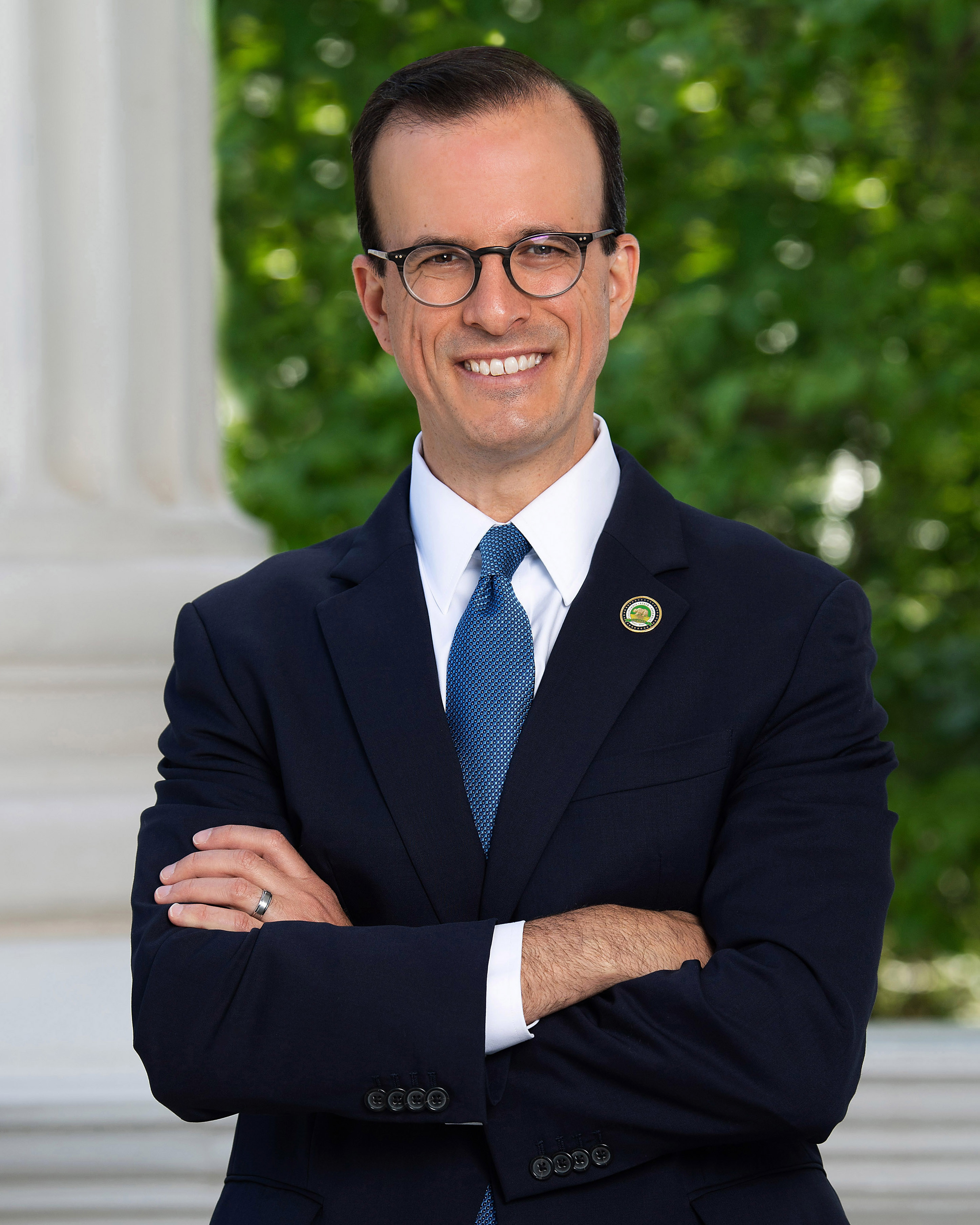
Photo of Marc Berman
D California Assembly · District 23 On the 2026 ballot

Asm. Marc Berman

Compare
Total votes
21,430
all sessions
Attendance
95%
1,013 missed
Near the chamber average
With party
99%
of cast votes
Near the chamber average
Bipartisan score
0%
crosses aisle rarely
Near the chamber average
Sponsored
2,112
bills & resolutions
Near the chamber average
Committees
8
assignments
2,112 bills and resolutions

Sponsored bills

Total
2,112
Primary
229
Co-sponsor
1,883
This page
2,112
matching current filters
Co-sponsor ACR 90
Signed into law · California Assembly · Co-sponsor
Relative to India's Independence Day.

This measure would recognize August 15, 2023, as India's Independence Day and urge all Californians to join in celebrating India's independence.

Signed into law Sep 8, 2023 1 co-sponsor
Co-sponsor SCR 86
Signed into law · California Senate · Co-sponsor
Relative to Breastfeeding Awareness Month of 2023.

This measure would proclaim August 2023 as Breastfeeding Awareness Month of 2023 in California. The measure would recognize the unique benefits that breastfeeding provides, as specified, and would affirm that Californians should work to ensure that barriers to initiation and continuation of breastfeeding are removed. The measure would encourage Californians to work together to explore ways to, among other things, improve women's access to breastfeeding support services in medical, social, and employment settings.

Signed into law Sep 8, 2023 1 co-sponsor
Co-sponsor SCR 81
Signed into law · California Senate · Co-sponsor
Relative to the 50th anniversary of hip hop.

This measure would recognize the 50th anniversary of hip hop on August 11, 2023, as a time of celebration, pride, and nostalgia for the citizens of California.

Signed into law Sep 5, 2023 1 co-sponsor
Primary AB 841
Passed · California Assembly · Lead sponsor
State Energy Resources Conservation and Development Commission: Industrial Heat Electrification Roadmap.

Existing law requires the State Energy Resources Conservation and Development Commission to undertake various actions in furtherance of meeting the state's clean energy and pollution reduction objectives. Existing law requires the commission to gather or develop, and publish on the commission's internet website, guidance and best practices to help building owners, the construction industry, and local governments overcome barriers to electrification of buildings and installation of electric vehicle charging equipment, as specified. This bill would require the commission, on or before January 1, 2025, to submit to the Legislature an Industrial Heat Electrification Roadmap, which would, among other things, identify the industrial subsectors for various California facilities that use heat application equipment operating at or below 1,000 degrees Celsius and their locations and evaluate various issues related to industrial electrification, as specified. The bill would authorize the commission to consult with the State Air Resources Board to include in the roadmap an estimate of the reductions in emissions of greenhouse gases and criteria air pollutants, and commensurate health benefits, from electrifying the identified industrial subsectors.

Passed Sep 1, 2023 0 co-sponsors
Primary AB 1054
Passed · California Assembly · Lead sponsor
Pupil instruction: high schools: computer science education courses.

Existing law requires the adopted course of study for grades 7 to 12, inclusive, to offer courses in specified areas of study, including, among others, science and mathematics. This bill would require the governing board of each school district, and the governing body of each charter school, maintaining any of grades 9 to 12, inclusive, by January 1, 2025, to adopt a plan at a regularly scheduled public meeting to offer at least one course in computer science education pursuant to a specified timeline, to post the plan to its internet website, and, on or before May 31, 2025, and annually thereafter, to review the plan at a regularly scheduled public meeting and report to the public on the plan's implementation, as provided. The bill would, among other things, specify that a computer science education course means a computer science course that is aligned to the computer science academic content standards adopted by the State Board of Education and in which pupils do not merely use technology as passive consumers, but understand why and how computing technologies work, and then build upon that conceptual knowledge by creating computational artifacts. The bill would require school districts and charter schools to describe in the plan their planned efforts to increase the computer science course enrollment of female pupils, pupils with disabilities, pupils who belong to ethnic and racial groups, and pupils eligible for free or reduced-priced meals that are underrepresented in the field of computer science. The bill would require school districts and charter schools, on or before June 30, 2026, and by each June 30 thereafter, to report specified computer science education course-related data to the department, as specified. By imposing additional duties on school districts and charter schools, the bill would impose a state-mandated local program. The California Constitution requires the state to reimburse local agencies and school districts for certain costs mandated by the state. Statutory provisions establish procedures for making that reimbursement. This bill would provide that, if the Commission on State Mandates determines that the bill contains costs mandated by the state, reimbursement for those costs shall be made pursuant to the statutory provisions noted above.

Passed Sep 1, 2023 0 co-sponsors
Co-sponsor AB 1749
Passed · California Assembly · Co-sponsor
Student Transfer Achievement Reform Act: University of California.

Existing law, the Student Transfer Achievement Reform Act, requires a student who earns an associate degree for transfer to be deemed eligible for transfer into a California State University baccalaureate degree program if they meet certain requirements. The act also requires the California State University to guarantee admission with junior status to a community college student who meets those requirements, and provides that admission to the California State University under these provisions does not guarantee admission for specific majors or campuses. A student admitted to the California State University pursuant to the act is entitled to receive priority over all other community college transfer students, excluding community college students who have entered into a transfer agreement between a community college and the California State University before the fall term of the 2012–13 academic year. Existing law requires the California Community Colleges and the California State University, in consultation with specified parties, to develop a student-centered communication and marketing strategy in order to increase the visibility of the associate degree for transfer pathway for all students in California. Existing law also requires the Legislative Analyst's Office to review and report to specified legislative committees and subcommittees, within a prescribed time period, on specified outcomes and recommendations related to the act. Provisions of the Donahoe Higher Education Act apply to the University of California only to the extent that the Regents of the University of California act, by resolution, to make them applicable. This bill would, commencing with the 2025–26 academic year, expand the above provisions of the Student Transfer Achievement Reform Act to additionally require that a student who earns an associate degree for transfer be deemed eligible for transfer into a University of California baccalaureate degree program if they meet certain requirements. The bill would require the University of California to guarantee admission with junior status to a community college student, as specified, and would provide that a student admitted to the University of California pursuant to this act is entitled to receive priority over all other community college transfer students, excluding community college students who have entered into a transfer agreement between a community college and the University of California before the fall term of the 2025–26 academic year. This bill would require the University of California, in addition to the California Community Colleges and the California State University, to develop a student-centered communication and marketing strategy, as specified. To the extent that this provision would impose new duties for community college districts, it would constitute a state-mandated local program. The bill would require the Legislative Analyst's Office to review and report to specified legislative committees and subcommittees, within a prescribed time period, with respect to the inclusion of the University of California in the act. The California Constitution requires the state to reimburse local agencies and school districts for certain costs mandated by the state. Statutory provisions establish procedures for making that reimbursement. This bill would provide that, if the Commission on State Mandates determines that the bill contains costs mandated by the state, reimbursement for those costs shall be made pursuant to the statutory provisions noted above.

Passed Sep 1, 2023 1 co-sponsor
Primary AB 578
Passed · California Assembly · Lead sponsor
Multifamily Housing Program: No Place Like Home Program.

(1) Existing law requires the Department of Housing and Community Development to administer various programs intended to promote the development of housing, including the Multifamily Housing Program, pursuant to which the department provides financial assistance in the form of deferred payment loans to pay for the eligible costs of development for specified activities. Under existing law, the principal and accumulated interest of a loan issued under the Multifamily Housing Program is due and payable upon the completion of the term of the loan. Existing law prohibits the amount of the required loan payments from exceeding 0.42% per annum for the first 30 years of the loan term. This bill would prohibit, for the first 30 years of the loan term, the amount of the required loan payments from exceeding 0.42% per annum or $260 per assisted unit, whichever is less. The bill would authorize the department to adjust the $260 cap for inflation based on the California Consumer Price Index, as specified. (2) Existing law, known as the No Place Like Home Program, requires the Department of Housing and Community Development to award $2,000,000,000 among counties to finance capital costs, including, but not limited to, acquisition, design, construction, rehabilitation, or preservation, and to capitalize operating reserves, of permanent supportive housing for the target population, as specified. Existing law establishes the No Place Like Home Fund, requires specified moneys to be deposited in the fund, and continuously appropriates moneys in the fund for the program. Existing law requires loans for capital costs made by the department under the program to be in the form of secured deferred payment loans to pay for the eligible costs of development. Existing law prohibits the amount of the required loan payments from exceeding 0.42% per annum for the first 15 years of the loan term. This bill would prohibit, for the first 15 years of the loan term, the amount of the required loan payments from exceeding 0.42% per annum or $260 per assisted unit, whichever is less. The bill would authorize the department to adjust the $260 cap for inflation based on the California Consumer Price Index, as specified. The No Place Like Home Program was ratified and amended by the No Place Like Home Act of 2018, approved by the voters as Proposition 2 at the November 6, 2018, statewide general election. Existing law authorizes the Legislature to amend Proposition 2 by a 23 vote, so long as the amendment is consistent with and furthers the intent of that measure. The bill would state the finding of the Legislature that these provisions are consistent with, and further the intent of, the No Place Like Home Act of 2018.


Passed Sep 1, 2023 0 co-sponsors
Showing 721 to 730 of 2,112 bills
Previous 1 … 72 73 74 … 212 Next