Maddy summaryThis bill is a ceremonial resolution that officially recognizes May 2024 as Older Americans Month in California. It highlights the state's commitment to supporting its aging population, which is projected to include one in four residents by 2030. The measure adopts the theme "Powered by Connection" to emphasize the importance of social relationships for health and well-being. It does not create new laws or funding but serves to acknowledge the demographic shift and encourage community engagement.
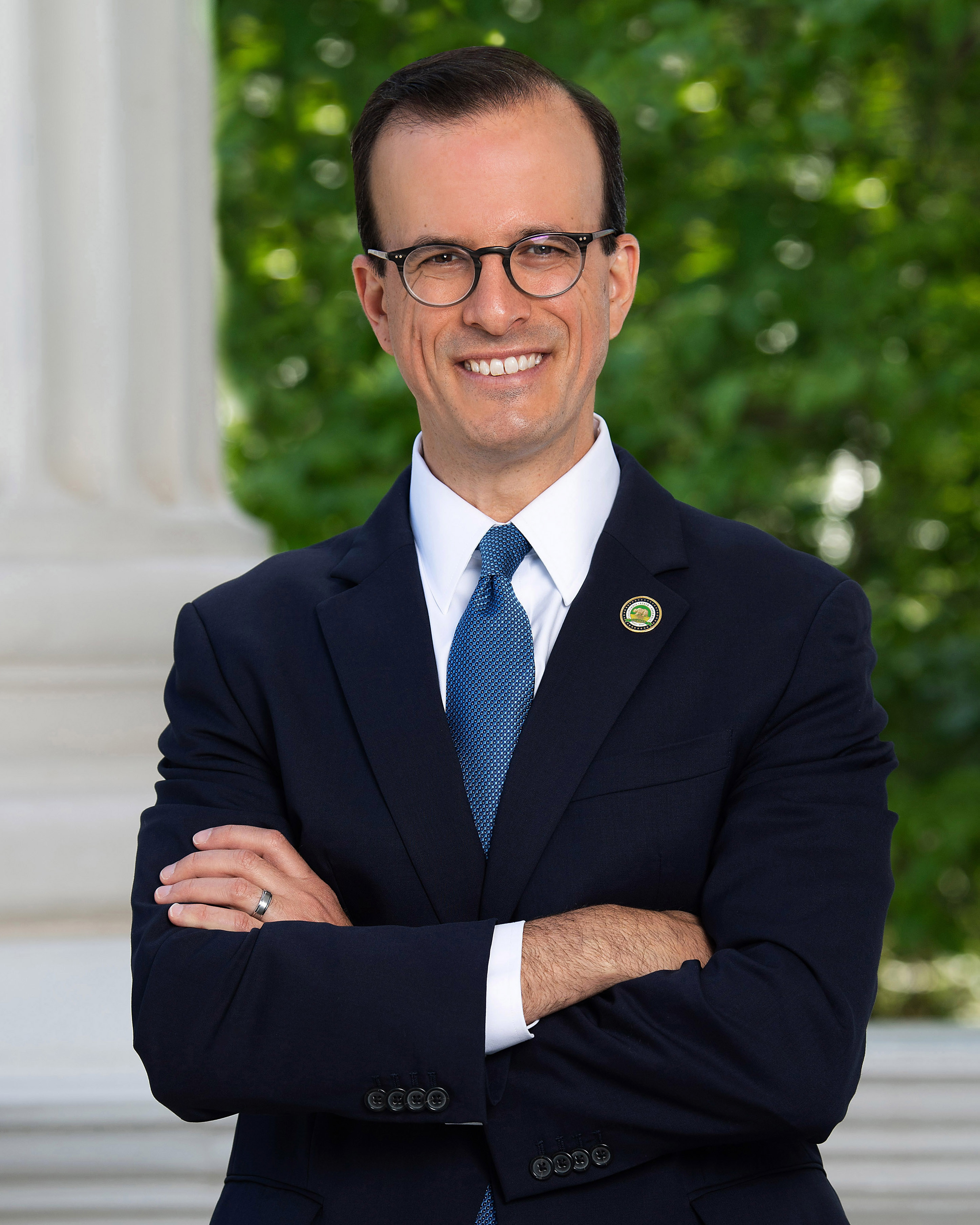
Asm. Marc Berman
Sponsored bills
This measure would encourage each individual in the United States to become better informed and aware of kidney disease and APOL1-mediated kidney disease (AMKD) . The measure would encourage people from or with ancestry from Western and Central Africa to consider genetic testing for apolipoprotein L1 (APOL1) gene mutations. The measure would designate the last Tuesday of every April as APOL1-Mediated Kidney Disease (AMKD) Awareness Day.
Maddy summaryThis legislative resolution officially designates the month of May as Necrotizing Fasciitis Awareness Month in California. The measure aims to increase public understanding of the condition, often known as flesh-eating bacteria, which is a rare but serious infection of the tissue under the skin. By recognizing this month, the state intends to encourage awareness and education about the disease's symptoms and causes without changing any laws or funding.
Maddy summaryThis bill formally recognizes April 2024 as Child Abuse Prevention Month in California. It encourages communities, schools, and organizations to focus on youth-serving prevention activities during this time and throughout the year. The measure does not create new laws or funding but serves to raise public awareness about the issue.
This measure would designate the month of May 2024 as Missing and Murdered Indigenous People Awareness Month in California and urge the Governor to declare a state of emergency due to the crisis of missing and murdered indigenous people.
Maddy summaryThis bill is a House Resolution that formally recognizes May 27, 2024, as Memorial Day in California. It serves as a commemorative measure to honor the men and women who have died while serving in the U.S. Armed Forces. The resolution does not alter laws or create new programs but instead expresses the state's gratitude for the sacrifices made by military personnel.
Existing law, the Medical Practice Act, establishes the Medical Board of California and the Osteopathic Medical Board of California to license and regulate the practice of medicine, and establishes examination, training, and other requirements for licensure as a physician and surgeon. A violation of the act is a misdemeanor. This bill, through November 30, 2024, would authorize a physician licensed to practice medicine in Arizona who meets certain requirements to practice medicine in California for the purpose of providing abortions and abortion-related care to patients who are Arizona residents traveling from Arizona, upon application for registration with the Medical Board of California or the Osteopathic Medical Board of California, as applicable. The bill would prohibit the physician from providing care or consultation for other purposes or to other patients, except under specified circumstances. The bill would require an Arizona physician, before practicing in California, to submit specified information to the Medical Board of California or the Osteopathic Medical Board of California, as applicable, including, among other information, written verification from the Arizona Medical Board or the Arizona Board of Osteopathic Examiners in Medicine and Surgery, or documentation printed from an online licensing system, that the physician's Arizona license to practice medicine is in good standing and confers on the physician the authority to practice abortions and abortion-related care. The bill would require the applicant to provide an affidavit attesting that, among other things, the applicant meets all of the requirements for registration, as specified, and would make it a misdemeanor for a person to provide false information. The bill would limit the information the California boards are required to disclose about a registrant. The bill would deem a physician registered pursuant to the bill's provisions a licensee of the applicable board, would authorize the applicable board to take enforcement against a person registered pursuant to the bill's provisions, and would prohibit the applicable boards from collecting any fees for registration. By creating a new crime, the bill would impose a state-mandated local program. The bill would repeal the bill's provisions on January 1, 2025. The California Constitution requires the state to reimburse local agencies and school districts for certain costs mandated by the state. Statutory provisions establish procedures for making that reimbursement. This bill would provide that no reimbursement is required by this act for a specified reason. This bill would declare that it is to take effect immediately as an urgency statute. Existing constitutional provisions require that a statute that limits the right of access to the meetings of public bodies or the writings of public officials and agencies be adopted with findings demonstrating the interest protected by the limitation and the need for protecting that interest. This bill would make legislative findings to that effect.

Maddy summaryThis bill designates May 17, 2024, as Bike to School Day in California to encourage students to ride bicycles or electric bikes to their schools. The resolution highlights the environmental, health, and recreational benefits of cycling while acknowledging the state's existing bike-friendly infrastructure and recent cycling events. It serves as a commemorative measure rather than a law that changes regulations or funding, and it directs the Assembly's Chief Clerk to distribute copies of the text for public awareness.
Existing law requires a hotel, third-party booking service, hosting platform, or short-term rental, as defined, to allow a reservation for a hotel accommodation or a short-term rental located in California to be canceled without penalty for at least 24 hours after the reservation is confirmed if the reservation is made 72 hours or more before the time of check-in. Existing law requires the hotel, third-party booking service, hosting platform, or short-term rental, if a consumer cancels a reservation pursuant to that provision, to issue a refund to a consumer for all amounts paid to the hosting platform, hotel, third-party booking service, or short-term rental to the original form of payment within 30 days of the cancellation of the reservation. Existing law authorizes the Attorney General and certain other public attorneys, to bring an action to enforce these provisions and requires a court to impose a civil penalty of not more than $10,000 for each violation. This bill would expand these provisions, beginning on July 1, 2026, to also apply to a reservation made in California for a hotel accommodation or short-term rental that is advertised in California.
Existing law, the Knox-Keene Health Care Service Plan Act of 1975, provides for the licensure and regulation of health care service plans by the Department of Managed Health Care and makes a willful violation of the act a crime. Existing law also provides for the regulation of health insurers by the Department of Insurance. Existing law requires health care service plans and health insurers to provide coverage for prosthetic devices in connection with specified health conditions and procedures. This bill would require a health care service plan contract or health insurance policy issued, amended, or renewed on or after January 1, 2025, to cover cranial prostheses, as defined, for individuals experiencing permanent or temporary medical hair loss. The bill would require a licensed provider to prescribe the cranial prosthesis for an individual's course of treatment for a diagnosed health condition, chronic illness, or injury, as specified. The bill would limit coverage to once every 12 months and $750 for each instance of coverage. The bill would not apply these provisions to a specialized health care service plan or specialized health insurance policy. Because a violation of these requirements by a health care service plan would be a crime, the bill would impose a state-mandated local program. Existing law also establishes the Medi-Cal program, which is administered by the State Department of Health Care Services and under which qualified low-income individuals receive health care services. The Medi-Cal program is, in part, governed and funded by federal Medicaid program provisions. Commencing January 1, 2025, this bill would require coverage for cranial prostheses for individuals experiencing permanent or temporary medical hair loss. or treatment for those conditions as a Medi-Cal benefit, subject to the same requirements with respect to provider prescription, coverage frequency, and amount. The bill would not apply these provisions to a specialized health care service plan. The California Constitution requires the state to reimburse local agencies and school districts for certain costs mandated by the state. Statutory provisions establish procedures for making that reimbursement. This bill would provide that no reimbursement is required by this act for a specified reason.