

The Personal Income Tax Law imposes a tax on individual taxpayers measured by the taxpayer's taxable income for the taxable year, but excludes certain items of income from the computation of tax, including an exclusion for combat-related special compensation. This bill, for taxable years beginning on or after January 1, 2024, and before January 1, 2034, would exclude from gross income retirement pay received by a taxpayer from the federal government for service performed in the uniformed services, as defined, during the taxable year. The bill, for taxable years beginning on or after January 1, 2024, and before January 1, 2034, would also exclude from gross income annuity payments received by a qualified taxpayer, as defined, pursuant to a United States Department of Defense Survivor Benefit Plan during the taxable year. The bill would make related findings and declarations. Existing law requires any bill authorizing a new tax expenditure to contain, among other things, specific goals, purposes, and objectives that the tax expenditure will achieve, detailed performance indicators, and data collection requirements. This bill also would include additional information required for any bill authorizing a new tax expenditure. The bill would require the Franchise Tax Board and the Department of Veterans Affairs to provide any data requested by the Legislative Analyst to write the report, as provided, and would make taxpayer information received by the Legislative Analyst subject to limitation on the collection and use of that information. By expanding the scope of a crime, this bill would impose a state-mandated local program. The California Constitution requires the state to reimburse local agencies and school districts for certain costs mandated by the state. Statutory provisions establish procedures for making that reimbursement. This bill would provide that no reimbursement is required by this act for a specified reason. This bill would take effect immediately as a tax levy.
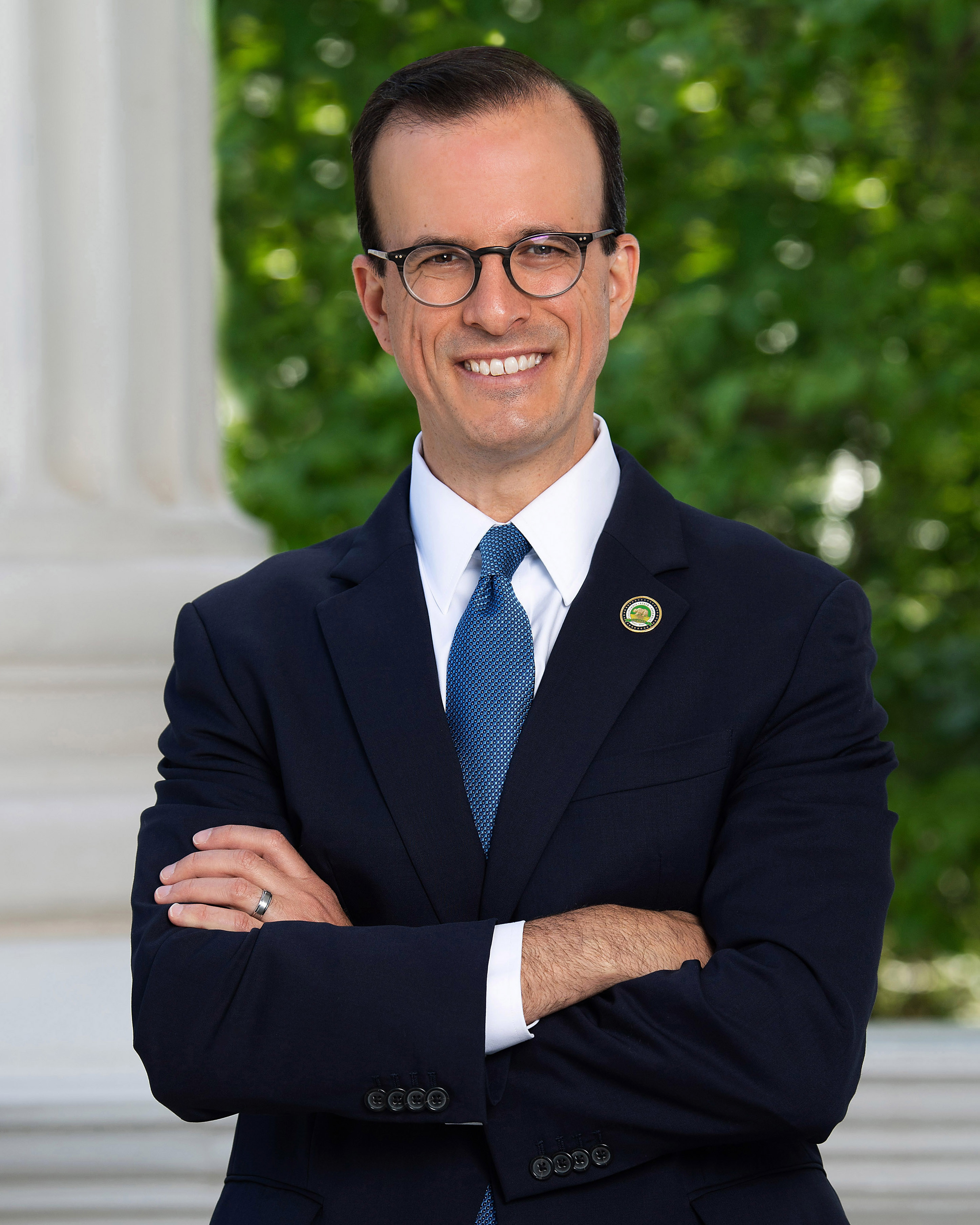
Asm. Marc Berman
Sponsored bills
Existing law provides comprehensive regulation of ticket sellers and makes violations of those provisions a misdemeanor. Existing law imposes various refund requirements on a ticket seller, including a requirement to issue a refund upon request to a ticket purchaser for canceled, postponed, or rescheduled events. Existing law also imposes various disclosure requirements on a ticket seller, including a requirement to disclose to a purchaser the location of the seat represented by the ticket, as specified. This bill would revise and recast those provisions by expanding the definition of a ticket seller to include a primary contractor or platform, as defined, and would instead apply the refund requirement relating to the postponement or rescheduling of an event only to primary contractors. The bill would impose various disclosure requirements on ticket sellers relating to ticket price, including that the ticket seller would be prohibited from advertising, displaying, or offering a price for a ticket that does not include all fees or charges that must be paid in order to purchase the ticket other than taxes or fees imposed by a government on the transaction. The bill would prohibit the resale of tickets that were initially offered at no charge and that were knowingly obtained using software or services that circumvent controls or measures that ensure an equitable ticket buying process for event attendees, and would require a ticket seller to provide printed tickets for a cellular telephone-free event, as defined, at the same price that a mobile or electronic ticket is sold. By expanding the scope of existing provisions regulating ticket sellers and imposing new requirements on ticket sellers and primary contractors, the violation of which would be a crime, this bill would impose a state-mandated local program. The California Constitution requires the state to reimburse local agencies and school districts for certain costs mandated by the state. Statutory provisions establish procedures for making that reimbursement. This bill would provide that no reimbursement is required by this act for a specified reason.
The Warren-Alquist State Energy Resources Conservation and Development Act requires the State Energy Resources Conservation and Development Commission to adopt building design and construction standards and energy and water conservation standards for new residential and nonresidential buildings to reduce the wasteful, uneconomic, inefficient, or unnecessary consumption of energy, including energy associated with the use of water. The act requires those standards to be cost effective when taken in their entirety and when amortized over the economic life of the structure compared with historic practice. The California Global Warming Solutions Act of 2006 requires the State Air Resources Board to prepare and approve a scoping plan for achieving the maximum technologically feasible and cost-effective reductions in greenhouse gas emissions and to update the scoping plan at least once every 5 years. This bill would require the commission, on or before July 1, 2026, to evaluate opportunities to increase electrification of industrial heat processes to meet the state's industrial emissions reduction goals, as provided. The bill would, as part of the state board's next update to the scoping plan occurring on or after January 1, 2025, require the state board to assess the potential for the state to reduce the emissions of greenhouse gases from the state's industrial facilities' heat application equipment and processes, as specified. The bill would require the state board to incorporate the commissions' evaluation required by the bill into the assessment and to identify potential emission reductions associated with the recommendations provided in the commission's evaluation.
Existing law requires the Secretary of State to establish a statewide system to facilitate removal of duplicate or prior voter registrations to facilitate the reporting of election results and voter and candidate information and to otherwise administer and enhance election administration. Existing law also requires that certain voter registration information be provided to, among others, any person for election, scholarly, journalistic, or political purposes, or for governmental purposes, as determined by the Secretary of State. This bill would allow the Secretary of State to apply for membership with the Electronic Registration Information Center and, if that application is approved, allow the Secretary of State to execute a membership agreement with the Electronic Registration Information Center on behalf of the state. The bill would require the Secretary of State to ensure that any confidential information or data provided by another state remains confidential, and would authorize the Secretary of State to transmit confidential information or data pursuant to that agreement. The bill would prohibit the disclosure of any information or data related to citizenship and certain types of driver's licenses and identification cards, as specified. The bill would also authorize the Secretary of State to adopt regulations necessary to implement these provisions and would require the Secretary of State to receive a certification from the Department of Technology that all proper cybersecurity protections are in place before sending any data or information to the Electronic Registration Information Center.
Existing law establishes the Golden State Teacher Grant Program under the administration of the Student Aid Commission to award grants to students enrolled in professional preparation programs leading to a preliminary teaching credential or a pupil personnel services credential who commit to work for 4 years at a priority school or a California preschool program, as provided. Existing law defines a "priority school" as a school with 55% or more of its pupils being unduplicated pupils, as defined, and requires the commission, in coordination with the State Department of Education, to publish a list of priority schools by April 15 of each year. This bill would expand the definition of a "priority school" to also include a nonpublic, nonsectarian school that enrolls individuals with exceptional needs pursuant to an individualized education program and is certified by the department.
(1) Existing law requires the adopted course of study for grades 7 to 12, inclusive, to offer courses in specified areas of study, including, among others, science and mathematics. This bill would require the governing board of each school district, and the governing body of each charter school, maintaining any of grades 9 to 12, inclusive, by January 1, 2026, to (A) adopt a plan at a regularly scheduled public meeting to offer at least one course in computer science in each of its high schools in accordance with a specified timeline, (B) post the plan to its internet website, and (C) review, on or before May 31, 2026, and annually thereafter, the plan at a regularly scheduled public meeting and report to the public on the plan's implementation, as provided. The bill would require school districts and charter schools to describe in the adopted plan their planned efforts to increase the computer science course enrollment of female pupils, pupils with disabilities, pupils who belong to ethnic and racial groups, and pupils eligible for free or reduced-priced meals that are underrepresented in the field of computer science. By imposing additional duties on school districts and charter schools, the bill would impose a state-mandated local program. The bill would require the State Department of Education, on or before June 30, 2027, and annually thereafter, to publicly post specified computer science course-related data on its internet website, as specified. (2) Existing law creates the California Computer Science Coordinator, as a position within the department, to provide statewide coordination in, among other things, implementing the computer science content standards and leading the implementation of the Computer Science Strategic Implementation Plan, as provided. This bill would require the department, by July 1, 2025, and under the direction of the California Computer Science Coordinator, to develop a computer science implementation guide that would include specified information regarding computer science standards-aligned courses, as provided, and would encourage school districts, county offices of education, and charter schools to review the computer science implementation guide developed by the department. (3) The California Constitution requires the state to reimburse local agencies and school districts for certain costs mandated by the state. Statutory provisions establish procedures for making that reimbursement. This bill would provide that, if the Commission on State Mandates determines that the bill contains costs mandated by the state, reimbursement for those costs shall be made pursuant to the statutory provisions noted above.
Existing law establishes a prima facie speed limit of 25 miles per hour when approaching or passing a school building or grounds contiguous to a highway or when the school grounds are not separated from the highway, as specified. Existing law authorizes a local authority, by ordinance or resolution, to reduce the prima facie speed limit based on an engineering and traffic survey, as specified. This bill would, until January 1, 2028, instead establish a prima facie speed limit of 25 miles per hour in a school zone, as defined, subject to specified conditions, including, among others, when a school speed limit sign states "when children are present" and children are present, as defined, and when a school speed limit sign states specific hours, as specified. The bill would, notwithstanding the above provision and until January 1, 2028, authorize a local authority, by ordinance or resolution, to determine and declare a prima facie speed limit of 20 miles per hour in a school zone. The bill would, beginning on January 1, 2028, establish a prima facie speed limit of 20 miles per hour in a school zone, subject to conditions similar to those described above. By establishing new prima facie speed limits in school zones that would require changes to local speed limit signs, this bill would impose a state-mandated local program. Existing law authorizes a local authority, by ordinance or resolution, to modify the prima facie speed limit based on distance from a school if the highways have a maximum of 2 traffic lanes and a maximum posted prima facie speed limit of 30 miles per hour immediately before and after the school zone, as specified. The bill would instead authorize a local authority, by ordinance or resolution, to determine and declare a prima facie speed limit of 15 miles per hour in a residence district on a highway with a posted speed limit of 30 miles per hour or slower in a school zone, or 25 miles per hour when approaching from a school zone at a distance of 500 to 1,000 feet, without the above-mentioned conditions, as specified. The bill would, for purposes of the above provisions, define "school zone" as an area of a highway within 500 feet of school grounds in any direction, unless otherwise posted, marked with appropriate signs giving notice of the area. Existing law defines a "speed trap," under certain circumstances, to mean, among other things, a particular section of a highway or state highway with a prima facie speed limit that is provided by law, as specified, if that prima facie speed limit is not justified by an engineering and traffic survey conducted within a certain specified time period, and enforcement of the speed limit involves the use of radar or another specified electronic device. Existing law exempts application of that definition to a local street, road, or school zone, senior zone, business activity district, or speed limit adopted by a local authority under certain conditions. This bill would change the definition of school zone for purposes of these provisions to conform with the definition of school zone described above. The California Constitution requires the state to reimburse local agencies and school districts for certain costs mandated by the state. Statutory provisions establish procedures for making that reimbursement. This bill would provide that, if the Commission on State Mandates determines that the bill contains costs mandated by the state, reimbursement for those costs shall be made pursuant to the statutory provisions noted above.
Maddy summaryThis California Assembly resolution encourages the U.S. Congress to pass legislation creating a National Infrastructure Bank to fund critical repairs and upgrades for roads, bridges, dams, and other public works. The bill cites reports from the American Society of Civil Engineers highlighting billions of dollars in investment gaps and poor conditions affecting California's transportation and water systems. It advocates for a financing model that uses existing federal debt rather than new taxes, aiming to stimulate the economy, create jobs, and prioritize projects in disadvantaged communities. The resolution formally requests that federal leaders adopt this approach to address the state's urgent infrastructure needs.
Maddy summaryThis California House Resolution condemns the July 13, 2024, assassination attempt on former President Donald J. Trump and calls for an end to political violence. The measure highlights the event where Trump was wounded while speaking at a rally in Butler, Pennsylvania, and notes that one attendee died and others were injured while trying to protect him. It urges the state to foster a political environment based on respectful discourse and nonviolence. The resolution is a formal statement of the Assembly's stance and does not create new laws or change existing policies.
This measure would recognize the importance of California Native American Day, celebrated this year on September 27, 2024, and the annual California Indian Cultural Awareness Conference, to the enhancement of awareness of California Indian culture.