This measure would designate the month of January 2018 as Gang Awareness and Prevention Month in the State of California and would encourage cities and constituents across the state to observe the month with appropriate programs, ceremonies, and activities to prevent future gang activity and honor those who lost their lives due to gang activity.
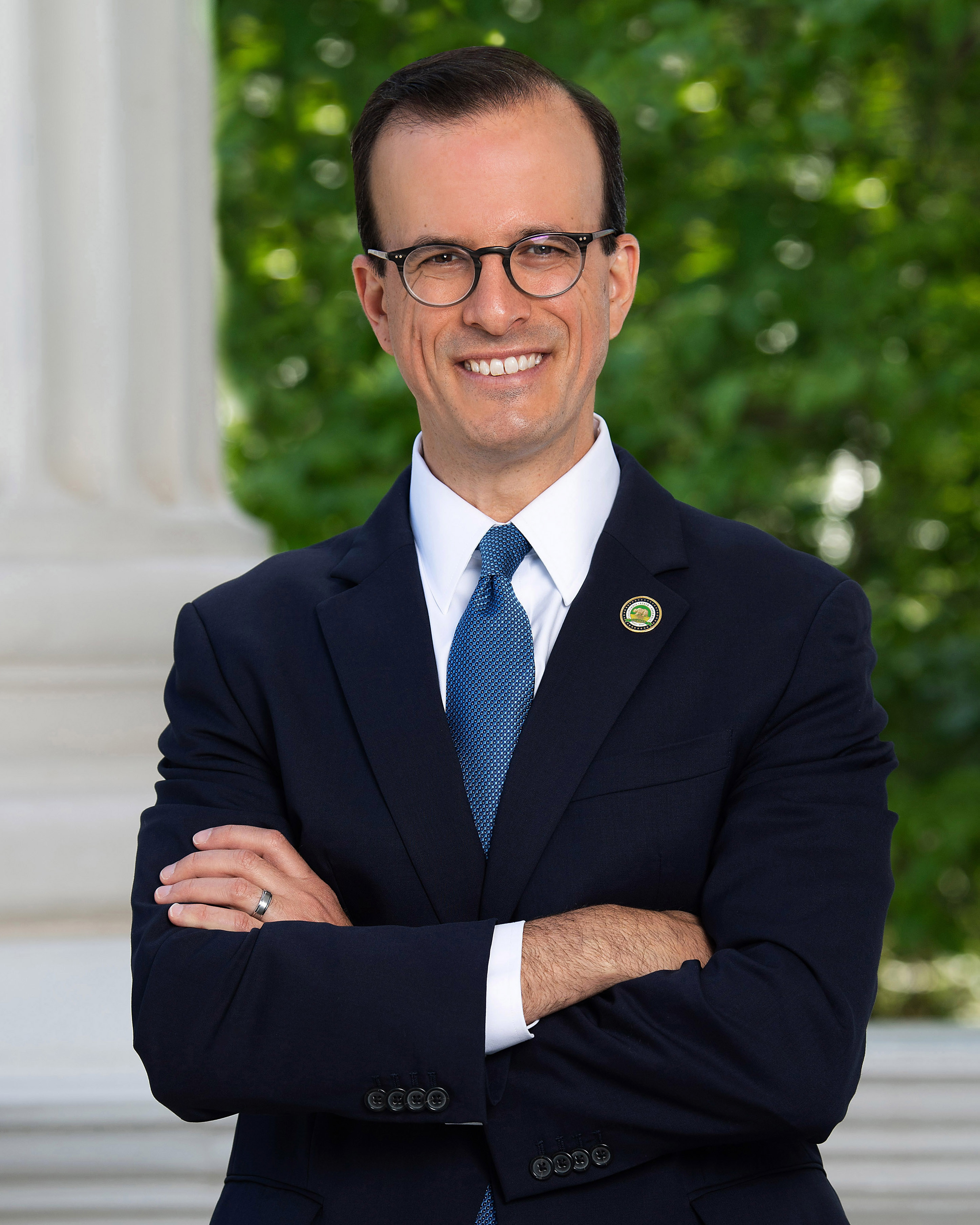
Asm. Marc Berman
Sponsored bills
Existing law generally protects employees who disclose illegal or improper workplace activities by prohibiting interference with, and retaliation for, making such disclosures. Existing law provides procedures for a person to file a complaint alleging violations of legislative ethics. Existing law also authorizes each house of the Legislature to adopt rules for its proceedings and to select committees necessary for the conduct of its business. This bill would impose criminal and civil liability on a Member of the Legislature or legislative employee, as defined, who interferes with, or retaliates against, a legislative employee's exercise of the right to make a protected disclosure, which is defined as a good faith allegation made by a legislative employee to specified entities that a Member of the Legislature or a legislative employee has engaged in, or will engage in, activity that may constitute a violation of law, including sexual harassment, or a violation of a legislative standard of conduct. The bill would also impose civil liability on an entity that interferes with, or retaliates against, a legislative employee's exercise of the right to make a protected disclosure, as specified. By creating new crimes, the bill would impose a state-mandated local program. The California Constitution requires the state to reimburse local agencies and school districts for certain costs mandated by the state. Statutory provisions establish procedures for making that reimbursement. This bill would provide that no reimbursement is required by this act for a specified reason. This bill would declare that it is to take effect immediately as an urgency statute.
Existing law authorizes the operation of an autonomous vehicle, as defined, on public roads for testing purposes by a driver who possesses the proper class of license for the type of vehicle being operated if specified requirements are satisfied. Existing law prohibits an autonomous vehicle from being operated on public roads until the manufacturer, as defined, submits an application to the Department of Motor Vehicles, as specified, and that application is approved. Existing law requires the Department of Motor Vehicles to adopt regulations no later than January 1, 2015, setting forth requirements for the submission of evidence of insurance, surety bond, or self-insurance, and for the submission and approval of an application to operate an autonomous vehicle. Under existing law, a violation of the Vehicle Code is an infraction, unless otherwise specified. This bill would require the department, on or before September 30, 2018, to adopt regulations setting forth standards for the testing of autonomous vehicles used to transport freight and, in the development of those regulations, to consult with the Department of Transportation and the Department of the California Highway Patrol on related topics, including appropriate routes for autonomous vehicles used to transport freight and compliance with state and federal requirements for commercial drivers. The bill would require an autonomous vehicle used to transport freight to have an operator in the driver's seat at all times while being operated and would subject the operator to specified requirements relating to the maximum hours a driver is permitted to drive in a work period. By establishing provisions of law, the violation of which would be a crime, this bill would impose a state-mandated local program. The California Constitution requires the state to reimburse local agencies and school districts for certain costs mandated by the state. Statutory provisions establish procedures for making that reimbursement. This bill would provide that no reimbursement is required by this act for a specified reason.
The Political Reform Act of 1974 prohibits a person, other than a small contributor committee or political party committee, from making to a candidate for elective state office, for statewide elective office, or for office of the Governor, and prohibits those candidates from accepting from a person, a contribution totaling more than a specified amount per election. For a candidate for elective state office other than a candidate for statewide elective office, the limitation on contributions is $3,000 per election, as that amount is adjusted by the Fair Political Practices Commission in January of every odd-numbered year. Existing law authorizes a county, city, or district to limit campaign contributions in local elections. Existing law authorizes the governing board of a school district or of a community college district to limit campaign expenditures or contributions in elections to district offices. The act specifies that it does not prevent the Legislature or any other state or local agency from imposing additional requirements on a person if the requirements do not prevent the person from complying with the act, and that the act does not nullify contribution limitations or prohibitions by any local jurisdiction that apply to elections for local elective office, as specified. This bill, commencing January 1, 2019, instead would prohibit a person from making to a candidate for local elective office, and would prohibit a candidate for local elective office from accepting from a person, a contribution totaling more than the amount set forth in the act for limitations on contributions to a candidate for elective state office. This bill would also authorize a county, city, special district, or school district to impose a limitation that is different from the limitation imposed by this bill. This bill would repeal the authorization for the governing board of a school district or of a community college district to limit campaign expenditures in elections to district offices. This bill would make specified provisions of the act relating to contribution limitations applicable to a candidate for a local elective office, except as specified. The act makes a violation of its provisions punishable as a misdemeanor and subject to specified penalties. This bill would add the contribution limitation imposed by the bill to the act's provisions, thereby making a violation of the limitation punishable as a misdemeanor and subject to specified penalties. However, the bill would specify that a violation of a limitation imposed by a local government is not subject to the act's enforcement provisions. The bill would authorize a local government that imposes a limitation that is different from the limitation imposed by this bill to adopt enforcement standards for a violation of the limitation imposed by the local government agency, including administrative, civil, or criminal penalties. By expanding the scope of an existing crime with regard to a violation of a contribution limitation imposed by the bill, the bill would impose a state-mandated local program. The California Constitution requires the state to reimburse local agencies and school districts for certain costs mandated by the state. Statutory provisions establish procedures for making that reimbursement. This bill would provide that no reimbursement is required by this act for a specified reason. The Political Reform Act of 1974, an initiative measure, provides that the Legislature may amend the act to further the act's purposes upon a 23 vote of each house of the Legislature and compliance with specified procedural requirements. This bill would declare that it furthers the purposes of the act.
Existing law establishes a system of public elementary and secondary schools in this state, and authorizes school districts and other local educational agencies to provide instruction to pupils in kindergarten and grades 1 to 12, inclusive. Existing law establishes a course of study for pupils in these grades. This bill would establish the Computer Science Education Grant Pilot Program under the administration of the Superintendent of Public Instruction. Under the program, eligible local educational agencies, as defined, could apply to receive grants, not to exceed 2 years, to establish and maintain computer science courses in underserved areas and among pupils from groups historically underrepresented in the field of computer science, and to provide professional development for teachers to teach computer science, either as a stand-alone course or as integrated into other courses. The bill would authorize any local educational agency in the state to apply for participation in the pilot program. The bill would specify minimum criteria to be applied by the Superintendent in evaluating applicant local educational agencies for possible participation in the pilot program, and authorize the Superintendent to consult with computer science experts to discuss and refine these criteria, as specified. The bill would establish the Computer Science Education Grant Matching Account in the State Treasury. The bill would authorize the State Treasury to receive, and deposit into the account, any gifts, grants, or donations received for purposes of the bill from private persons or entities. The bill would require local educational agencies receiving grants under the bill to provide local matching resources, which may include in-kind donations, constituting an amount equaling the amount that would be allocated to the local educational agency from the Computer Science Education Grant Matching Account. The bill would express the intent of the Legislature that no moneys from the state General Fund be used to fund the grant pilot program established by the bill. The bill would provide that the funds deposited in the account would be available, upon appropriation in the annual Budget Act or in another statute, to the Superintendent for purposes of the bill, provided that the Superintendent certifies, in writing, to the Director of Finance that there are sufficient funds, as defined, in the account to implement the bill. The bill would limit expenditures from the account to cover administrative costs to the State Department of Education to no more than 5% of the allocations made from the account in any fiscal year. The bill would authorize the Superintendent to refund to the donor all or a portion of any gift, grant, or donation made to the account by that donor if the funds received from that donor have not been encumbered because there are surplus funds in the account or because this provision has not become operative. The bill would require the Superintendent to submit an annual report, containing specified data about the grant program, to the Governor and the Legislature on or before January 10, 2020, and on or before January 10 in 2021, 2022, and 2023. The provisions of the bill would become inoperative on July 1, 2023, and would be repealed as of January 1, 2024.

Existing law provides for the Medi-Cal program, which is administered by the State Department of Health Care Services, under which qualified low-income individuals receive health care services. The Medi-Cal program is, in part, governed and funded by federal Medicaid program provisions. Existing law provides that federally qualified health center (FQHC) services and rural health clinic (RHC) services, as defined, are covered benefits under the Medi-Cal program, to be reimbursed, to the extent that federal financial participation is obtained, to providers on a per-visit basis. "Visit" is defined as a face-to-face encounter between a patient of an FQHC or RHC and specified health care professionals. Existing law allows an FQHC or RHC to apply for an adjustment to its per-visit rate based on a change in the scope of services it provides. This bill would, no later than July 1, 2018, include a licensed professional clinical counselor within those health care professionals covered under that definition. The bill would require an FQHC or RHC that currently includes the cost of the services of a licensed professional clinical counselor for the purposes of establishing its FQHC or RHC rate to apply to the department for an adjustment to its per-visit rate, and, after the rate adjustment has been approved by the department, would require the FQHC or RHC to bill for these services as a separate visit, as specified. The bill would require an FQHC or RHC that does not provide the services of a licensed professional clinical counselor, and later elects to add this service and bill these services as a separate visit, to process the addition of these services as a change in scope of service. This bill would incorporate additional changes to Section 14132.100 of the Welfare and Institutions Code proposed by SB 323 to be operative only if this bill and SB 323 are enacted and this bill is enacted last.