

Passed Jun 28, 2019
1 co-sponsor
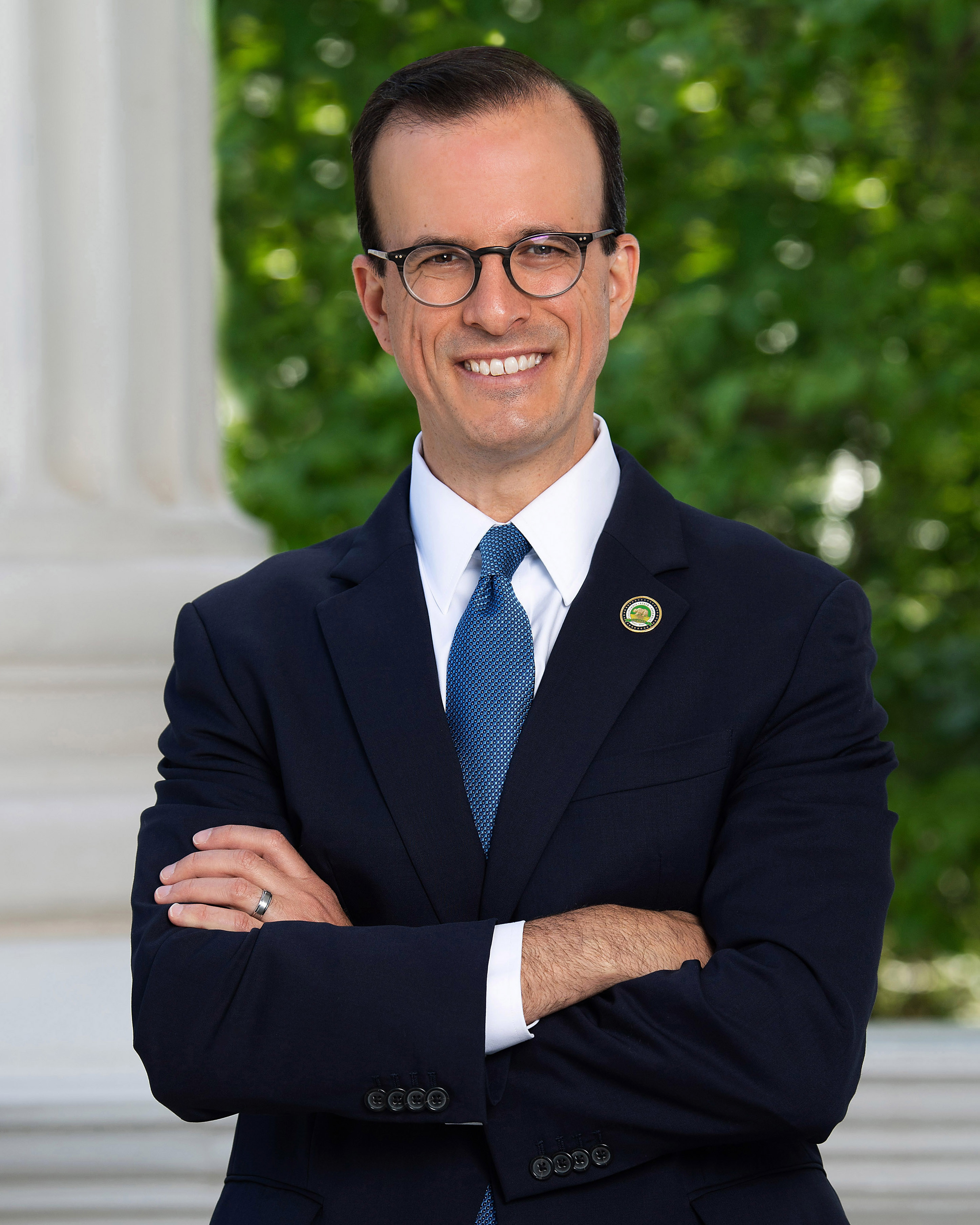
Asm. Marc Berman
Total votes
21,430
all sessions
Attendance
95%
1,013 missed
Near the chamber average
With party
99%
of cast votes
Near the chamber average
Bipartisan score
0%
crosses aisle rarely
Near the chamber average
Sponsored
2,112
bills & resolutions
Near the chamber average
Committees
8
assignments
2,112 bills and resolutions
Sponsored bills
Total
2,112
Primary
229
Co-sponsor
1,883
This page
2,112
matching current filters
Relative to Alzheimer's and Brain Awareness Month and The Longest Day.
This measure would recognize the month of June 2019 as Alzheimer's and Brain Awareness Month and Friday, June 21, 2019, as The Longest Day, and would urge all Californians to commemorate the month of June 2019 as Alzheimer's and Brain Awareness Month.
Signed into law Jun 25, 2019
1 co-sponsor
Relative to Portuguese National Heritage Month.
This measure would declare the month of June 2019 as Portuguese National Heritage Month.
Signed into law Jun 25, 2019
1 co-sponsor
Relative to Maternal Mental Health Awareness Month.
This measure would dedicate the month of May 2019 as Maternal Mental Health Awareness Month.
Signed into law Jun 25, 2019
1 co-sponsor
Relative to California Nonprofits Day.
This measure would declare June 5, 2019, as California Nonprofits Day in recognition of the importance of nonprofit organizations to the economy and well-being of this state.
Signed into law Jun 25, 2019
1 co-sponsor
Solid waste: lithium-ion batteries.
Existing law, the Rechargeable Battery Recycling Act of 2006, requires every retailer, as defined, to have in place a system for the acceptance and collection of used rechargeable batteries for reuse, recycling, or proper disposal. Existing law requires the system for the acceptance and collection of used rechargeable batteries to include, at a minimum, specified elements, including, among others, the take-back of a used rechargeable battery of the type or brand that the retailer sold or previously sold at no cost to the consumer. Existing law defines "rechargeable battery" for purposes of these provisions to mean a small, nonvehicular, rechargeable nickel-cadmium, nickel metal hydride, lithium-ion, or sealed lead-acid battery, or a battery pack containing these types of batteries. This bill would establish the Lithium-Ion Battery Recycling Program in the Department of Resources Recycling and Recovery. The bill would require a covered entity, as defined, on or before March 1, 2021, to provide a list of covered products that it sells or offers for sale in the state to the department and the total number of each covered product it sold in the state during the prior year, and to update those lists annually. The bill would define "covered product" to mean a lithium-ion battery sold separately or sold with a product, or a product containing a lithium-ion battery or battery pack that is not designed to be removed from the product by a consumer. The bill would require a covered entity to annually achieve specified collection and recycling rates for covered products, as provided. The bill would require a covered entity to establish a stewardship program for covered batteries independently or as part of a group of covered entities through membership in a stewardship organization. The bill would authorize a covered entity to achieve the recycling rates for covered battery-embedded products through any of specified mechanisms, including through a take-back program in which the retailer offers consumers covered battery-embedded product take-back services through collection receptacles or a mail-back program. The bill would require a covered entity to pay the department an administrative fee, set by the department at an amount that, when paid by every covered entity, is adequate to cover the department's, and any other state agency's, full costs of administering and enforcing this program. The bill would require the department to deposit those administrative fees in the Lithium-Ion Battery Recycling Cost of Implementation Account, which would be established by the bill, and would authorize the expenditure of those funds, upon appropriation by the Legislature, for certain purposes. The bill would require the department, on or before January 1, 2022, to adopt regulations to implement the program. This bill would also state the intent of the Legislature to enact legislation to amend the Electronic Waste Recycling Act of 2003 to allow for the recovery and recycling of lithium-ion batteries and products containing lithium-ion batteries under the existing program established by the act.
Passed Jun 25, 2019
1 co-sponsor
Passed Jun 24, 2019
1 co-sponsor
Autism: sensory-friendly movie screenings.
This measure would declare the support of the Legislature for the expansion of sensory-friendly movie screenings and similar programs for people with autism, and would encourage families to attend a sensory-friendly movie screening during April 2019, which is National Autism Awareness Month.
Signed into law Jun 20, 2019
1 co-sponsor
Passed Jun 20, 2019
1 co-sponsor
California Aerospace and Aviation Commission: establishment.
Existing law establishes the Governor's Office of Business and Economic Development, which is administered by a director appointed by the Governor. The office serves the Governor as the lead entity for economic strategy and the marketing of California on issues relating to business development, private sector investment, and economic growth. This bill would establish, within the office, the California Aerospace and Aviation Commission consisting of 15 members, as specified, to serve as a central point of contact for businesses engaged in the aerospace and aviation industries and to support the health and competitiveness of these industries in California. The bill would require the commission to make recommendations on legislative and administrative action that may be necessary or helpful to maintain or improve the state's aerospace and aviation industries and would authorize the commission to engage in various other activities in undertaking its mission and responsibilities, as specified. This bill would require the commission to have offices contained within existing operations of the office, as specified. The bill would also require that funds received by the commission be deposited in the Aerospace and Aviation Account, which the bill would create in the California Economic Development Fund, to be used by the commission upon appropriation by the Legislature. The bill would preclude any actions by the office relating to the commission until a determination is made and reported regarding the sufficiency of the funds received. The bill would require state funds, averaged over 3 years, that are allocated to the commission to be matched by nonstate funds. The bill would repeal its provisions on January 1, 2025.
Passed Jun 17, 2019
1 co-sponsor
Ask Maddy
·
AI policy assistant
Ask Maddy about Marc Berman
Scope: california
Hi! I can help you understand Marc Berman's legislative record. What would you like to know?
Try one of these
i
Maddy answers using official bill text and legislative records. Always verify before sharing.
Sources cited inline