

Existing law, the Uniform Electronic Transactions Act, applies to electronic records and electronic signatures of a transaction, and generally prohibits a record or signature from being denied legal effect or enforceability solely because it is in electronic form. Existing law exempts from that act specific transactions. Existing law, commencing January 1, 2021, would exempt specified notices regarding the cancellation, expiration, and replacement of insurance policies from that act. This bill would instead make those notices subject to the act indefinitely. Existing law authorizes an insurer to provide notices of insurance transactions by electronic transmission, if the insurer complies with specified requirements, including that the insurer acquires the consent of the person to opt in to receive the notice by electronic transmission. Existing law, commencing on January 1, 2021, excepts from this electronic transmission authorization any written record that is required to be given or mailed that relates to the business of life insurance. This bill would repeal that exception, thereby indefinitely authorizing written records relating to the business of life insurance to be provided by electronic transmission if the insurer complies with the specified requirements. Existing law, until January 1, 2021, requires a licensee who is required to transmit a record by return receipt, registered mail, certified mail, signed written receipt of delivery, or other method of delivery evidencing actual receipt by the person, and who transmits that record electronically, to maintain a process or system that demonstrates proof of delivery and actual receipt of the record. Under existing law, until January 1, 2021, a licensee who transmits a notice of lapse, nonrenewal, cancellation, or termination of an insurance product electronically is also required to demonstrate that proof of delivery. This bill would eliminate the January 1, 2021 sunset date, thereby making those proof of delivery and actual receipt requirements apply indefinitely. Existing law authorizes the Department of Insurance to suspend a licensee from providing records by electronic transmission if there is a pattern or practices that demonstrate the licensee has failed to comply with specified requirements regarding those records. Existing law authorizes a licensee to appeal the suspension, as specified. This bill would instead require the Insurance Commissioner, when the commissioner has reason to believe that a licensee has been or is engaged in conduct that violates those requirements, to issue a statement of charges to the licensee and to provide the licensee with a hearing, as specified. The bill would authorize the licensee to obtain a review of the order of the commissioner by making a specified filing in court. The bill would additionally subject any licensee who violates a cease and desist order regarding these requirements to specified civil penalties or a suspension or revocation of a licensee's license, if the licensee knew or reasonably should have known it was in violation of the cease and desist order. This bill would require the commissioner, on or before January 1, 2022, to submit a report to the Governor and to the committees of the Senate and Assembly having jurisdiction over insurance and the judiciary, regarding insurer compliance with laws governing electronic transmissions of insurance transactions.
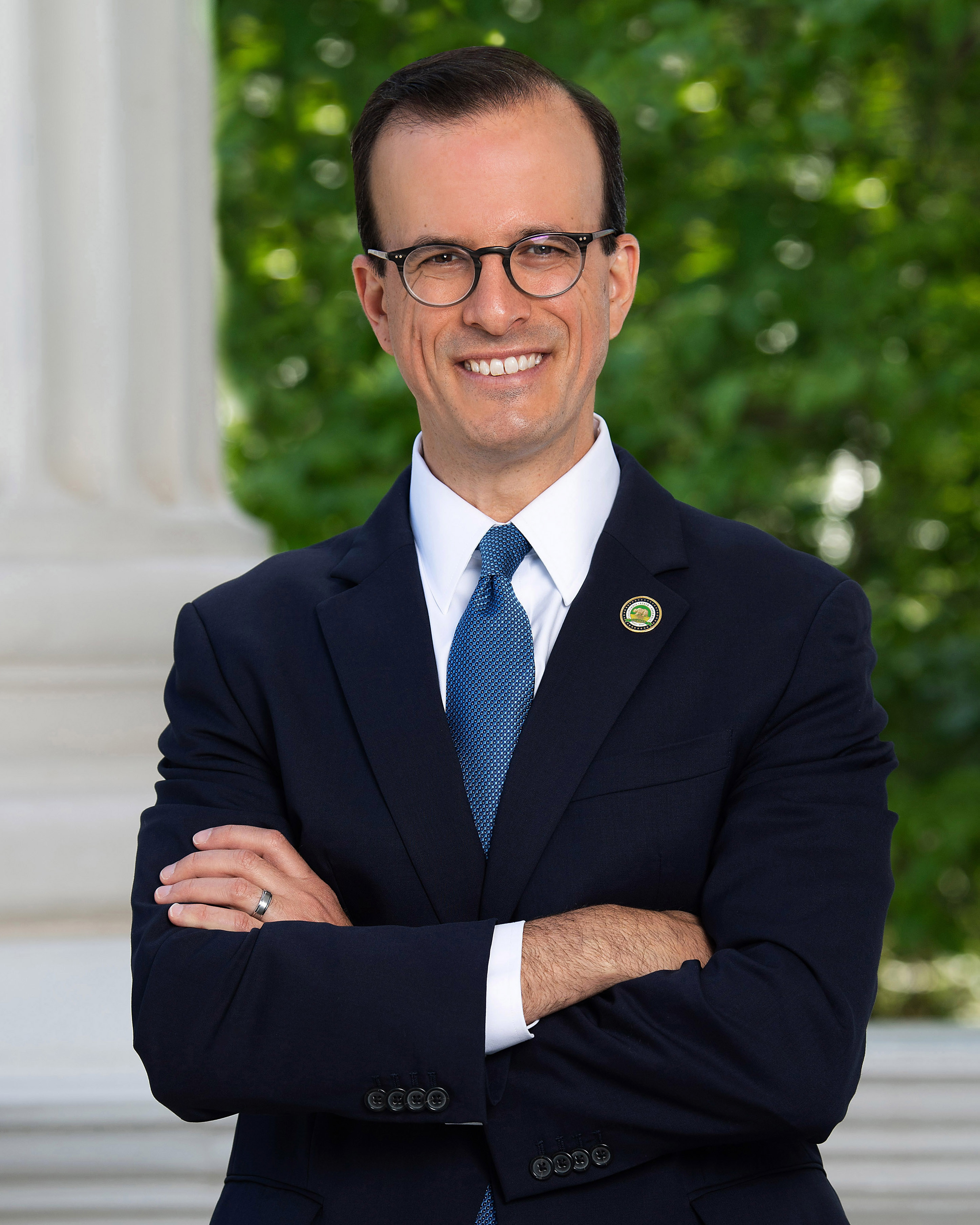
Asm. Marc Berman
Sponsored bills
This measure would declare August 2019 as Valley Fever Awareness Month.
This measure would endorse activities in public schools that instruct pupils in upholding and sustaining American democracy, encourage, in the strongest terms, California schools to pursue certain recognized designations that reflect specified ethos and values, and encourage publicly elected officials to conduct themselves in ways that strengthen civic engagement and participation in civil society.
This measure would formally apologize for California's past complicity in enabling and furthering the practice of slavery and would urge the United States Congress and the President of the United States to enact House Resolution 40 to study the legacy of slavery and provide recommendations on redress for descendants of enslaved persons.
This measure would mark December 17, 2019, as the 76th anniversary of the repeal of the Chinese Exclusion Act to honor the contributions of all immigrants and refugees in our communities. The measure would also declare the opposition of the Legislature to executive orders and a presidential proclamation signed by President Trump relating to immigration, call upon the President to revoke those orders and that proclamation, condemn the expansion of deportations being undertaken under the current presidential administration, stand in firm opposition to the President's proposal for construction of a wall along the southern border with Mexico, and reaffirm that the state is open and welcoming to immigrants and refugees who are integral to life in our state.
This measure would encourage the United States Congress to adopt climate policies, including those that might be adopted under the Green New Deal, that build upon California's programs that have reduced greenhouse gas emissions while improving air and water quality, create new green jobs, and improve disadvantaged communities and that just climate actions offer the nation an opportunity to achieve community-mindful policies that California has successfully adopted while growing its economy.
Existing law provides for the Medi-Cal program, which is administered by the State Department of Health Care Services, under which qualified low-income individuals receive healthcare services. The Medi-Cal program is, in part, governed and funded by federal Medicaid program provisions. Existing law provides that federally qualified health center (FQHC) services and rural health clinic (RHC) services, as defined, are covered benefits under the Medi-Cal program, to be reimbursed, to the extent that federal financial participation is obtained, to providers on a per-visit basis. "Visit" is defined as a face-to-face encounter between a patient of an FQHC or RHC and specified health care professionals. Existing law allows an FQHC or RHC to apply for an adjustment to its per-visit rate based on a change in the scope of service it provides. This bill would additionally include a licensed professional clinical counselor within those health care professionals covered under that definition. The bill would require an FQHC or RHC that currently includes the cost of the services of a licensed professional clinical counselor for the purposes of establishing its FQHC or RHC rate to apply to the department for an adjustment to its per-visit rate, and, after the rate adjustment has been approved by the department, would require the FQHC or RHC to bill for these services as a separate visit, as specified. The bill would require an FQHC or RHC that does not provide the services of a licensed professional clinical counselor, and later elects to add this service and bill these services as a separate visit, to process the addition of these services as a change in scope of service.
Existing law establishes the California Private Postsecondary Education Act of 2009, which, among other things, provides for student protections and regulatory oversight of private postsecondary schools in the state. The act prohibits certain types of conduct by regulated institutions, including offering to compensate a student to act as an agent of the institution for the purposes of enrollment or recruitment of students, except as specified, and compensating an employee involved in recruitment and enrollment on the basis of commission, quota, bonus, or a similar method, also with exceptions. This bill would define financial aid for the purposes of the act. The bill would prohibit an institution from providing, directly or indirectly, certain financial incentives to any person, including a student, engaged in student recruitment or admission activities, engaged in awarding financial aid directly to a student, or engaged in the sales of any educational materials directly to a student, if that financial incentive is contingent upon quotas or the success of securing enrollments, admissions, awarding financial aid to a student, or sales of educational materials directly to a student.
Existing law provides that when more than one violation of certain specified offenses occurs in more than one jurisdictional territory, jurisdiction for any of those offenses and any other properly joinable offenses may be in any jurisdiction where at least one of the offenses occurred if all district attorneys in the counties with jurisdiction over any of the offenses agree to the venue. This bill would create a similar authority for the prosecution of specified financial elder abuse felony offenses occurring in multiple jurisdictions.
Existing law, the California Private Postsecondary Education Act of 2009, provides, among other things, for student protections and regulatory oversight of private postsecondary institutions in the state. The act is enforced by the Bureau for Private Postsecondary Education within the Department of Consumer Affairs. The act exempts an institution from its application if any of a list of specific criteria are met. Existing law requires an out-of-state private postsecondary educational institution to comply with specified requirements, including providing the bureau evidence of the institution's accreditation. This bill would define nonprofit corporation and public institution of higher education specially for purposes of the act. The bill would specify that only an institution of higher education meeting the act's definition of nonprofit corporation or public institution of higher education is exempt from the requirements imposed on an out-of-state private postsecondary educational institution. The bill would prohibit the bureau from verifying the exemption of, or contracting to handle complaints for, a nonprofit institution that operated as a for-profit institution during any period on or after January 1, 2010, unless the Attorney General makes certain determinations. Under existing law, the act specifies conduct by regulated institutions that, if undertaken, is a crime. Because this bill would extend the application of those criminal provisions, it would impose a state-mandated local program. The California Constitution requires the state to reimburse local agencies and school districts for certain costs mandated by the state. Statutory provisions establish procedures for making that reimbursement. This bill would provide that no reimbursement is required by this act for a specified reason.