

Passed Jan 25, 2021
1 co-sponsor
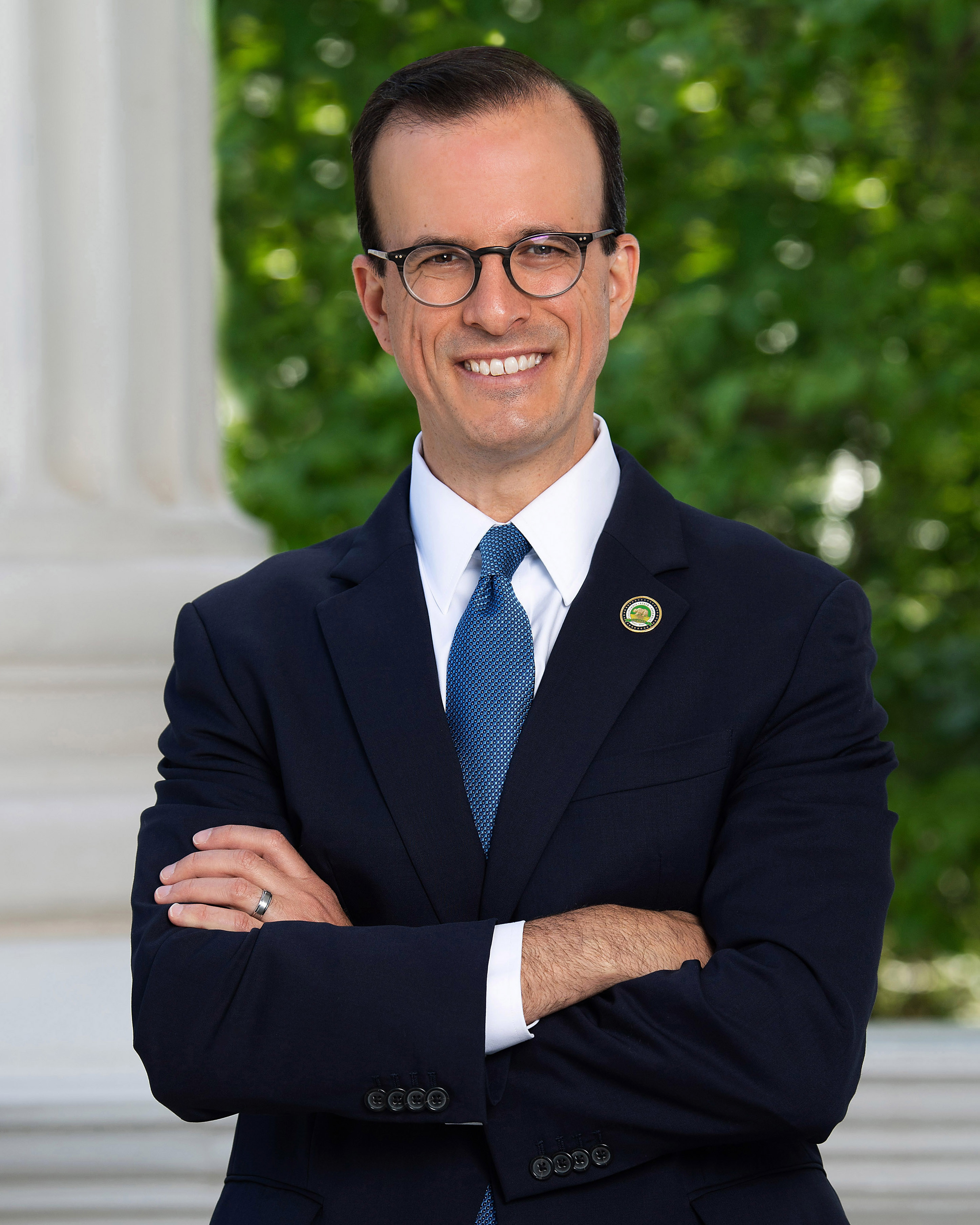
Asm. Marc Berman
Total votes
21,430
all sessions
Attendance
95%
1,013 missed
Near the chamber average
With party
99%
of cast votes
Near the chamber average
Bipartisan score
0%
crosses aisle rarely
Near the chamber average
Sponsored
2,112
bills & resolutions
Near the chamber average
Committees
8
assignments
2,112 bills and resolutions
Sponsored bills
Total
2,112
Primary
229
Co-sponsor
1,883
This page
2,112
matching current filters
Relative to Reverend Dr. Martin Luther King, Jr.
This measure would, among other things, honor the late civil rights pioneer and icon Reverend Dr. Martin Luther King, Jr. and commemorate Dr. Martin Luther King, Jr. Day.
Passed Jan 19, 2021
1 co-sponsor
Passed Jan 15, 2021
1 co-sponsor
Passed Jan 11, 2021
1 co-sponsor
Peace officers: use of force.
Existing law authorizes a peace officer to make an arrest pursuant to a warrant or based upon probable cause, as specified. Under existing law, an arrest is made by the actual restraint of the person or by submission to the custody of the arresting officer. Existing law authorizes a peace officer to use reasonable force to effect the arrest, to prevent escape, or to overcome resistance. Existing law requires law enforcement agencies to maintain a policy on the use of force, as specified. Existing law requires the Commission on Peace Officer Standards and Training to implement courses of instruction for the regular and periodic training of law enforcement officers in the use of force. This bill would prohibit a law enforcement agency from authorizing the use of a carotid restraint or a choke hold, as defined. By requiring local agencies to amend use of force policies, this bill would impose a state-mandated local program. The California Constitution requires the state to reimburse local agencies and school districts for certain costs mandated by the state. Statutory provisions establish procedures for making that reimbursement. This bill would provide that, if the Commission on State Mandates determines that the bill contains costs mandated by the state, reimbursement for those costs shall be made pursuant to the statutory provisions noted above.
Signed into law Sep 30, 2020
1 co-sponsor
Police use of force.
Existing law requires law enforcement agencies to maintain a policy on the use of force, as specified. Existing law requires the Commission on Peace Officer Standards and Training to implement courses of instruction for the regular and periodic training of law enforcement officers in the use of force. Existing law requires law enforcement agencies to report to the Department of Justice, as specified, any incident in which a peace officer is involved in a shooting or use of force that results in death or serious bodily injury. This bill would create a division within the Department of Justice to, upon the request of a law enforcement agency, review the use-of-force policy of the agency and make recommendations, as specified. This bill would require a state prosecutor to investigate incidents of an officer-involved shooting resulting in the death of an unarmed civilian, as defined. The bill would make the Attorney General the state prosecutor unless otherwise specified or named. The bill would authorize the state prosecutor to prepare a written report, and would require the state prosecutor to post any reports made on a public internet website. The bill would require, commencing July 1, 2023, the Attorney General to operate a Police Practices Division within the department to review, upon the request of a local law enforcement agency, the use of deadly force policies of that law enforcement agency and make recommendations, as specified. The bill would require the department to implement these provisions subject to an appropriation for this purpose.
Signed into law Sep 30, 2020
1 co-sponsor
Firearms: gun violence restraining orders.
Existing law allows a court to issue an order restraining an individual from possessing a firearm for the duration of the order. Existing law allows the court to issue a temporary emergency gun violence restraining order on an ex parte basis if the possession of a firearm by the subject of the petition poses an immediate and present danger. Existing law requires a law enforcement officer who requests a temporary emergency gun violence restraining order to take certain steps, including filing a copy of the order with the court as soon as practicable after issuance. This bill would instead require the law enforcement officer to file a copy of the order with the court as soon as practicable, but not later than 3 court days, after issuance. Under existing law, a person who owns or possesses a firearm or ammunition with the knowledge that they are prohibited from doing so by a gun violence restraining order is guilty of a misdemeanor and shall be prohibited from having custody or control of, owning, purchasing, possessing, or receiving, or attempting to purchase or receive, a firearm or ammunition for a 5-year period, commencing upon the expiration of the existing gun violence restraining order. This bill would specify that this offense also applies to persons who are subject to certain gun violence restraining orders, as described, issued by an out-of-state jurisdiction. This bill would state that its provisions are severable. By expanding the application of an existing crime, this bill would impose a state-mandated local program. The California Constitution requires the state to reimburse local agencies and school districts for certain costs mandated by the state. Statutory provisions establish procedures for making that reimbursement. This bill would provide that no reimbursement is required by this act for a specified reason.
Signed into law Sep 29, 2020
1 co-sponsor
California State Lottery: revenue allocation.
(1) The California State Lottery Act of 1984, an initiative measure approved by the voters at the November 6, 1984, statewide general election, authorizes a California State Lottery and provides for its operation and administration by the California State Lottery Commission and the Director of the California State Lottery, with certain limitations. The act establishes the State Lottery Fund as a continuously appropriated fund for carrying out the purposes of the act. Existing law requires that not less than 87% of the total annual revenues of the state lottery be returned to the public in the form of prizes and net revenues to benefit public education, as specified, and that no more than 13% be used for lottery expenses. Existing law, to become operative following notification from the Controller to the Legislature and the Governor that certain events have occurred, as specified, changes the revenue allocation formula so that not less than 84% of the total annual revenues of the state lottery be returned to the public in the form of prizes and net revenues to benefit public education, as specified, and that no more than 16% be used for lottery expenses. Existing law requires, with respect to a specified percentage of total annual lottery revenues to be allocated for public education, that 50% of any increase over an amount calculated in the 1997–98 fiscal year be allocated to school districts and community college districts for the purchase of instructional materials. This bill would make legislative findings and declarations relating to the allocation of lottery funds to community colleges. The bill would express the intent of the Legislature to ensure that restricted lottery funding allocated to community colleges is spent in full for the benefit of students. This bill would additionally authorize the allocation of this amount for housing assistance and food assistance for community college students. By authorizing this allocation, the bill would change the purposes for which the funds of a continuously appropriated fund may be appropriated, and thereby make an appropriation. (2) The California State Lottery Act of 1984 provides that its provisions may not be changed except to further its purpose by a bill passed by a 23 vote of each house of the Legislature and signed by the Governor. This bill would declare that its provisions further the purposes of the act. (3) This bill would declare that it is to take effect immediately as an urgency statute.
Signed into law Sep 29, 2020
0 co-sponsors
Leroy Anderson Dam and Reservoir: permitting, environmental review, and public contracting.
Existing law prohibits an entity from diverting or obstructing the natural flow of, or substantially changing or using any material from the bed, channel, or banks of, a river, stream, or lake, or depositing or disposing of debris, waste, or other material containing crumbled, flaked, or ground pavement where it may pass into a river, stream, or lake, unless the Department of Fish and Wildlife receives written notification regarding the activity and the department either determines that the activity will not substantially adversely affect an existing fish and wildlife resource or, if the department determines that the activity may substantially adversely affect an existing fish and wildlife resource, the department issues a final agreement to the entity that includes reasonable measures necessary to protect the affected resource. This bill would, if the department determines that the Anderson Dam project, as defined, will substantially adversely affect existing fish and wildlife resources and the Santa Clara Valley Water District completes certain actions for the project, require the department within 180 days of receipt of a notification, as defined, from the district to issue a final agreement with the district that includes reasonable measures necessary to protect the affected resource, unless the department and the district agree to an extension. The California Environmental Quality Act (CEQA) requires a lead agency, as defined, to prepare, or cause to be prepared, and certify the completion of an environmental impact report (EIR) on a project that it proposes to carry out or approve that may have a significant effect on the environment or to adopt a negative declaration if it finds that the project will not have that effect. CEQA also requires a lead agency to prepare a mitigated negative declaration for a project that may have a significant effect on the environment if revisions in the project would avoid or mitigate that effect and there is no substantial evidence that the project, as revised, would have a significant effect on the environment. CEQA establishes administrative procedures for the review and certification of the EIR for a project and judicial review procedures for any action or proceeding brought to challenge the lead agency's decision to certify the EIR or to grant project approvals. This bill would establish specified procedures for the administrative and judicial review of the environmental review and approvals granted for the Anderson Dam project, as defined. The bill would apply certain rules of court establishing procedures requiring actions or proceedings seeking judicial review pursuant to CEQA or the granting of project approvals, including any appeals to the court of appeal or the Supreme Court, to be resolved, to the extent feasible, within 270 business days of the filing of the certified record of proceedings with the court to an action or proceeding seeking judicial review of the lead agency's action related to the Anderson Dam project under CEQA. The bill would require the Santa Clara Valley Water District, in implementing the project, to comply with certain requirements. This bill would establish a schedule for the issuance of a draft EIR and the certification of the final EIR for the implementation of measures set forth in a specific settlement agreement to benefit fisheries in the Stevens Creek and the Guadalupe River watersheds, as provided. Existing law designates the State Water Resources Control Board as that state water pollution control agency for purposes of the Federal Water Pollution Control Act and authorizes the state board to issue a certificate or statement under the federal act that there is reasonable assurance that an activity of a person subject to the jurisdiction of the state board will not reduce water quality below applicable standards. This bill would prescribe procedures by which the state board is to issue the certification for the Anderson Dam project. This bill would authorize state agencies with permitting authority over the Anderson Dam project to take certain actions to expedite the permitting process for the project, including entering into an agreement for the recovery of certain costs. This bill would require the Santa Clara Valley Water District to develop, in consultation with the adaptive management team, as described, the Adaptive Management Program, as described. The bill would require the district, in conjunction with the state board and others, to implement a new flow regime, known as FAHCE+, for the Guadalupe River and Stevens Creek by October 15, 2020. The bill would require the district, by January 1, 2021, to engage and discuss with the Guadalupe River Corridor Restoration Management Team the development of a Guadalupe River Corridor restoration management plan, as provided. Existing law authorizes certain local entities to select a bidder for a contract on the basis of "best value," as defined. Existing law governs various types of contract procedures applicable to the Santa Clara Valley Water District and prescribes competitive bidding procedures for any improvement or unit of work over $50,000. This bill would authorize the district, upon approval by the board of directors of the district, to award contracts on a best value basis for any work of construction to retrofit, repair, or replace the Leroy Anderson Dam and Reservoir, owned by the district and located in the County of Santa Clara. The bill would require the district, if the board elects to award contracts on a best value basis, to comply with specified requirements governing the documents prepared setting forth the scope and estimated price of the project and the request for qualifications. The bill would prohibit a best value contractor from being prequalified, shortlisted, or awarded a contract unless the contractor provides an enforceable commitment to the district that the contractor and its subcontractors at every tier will use a skilled and trained workforce to perform all work on the project, in accordance with certain criteria. By requiring certain information of bidders to be certified under penalty of perjury, the bill would expand an existing crime, thereby imposing a state-mandated local program. This bill would make legislative findings and declarations as to the necessity of a special statute for the Santa Clara Valley Water District. The California Constitution requires the state to reimburse local agencies and school districts for certain costs mandated by the state. Statutory provisions establish procedures for making that reimbursement. This bill would provide that no reimbursement is required by this act for a specified reason. This bill would declare that it is to take effect immediately as an urgency statute.
Vetoed Sep 29, 2020
1 co-sponsor
Nurse practitioners: scope of practice: practice without standardized procedures.
Existing law, the Nursing Practice Act, provides for the certification and regulation of nurse practitioners by the Board of Registered Nursing. Existing law authorizes the implementation of standardized procedures that authorize a nurse practitioner to perform certain acts that are in addition to other authorized practices, including certifying disability after performing a physical examination and collaboration with a physician and surgeon. A violation of the act is a misdemeanor. This bill would establish the Nurse Practitioner Advisory Committee to advise and give recommendations to the board on matters relating to nurse practitioners. The bill would require the committee to provide recommendations or guidance to the board when the board is considering disciplinary action against a nurse practitioner. The bill would require the board, by regulation, to define minimum standards for a nurse practitioner to transition to practice independently. The bill would authorize a nurse practitioner who meets certain education, experience, and certification requirements to perform, in certain settings or organizations, specified functions without standardized procedures, including ordering, performing, and interpreting diagnostic procedures, certifying disability, and prescribing, administering, dispensing, and furnishing controlled substances. The bill, beginning January 1, 2023, would also authorize a nurse practitioner to perform those functions without standardized procedures outside of specified settings or organizations in accordance with specified conditions and requirements if the nurse practitioner holds an active certification issued by the board. The bill would require the board to issue that certification to a nurse practitioner who meets additional specified education and experience requirements, and would authorize the board to charge a fee for the cost of issuing the certificate. The bill would also require the board to request the department's Office of Professional Examination Services, or an equivalent organization, to perform an occupational analysis of nurse practitioners performing certain functions. The bill would require the occupational analysis to be completed by January 1, 2023. The bill would require the board to take specified measures to identify and assess competencies. The bill would require the board to identify and develop a supplemental examination for licensees if needed based on the assessment, as provided. Existing law makes it unlawful for specified healing arts practitioners, including physicians and surgeons, psychologists, and acupuncturists, to refer a person for certain services, including laboratory, diagnostic nuclear medicine, and physical therapy, if the physician and surgeon or their immediate family has a financial interest with the person or in the entity that receives the referral. A violation of those provisions is a misdemeanor and subject to specified civil penalties and disciplinary action. This bill would make those provisions applicable to a nurse practitioner practicing pursuant to the bill's provisions. Existing law requires certain peer review organizations responsible for reviewing the medical care provided by specified healing arts licentiates to file with the relevant agency an "805 report," which is a report of certain adverse actions taken against a licentiate for a medical disciplinary cause or reason. Existing law exempts a peer review body from the requirement to file an 805 report for an action taken as a result of a revocation or suspension, without stay, of a physician and surgeon's license by the Medical Board of California or a licensing agency of another state. Existing law requires the licensing agency to disclose, among other things, a copy of any 805 report of a licensee upon a request made by specified institutions prior to granting or renewing staff privileges for the licentiate. Existing law specifies certain penalties for failing to file an 805 report, and requires the action or proceeding to be brought by the Medical Board of California if the person who failed to file an 805 report is a licensed physician and surgeon. Existing law defines "licentiate" for those purposes. This bill would include as a licentiate a nurse practitioner practicing pursuant to the bill's provisions, and make conforming changes. The bill would exempt a peer review body from the requirement to file an 805 report for an action taken as a result of a revocation or suspension, without stay, of a nurse practitioner's license by the Board of Registered Nursing or a licensing agency of another state. The bill would require the action or proceeding to be brought by the Board of Registered Nursing if the person who failed to file an 805 report is a licensed nurse practitioner. Because the bill would expand the scope of crimes, the bill would impose a state-mandated local program. This bill would incorporate additional changes to Section 650.01 of the Business and Professions Code proposed by SB 1237 to be operative only if this bill and SB 1237 are enacted and this bill is enacted last. The California Constitution requires the state to reimburse local agencies and school districts for certain costs mandated by the state. Statutory provisions establish procedures for making that reimbursement. This bill would provide that no reimbursement is required by this act for a specified reason.
Signed into law Sep 29, 2020
1 co-sponsor
Ask Maddy
·
AI policy assistant
Ask Maddy about Marc Berman
Scope: CA
Hi! I can help you understand Marc Berman's legislative record. What would you like to know?
Try one of these
i
Maddy answers using official bill text and legislative records. Always verify before sharing.
Sources cited inline