

Existing law establishes a system of elementary and secondary education in this state, under which local educational agencies provide instruction to pupils in kindergarten and grades 1 to 12, inclusive, at schoolsites throughout the state. Existing law requires the Commission on Teacher Credentialing to establish standards for the issuance and renewal of credentials, certificates, and permits. This bill would require the commission to develop and implement a grant program to award competitive grants to institutions of higher education that offer commission-approved teacher preparation programs to develop and expand K–12 computer science and computational thinking coursework for individuals seeking a single or multiple subject credential with supplementary authorization in computer science or a single or multiple subject credential, as provided.
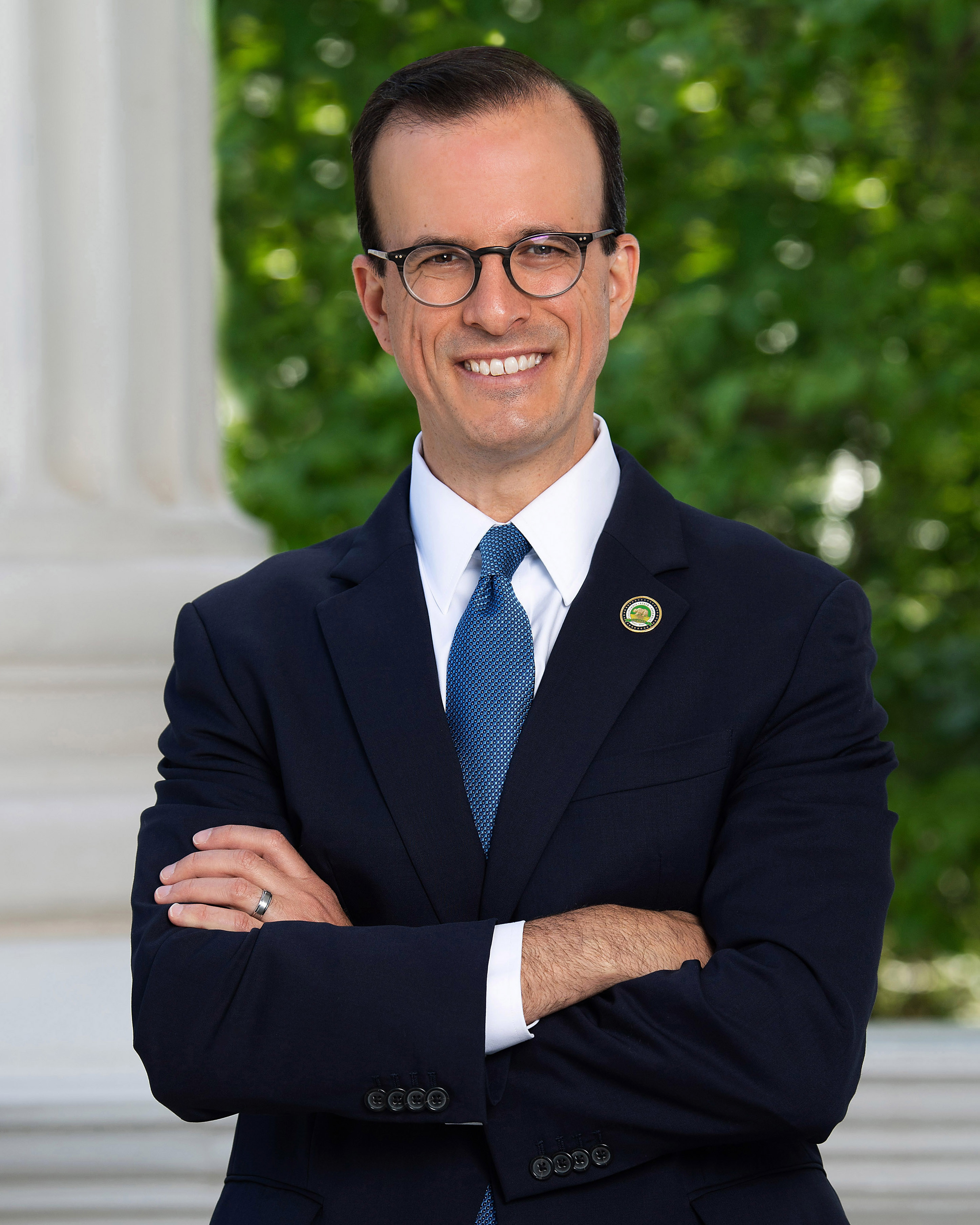
Asm. Marc Berman
Sponsored bills
Existing law authorizes each county to establish an interagency sexual assault response team (SART) program for the purpose of providing a forum for interagency cooperation and coordination to effectively address the problem of sexual assault. Existing law requires each SART to, among other things, evaluate the effectiveness of individual agency and interagency protocols and systems by conducting case reviews involving sexual assault. This bill would create the California Sexual Assault Response Team (SART) Advisory Council to promote swift, coordinated, competent, and efficient sexual assault intervention in every county, whose work shall be directed by a lead agency or department to be specified by the Governor. The bill would require the council to consist of representatives from specified entities, including sexual assault forensic examination teams, law enforcement agencies, county district attorneys' offices, crime laboratories, rape crisis centers, and hospitals. The bill would establish procedures for the council and require the council to, among other things, review statewide sexual assault intervention, advise county sexual assault response team programs, and submit, beginning on November 30, 2024, a biennial report to the Governor, Legislature, relevant legislative committees, and specified state agencies.
Existing law requires the California Workforce Development Board to assist in the development, oversight, and continuous improvement of California's workforce investment system, including helping individuals with barriers to employment. This bill would require the board to implement a grant program to award competitive grants to community-based organizations that resettle or provide services to the target populations, as defined, to address barriers to access and completion of health care training programs to obtain employment in health care professions, as provided. The bill would define "target populations" to mean refugees, asylees, and special immigrant visa recipients, as specified. The bill would require the board, in awarding grants, to give priority to proposals that align target populations with the specific entry-level health care labor needs of the respective local or regional geographic area, including, but not limited to, labor shortages of certified nurse assistants, pharmacy technicians, or medical assistants. The bill would require a grant recipient to provide to the board, upon closure of the grant period, a report on program and outcome data and information, as specified, relevant to the effect of the grant.
Existing law authorizes air pollution control districts and air quality management districts to establish, by regulation, a permit system to require that before any person builds, erects, alters, replaces, operates, or uses any article, machine, equipment, or other contrivance which may cause the issuance of air contaminants, the person obtain a permit from the district. Existing law requires air pollution control and air quality management districts, except county districts with a population of less than 250,000, to establish, by regulation, a program to provide for the expedited review of permits. A person who violates these requirements, or any rules, regulation, permit, or order of a district is guilty of a misdemeanor. This bill would, except as provided, require air pollution control and air quality management districts to establish a mobile fueling on-demand tank vehicle permit program for mobile fueling on-demand tank vehicle operations, as defined. The bill would require that a mobile fueling on-demand tank vehicle permit program provide, among other things, a consistent permitting process for an operation that requires more than one permit and an expedited permit review and fee schedule. By placing additional duties upon air pollution control and air quality management districts, and expanding the scope of existing crimes, the bill would impose a state-mandated local program. The California Constitution requires the state to reimburse local agencies and school districts for certain costs mandated by the state. Statutory provisions establish procedures for making that reimbursement. This bill would provide that no reimbursement is required by this act for specified reasons.
Existing law establishes the California State University, under the administration of the Trustees of the California State University, as one of the segments of public postsecondary education in this state. The California State University comprises 23 institutions of higher education located throughout the state. This bill would establish the Cybersecurity Regional Alliances and Multistakeholder Partnerships Pilot Program to address the cybersecurity workforce gap, as specified. The bill would require the office of the Chancellor of the California State University to select any number of California State University campuses to participate in the pilot program through an application process developed by the chancellor's office on or before March 1, 2023. The bill would require the selected campuses to, among other things, annually share the impact and results of their created pilot program with the chancellor's office. The bill would require the chancellor's to annually report the impact and results of the campus's pilot programs to the Legislature.
The Personal Income Tax Law and the Corporation Tax Law allow various credits against the taxes imposed by those laws. This bill, for taxable years beginning on or after January 1, 2023, and before January 1, 2028, would allow a credit against those taxes to a taxpayer that is transferred, and allocated, credits pursuant to the sale of a specified multifamily rental housing development to a qualified developer, that has received a credit reservation from the California Tax Credit Allocation Committee, in specified amounts. The bill would define a qualified developer for purposes of this bill, in part, as a specified entity that commits, at application to the committee and under penalty of perjury, to employing a tax credit reservation allowed by the bill in the acquisition of a qualified development. By expanding the crime of perjury, this bill would impose a state-mandated local program. The bill would require the credits to be reserved on a first-come-first-served basis. The bill would limit the aggregate amount of credit that may be allocated by the committee, as provided. The bill would also provide that the credit amount shall be $0 for each taxable year beginning on or after January 1, 2023, and before January 1, 2028, unless otherwise specified in a bill providing for appropriations related to the Budget Act. Existing law requires that any bill introduced on or after January 1, 2020, that would authorize certain tax expenditures, as defined, or tax exemptions contain, among other things, specific goals, purposes, and objectives that the tax expenditure or exemption will achieve, detailed performance indicators, and data collection requirements. This bill would include additional information required for any bill authorizing a new tax expenditure. The California Constitution requires the state to reimburse local agencies and school districts for certain costs mandated by the state. Statutory provisions establish procedures for making that reimbursement. This bill would provide that no reimbursement is required by this act for a specified reason. This bill would take effect immediately as a tax levy.
Under existing law, the Stop Tobacco Access to Kids Enforcement Act, an enforcing agency, as defined, may assess civil penalties against any person, firm, or corporation that sells, gives, or furnishes specified tobacco and cigarette related items, including cigarette papers, to a person who is under 21 years of age, except as specified. The existing civil penalties range from $400 to $600 for a first violation, up to $5,000 to $6,000 for a 5th violation within a 5-year period. Existing law prohibits the sale, distribution, or nonsale distribution of tobacco products directly or indirectly to any person under 21 years of age through the United States Postal Service or other public or private postal or package delivery service. Under existing law, a district attorney, city attorney, or the Attorney General may assess civil penalties against a violator of not less than $1,000 or more than $2,000 for the first violation and up to $10,000 for a 5th or subsequent violation within a 5-year period. Under existing law, every person, firm, or corporation that knowingly or under circumstances in which it has knowledge, or should otherwise have grounds for knowledge, sells, gives, or furnishes a cigarette, among other specified items, to another person who is under 21 years of age is, except as specified, subject to either a criminal action for a misdemeanor or to a civil action brought by a city attorney, a county counsel, or a district attorney, punishable by a fine of $200 for the first offense, $500 for the 2nd offense, and $1,000 for the 3rd offense. This bill would prohibit a person or entity from selling, giving, or furnishing to another person of any age in this state a single-use electronic cigarette, as defined, except as specified. The bill would prohibit that selling, giving, or furnishing, whether conducted directly or indirectly through an in-person transaction, or by means of any public or private method of shipment or delivery to an address in this state. This bill would authorize a city attorney, county counsel, or district attorney to assess a $500 civil fine against each person determined to have violated those prohibitions in a proceeding conducted pursuant to the procedures of the enforcing agency, as specified. This bill would make its provisions operative on January 1, 2024.
This measure would respectfully memorialize the President of the United States and the Congress of the United States to take action to restore honor to Bernard B. James, and to take the necessary actions to ensure the treatment of Bernard B. James is rectified by a full exoneration, including having the military record of Bernard B. James cleared of any court judgment and less-than-honorable discharge.
This measure would designate a specified portion of Interstate Highway Route 405 in the County of Los Angeles as the Officer Tommy Scott Memorial Highway. The measure would request that the Department of Transportation determine the cost of appropriate signs showing this special designation and, upon receiving donations from nonstate sources covering that cost, erect those signs.