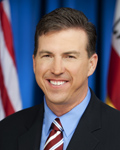
Photo of Kevin Mullin
D California Assembly · District 22 · Former member

Asm. Kevin Mullin

Compare
Total votes
31,650
all sessions
Attendance
97%
797 missed
Near the chamber average
With party
99%
of cast votes
Higher than 87% of chamber peers
Bipartisan score
0%
crosses aisle rarely
Lower than 90% of chamber peers
Sponsored
2,233
bills & resolutions
Near the chamber average
Committees
0
assignments
2,233 bills and resolutions

Sponsored bills

Total
2,233
Primary
287
Co-sponsor
1,946
This page
2,233
matching current filters
Co-sponsor ACR 115
Passed · California Assembly · Co-sponsor
Relative to gun-related businesses.

This measure would urge each bank with which the State of California has a business relationship to evaluate its commercial relationship with gun manufacturers and to consider the repercussions of that relationship, and urge all banks to discuss their lending practices with their shareholders and to adopt lending practices that mirror the people of California's values of protecting citizens before profit.

Passed Sep 1, 2020 1 co-sponsor
Co-sponsor AB 1659
Passed · California Assembly · Co-sponsor
Large electrical corporations: wildfire mitigation: securitization.

The California Constitution establishes the Public Utilities Commission and authorizes the commission to exercise ratemaking and rulemaking authority over all public utilities, as defined, subject to control by the Legislature. The Public Utilities Act authorizes the commission to supervise and regulate every public utility, including electrical corporations, and to do all things that are necessary and convenient in the exercise of that power and jurisdiction. Existing law authorizes the commission to fix the rates and charges for every public utility and requires that those rates and charges be just and reasonable. Existing law authorizes the commission, in a proceeding on an application by an electrical corporation to recover costs and expenses arising from a catastrophic wildfire occurring on or after January 1, 2019, to allow cost recovery if the costs and expenses are just and reasonable, after consideration of the conduct of the utility, including consideration of specified factors. Existing law establishes the Wildfire Fund to pay eligible claims arising from a covered wildfire, as provided. Existing law requires the commission to initiate a rulemaking proceeding to consider using its existing authority to require certain electrical corporations to collect a nonbypassable charge from its ratepayers to support the Wildfire Fund, and requires the commission to direct those electrical corporations to collect that charge if the commission determines that the imposition of the charge is just and reasonable and that it is an appropriate exercise of its authority, as specified. This bill would enact the Wildfire Prevention and Community Resilience Act of 2020 and would require the Natural Resources Agency, in consultation with the commission, to adopt an interim expenditure plan and an expenditure plan that are focused on reducing wildfire risk on the ground and in communities through activities such as defensible space implementation, home hardening, improved public safety, including expenditures to add trained emergency medical technicians to the workforce, and other authorized activities, as well as to prepare residents for wildfires through public education and outreach, as provided. The bill would establish the Wildfire Prevention and Community Resilience Fund and, upon appropriation by the Legislature, would require moneys in the fund be used for the implementation of those plans. The bill would require the Secretary of the Natural Resources Agency, upon the adoption of the interim plan, to notify the State Controller of the adoption. The bill would require, within 30 days of the notification, the transfer of $500,000,000 from the Surplus Money Investment Fund to the Wildfire Prevention and Community Resilience Fund, and would appropriate the money to the Natural Resources Agency for the implementation of the interim expenditure plan. The bill would provide for the repayment of the moneys transferred from the Wildfire Prevention and Community Resilience Fund to the Surplus Money Investment Fund, as provided. The bill would require the commission to require large electrical corporations, as defined, to collect, on and after a specified time, a nonbypassable charge from their ratepayers, as provided, to finance the bonds issued for the support of the Wildfire Prevention and Community Resilience Fund, as described below. Existing law, until January 1, 2003, authorizes the Department of Water Resources to enter into contracts for the purchase of electric power. Existing law authorizes the department to sell power to retail end use customers and local publicly owned electric utilities under certain circumstances. Existing law authorizes the department to issue revenue bonds and entitles the department to recover, as a revenue requirement, amounts necessary to enable it to finance the bonds and purchase electric power pursuant to these provisions. Existing law authorizes the department to issue Wildfire Fund bonds on and after either the date on which the department legally defeases all of its remaining bonds under the provisions described above or the date on which it pays those obligations in full at maturity, whichever is earlier, to support the Wildfire Fund. Existing law entitles the department to recover, as a revenue requirement, amounts necessary to enable it to finance the bonds in support of the Wildfire Fund. Existing law requires those bond proceeds and revenues received by the department to be deposited in the Department of Water Resources Charge Fund. Existing law continuously appropriates the moneys in the Department of Water Resources Charge Fund to the department for specified purposes, including transfers to the Wildfire Fund and repayment of the bonds issued in support of the Wildfire Fund. This bill would authorize the department to issue bonds, in an aggregate amount of up to $3,000,000,000, the repayment of which, including interest, commences on the date on which the department has paid in full, at maturity, or legally defeases any outstanding bonds issued for the support of the Wildfire Fund or on January 1, 2036, whichever is later, to support the Wildfire Prevention and Community Resilience Fund. The bill would entitle the department to recover, as a revenue requirement, amounts necessary to enable it to finance the bonds in support of the Wildfire Prevention and Community Resilience Fund. The bill would require those bond proceeds and revenues received by the department to be deposited in the Department of Water Resources Charge Fund. The bill would continuously appropriate the moneys in the Department of Water Resources Charge Fund to the department for specified purposes, including transfers to the Wildfire Prevention and Community Resilience Fund and repayment of the bonds issued for the support of the Wildfire Prevention and Community Resilience Fund. Under existing law, a violation of the Public Utilities Act or any order, decision, rule, direction, demand, or requirement of the commission is a crime. Because certain of the above provisions would be codified in the act and would require action by the commission, a violation of which would be a crime, this bill would impose a state-mandated local program. This bill would incorporate additional changes to Section 3289 of the Public Utilities Code proposed by SB 350 to be operative only if this bill and SB 350 are enacted and this bill is enacted last. The California Constitution requires the state to reimburse local agencies and school districts for certain costs mandated by the state. Statutory provisions establish procedures for making that reimbursement. This bill would provide that no reimbursement is required by this act for a specified reason. This bill would declare that it is to take effect immediately as an urgency statute.

Passed Sep 1, 2020 1 co-sponsor
Primary ACR 183
Passed · California Assembly · Lead sponsor
Relative to Irish American Heritage Month.

This measure would, among other things, designate March 2020 as Irish American Heritage Month in honor of the multitude of contributions that Irish Americans have made to the country and state.

Passed Aug 30, 2020 0 co-sponsors
Co-sponsor SB 793
Signed into law · California Senate · Co-sponsor
Flavored tobacco products.

Existing law, the Stop Tobacco Access to Kids Enforcement (STAKE) Act, prohibits a person from selling or otherwise furnishing tobacco products, as defined, to a person under 21 years of age. Existing law also prohibits the use of tobacco products in county offices of education, on charter school or school district property, or near a playground or youth sports event, as specified. This bill would prohibit a tobacco retailer, or any of the tobacco retailer's agents or employees, from selling, offering for sale, or possessing with the intent to sell or offer for sale, a flavored tobacco product or a tobacco product flavor enhancer, as those terms are defined, except as specified. The bill would make a violation of this prohibition an infraction punishable by a fine of $250 for each violation. The bill would state the intent of the Legislature that these provisions do not preempt or prohibit the adoption and implementation of local ordinances that impose greater restrictions on the access to tobacco products than the restrictions imposed by the bill, as specified. The bill would state that its provisions are severable. By creating a new crime, the bill would impose a state-mandated local program. The California Constitution requires the state to reimburse local agencies and school districts for certain costs mandated by the state. Statutory provisions establish procedures for making that reimbursement. This bill would provide that no reimbursement is required by this act for a specified reason.


Signed into law Aug 28, 2020 1 co-sponsor
Primary AB 2621
Passed · California Assembly · Lead sponsor
Office of Planning and Research: regional climate networks: climate adaptation action plans.

Existing law requires, by July 1, 2017, and every 3 years thereafter, the Natural Resources Agency to update, as prescribed, the state's climate adaptation strategy, known as the Safeguarding California Plan. Existing law establishes the Office of Planning and Research in state government in the Governor's office. Existing law establishes the Integrated Climate Adaptation and Resiliency Program to be administered by the office to coordinate regional and local efforts with state climate adaptation strategies to adapt to the impacts of climate change, as prescribed. This bill would authorize eligible agencies, as defined, to establish and participate in a regional climate network, as defined, to prepare a regional climate adaptation action plan for certain regions, as described. The bill would authorize eligible agencies to voluntarily determine whether to establish membership in a regional climate network. The bill would not limit the number of regional climate networks that may be established within each region. The bill would require the office to encourage the inclusion of agencies with land use planning authority into regional climate networks. This bill would also require, by January 1, 2022, the office to develop guidelines, as prescribed, establishing how a regional climate network may develop a regional climate adaptation action plan, including certain information, analyses, and contents to be included in a plan and certain considerations and procedures for a regional climate network when preparing a plan. The bill would require the office to provide technical assistance to eligible agencies developing regional climate networks and plans. The bill would require, by January 1, 2022, the office to make recommendations to certain policy committees of the Legislature on improving state support for the creation and work of regional climate networks, as prescribed, and the potential sources of financial assistance and options for distributing state funds to support the creation and implementation of plans.

Passed Aug 20, 2020 0 co-sponsors
Co-sponsor SB 795
Passed · California Senate · Co-sponsor
Economic development: housing: workforce development: climate change infrastructure.

Existing law establishes various housing programs administered by the Department of Housing and Community Development, including the Multifamily Housing Program, pursuant to which the department provides financial assistance in the form of deferred payment loans to pay for the eligible costs of development for specified types of housing projects. Existing law also establishes the Homeless Housing, Assistance, and Prevention program, administered by the Business, Consumer Services, and Housing Agency, for the purpose of providing jurisdictions with one-time grant funds to support regional coordination and expand or develop local capacity to address their immediate homelessness challenges, as provided. Existing law requires that the California Workforce Development Board and each local workforce development board ensure that programs and services funded by the federal Workforce Innovation and Opportunity Act of 2014 and directed to apprenticeable occupations are conducted in coordination with apprenticeship programs approved by the Division of Apprenticeship Standards, as specified. Existing law also establishes the Strategic Growth Council and, among other things, requires the council to manage and award grants and loans to support the planning and development of sustainable communities. Existing law also establishes the State Coastal Conservancy in the Natural Resources Agency with prescribed powers and responsibilities for implementing a program of agricultural land protection, area restoration, and resources enhancement within the coastal zone, as defined. Existing law establishes the Governor's Office of Business and Economic Development, known as "GO-Biz," within the Governor's office to serve the Governor as the lead entity for economic strategy and the marketing of California on issues relating to business development, private sector investment, and economic growth. This bill, upon appropriation by the Legislature, would make up to $2,000,000,000 available in each fiscal year for the purpose of providing emergency economic recovery and development, climate change, and disaster response. Of the amount made available for any fiscal year, the bill would require the Controller to allocate $1,808,000,000, or a proportional amount of the total available amount for the applicable fiscal year, among various housing programs administered by the Department of Housing and Community Development, the Homeless Housing, Assistance, and Prevention program, and for distribution by the California Workforce Development Board among local agencies to participate in, invest in, or partner with new or existing preapprenticeship training programs established as described above. The bill would require the Business, Consumer Services, and Housing Agency to establish deadlines for applications and submitting final reports under the Homeless Housing, Assistance, and Prevention program with respect to moneys allocated to that program under the bill. Of the amount made available for any fiscal year under its provisions, the bill would require the Controller to allocate $192,000,000, or a proportional amount of the total available amount for the applicable fiscal year, to the State Coastal Conservancy, the Strategic Growth Council, and GO-Biz, to be used for the Climate, Sea Level, and Natural Disaster Program and the Community Economic Development Program. The bill would require the State Coastal Conservancy and the Strategic Growth Council, in consultation with the Office of Planning and Research or any other appropriate state agency, to allocate $100,000,000, or a proportional amount, under the Climate, Sea Level, and Natural Disaster Program among specified eligible entities for the purpose of protecting communities dealing with the effects of climate change, as specified. The bill would require GO-Biz, in consultation with the Department of Housing and Community Development and any other appropriate state agency, council, or department, to allocate $92,000,000, or a proportional amount, under the Community Economic Development Program among these specified eligible entities for various purposes relating to community development. The bill would require eligible applicants to comply with specified requirements, including submitting plans for outreach to, and retention of, women, minority, disadvantaged youth, formerly incarcerated, and other underrepresented subgroups and, subject to certain exceptions, certifying that a skilled and trained workforce, as defined, will be used to complete any project funded under those programs. By requiring the certification of certain information, thereby expanding the scope of the crime of perjury, the bill would impose a state-mandated local program. The California Constitution requires the state to reimburse local agencies and school districts for certain costs mandated by the state. Statutory provisions establish procedures for making that reimbursement. This bill would provide that no reimbursement is required by this act for a specified reason.
Passed Aug 20, 2020 1 co-sponsor
Co-sponsor AB 2340
Passed · California Assembly · Co-sponsor
Peace officers: deputy sheriffs.

Existing law establishes categories of peace officers with varying powers and authority to make arrests and carry firearms. Under existing law, in certain counties, including the counties of Butte and Calaveras, a deputy sheriff, who is employed to perform duties exclusively or initially relating to custodial assignments with responsibilities for maintaining the operations of county custodial facilities, is a peace officer whose authority extends to any place in the state only while engaged in the performance of the duties of the officer's employment and for the purpose of carrying out the primary function of employment relating to the officer's custodial assignments, or when performing other law enforcement duties directed by the officer's employing agency during a local state of emergency. This bill would include a deputy sheriff employed by the County of Del Norte, the County of Mono, or the County of San Mateo within that definition of peace officer.

Passed Aug 20, 2020 1 co-sponsor
Co-sponsor AB 828
Passed · California Assembly · Co-sponsor
Temporary moratorium on foreclosures and unlawful detainer actions: coronavirus (COVID-19).

Existing law confers a power of sale upon a mortgagee, trustee, or any other person to be exercised after a breach of the obligation for which the mortgage or transfer is a security. Existing law requires a trustee, mortgagee, or beneficiary to first file a record in the office of the recorder a notice of default, and establishes other requirements and procedures for completion of a foreclosure sale. This bill would prohibit a person from taking any action to foreclose on a residential real property while a state or locally declared state of emergency related to the COVID-19 virus is in effect and until 91 days after the state of emergency has ended, including, but not limited to, causing or conducting the sale of the real property or submitting for recordation a notice of default. Existing property tax law attaches taxes that are owed on that property as a lien against that property. Existing law generally requires the tax collector to attempt to sell residential property that has become tax defaulted 5 years or more after that property has become tax defaulted. This bill would require a tax collector to suspend the sale, and not attempt to sell, tax-defaulted properties while a state or locally declared state of emergency related to the COVID-19 virus is in effect and until 91 days after the state of emergency has ended. Existing law requires a county recorder to record any instrument, paper, or notice that is authorized or required to be recorded upon payment of proper fees and taxes. This bill would prohibit a party from submitting to a county recorder any instrument, paper, or notice that constitutes a notice of default, a notice of sale, or a trustee's deed upon sale for residential real property during the above-specified declared state of emergency relating to the COVID-19 virus. The bill would provide that any action for foreclosure on a mortgage or deed of trust of residential real property is stayed and the court may take no action unless the court finds that the action is required to further public health and safety and would extend the period for exercising rights, including right of redemption, until 90 days after the state of emergency ends. Existing law establishes a procedure, known as an unlawful detainer action, that a landlord must follow in order to evict a tenant. Existing law provides that a tenant is subject to such an action if the tenant continues to possess the property without permission of the landlord in specified circumstances, including when the tenant has violated the lease by defaulting on rent or failing to perform a duty under the lease. This bill would prohibit a party from submitting for filing a residential unlawful detainer complaint except to address issues of damage to the property, nuisance, or health and safety during the timeframe in which a state of emergency related to the COVID-19 virus is in effect and 91 days thereafter. The bill would prohibit a court from issuing a summons on a complaint for a residential unlawful detainer unless the court finds it is necessary to address damage to the property, nuisance, or health and safety, and would prohibit a court from entering a default or default judgment for restitution in an unlawful detainer action unless it is necessary to protect public health and safety. The bill would authorize a period of rent deferment of up to 12 months from 90 days after the state of emergency ends for a tenant who provides specified documentation to their landlord showing economic hardship resulting from COVID-19, including a substantial reduction in income or substantial out-of-pocket medical expenses. The bill would prohibit the imposition of late fees, fines, or interest during that time. The bill would make these provisions effective in a jurisdiction in which a state or locally declared state of emergency is in effect until 91 days after the state of emergency ends and would repeal these provisions on January 1, 2022. By expanding the crime of perjury, the bill would impose a state-mandated local program. The bill would contain related findings regarding the economic hardships imposed by the COVID-19 virus. This bill would declare that it is to take effect immediately as an urgency statute. The California Constitution requires the state to reimburse local agencies and school districts for certain costs mandated by the state. Statutory provisions establish procedures for making that reimbursement. This bill would provide that no reimbursement is required by this act for a specified reason.

Passed Jul 28, 2020 1 co-sponsor
Co-sponsor AB 2371
Passed · California Assembly · Co-sponsor
Climate change: Office of Planning and Research: science advisory team: climate adaptation and hazard mitigation.

Existing law requires the Natural Resources Agency every 3 years to update the state's climate adaptation strategy, known as the Safeguard California Plan (plan) , including addressing certain topics. As part of the update, existing law requires the agency to coordinate with other state agencies to identify a lead agency or group of agencies to lead adaptation efforts in each sector. Existing law requires state agencies to work to maximize specified objectives related to climate change. Existing law establishes the Office of Planning and Research (office) in state government in the Governor's office. Existing law establishes the Integrated Climate Adaptation and Resiliency Program (ICARP) , to be administered by the office, to coordinate regional and local efforts with state climate adaptation strategies to adapt to the impacts of climate change, as prescribed. Existing law establishes the Strategic Growth Council (council) in state government and assigns to the council certain duties, including providing funding and distributing data and information to local governments and regional agencies that will assist in the development and planning of sustainable communities. This bill would require the office, by July 1, 2021, to convene a climate science advisory team to provide independent, timely, and science-based advice on the state's climate adaptation and climate-related hazard mitigation efforts and to, among other things, provide input to improve climate adaptation and climate-related hazard mitigation planning across state agencies, including the plan. The bill would require the team to serve as a working group of a specified ICARP advisory group. The bill would require the team to provide recommendations to inform certain activities of the council regarding climate change. The bill would require, by January 1, 2022, the office to produce, in consultation with the team and relevant state agencies, regional governments, and local governments, an evidence-based list of recommended existing projects and potential projects of statewide significance and urgency that should be prioritized in order to advance the state's climate resilience, including projects that improve community resilience and climate-related hazard mitigation through natural infrastructure. The bill would require the office, by July 1, 2024, to submit to the relevant policy and fiscal committees of the Legislature a report summarizing the actions of the team, the team's contribution to climate resiliency and adaptation planning, and the office's recommendations to improve the effectiveness of the team.

Passed Jul 8, 2020 1 co-sponsor
Showing 471 to 480 of 2,233 bills
Previous 1 … 47 48 49 … 224 Next