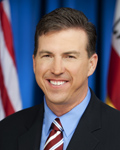
Photo of Kevin Mullin
D California Assembly · District 22 · Former member

Asm. Kevin Mullin

Compare
Total votes
31,650
all sessions
Attendance
97%
797 missed
Near the chamber average
With party
99%
of cast votes
Higher than 88% of chamber peers
Bipartisan score
0%
crosses aisle rarely
Lower than 91% of chamber peers
Sponsored
2,233
bills & resolutions
Near the chamber average
Committees
0
assignments
2,233 bills and resolutions

Sponsored bills

Total
2,233
Primary
287
Co-sponsor
1,946
This page
2,233
matching current filters
Primary AB 792
Signed into law · California Assembly · Lead sponsor
Utility user tax: exemption: distributed generation systems.

Existing law generally provides that the legislative body of any city and any charter city may make and enforce all ordinances and regulations with respect to municipal affairs, as provided, including, but not limited to, a utility user tax on the consumption of gas and electricity. Existing law provides that the board of supervisors of any county may levy a utility user tax on the consumption of, among other things, gas and electricity in the unincorporated area of the county. This bill would, until January 1, 2020, exempt from any utility user tax imposed by a local jurisdiction, as defined, the consumption of electricity generated by a clean energy resource, as defined, for the use of a single customer or the customer's tenants.

Signed into law Oct 4, 2013 0 co-sponsors
Co-sponsor AB 60
Signed into law · California Assembly · Co-sponsor
Driver's licenses: eligibility: required documentation.

(1) Existing law requires the Department of Motor Vehicles (DMV) to require an applicant for an original driver's license or identification card to submit satisfactory proof that the applicant's presence in the United States is authorized under federal law. Existing law prohibits the department from issuing an original driver's license or identification card to a person who does not submit satisfactory proof that his or her presence in the United States is authorized under federal law. This bill would require the department to issue an original driver's license to a person who is unable to submit satisfactory proof that the applicant's presence in the United States is authorized under federal law if he or she meets all other qualifications for licensure and provides satisfactory proof to the department of his or her identity and California residency. The bill would require the department to adopt emergency regulations, in consultation with appropriate interested parties, as prescribed, to implement those provisions, including identifying documents acceptable for the purposes of providing identity and California residency and procedures for verifying the authenticity of the documents. The bill would require the department to accept various types of documentation for this purpose. The bill would require a license issued pursuant to those provisions, including temporary licenses, to include on the front of the card a recognizable feature and a specified notice. The bill would authorize the department to modify these licenses if these licenses do not meet federal requirements. The bill would provide that information collected pursuant to those provisions is not a public record and shall not be disclosed by the department, except as required by law. This bill would make it a violation of law to discriminate against an individual because he or she holds or presents a license issued under these provisions. The bill would require, on or before January 1, 2018, the California Research Bureau to compile and submit to the Legislature and the Governor a report that, among other things, includes instances when these licenses are used to discriminate against an individual. The bill would provide that a person applying for a license pursuant to these provisions may be required to pay, only until June 30, 2017, an additional fee to offset the reasonable administrative costs of implementing these provisions. The bill would make other technical and conforming changes. (2) Existing law requires the department to require an application for a driver's license to contain the applicant's social security number and any other number or identifier determined to be appropriate by the department. Existing law authorizes an applicant who provides satisfactory proof that his or her presence in the United States is authorized under federal law, but who is not eligible for a social security number, to receive an original driver's license if he or she meets all other requirements for licensure. This bill would authorize an applicant who is unable to provide satisfactory proof that his or her presence in the United States is authorized under federal law to sign an affidavit attesting that he or she is both ineligible for a social security number and unable to submit satisfactory proof that his or her presence in the United States is authorized under federal law in lieu of submitting a social security number. The bill would prohibit the use of this information to consider an individual's citizenship or immigration status as a basis for a criminal investigation, arrest, or detention. This bill would make these changes operative on January 1, 2015, or on the date the director of the department executes a specified declaration, whichever is sooner. The bill would make these provisions inoperative on the effective date of a final judicial determination made by any court of appellate jurisdiction that any of these provisions, or their application, are enjoined, found unconstitutional, or held invalid for any reason. The bill would require the department to post this information on its Internet Web site. This bill would state that its provisions do not authorize an individual to apply for, or be issued, a commercial driver's license without submitting his or her social security account number with his or her application.

Signed into law Oct 3, 2013 1 co-sponsor
Primary AB 989
Signed into law · California Assembly · Lead sponsor
State teachers' retirement: account statements.

The State Teachers' Retirement Law creates the State Teachers' Retirement System (STRS) for the purpose of providing retirement benefits to teachers and other people employed in connection with the schools. STRS is administrated by the Teachers' Retirement Board, which is required to issue each active and inactive member, no less frequently than annually, as specified, a statement of the member's individual Defined Benefit Program and Defined Benefit Supplement Program accounts, if the system has the member's mailing address. Existing law permits the board to make the account statement available by secured access through the system's Internet Web site. Existing law creates the Cash Balance Benefit Program, also referred to as the cash balance plan, administrated by the Teachers' Retirement Board, to provide a retirement plan for teachers working less than half time. Existing law requires the board, in connection with the cash balance plan, to provide each participant a statement regarding the balance of his or her account with the plan at the close of the year, as specified. This bill would permit the board to make an electronic delivery of the account statements described above, subject to specified requirements. The bill would permit the system to designate electronic delivery of the account statements the default method by which active and inactive members and participants receive the information in the statements. The bill would require the system to notify the affected parties that they have the right to request delivery by mail, and that unless the affected party elects, in a manner specified by the board, delivery will be provided electronically. The bill would provide that, until this designation is made, delivery by mail is the default delivery method, except as specified. The bill would apply similar authorizations and requirements regarding electronic delivery of communications and other actions to provisions regarding refund of retirement contributions, redeposit of retirement contributions, and the purchase of service credit. If specified provisions mandate that actions be taken within a certain number of days of a mailing date and electronic delivery has been substituted for mail, the bill would require that date of electronic delivery be substituted for mailing date for purposes of measuring when those actions are to be taken.

Signed into law Oct 1, 2013 0 co-sponsors
Co-sponsor SB 318
Signed into law · California Senate · Co-sponsor
Consumer loans: Pilot Program for Increased Access to Responsible Small Dollar Loans.

Existing law, the California Finance Lenders Law, provides for the licensure and regulation of finance lenders and brokers by the Commissioner of Corporations and makes a willful violation of its provisions a crime. Existing law regulates the charges a licensee may impose or receive on loans it makes, and authorizes a licensee to contract for and receive specified alternative charges and administrative and delinquency fees. Existing law establishes, until January 1, 2015, the Pilot Program for Affordable Credit-Building Opportunities for the purpose of increasing the availability of credit-building opportunities to underbanked individuals seeking low-dollar-value loans. Under the program, licensees must file an application with, and pay a fee to, the Commissioner of Corporations to participate in the program. Existing law authorizes a licensee approved by the commissioner to participate in the program to impose specified alternative interest rates and charges, including an administrative fee and delinquency fees, on loans of at least $250 and less than $2,500, subject to certain requirements. Existing law also authorizes licensees in the program to use the services of finders, defined as entities who, at the finder's physical location for business, bring licensees and prospective borrowers together for the purpose of negotiating loan contracts at the finder's location, subject to a written agreement meeting specified requirements. The Governor's Reorganization Plan No. 2 of the 2011–12 Regular Session provides that, on and after July 1, 2013, certain responsibilities of the Department of Corporations and the Commissioner of Corporations will be transferred to the Department of Business Oversight and the Commissioner of Business Oversight will be the head of the Department of Business Oversight. This bill would abolish the Pilot Program for Affordable Credit-Building Opportunities. The bill would, until January 1, 2018, establish the Pilot Program for Increased Access to Responsible Small Dollar Loans for the purpose of allowing greater access for responsible installment loans in principal amounts of at least $300 and less than $2,500. The bill would require licensees and other entities to file an application and pay a specified fee to the Commissioner of Business Oversight to participate in the program. The bill would authorize a licensee approved by the commissioner to participate in the program to impose specified alternative interest rates and charges, including an administrative fee and delinquency fees, on loans of at least $300 and less than $2,500, subject to certain requirements. This bill would also authorize a licensee in the program to use the services of finders, defined as entities who, at the finder's physical location for business, bring licensees and prospective borrowers together for the purpose of negotiating loan contracts, subject to a written agreement meeting specified requirements. The bill would establish the services a finder is authorized and required to perform, and would require a finder to comply with the laws applicable to the licensee relative to information security. The bill would require a licensee to notify the commissioner within 15 days of entering into a contract with a finder, would require a licensee to pay an annual finder registration fee to the commissioner, and would require a licensee to submit an annual report to the commissioner on the licensee's relationship and business arrangements with a finder, as specified. The bill would authorize the commissioner to examine the operations of a licensee and a finder to ensure that the activities of the licensee and the finder are in compliance with these provisions. The bill would make a licensee that uses a finder responsible for a violation of these provisions by a finder or a finder's employee, and would authorize the commissioner to impose administrative penalties against a finder for a violation of these provisions. The bill would authorize the commissioner, upon a violation of these provisions, to disqualify a finder from performing services, bar a finder from performing services at one or more specific locations of the finder, terminate a written agreement between a licensee and a finder, and, under specified circumstances, prohibit the use of the finder by all licensees. The bill would authorize a licensee participating in the program to appoint one or more branch managers with responsibility for multiple branch locations, subject to approval by the commissioner. This bill would require the commissioner to examine the performance of each licensee in the program at least once every 24 months, and would require the costs of examination to be paid by the licensee to the commissioner, as specified. The bill would also require the commissioner to conduct a random sample survey of borrowers under the program. The bill would require the commissioner to post a report on the commissioner's Internet Web site by July 1, 2015, and once again by January 1, 2017, summarizing utilization of the Pilot Program for Increased Access to Responsible Small Dollar Loans, as specified. This bill would make licensees of the abolished Pilot Program for Affordable Credit-Building Opportunities subject to the newly established Pilot Program for Increased Access to Responsible Small Dollar Loans. The bill would continue in existence any outstanding loans made under the abolished pilot program and the loans would remain subject to the terms and conditions that existed at the time the loan was made. Because a willful violation of these provisions would be a crime, this bill would impose a state-mandated local program. This bill would also make a clarifying change to the California Finance Lenders Law. The California Constitution requires the state to reimburse local agencies and school districts for certain costs mandated by the state. Statutory provisions establish procedures for making that reimbursement. This bill would provide that no reimbursement is required by this act for a specified reason.


Signed into law Oct 1, 2013 1 co-sponsor
Co-sponsor AB 1126
Signed into law · California Assembly · Co-sponsor
Solid waste: engineered municipal solid waste (EMSW) conversion.

(1) The California Integrated Waste Management Act of 1989 (act) , which is administered by the Department of Resources Recycling and Recovery, requires each city, county, and regional agency, if any, to develop a source reduction and recycling element of an integrated waste management plan. With certain exceptions, the source reduction and recycling element of that plan is required to divert 50% of all solid waste, through source reduction, recycling, and composting activities. Existing law allows the 50% diversion requirement to include, pursuant to specified conditions, not more than 10% through biomass conversion, which is defined as the controlled combustion of specific materials for use in producing electricity or heat. Existing law defines the term "transformation" and excludes from that definition composting, gasification, and biomass conversion. This bill would define the terms "EMSW conversion" and "EMSW conversion facility," and would make conforming changes to existing definitions with regard to those operations and facilities. The bill would additionally exclude EMSW conversion from the definition of transformation, and would allow a transformation facility that meets specified requirements relating to EMSW conversion to elect to be considered an EMSW facility for purposes of the act, except as provided. (2) The act requires the integrated waste management plan required to be adopted by a county to include a countywide siting element that provides a description of the areas to be used for the development of certain facilities. The act excludes certain solid wastes, for purposes of determining the base rate for the diversion of solid waste, and requires that the amount of solid waste diverted include solid waste diverted from a disposal facility or transformation facility. Existing law requires the department to determine compliance with the act's 50% diversion requirement, based on the jurisdiction's change in its per capita disposal rate and specifies the procedure for determining that rate. This bill would require the countywide siting element to include a description of the areas to be used for the development of adequate EMSW conversion, thereby imposing a state-mandated local program by imposing new duties upon local agencies. This bill would additionally exclude certain used tires or waste tires or biomass materials that are converted at an EMSW conversion facility from the per capita disposal determination and would require, for purposes of the solid waste calculation used in the base rate determination, the amount of solid waste to include solid waste diverted from an EMSW conversion facility. (3) Existing law prohibits a person from establishing or expanding a solid waste facility in a county, after a countywide or regional agency integrated waste management plan has been approved, unless the solid waste facility is, among other things, a disposal facility or a transformation facility that meets certain criteria. This bill would additionally include, as one of those facilities, an EMSW conversion facility. (4) The California Constitution requires the state to reimburse local agencies and school districts for certain costs mandated by the state. Statutory provisions establish procedures for making that reimbursement. This bill would provide that no reimbursement is required by this act for a specified reason.
Signed into law Sep 28, 2013 1 co-sponsor
Co-sponsor SB 359
Signed into law · California Senate · Co-sponsor
Vehicles: retirement and replacement.

(1) Existing law establishes the Air Quality Improvement Program that is administered by the State Air Resources Board for the purposes of funding projects related to, among other things, reduction of criteria air pollutants and improvement of air quality. Existing law requires, until January 1, 2016, that a portion of the registration fees for motor vehicles and vessels be deposited into the Air Quality Improvement Fund and, upon appropriation, be expended for the implementation of the program. Pursuant to the Air Quality Improvement Program, the state board has established the Clean Vehicle Rebate Project to promote the production and use of zero-emission vehicles and the Hybrid and Zero-Emission Truck and Bus Voucher Incentive Project to provide vouchers to help California fleets to purchase hybrid and zero-emission trucks and buses. Existing law establishes the Vehicle Inspection and Repair Fund, which serves as a repository for fees collected by the Department of Consumer Affairs pursuant to the Automotive Repair Act. This bill would require the Controller to transfer, as a loan, $30,000,000 from the Vehicle Inspection and Repair Fund to the Air Quality Improvement Fund. The bill would appropriate to the state board these moneys in the Air Quality Improvement Fund to be expended only for the Clean Vehicle Rebate Project and the Hybrid and Zero-Emission Truck and Bus Voucher Incentive Project, thereby making an appropriation. (2) Existing law establishes the Capital Access Loan Program for small businesses, administered by the California Pollution Control Financing Authority, by providing loans through participating financial institutions to qualifying small businesses, including financial assistance to businesses affected by the In-Use Bus and Truck Rule through the Heavy-Duty Vehicle Air Quality Loan Program. This bill would require the Controller to transfer, as a loan, $10,000,000, from the Vehicle Inspection and Repair Fund to the Air Pollution Control Fund. The bill would appropriate to the state board these moneys in the Air Pollution Control Fund to be expended only for the Heavy-Duty Vehicle Air Quality Loan Program, thereby making an appropriation. (3) Existing law creates the Enhanced Fleet Modernization Subaccount in the High Polluter Removal and Repair Account and makes available, upon appropriation, all money in the account to establish and implement the enhanced fleet modernization program, administered by the Bureau of Automotive Repair in the Department of Consumer Affairs. This bill would appropriate $8,000,000 to the Bureau of Automotive Repair from the Enhanced Fleet Modernization Subaccount in the High Polluter Repair or Removal Account to be expended only for the purposes of the enhanced fleet modernization program, thereby making an appropriation.

Signed into law Sep 28, 2013 1 co-sponsor
Co-sponsor AJR 16
Signed into law · California Assembly · Co-sponsor
Relative to Preschool for All in California.

This measure would urge the Congress of the United States to enact President Barack Obama's budget proposal to increase funding for preschool and early learning. This measure would also urge the Superintendent of Public Instruction to prepare a plan for making California competitive for future increases in federal funding to preschool and early learning programs.

Signed into law Sep 27, 2013 1 co-sponsor
Showing 1,631 to 1,640 of 2,233 bills