

Passed Mar 6, 2014
1 co-sponsor
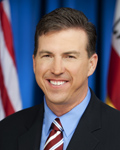
Total votes
31,650
all sessions
Attendance
97%
797 missed
Near the chamber average
With party
99%
of cast votes
Higher than 88% of chamber peers
Bipartisan score
0%
crosses aisle rarely
Lower than 91% of chamber peers
Sponsored
2,233
bills & resolutions
Near the chamber average
Committees
0
assignments
2,233 bills and resolutions
Sponsored bills
Total
2,233
Primary
287
Co-sponsor
1,946
This page
2,233
matching current filters
Passed Feb 27, 2014
0 co-sponsors
Charter-party carriers of passengers: limousines: fire extinguishers.
The Passenger Charter-party Carriers' Act places charter-party carriers of passengers, as defined, under the jurisdiction and control of the Public Utilities Commission. The act defines a charter-party carrier of passengers, subject to certain exceptions, to mean every person that is engaged in the transportation of persons by motor vehicle for compensation, whether in common or contract carriage, over any public highway. Existing law requires the Department of the California Highway Patrol to regulate the safe operation of motor vehicles engaged in transportation for hire or compensation and to inspect those vehicles to ensure that they have the required safety equipment. A violation of these provisions is a crime. This bill would require a limousine, as defined, that has been modified or extended by an original or final-stage manufacturer for purposes of increasing vehicle length and passenger capacity to be equipped with 2 readily accessible and fully charged fire extinguishers, as specified, and would require one fire extinguisher to be securely mounted in the driver's compartment and at least one to be accessible to the passengers. The bill would require the driver or operator of the limousine to notify the passengers of the location of each fire extinguisher prior to the commencement of any trip. The bill would require each certificate of registration to identify whether a limousine with a seating capacity of fewer than 10 passengers has been extended or modified by an original or final-stage manufacturer for purposes of increasing vehicle length and passenger capacity and make that information available to the Department of the California Highway Patrol. The bill would also require, not later than July 1, 2015, the Department of the California Highway Patrol to implement a safety inspection program, as specified, of charter-party carriers of passengers that operate limousines that have been modified or extended by an original or final-stage manufacturer for purposes of increasing vehicle length and passenger capacity. The bill would require the department to adopt emergency regulations for this purpose. The bill would require the department to transmit to the Public Utilities Commission inspection data of limousines inspected pursuant to this program and would require the original manufacturer or final-stage manufacturer of a manufactured or aftermarket limousine, as described, to certify to the department that the vehicle meets all applicable federal and state motor vehicle safety standards. The bill would also require the department to adopt regulations to establish an inspection fee to be paid by a single charter-party carrier operator, as specified. The bill would require the inspection fee to be collected by the Public Utilities Commission and deposited into the Motor Vehicle Account in the State Transportation Fund. Because a violation of these provisions would be a crime, this bill would impose a state-mandated local program. The California Constitution requires the state to reimburse local agencies and school districts for certain costs mandated by the state. Statutory provisions establish procedures for making that reimbursement. This bill would provide that no reimbursement is required by this act for a specified reason.
Vetoed Feb 27, 2014
1 co-sponsor
Biosimilars.
The Pharmacy Law governs the practice of pharmacy in this state, including the permissible duties of licensed pharmacists. Among other permitted acts, a pharmacist filling a prescription order for a drug product prescribed by its trade or brand name may select another drug product with the same active chemical ingredients of the same strength, quantity, and dosage form, and of the same generic drug name as determined, as specified, of those drug products having the same active chemical ingredients. A person who knowingly violates the Pharmacy Law is guilty of a misdemeanor, as specified. This bill would authorize a pharmacist, in his or her discretion, except as specified, to select a biosimilar, as defined, when filling a prescription order for a prescribed biological product only if the product has been approved by the federal Food and Drug Administration, as specified, and the prescriber does not personally indicate "Do not substitute," as specified. The bill would also require, for prescriptions filled prior to January 1, 2017, the pharmacy to, within 5 business days of the selection of a biological product or an interchangeable biosimilar, notify the prescriber or enter in a patient record whether the prescription dispensed was a biological product or an interchangeable biosimilar, except as specified. The bill would prohibit a pharmacist from selecting a biosimilar that meets the requirements of these provisions unless the cost to the patient of the biosimilar selected is the same or less than the cost of the prescribed biological product. The bill would also require that the substitution of a biosimilar be communicated to the patient. Because a knowing violation of these requirements would be a misdemeanor, the bill would create new crimes, thereby imposing a state-mandated local program. The bill would also require the California State Board of Pharmacy to maintain on its public Internet Web site a link to the current list, if available, of biosimilar products determined by the federal Food and Drug Administration to be interchangeable, as specified. The California Constitution requires the state to reimburse local agencies and school districts for certain costs mandated by the state. Statutory provisions establish procedures for making that reimbursement. This bill would provide that no reimbursement is required by this act for a specified reason.
Vetoed Feb 27, 2014
1 co-sponsor
Passed Feb 10, 2014
1 co-sponsor
Income taxes: credit: patent licensing.
The Personal Income Tax Law and the Corporation Tax Law allow various credits against the taxes imposed by those laws. This bill would, under the Personal Income Tax Law and the Corporation Tax Law, for taxable years beginning on or after January 1, 2013, allow a credit against those taxes in an amount equal to 15% of the qualified royalties, as defined, paid by a qualified taxpayer, as defined. The bill would calculate the cut-off date for the above-described credit based upon an estimate by the Franchise Tax Board of claims cumulatively totaling $100,000,000 for all taxable years, as specified. The bill would require a qualified taxpayer to commercialize, as defined, a qualified patent for at least 5 consecutive years. This bill would take effect immediately as a tax levy.
Failed Feb 3, 2014
1 co-sponsor
Schools: school safety and teacher training.
(1) Existing law establishes the school safety consolidated competitive grant, requires the funding for the school safety consolidated competitive grant to include funding previously apportioned to school districts for carrying out the purposes of specified programs, and requires funds appropriated for purposes of the school safety consolidated competitive grant to be available for encumbrance for 5 years from the date of appropriation. This bill would repeal the provision requiring funds appropriated for purposes of the school safety consolidated competitive grant to be available for encumbrance for 5 years from the date of appropriation. (2) Existing law establishes various categorical education programs and appropriates the funding for those programs in the annual Budget Act. Existing law requires the Superintendent of Public Instruction, for the 2008–09 to 2014–15 fiscal years, inclusive, to apportion from the amounts provided in the annual Budget Act for specified categorical education programs an amount based on the relative proportion that the local educational agency received in the 2008–09 fiscal year for those programs and authorizes the local educational agency, for those fiscal years, to use these funds, with specified exceptions, for any educational purpose, to the extent permitted by federal law. This bill would, from moneys annually appropriated for the school safety consolidated competitive grant, require $321,000 of those moneys to be used for certain purposes related to the Interagency School Safety Demonstration Act of 1985. (3) Existing law establishes the California Beginning Teacher Support and Assessment System, which is jointly administered by the Superintendent of Public Instruction and the Commission on Teacher Credentialing. In administering the California Beginning Teacher Support and Assessment System, existing law requires the Superintendent and the commission to provide or contract for, among other things, establishing requirements for reviewing and approving teacher induction programs. Existing law requires a school district or consortium of school districts that apply to the Superintendent for funding to establish a local teacher induction program to meet specified requirements. This bill, for purposes of the California Beginning Teacher Support and Assessment System, also would require the Superintendent and the commission to provide or contract for implementing high-quality teacher induction programs per specified certification criteria and enforcing each teacher induction program's standards to meet state standards.
Failed Feb 3, 2014
0 co-sponsors
County Employees Retirement Law of 1937: federal law compliance.
Federal tax law regulates pension plans generally and regulates public pension plans specifically based on their status as governmental plans, as defined. In this regard, among other things, federal law requires that accrued member retirement benefits be nonforfeitable, as specified, establish conditions for the distribution of funds to members from a retirement system, prescribe requirements for the vesting of benefits, and limit the application of pension funds for medical benefits. The County Employees Retirement Law of 1937 (CERL) permits counties and districts, as defined, to provide retirement benefits to their employees pursuant to its provisions, and vests the management of the retirement system in the board of retirement. CERL generally conditions distribution of benefits upon compliance with federal requirements. CERL requires a county to retain in its retirement fund specified excess earnings to maintain a reserve against possible future deficiencies in earnings, and to transfer certain of those excess earnings into county advance reserves for the sole purpose of paying the cost of retirement benefits, as specified. CERL authorizes the use of these reserves for the payment of health and medical benefits, as specified. In addition, excess earnings, as defined, and the Supplemental Retiree Benefits Reserve, if established by the county, may be used for payment of specified optional benefits. This bill would revise various provisions of CERL to explicitly conform with federal law. In this regard, the bill would provide that a member's accrued retirement benefits are nonforfeitable, in accordance with federal law, once the member attains normal retirement age, as specified, or upon termination of, or discontinuance of contributions under, the retirement system. Upon the withdrawal of a district from a retirement system, the bill also would prohibit a refund, distribution, or transfer of contributions for other funds to an employee or district unless in compliance with prescribed federal law. This bill would authorize a retirement system to apply specified earnings to designated health benefits if federal requirements are met, and would allow the board of retirement to authorize payment of those benefits with county advance reserves. The bill would specify that, if a county establishes a Post-Employment Benefits Trust Account as a part of its retirement fund, that account shall be used exclusively to provide health benefits for retired members, their spouses, and dependents. This bill would revise county procedures applicable to providing service credit to a member of the retirement system for all or part of his or her military service, in accordance with federal law. This bill would require a county that elects to provide optional long-term care or vision benefits, to comply with applicable federal law and regulation, including maintaining separate trust funds for those benefits. The bill also would make various technical, nonsubstantive changes to CERL. The California Public Employees' Pension Reform Act of 2013 (PEPRA) , on and after January 1, 2013, generally requires a public retirement system, as defined, to modify its plan or plans to comply with the act, as specified. Among other things, PEPRA requires a public employee or officer who is convicted of certain enumerated crimes to forfeit specified rights and benefits under, and membership in, any public retirement system of which he or she is a member, effective on the date of his or her final conviction. This bill would revise the provisions of PEPRA relating to forfeiture, to specify that those provisions do not apply after the retirement system is terminated or contributions under the system are completely discontinued.
Failed Feb 3, 2014
0 co-sponsors
Sales and use taxes.
The Sales and Use Tax Law imposes a tax on retailers measured by the gross receipts from the sale of tangible personal property sold at retail in this state, or on the storage, use, or other consumption in this state of tangible personal property purchased from a retailer for storage, use, or other consumption in this state. The State Board of Equalization administers the collection of taxes as imposed under those laws. Existing law requires every seller, certain retailers, and every person storing, using, or otherwise consuming in this state tangible personal property purchased from a retailer to keep any records, receipts, invoices, and other pertinent papers in any form as the board may require. This bill would make various technical, nonsubstantive changes to this requirement.
died Feb 3, 2014
0 co-sponsors
Sales and use taxes: exemption: manufacturing research and development.
Existing sales and use tax laws impose taxes on retailers measured by the gross receipts from the sale of tangible personal property sold at retail in this state, or on the storage, use, or other consumption in this state of tangible personal property purchased from a retailer for storage, use, or other consumption in this state. That law provides various exemptions from those taxes. The bill would exempt from those taxes, on and after January 1, 2014, the gross receipts from the sale of, and the storage, use, or other consumption of, qualified tangible personal property purchased by a qualified person for use primarily in manufacturing, processing, refining, fabricating, or recycling of property, as specified, qualified tangible personal property purchased for use by a contractor for specified purposes, as provided, and tangible personal property purchased for use by a qualified person to be used primarily in research and development, as provided. The Bradley-Burns Uniform Local Sales and Use Tax Law authorizes counties and cities to impose local sales and use taxes in conformity with the Sales and Use Tax Law, and existing law authorizes districts, as specified, to impose transactions and use taxes in conformity with the Transactions and Use Tax Law, which conforms to the Sales and Use Tax Law. Exemptions from state sales and use taxes are incorporated into these laws. This bill would specify that this exemption does not apply to local sales and use taxes, transactions and use taxes, and specified state taxes from which revenues are deposited into the Local Public Safety Fund, the Education Protection Account, and the Local Revenue Fund. This bill would take effect immediately as a tax levy.
Failed Feb 3, 2014
0 co-sponsors
Ask Maddy
·
AI policy assistant
Ask Maddy about Kevin Mullin
Scope: CA
Hi! I can help you understand Kevin Mullin's legislative record. What would you like to know?
Try one of these
i
Maddy answers using official bill text and legislative records. Always verify before sharing.
Sources cited inline