

Passed May 2, 2024
1 co-sponsor
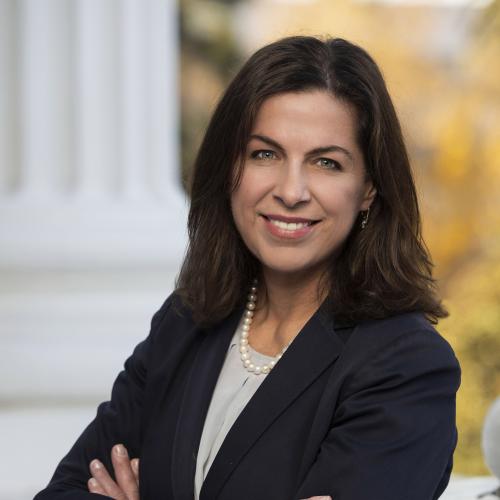
Asm. Diane Papan
Total votes
11,107
all sessions
Attendance
92%
655 missed
Near the chamber average
With party
99%
of cast votes
Near the chamber average
Bipartisan score
0%
crosses aisle rarely
Near the chamber average
Sponsored
776
bills & resolutions
Near the chamber average
Committees
12
assignments
776 bills and resolutions
Sponsored bills
Total
776
Primary
89
Co-sponsor
687
This page
776
matching current filters
Relative to the Marian Bergeson Memorial Bridge.
This measure would designate the North Arm Newport Bay Bridge on State Route 1, in the County of Orange, as the Marian Bergeson Memorial Bridge. The measure would also request the Department of Transportation to determine the cost of appropriate signs showing this special designation and, upon receiving donations from nonstate sources to cover that cost, to erect those signs.
Signed into law Apr 30, 2024
1 co-sponsor
Relative to the CHP Officer Andy Ornelas Memorial Highway.
This measure would designate the portion of State Route 14 from the Avenue 0-8 bridge at Postmile R62.151 to the Avenue M overcrossing at Postmile R64.678, in the County of Los Angeles, as the CHP Officer Andy Ornelas Memorial Highway. The measure would request the Department of Transportation to determine the cost for appropriate signs, which shall include the star of the California Highway Patrol, showing these special designations and, upon receiving donations from nonstate sources covering that cost, to erect those signs.
Signed into law Apr 30, 2024
1 co-sponsor
Relative to the "Surf City USA" interchange.
This measure would designate the interchange at State Highway Route 405 and State Route 39 in the County of Orange at Beach Boulevard as the "Surf City USA" interchange. The measure would request the Department of Transportation to determine the cost of appropriate signs showing this special designation and, upon receiving donations from nonstate sources covering that cost, to erect those signs.
Signed into law Apr 30, 2024
1 co-sponsor
Relative to Los Angeles County Sheriff's Deputy Hagop "Jake" Kuredjian Memorial Highway.
This measure would designate the portion of Interstate 5 between the Pico-Lyons Overcrossing and the McBean Parkway Overcrossing in the City of Santa Clarita as the Los Angeles County Sheriff's Deputy Hagop "Jake" Kuredjian Memorial Highway. The measure would also request the Department of Transportation to determine the cost of appropriate signs showing this special designation and, upon receiving donations from nonstate sources sufficient to cover the cost, to erect those signs.
Signed into law Apr 30, 2024
1 co-sponsor
Relative to the Master Sergeant Richard Pittman Memorial Highway.
This measure would designate the portion of Interstate 5 between Roth Road, at postmile R19.584, and French Camp Road, at postmile R22.508, in the City of Stockton as the Master Sergeant Richard Pittman Memorial Highway. The measure would also request the Department of Transportation to determine the cost of appropriate signs showing this special designation and, upon receiving donations from nonstate sources to cover that cost, to erect those signs.
Signed into law Apr 30, 2024
1 co-sponsor
Digital Advertising Services Tax Law.
Existing law imposes taxes upon income and real property, and taxes upon certain transactions and excise taxes. The Fee Collection Procedures Law provides procedures for the collection of certain fees and surcharges and is administered by the California Department of Tax and Fee Administration. Under existing law, a violation of the Fee Collection Procedures Law is a crime. This bill would, beginning January 1, 2025, require a person with at least $100,000,000 in annual gross revenues, as defined, to pay a tax on annual gross revenues that are derived from digital advertising services in the state at a specified rate. The bill would prohibit a taxpayer from directly passing on the cost of the tax to a customer. The bill would state the intent of the Legislature that the net proceeds from the tax would be used to fund youth mental health services. The bill would require the department to administer and collect the tax pursuant to the Fee Collection Procedures Law. By expanding the application of the crimes associated with the Fee Collection Procedures Law, the bill would impose a state-mandated local program. The California Constitution requires the state to reimburse local agencies and school districts for certain costs mandated by the state. Statutory provisions establish procedures for making that reimbursement. This bill would provide that no reimbursement is required by this act for a specified reason. This bill would include a change in state statute that would result in a taxpayer paying a higher tax within the meaning of Section 3 of Article XIIIA of the California Constitution, and thus would require for passage the approval of 23 of the membership of each house of the Legislature. This bill would take effect immediately as a tax levy.
In committee Apr 29, 2024
0 co-sponsors
Passed Apr 25, 2024
1 co-sponsor
Passed Apr 25, 2024
1 co-sponsor
School district and community college district bonds: school facilities.
Existing law authorizes, and in some instances requires, the governing board of a school district or community college district to, by majority vote of the governing board, order an election and submit to the electors of the school district or community college district, as applicable, the question whether the bonds of the district should be issued and sold for the purpose of raising money for specified purposes, including, among other things, the repairing, restoring, or rebuilding of a school building damaged, injured, or destroyed by fire or other public calamity. Existing law generally requires, to pass a school bond measure, that at least 23 of the votes cast on the proposition of issuing bonds be in favor of issuing the bonds. Existing law authorizes the governing board of a school district or community college district, as an alternative method to issuing bonds pursuant to the above authority, to, by a 23 vote of the governing board and subject to specified requirements, pursue the authorization and issuance of bonds through an election pursuant to certain provisions of the California Constitution that only require at least 55% of the votes cast on the proposition of issuing bonds be in favor of issuing the bonds. This bill would broaden the specified purposes for which school bonds may be issued to include, among other purposes, the acquisition or lease of real property for school facilities, the construction or acquisition of school facilities, the reconstruction, rehabilitation, or replacement of school facilities, the repairing, restoring, or rebuilding of school facilities damaged, injured, or destroyed by fire or other public calamity, and the supplying of school facilities. The bill would define, for these purposes, "school facilities" to mean buildings, facilities, structures, or real property improvements used or operated in conjunction with one or more public schools or community colleges, including, but not limited to, classrooms, academic buildings, auditoriums, libraries, laboratories, research or training facilities, administrative offices or buildings, health offices or facilities, dormitories, dining halls, student centers or unions, housing for students, faculty, or school or district employees, sports facilities, maintenance, storage, or utility facilities, other related buildings, facilities, structures, or real property improvements used for student instruction, conducting research, or training, or for operating a school facility, and all necessary, usual, or useful attendant and related buildings, facilities, structures, or real property improvements, including, but not limited to, streets, parking, and supportive services facilities or structures, required or useful for the operation of another school facility. The bill would declare that its provisions are severable and are to be liberally construed to effectuate its purposes. To the extent the bill creates additional duties for school districts, community college districts, and local elections officials, the bill would impose a state-mandated local program. The California Constitution requires the state to reimburse local agencies and school districts for certain costs mandated by the state. Statutory provisions establish procedures for making that reimbursement. This bill would provide that, if the Commission on State Mandates determines that the bill contains costs mandated by the state, reimbursement for those costs shall be made pursuant to the statutory provisions noted above.
In committee Apr 23, 2024
0 co-sponsors
Ask Maddy
·
AI policy assistant
Ask Maddy about Diane Papan
Scope: california
Hi! I can help you understand Diane Papan's legislative record. What would you like to know?
Try one of these
i
Maddy answers using official bill text and legislative records. Always verify before sharing.
Sources cited inline