

The California Drought, Water, Parks, Climate, Coastal Protection, and Outdoor Access For All Act of 2018, approved by the voters as Proposition 68 at the June 5, 2018, statewide primary election, authorizes the issuance of bonds in the amount of $4,000,000,000 pursuant to the State General Obligation Bond Law to finance a drought, water, parks, climate, coastal protection, and outdoor access for all program. The California Constitution requires a measure authorizing general obligation bonds to specify the single object or work to be funded by the bonds and further requires the measure to be approved by a 23 vote of each house of the Legislature and a majority of the voters. This bill would enact the California Flood Protection Bond Act of 2024 which, if approved by the voters, would authorize the issuance of bonds in the amount of $4,500,000,000 pursuant to the State General Obligation Bond Law for flood protection projects, as specified. The bill would provide for the submission of these provisions to the voters at the November 5, 2024, statewide general election.
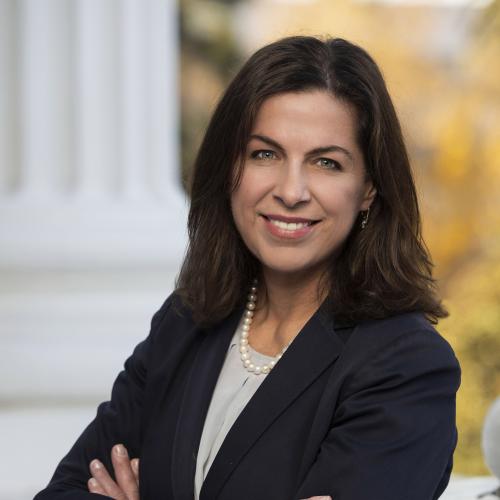
Asm. Diane Papan
Sponsored bills
Maddy summaryThis bill designates May 17, 2024, as Bike to School Day in California to encourage students to ride bicycles or electric bikes to their schools. The resolution highlights the environmental, health, and recreational benefits of cycling while acknowledging the state's existing bike-friendly infrastructure and recent cycling events. It serves as a commemorative measure rather than a law that changes regulations or funding, and it directs the Assembly's Chief Clerk to distribute copies of the text for public awareness.
Maddy summaryThis bill establishes April 27 as Harvey Milk Day to honor the first openly gay man elected to public office in a major U.S. city. The resolution recognizes Milk's legacy as a civil rights leader who fought against discrimination and advocated for LGBTQ+ visibility and unity among minority communities. It recounts key events in his life, including his assassination in 1978 and the subsequent legal proceedings against his killer. The measure serves as a commemorative acknowledgment of Milk's impact on California and national history rather than creating new laws or policies.
Existing law requires the Department of Motor Vehicles to establish the California Legacy License Plate Program, and to create and issue a series of specialized license plates, consisting of one or more of 3 specified designs that replicate license plates from the state's past. Existing law requires the department to collect and hold paid applications for the plates, as specified, and prohibits the department from issuing a specialized license plate until it has received not less than 7,500 paid applications for any one of the particular plates on or before January 1, 2015. This bill would extend the deadline for receipt of the required number of paid applications to January 1, 2026, for plate designs that did not receive the required number of applications by January 1, 2015. This bill would also add an additional plate design to the program, as specified.
Existing law vests the Department of Transportation with full possession and control of all state highways. Under existing law, the State Water Resources Control Board and the 9 California regional water quality control boards regulate water quality. This bill would require the department, in conjunction with the State Water Resources Control Board, to develop a programmatic environmental review process to prevent 6PPD and 6PPD-quinone from entering salmon and steelhead trout bearing surface waters of the state. The bill would require the state board to establish the parameters of the department's programmatic environmental review process, as specified, and, to the extent practical, with the department, consult with the States of Washington and Oregon in the development of the programmatic environmental review process. The bill would require the department's 6PPD and 6PPD-quinone programmatic environmental review process to include specified components, including 5 pilot projects at specified locations to study the effectiveness and cost effectiveness of installing and maintaining bioretention and biofiltration comparatively along department rights-of-way to eliminate the discharge of 6PPD and 6PPD-quinone into surface waters of the state, as specified. The bill would require all information provided by the department to the state board pursuant to these provisions be made publicly available through the state board's stormwater data collection system.
Existing law establishes the Office of Planning and Research within the Governor's office to provide long-range planning and research and to serve as the comprehensive state planning agency. This bill would require the office, on or before January 1, 2026, to create and maintain, as specified, a permitting accountability transparency internet website (dashboard) . The bill would require the dashboard to include a display for each permit to be issued by specified state agencies for all covered projects. The bill would define various terms for these purposes. The bill would also require the dashboard to include, but not be limited to, information for each permit to be issued by a state agency that is required for the completion of the project, including, among other requirements, the permit application submission date. The bill would require each state agency with a responsibility for issuing a permit for a covered project to provide information in the appropriate time and manner as determined by the office. The bill would also make related findings and declarations.
Existing law vests the Public Utilities Commission with regulatory authority over public utilities, including electrical corporations. Existing law authorizes the commission to adopt new, or expand existing, fixed charges, as defined, for the purpose of collecting a reasonable portion of the fixed costs of providing electrical service to residential customers. Under existing law, the commission may authorize fixed charges for any rate schedule applicable to a residential customer account. Existing law requires the commission, no later than July 1, 2024, to authorize a fixed charge for default residential rates. Existing law requires these fixed charges to be established on an income-graduated basis, with no fewer than 3 income thresholds, so that low-income ratepayers in each baseline territory would realize a lower average monthly bill without making any changes in usage. This bill would prohibit modifications to the amount of the income-graduated fixed charge from exceeding changes in inflation, as provided. The bill would make the provisions authorizing the income-graduated fixed charge inoperative on July 1, 2028. The bill, commencing July 1, 2028, would instead permit the commission to authorize fixed charges that, as of January 1, 2015, do not exceed $5 per residential customer account per month for low-income customers enrolled in the California Alternate Rates for Energy (CARE) program and that do not exceed $10 per residential customer account per month for customers not enrolled in the CARE program. The bill would authorize these maximum allowable fixed charges to be adjusted by no more than the annual percentage increase in the Consumer Price Index for the prior calendar year, beginning January 1, 2016. The bill would require the commission to adopt any modification to an existing fixed charge for the collection of a reasonable portion of the fixed costs of providing electrical service to residential customers in a stand-alone proceeding. The bill would prohibit a fixed charge from resulting in an increase to an electrical corporation's revenue requirement. The bill would require the commission, on or before July 1, 2027, but no sooner than 2 years after the adoption of the income-graduated fixed charge, to submit a public report to the relevant policy committees of both houses of the Legislature on the electrical corporations' implementation of the income-graduated fixed charge and other cost-saving options, as specified. Under existing law, a violation of the Public Utilities Act or any order, decision, rule, direction, demand, or requirement of the commission is a crime. Because the provisions of this bill would be a part of the act and therefore a violation of the bill's requirements or of a commission action implementing its requirements would be a crime, the bill would impose a state-mandated local program. The California Constitution requires the state to reimburse local agencies and school districts for certain costs mandated by the state. Statutory provisions establish procedures for making that reimbursement. This bill would provide that no reimbursement is required by this act for a specified reason.
Existing law, the Grant Information Act of 2018, requires the California State Library to create a funding opportunities internet web portal that provides a centralized location for grant seekers to find state grant opportunities. Existing law requires the Natural Resources Agency to update every 3 years the state's climate adaptation strategy, known as the Safeguarding California Plan, and to coordinate with other state agencies to identify vulnerabilities to climate change by sectors, including, among others, transportation and public health. This bill would require the library, in consultation with the agency, to include on the above-described internet web portal the category "childcare" under the category tab, and would also require the library to consult with all agencies and departments administering grants that are included on the portal to identify and indicate on the portal grants in which childcare providers are eligible applicants. The bill would require those agencies and departments to provide the library with information relating to the eligibility of childcare providers for grant identification purposes.
Existing law requires a county treasurer to receive and keep safely all moneys belonging to the county and all other moneys directed by law to be paid to the county treasurer, and to apply and pay those moneys out, rendering the account as required by law. Existing law requires the county treasurer to settle the county treasurer's accounts relating to the collection, care, and disbursement of public revenue with the auditor no less frequently than monthly. Existing law additionally requires the county treasurer, upon the request of the auditor, to provide a settlement of cash receipts and disbursements of the prior calendar month to the auditor on or before 10 business days after the treasurer receives the auditor's request. This bill would instead require the treasurer, upon the request of the auditor, to provide a settlement of cash receipts and disbursements of the prior calendar month to the auditor on or before 12 business days after the treasurer receives the auditor's request.
This measure would proclaim the week of April 14, 2024 to April 20, 2024, to be Cities Week, and would encourage all Californians to be involved in their communities and be civically engaged with their local government.