

Passed Aug 26, 2021
1 co-sponsor
Total votes
19,775
all sessions
Attendance
88%
2,109 missed
Lower than 99% of chamber peers
With party
96%
of cast votes
Lower than 99% of chamber peers
Bipartisan score
2%
crosses aisle rarely
Higher than 96% of chamber peers
Sponsored
578
bills & resolutions
Lower than 80% of chamber peers
Committees
0
assignments
578 bills and resolutions
Sponsored bills
Total
578
Primary
74
Co-sponsor
504
This page
578
matching current filters
Passed Aug 26, 2021
1 co-sponsor
Passed Aug 26, 2021
1 co-sponsor
Passed Aug 26, 2021
1 co-sponsor
Passed Aug 26, 2021
1 co-sponsor
Passed Aug 26, 2021
1 co-sponsor
Medi-Cal specialty mental health services.
Existing law provides for the Medi-Cal program, which is administered by the State Department of Health Care Services, under which qualified low-income individuals receive health care services, including specialty mental health services, and Early and Periodic Screening, Diagnostic, and Treatment services for an individual under 21 years of age. The Medi-Cal program is, in part, governed and funded by federal Medicaid program provisions. Under existing law, one of the methods by which Medi-Cal services are provided is pursuant to contracts with various types of managed care health plans, including mental health plans that provide specialty mental health services. Existing law requires the department to ensure that Medi-Cal managed care contracts include a process for screening, referral, and coordination with mental health plans of specialty mental health services, to convene a steering committee to provide advice on the transition and continuing development of the Medi-Cal mental health managed care systems, and to ensure that the mental health plans comply with various standards, including maintaining a system of outreach to enable Medi-Cal beneficiaries and providers to participate in and access Medi-Cal specialty mental health services under the mental health plans. With respect to specialty mental health services provided under the Early and Periodic Screening, Diagnostic, and Treatment Program, on or after January 1, 2022, this bill would require the department to develop standard forms, including intake and assessment forms, relating to medical necessity criteria, mandatory screening and transition of care tools, and documentation requirements pursuant to specified terms and conditions, and, for purposes of implementing these provisions, would require the department to consult with representatives of identified organizations, including the County Behavioral Health Directors Association of California. The bill would authorize the department to develop and maintain a list of department-approved nonstandard forms, and would require the department to conduct, on or before July 1, 2023, regional trainings for county mental health plan personnel and their provider networks on proper completion of the standard forms. The bill would require each county mental health plan contractor to distribute the training material and standard forms to their provider networks, and to commence, by July 1, 2023, exclusively using the standard forms, unless they use department-approved nonstandard forms.
Passed Aug 23, 2021
1 co-sponsor
Relative to National Gun Violence Awareness Day.
This measure would proclaim June 4, 2021, as National Gun Violence Awareness Day.
Signed into law Aug 23, 2021
1 co-sponsor
Health care workforce development: California Medicine Scholars Program.
Existing law establishes various programs to facilitate the expansion of the health care workforce in rural and underserved communities, including, but not limited to, the Health Professions Career Opportunity Program, the California Registered Nurse Education Program, and the Steven M. Thompson Medical School Scholarship Program. This bill, contingent upon an appropriation by the Legislature, as specified, would create the California Medicine Scholars Program, a 5-year pilot program commencing January 1, 2023, and would require the Office of Statewide Health Planning and Development to establish and facilitate the pilot program. The bill would require the pilot program to establish a regional pipeline program for community college students to pursue premedical training and enter medical school, in an effort to address the shortage of primary care physicians in California and the widening disparities in access to care in vulnerable and underserved communities, including building a comprehensive statewide approach to increasing the number and representation of minority primary care physicians in the state. The bill would require the office to contract with a managing agency for the pilot program, as specified. The bill would require the pilot program to consist of 4 Regional Hubs of Health Care Opportunity (RHHO) to achieve its objectives, and would require each RHHO to include, at a minimum, 3 community colleges, one public or nonprofit, as defined, 4-year undergraduate institution, one public or nonprofit, as defined, medical school, and 3 local community organizations. The bill would require the managing agency to appoint an objective selection committee, with specified membership, to evaluate prospective RHHO applications and select RHHOs that meet certain requirements to participate in the pilot program. The bill would require each selected RHHO to enter into memoranda of understanding between the partnering entities setting forth participation requirements, and to perform other specified duties, including establishing an advisory board to oversee and guide the programmatic direction of the RHHO and developing partnership agreements with one or more campus-based learning communities, groups, or entities to assist with outreach, recruitment, and support of students. The bill would require the selection process to be completed by June 30, 2022. This bill would require each RHHO to recruit and select 50 California Medicine Scholars each calendar year from 2023 to 2026, inclusive, in accordance with specified criteria, and to provide, by December 31, 2023, and by that date of each year thereafter, up to and including 2026, a status report on the implementation of the pilot program to the managing agency and the office, including data and information collected by each RHHO during the applicable program year. The bill would require the managing agency and the office to jointly prepare and submit to the Legislature a final report evaluating the success of the pilot program, including the data and information provided by the RHHOs, in accordance with specified metrics. The bill would declare that its provisions are severable. This bill would make these provisions inoperative on June 30, 2027, and would repeal the provisions as of January 1, 2028.
Passed Aug 16, 2021
1 co-sponsor
Relative to Juneteenth.
This measure would recognize June 19, 2021, as Juneteenth and would urge the people of California to join in celebrating Juneteenth as a day to honor and reflect on the significant role that African Americans have played in the history of the United States and how they have enriched society through their steadfast commitment to promoting unity and equality.
Signed into law Jul 20, 2021
1 co-sponsor
Ask Maddy
·
AI policy assistant
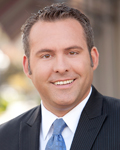
Ask Maddy about Adam C. Gray
Scope: california
Hi! I can help you understand Adam C. Gray's legislative record. What would you like to know?
Try one of these
i
Maddy answers using official bill text and legislative records. Always verify before sharing.
Sources cited inline