

Passed Sep 5, 2023
1 co-sponsor
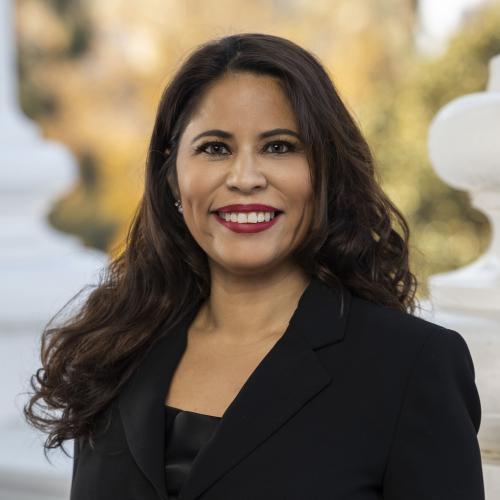
Asm. Liz Ortega
Total votes
10,051
all sessions
Attendance
87%
1,103 missed
Near the chamber average
With party
99%
of cast votes
Near the chamber average
Bipartisan score
0%
crosses aisle rarely
Near the chamber average
Sponsored
921
bills & resolutions
Near the chamber average
Committees
9
assignments
921 bills and resolutions
Sponsored bills
Total
921
Primary
74
Co-sponsor
847
This page
921
matching current filters
CalWORKs: aid payments.
Existing federal law provides for allocation of federal funds through the federal Temporary Assistance for Needy Families (TANF) block grant program to eligible states. Existing law provides for the California Work Opportunity and Responsibility to Kids (CalWORKs) program under which, through a combination of state and county funds and federal funds received through the TANF program, each county provides cash assistance and other benefits, including allowances for other purposes such as pregnancy, homeless assistance, and recurring special needs, to qualified low-income families. This bill would, beginning April 1, 2025, make a menstruating person who is qualified for aid under the CalWORKs program and between 10 and 55 years of age, inclusive, entitled to $20 per month to assist with menstrual product costs. The bill would require the State Department of Social Services to work with the County Welfare Directors Association of California and the California Statewide Automated Welfare System (CalSAWS) to develop and implement the necessary system changes on or before April 1, 2025. By increasing the duties of counties administering the CalWORKs program, the bill would impose a state-mandated local program. Existing law continuously appropriates moneys from the General Fund to defray a portion of county costs under the CalWORKs program. This bill would instead provide that the continuous appropriation would not be made for purposes of implementing the bill. The California Constitution requires the state to reimburse local agencies and school districts for certain costs mandated by the state. Statutory provisions establish procedures for making that reimbursement. This bill would provide that, if the Commission on State Mandates determines that the bill contains costs mandated by the state, reimbursement for those costs shall be made pursuant to the statutory provisions noted above.
Passed Sep 1, 2023
1 co-sponsor
Older individuals: case management services.
Existing law requires the California Department of Aging to administer the Mello-Granlund Older Californians Act, which establishes various programs that serve older individuals, defined as persons 60 years of age or older except as specified. The act requires the department to designate various private nonprofit or public agencies as area agencies on aging to work within a planning and service area and provide a broad array of social and nutritional services. Under the act, the department's mission is to provide leadership to those agencies in developing systems of home- and community-based services that maintain individuals in their own homes or least restrictive homelike environments. This bill would, until January 1, 2030, and subject to an appropriation, require the department to establish a case management services pilot program. Under the bill, the purpose of the program would be to expand statewide the local capacity of supportive services programs by providing case management services to older individuals who need assistance to maintain health and economic stability. The bill would require the Counties of Alameda, Marin, and Sonoma to participate in the pilot program. The bill would require the 3 counties to coordinate with their respective area agencies on aging or other county or community-based entities to deliver the services. The bill would also require those counties to measure performance outcomes during the course of implementing the program. The bill would require those counties, on an annual basis, for the first 5 years during which an appropriation is made, to submit reports to the department containing data on the performance outcomes, in order to determine program efficacy and to inform and shape solutions under a master plan for aging that has been established pursuant to a specified executive order. By creating new duties for the 3 counties relating to participation in the pilot program, the bill would impose a state-mandated local program. This bill would make legislative findings and declarations as to the necessity of a special statute for the Counties of Alameda, Marin, and Sonoma. The California Constitution requires the state to reimburse local agencies and school districts for certain costs mandated by the state. Statutory provisions establish procedures for making that reimbursement. This bill would provide that, if the Commission on State Mandates determines that the bill contains costs mandated by the state, reimbursement for those costs shall be made pursuant to the statutory provisions noted above.
Passed Sep 1, 2023
0 co-sponsors
Passed Sep 1, 2023
1 co-sponsor
Pupil health: opioid antagonists.
Existing law authorizes school districts, county offices of education, and charter schools to provide emergency naloxone hydrochloride or another opioid antagonist to school nurses or voluntary trained personnel, and authorizes those nurses and voluntary trained personnel to use naloxone hydrochloride or another opioid antagonist to provide emergency medical aid to persons suffering, or reasonably believed to be suffering, from an opioid overdose, as provided. This bill would require each individual public school operated by a school district, county office of education, or charter school that has elected to make a school nurse or trained personnel available at the school pursuant to those provisions to maintain at least two units of naloxone hydrochloride or another opioid antagonist for purposes of those authorizations.
Passed Sep 1, 2023
1 co-sponsor
Rehabilitative and habilitative services: durable medical equipment and services.
Existing law, the Knox-Keene Health Care Service Plan Act of 1975, requires the Department of Managed Health Care to license and regulate health care service plans and makes a willful violation of the act a crime. Other existing law requires the Department of Insurance to regulate health insurers. Existing law requires an individual or small group health care service plan contract or health insurance policy issued, amended, or renewed on or after January 1, 2017, to include, at a minimum, coverage for essential health benefits pursuant to the federal Patient Protection and Affordable Care Act. Under existing law, essential health benefits includes, among other things, rehabilitative and habilitative services. Existing law requires habilitative services and devices to be covered under the same terms and conditions applied to rehabilitative services and devices under the plan contract or policy, and defines habilitative services to mean health care services and devices that help a person keep, learn, or improve skills and functioning for daily living. This bill would specify that coverage of rehabilitative and habilitative services and devices under a health care service plan or health insurance policy includes durable medical equipment, services, and repairs, if the equipment, services, or repairs are prescribed or ordered by a physician, surgeon, or other health professional acting within the scope of their license. The bill would define "durable medical equipment" to mean devices, including replacement devices, that are designed for repeated use, and that are used for the treatment or monitoring of a medical condition or injury in order to help a person to partially or fully acquire, improve, keep, or learn, or minimize the loss of, skills and functioning of daily living. The bill would prohibit coverage of durable medical equipment and services from being subject to financial or treatment limitations, as specified. The bill would require the Secretary of California Health and Human Services to communicate to the federal Center for Consumer Information and Insurance Oversight that the coverage of durable medical equipment is necessary to comply with federal requirements for purposes of being considered essential health benefits not subject to defrayal payments. If the center overrules the state's determination that the additional coverage subjects the state to defrayal payments, the bill would require the secretary to reevaluate California's essential health benefits benchmark plan to incorporate the coverage without triggering the defrayal requirement. The bill would require the secretary, no later than one year after the center makes its determination, to submit a report to the Legislature recommending the corresponding changes to the essential health benefits benchmarking process in order for the Legislature to approve submission of a new benchmark plan proposal to the center. Because a violation of the bill's provisions by a health care service plan would be a crime, the bill would impose a state-mandated local program. The California Constitution requires the state to reimburse local agencies and school districts for certain costs mandated by the state. Statutory provisions establish procedures for making that reimbursement. This bill would provide that no reimbursement is required by this act for a specified reason.
Passed Sep 1, 2023
0 co-sponsors
Alternatives to cobalt mined in Africa using child slave labor.
This measure would declare that the Legislature should pass laws that halt the importation of cobalt or any product using cobalt mined in Africa using child slave labor and encourage the production of cobalt and other critical minerals ethically sourced from within the United States.
Signed into law Sep 1, 2023
1 co-sponsor
Prisons: visitation.
(1) Under existing law, a person sentenced to imprisonment in a state prison or in a county jail for a felony offense, as specified, may, during that period of confinement, be deprived of only those rights as is reasonably related to legitimate penological interests. Existing law enumerates certain civil rights of these prisoners, including the right to purchase, receive, and read newspapers, periodicals, and books accepted for distribution by the United States Post Office. This bill would include the right to personal visits by an intimate partner or a family member, as those terms are defined, as a civil right, as specified. The bill would provide that these civil rights may not be infringed, except as necessary and only if narrowly tailored to further a compelling security interest of the government, and would provide that any governmental action related to these civil rights may be reviewed in court for legal or factual error. (2) Existing law authorizes the Secretary of the Department of Corrections and Rehabilitation to prescribe and amend rules and regulations for the administration of prisons and requires regulations, which are adopted by the Department of Corrections and Rehabilitation and may impact the visitation of inmates. Existing law requires these regulations to recognize and consider the value of inmate visitation as a means of increasing safety in prisons, maintaining family and community connections, and preparing inmates for successful release and rehabilitation. Existing regulations create the framework for establishing a visitation process in prisons that is conducted in as accommodating a manner as possible, subject to the need to maintain order, the safety of persons, the security of institutions and facilities, and required prison activities and operations. This bill would additionally require those regulations pertaining to inmate visits to recognize and consider the right to personal visits as a civil right. The bill would prohibit the department from denying or restricting in-person contact visits except as specified, including as a disciplinary sanction against the incarcerated person who has committed a listed offense during a personal visit. The bill would require the department to inform both the visitor and the incarcerated person of the specific reason for any denial of a visit, as specified. The bill would require the department to provide at least 3 days of in-person visiting per week, with a minimum of 7 visiting hours per day.
Passed Sep 1, 2023
1 co-sponsor
Relative to outdoor workers.
This measure would recognize July 17, 2023, to July 23, 2023, as Outdoor Worker Appreciation Week.
Signed into law Aug 30, 2023
1 co-sponsor
Relative to Sudden Infant Death Syndrome (SIDS) Awareness Month.
This measure would declare the month of October 2023 as Sudden Infant Death Syndrome (SIDS) Awareness Month.
Signed into law Aug 30, 2023
1 co-sponsor
Ask Maddy
·
AI policy assistant
Ask Maddy about Liz Ortega
Scope: california
Hi! I can help you understand Liz Ortega's legislative record. What would you like to know?
Try one of these
i
Maddy answers using official bill text and legislative records. Always verify before sharing.
Sources cited inline